Skip to content
Aquaponics looks simple until the first crash. Fish stress, plants stall, water turns, and the whole system feels out of control.
A stable aquaponics greenhouse needs three things: predictable greenhouse climate, predictable water quality, and predictable daily routines. If I design around those three, I can grow clean vegetables while keeping fish healthy and costs measurable.
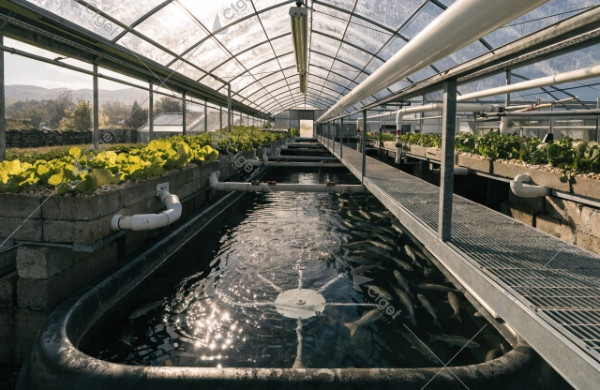
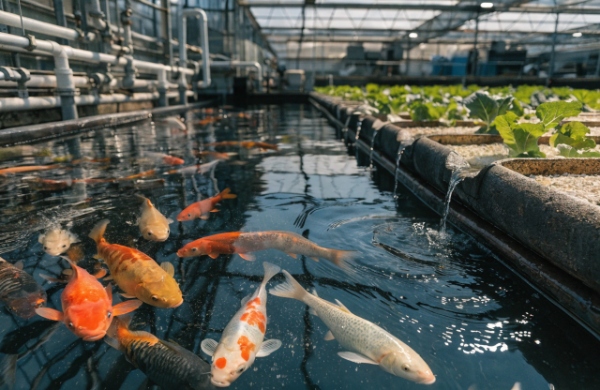
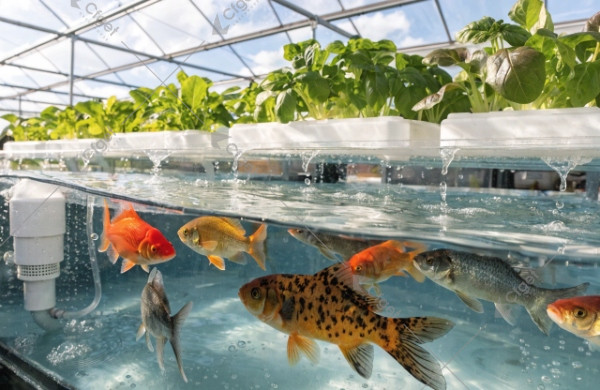
A clear water loop from fish to plants and back.
I write this like a grower and a builder. I do not want “cool concepts.” I want a system that runs every day. So I focus on design choices that reduce risk, and operating rules that a team can repeat.
YouTube (CFGET Field Video)
- Watch a real greenhouse walkthrough: Strawberry Greenhouse Design & Climate Control: Ventilation, Cooling, and Irrigation Tips (CFGET Field Video)
What you can reuse for aquaponics:- ventilation and airflow layout thinking
- shading and cooling staging habits
- daily operational routines that prevent “surprises”
Is an aquaponics greenhouse profitable, and what decides the real ROI?
If I only calculate “fish + vegetables,” I miss the real costs. Most failures come from hidden operating complexity, not from biology.
An aquaponics greenhouse can be profitable when I match crop choice to local price, keep mortality low, and reduce labor per kg. ROI is decided by climate stability, feed and energy costs, and a simple operating routine that prevents system crashes.
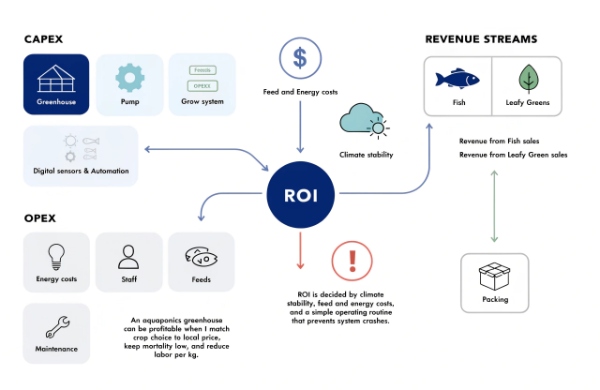
ROI depends on stability more than “maximum output.”
What I budget first (not last)
Aquaponics is a living water treatment system. That means I budget for monitoring and redundancy.
Crop-market fit
I start with crops that tolerate stable, moderate nutrient levels and have fast turnover:
- leafy greens
- basil and herbs
- some nursery starts
I avoid starting with heavy fruiting crops unless my system is mature.
Energy and climate costs
If my greenhouse overheats or overcools, fish and plants both suffer. The simplest ROI win is often reducing heat load first (shade, ventilation, insulation planning), then adding active systems only where they pay back.
Food safety and “trust cost”
When I sell “clean,” I must prove it. Food safety systems cost money. But they protect long-term sales.
For baseline safety planning, I follow recognized guidance like FAO<1> and the WHO food safety program<2>. I do not treat this as paperwork. I treat it as my brand risk control.
A practical ROI checklist I use
| ROI driver | What I measure | What I improve first |
|---|---|---|
| Plant output per m² | kg/m²/week | climate stability + light use |
| Fish survival | mortality % | oxygen, temperature, biosecurity |
| Labor efficiency | minutes per task | simpler layout + standard routines |
| Energy per kg | kWh/kg | shading + ventilation staging |
| Water stability | NH3/NO2 trend | biofilter capacity + feeding discipline |
If my numbers are stable, scaling becomes realistic.
What greenhouse design works best for aquaponics, and what layout prevents daily chaos?
A wrong layout creates daily waste. People walk too much. Pipes cross. Tanks become hard to clean. Then hygiene drops.
The best aquaponics greenhouse design is a simple, serviceable layout: fish zone + filtration zone + plant zone, with straight access lanes. I size ventilation and shading to keep water temperature stable, not only air temperature.
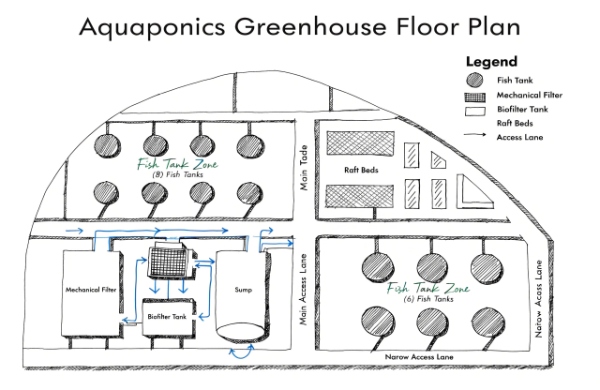
Zoning makes cleaning and troubleshooting easier.
Design rules I do not break
Rule 1: Water temperature drives everything
Fish are not “forgiving.” Water temperature swings create stress and disease. So I design climate control to protect water temperature.
Rule 2: Make cleaning fast
If I cannot clean in 20 minutes, I will not clean daily. So I plan:
- floor slope and drainage
- washable surfaces
- isolation valves
- easy access to filters and sump
Rule 3: Protect oxygen delivery
Aeration is life support. I plan redundant blowers or backup oxygen options.
Materials and structure decisions
For structure choices, I treat aquaponics like a commercial greenhouse project, not a hobby build. These internal pages help me keep the decision organized:
- https://cfgreenway.com/greenhouse/
- https://cfgreenway.com/multi-span/
- https://cfgreenway.com/polycarbonate/
A design table that prevents mistakes
| Design area | Best practice | Common mistake | Result |
|---|---|---|---|
| Fish zone | separate service lane | tanks in the middle of plant area | hygiene and handling problems |
| Filtration zone | straight pipe runs + valves | “pipe spaghetti” | leaks and downtime |
| Plant zone | uniform flow distribution | uneven flow to beds | uneven growth and algae |
| Ventilation | staged vents + airflow fans | vents exist but canopy is still dead | heat pockets and stress |
| Shading | planned staging | no shade in summer | overheated water and fish stress |
If the layout is clean, operating becomes boring. Boring is good.
How do I keep water quality stable: biofilter sizing, nitrification, and daily monitoring?
Water stability is the heart of aquaponics. If ammonia spikes, fish die first. If nitrates crash, plants stall.
I keep water stable by sizing filtration for peak feeding, keeping oxygen high, and monitoring ammonia, nitrite, pH, and alkalinity on a fixed schedule. I change feeding before I change chemicals.
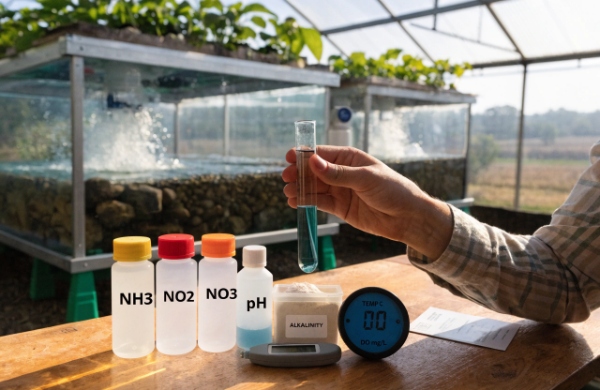
A simple test routine prevents most crashes.
The water chemistry I respect
Nitrification needs oxygen and stable pH
Biofilters need oxygen. They also slow down when pH swings.
pH is not just “a number”
pH affects fish stress and nutrient availability. I avoid fast adjustments.
Solids management is a profit tool
If solids build up, oxygen drops and pathogens rise. Mechanical filtration is not optional.
A monitoring routine I can actually follow
| Frequency | What I check | Why it matters |
|---|---|---|
| Daily | temperature, DO, fish behavior | early stress signals |
| 3× per week | ammonia, nitrite | crash prevention |
| Weekly | nitrate, alkalinity | plant nutrition and buffer |
| Monthly | system cleaning audit | long-term stability |
For public reference on aquaponics and system thinking, I align with educational sources like USDA (Food Systems and agriculture resources)<3> and academic extension materials from major universities when I train staff. The point is not “authority for marketing.” The point is using repeatable methods.
A stability table I use during heat waves
| Symptom | Likely cause | First action | Second action |
|---|---|---|---|
| fish gasping | low DO | increase aeration | reduce feeding |
| cloudy water | solids overload | clean filters | reduce feed and check flow |
| plant yellowing | nutrient imbalance | check pH + nitrate | adjust crop choice or supplementation plan |
| ammonia rising | biofilter overloaded | cut feeding | add biofilter capacity long-term |
If I keep the water stable, plants become easy.
What are the biggest disease and food-safety risks, and how do I prevent them in the greenhouse?
Aquaponics adds one more layer of responsibility: fish + plants + water + workers. If hygiene fails, everything fails.
I reduce disease and food-safety risk by separating clean and dirty zones, using safe water-handling routines, and building a simple biosecurity checklist. I also keep records so I can prove consistency to buyers.
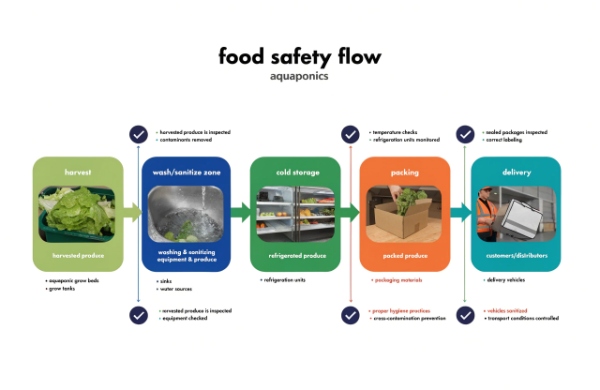
Risk points I watch first
Fish health and quarantine
New fish can bring disease. I quarantine and observe before mixing.
Plant handling and harvesting
Harvest is where contamination risk rises. I train staff on clean tools and clean bins.
Water contact surfaces
Slime and biofilm grow in warm systems. I schedule cleaning.
For safety framing, I follow public, non-commercial standards and education:
I do not claim aquaponics is “zero risk.” I build a system that controls risk.
A simple biosecurity table
| Area | Rule | What I log |
|---|---|---|
| fish intake | quarantine | date, supplier, mortality |
| tools | daily sanitation | checklist sign-off |
| harvest | clean-only zone | batch and time |
| visitors | controlled entry | visitor log |
This is how I protect long-term sales, not just today’s harvest.
Conclusion
A profitable aquaponics greenhouse is a stability machine. I design for climate control, water control, and repeatable routines. Then I choose crops that match the system. That is how I avoid crashes and grow clean, consistent product.
Aquaponics Greenhouse: How to Design a Stable System for Fish Health, Clean Vegetables, and Real ROI
Learn how I design and operate an aquaponics greenhouse: layout zoning, climate control, water quality routines, biofilter thinking, and food-safety habits that keep the system stable and profitable.
External Links Footnotes (Authority Sources)
1> https://www.fao.org/food-safety/en/
<2> https://www.who.int/health-topics/food-safety
<3> https://www.usda.gov/topics
—
## Internal References (CFGET)
– **CFGET Homepage**
– **Commercial Greenhouse Systems**
– **Multi-span Film Greenhouse**
– **Polycarbonate Greenhouse**
– **Smart Auto & Control Solutions**
– **Temperature Solutions**
– **Humidity Solutions**
– **Irrigation Solutions**
https://cfgreenway.com/solutions/irrigation/
– **Contact**
—
## Internal Blog References (Related CFGET Articles)
– **Hydroponic Greenhouse Systems: Investment vs Yield, ROI Models, and Payback Periods**
Hydroponic Greenhouse System Investment vs Yield: Real ROI Models, Break-Even Yield & Payback Years?
– **How to Set Up a Commercial Greenhouse: An Essential Guide for Growers and Agribusinesses**
How to Set Up a Commercial Greenhouse: Essential Guide for Growers & Businesses?
– **How Much Does It Cost to Build a Smart Greenhouse? Hidden Costs You Should Know**
How Much Does It Cost to Build a Smart Greenhouse? What Are the Hidden Costs?
– **Greenhouse Irrigation Systems: Complete Guide to Drip & Fertigation**
Greenhouse Irrigation Systems: The Ultimate Guide to Boosting Yields & Saving Water
– **Why Sawtooth Greenhouses Beat the Heat with Zero-Energy Natural Ventilation**
https://cfgreenway.com/sawtooth-greenhouses-beat-the-heat-with-zero-cost-natural-ventilation/