Cracked cherry tomatoes can destroy my marketable rate in days. When heat spikes and irrigation swings, my fruit skin cannot keep up.
To stop tomato cracking in Almería, Spain, I first stabilize irrigation pulses, then control VPD with shading + ventilation, and finally keep root-zone EC and pH steady. This improves firmness, raises Brix, and increases Grade-A yield.
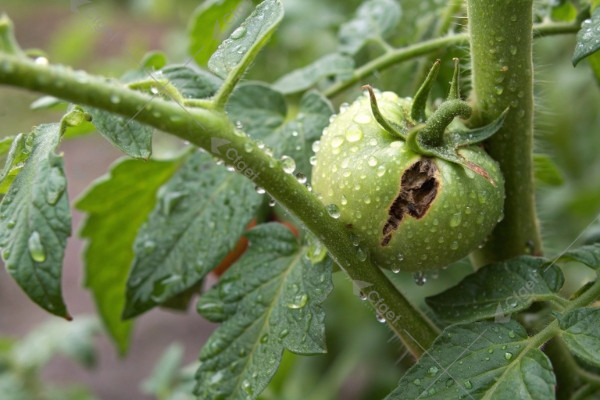
Cracked vs healthy fruit linked to climate and irrigation.
I am writing this like a grower who gets paid by marketable boxes, not by “plant health theory.” Almería is a global greenhouse region, and it proves that greenhouse tomatoes can scale when systems are stable. NASA Earth Observatory<1> But cracking is still common here because solar load changes fast and growers sometimes “chase the weather” with irrigation. I do the opposite. I build a routine that stays calm when the sun is not calm.
Why do tomatoes crack in Almería greenhouses even when my nutrition looks correct?
Cracking is not only a fertilizer issue. It is usually a water-balance issue that shows up as fruit skin failure.
Tomatoes crack when the plant moves water into fruit too quickly after a dry period, or when root-zone EC and VPD swings cause uneven water uptake. The fix is stability, not more fertilizer.
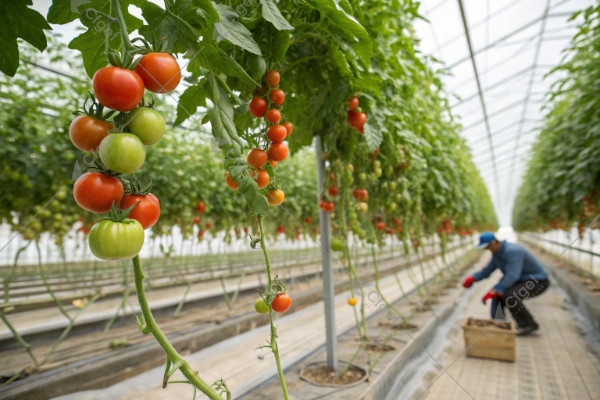
I focus on stability before recipes.
Dive deeper
In Almería, the sun can jump quickly from mild to extreme. When radiation rises, transpiration rises. If I delay irrigation, the plant experiences a short “dry stress.” Then many growers over-correct with a long irrigation run. That causes rapid water uptake and fast fruit expansion. The skin cannot expand at the same speed, so cracking appears.
I use VPD as a daily decision tool because VPD describes the driving force for transpiration better than RH alone. Michigan State University Extension<2> If VPD swings hard, plant water flow swings hard, and cracking risk rises. I do not need perfect numbers. I need fewer swings.
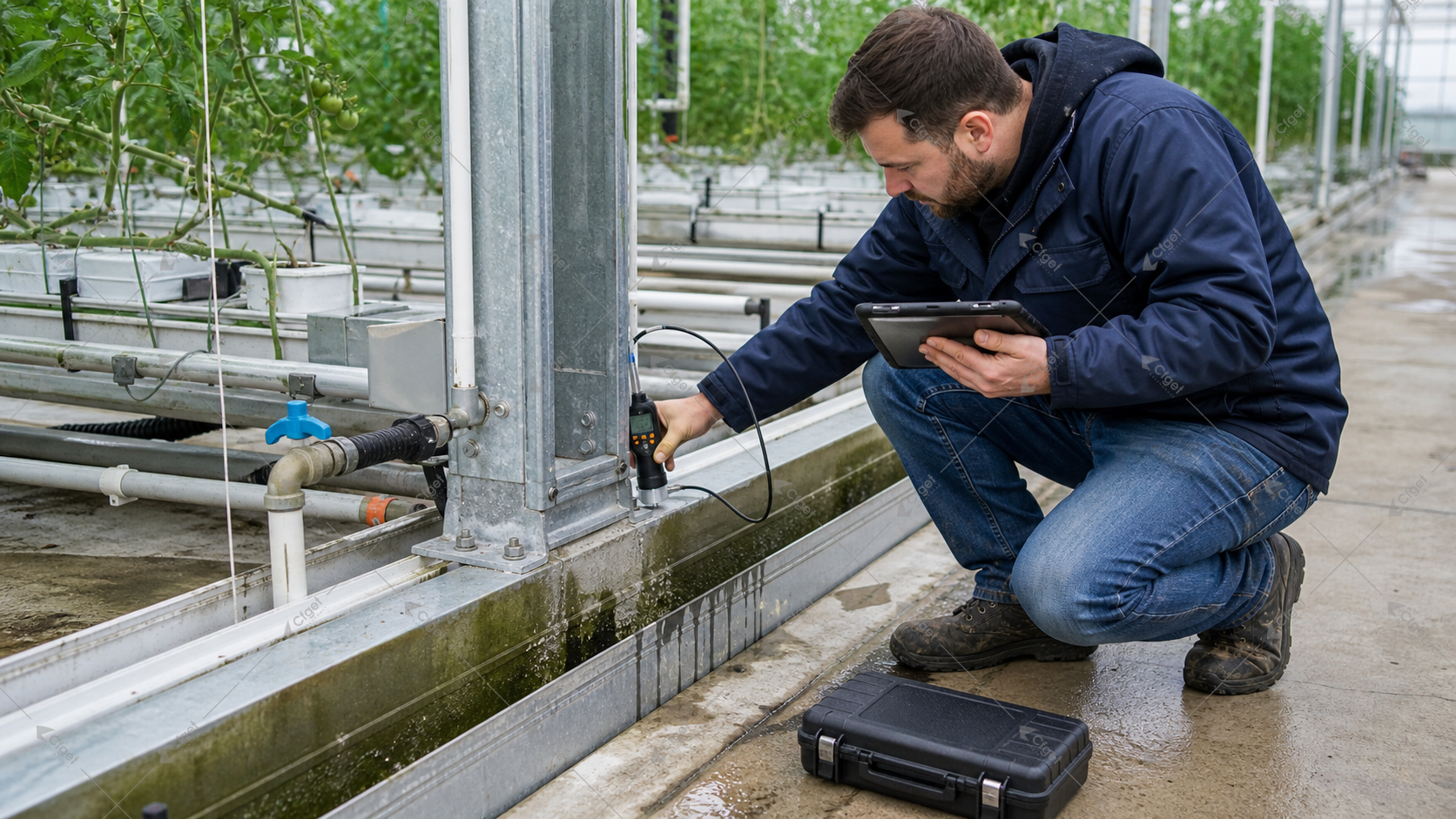
I also watch root-zone EC. If drain EC slowly rises, the plant becomes more sensitive to sudden irrigation changes. That makes cracking worse. So I stabilize pulses and keep a predictable drain percentage.
Here is the fast diagnosis table I use:
| Symptom I see | Most likely driver | My first check | My first fix |
|---|---|---|---|
| Cracks after hot day | irrigation swing + high VPD | pulse timing | increase frequency, reduce volume |
| Cracks after cool morning | over-irrigation after dry night | first irrigation time | earlier small pulses |
| Cracks + low Brix | too much water late | afternoon program | reduce late watering |
| Cracks + blossom-end issues | unstable water flow | VPD + EC trend | stabilize VPD and EC |
If I fix stability, I usually see Brix rise naturally because the plant stops “panic drinking.”
How do I design irrigation pulses to reduce cracking and increase marketable rate?
Many growers think “more water = safer.” In cracking, that is often wrong.
I reduce cracking by using frequent short pulses, keeping drain % stable, and avoiding late heavy irrigation. The goal is smooth root-zone moisture, not maximum wetness.
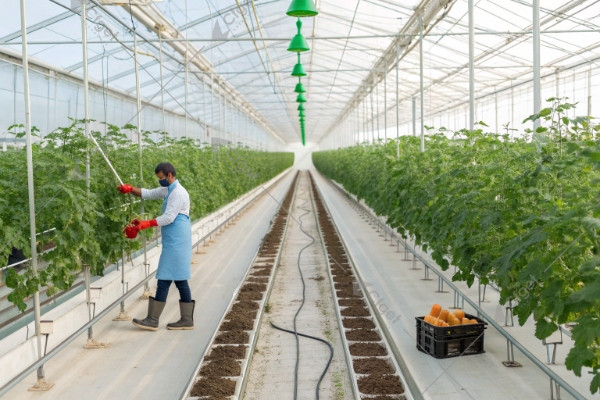
Short pulses protect fruit skin.
Dive deeper
I set my irrigation program around radiation and crop load, not around a fixed clock. I start earlier with small pulses, then increase frequency as radiation increases. I avoid long gaps. Long gaps cause stress. Stress causes a snap-back effect when water returns.
If I use cooling systems, I never let them force my irrigation into a reactive pattern. In humid moments, evaporative cooling can add moisture to the air and change plant transpiration patterns. Fan-and-pad limits and behavior are described clearly by University of Florida IFAS Extension<3>. If I ignore that, I may cool air and raise humidity, and then my plant transpiration changes suddenly. That also raises cracking risk.
I also keep pH stable so nutrient uptake does not “jump.” A practical greenhouse tomato pH target reference is provided by Mississippi State University Extension<4>. I use it as a baseline and adjust slowly.
My pulse rules (simple and repeatable)
- I increase pulse frequency when radiation rises.
- I keep each pulse short and controlled.
- I track drain EC trend, not only feed EC.
My “late day” rules to protect Brix
- I reduce late heavy watering.
- I avoid pushing vegetative growth late in the day.
- I keep night humidity risk in mind.
A quick control table:
| Control item | Target behavior | If it drifts | What I change |
|---|---|---|---|
| Pulse frequency | smooth moisture curve | long dry gaps | add pulses, smaller volume |
| Drain % | stable and predictable | EC creep up | increase drain %, earlier pulses |
| pH stability | stable uptake | leaf symptoms | adjust slowly, retest |
| Late irrigation | light and controlled | low Brix | reduce last pulse size |
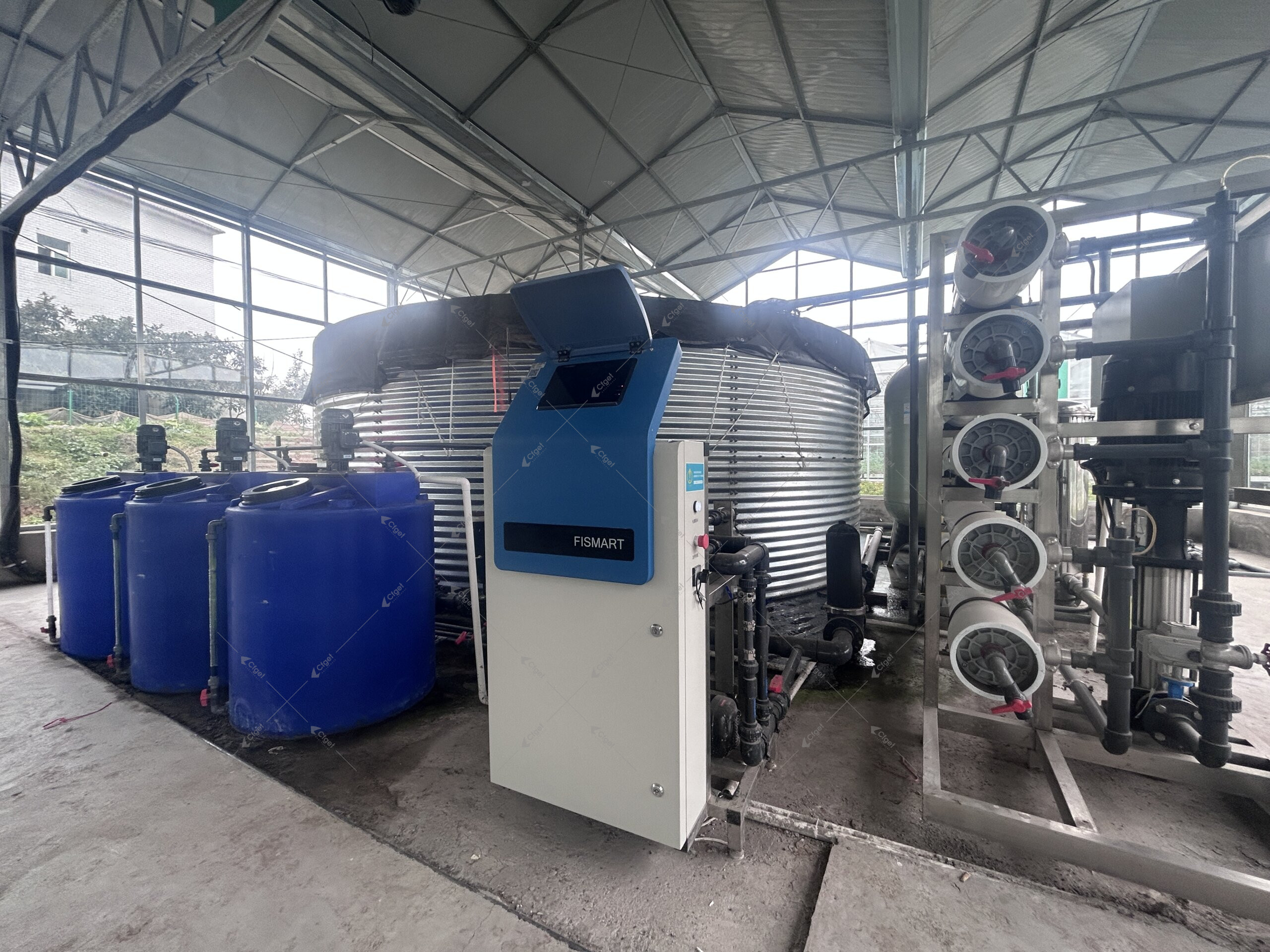
If I want this stable across weeks, I connect sensors and logic through Smart Auto & Control Solutions.
How do I control VPD in Almería to improve firmness and Brix?
If VPD is unstable, my plant water flow is unstable. That hurts fruit firmness and flavor.
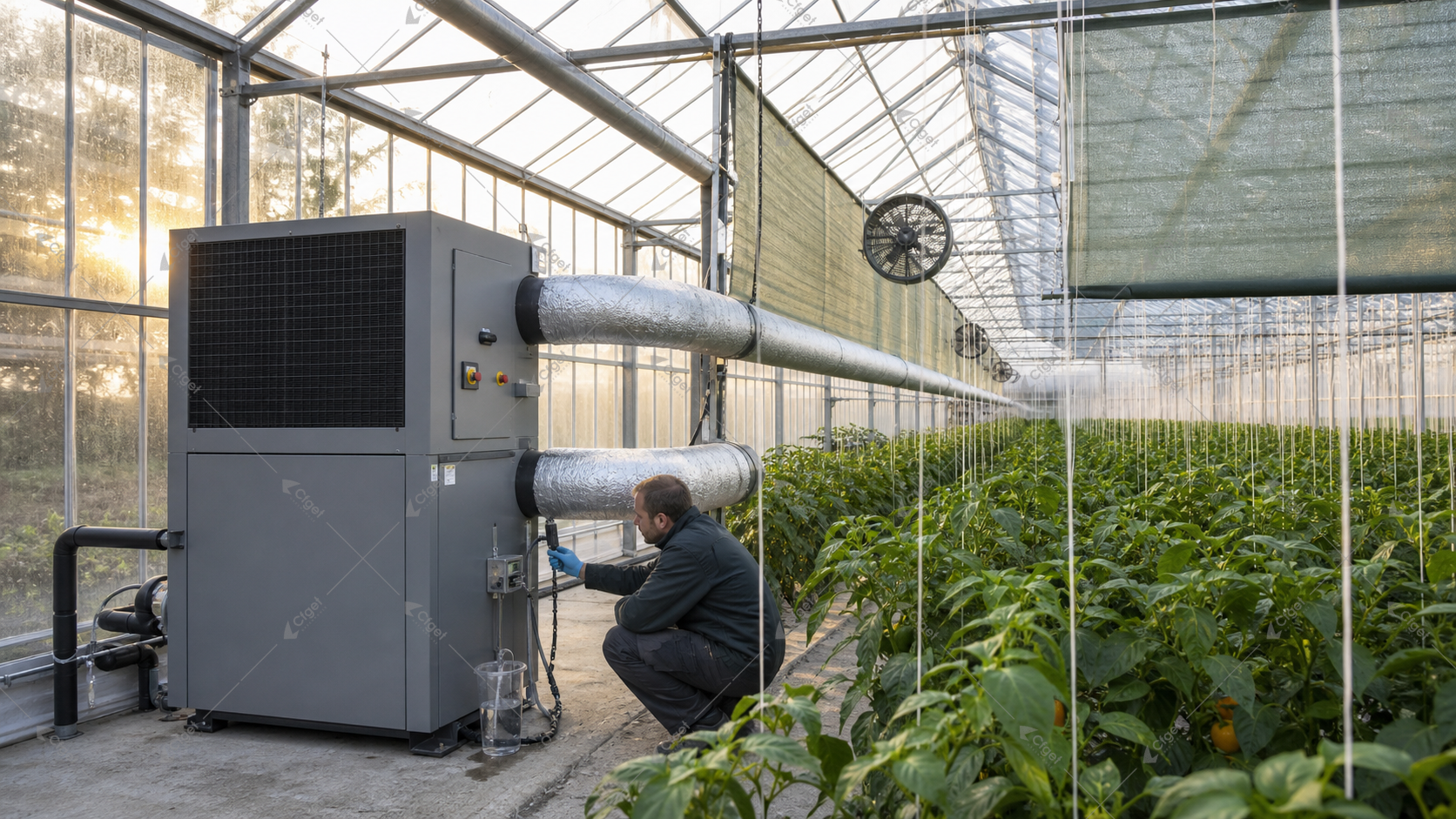
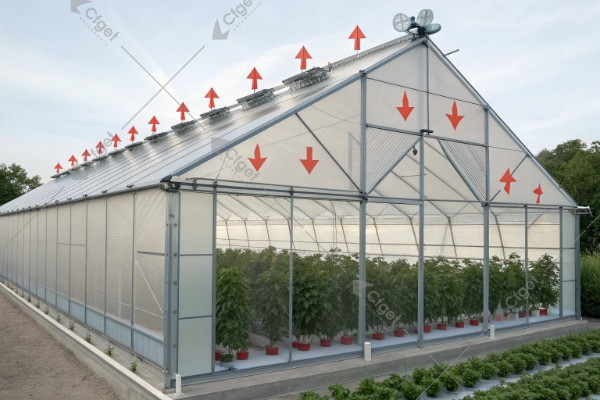
I stabilize VPD by reducing solar load first with shading, then improving air exchange with ventilation, and finally using airflow fans to remove microclimate pockets. Stable VPD means stable fruit filling.
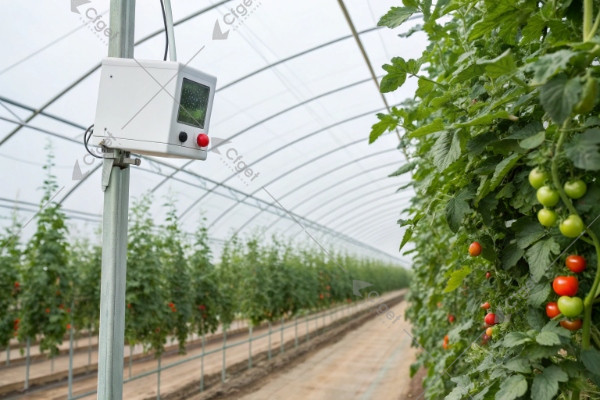
Stable VPD supports firm, sweet fruit.
I manage load before cooling.
Dive deeper
I do not chase “cool air.” I chase “stable plant behavior.” In Almería, the sun is strong, so I reduce heat load first. I use shading and ventilation as my first tools. On our site, these structure pages help me connect design choices to climate performance:
Multi-span Film Greenhouse
https://cfgreenway.com/multi-span/Wide-span Greenhouse
https://cfgreenway.com/wide-span/Sawtooth Greenhouse
https://cfgreenway.com/sawtooth/
I also use shading solutions as a practical lever:
- Shade Net & Rain Shelter Systems
https://cfgreenway.com/shade-net-rainshelter/
VPD logic is explained in a grower-friendly way by Michigan State University Extension<2>. I use that to avoid the mistake many pages make: they talk about RH only. RH alone can look “fine” while the canopy is unstable.
My midday VPD routine
- Shade first to cut solar load.
- Vent second to exchange air.
- Circulation fans third to remove dead zones.
My night risk routine
- Avoid heavy late irrigation.
- Maintain gentle airflow to prevent condensation pockets.
A quick decision table:
| Condition | What happens | My first action | My second action |
|---|---|---|---|
| High heat + high VPD | plant stress | shade | increase ventilation |
| Moderate heat + low VPD | disease risk | airflow fans | adjust vent timing |
| Big swings | cracking risk | stabilize shading stages | stabilize irrigation pulses |
Stable VPD supports stable fruit filling. That is the real anti-cracking strategy.
How do I manage root-zone EC and pH to support higher Brix?
If EC and pH drift, the crop becomes unstable. That instability shows up as uneven sizing, softer fruit, and lower Brix.
I raise Brix by keeping root-zone EC in a stable band and holding pH in a crop-safe range, so uptake stays consistent and the plant does not swing between stress and excess water.
Dive deeper
I use EC as a “trend tool,” not as a daily panic trigger. If my drain EC rises slowly over days, it tells me salts are building and the plant is becoming more sensitive. Then any irrigation correction becomes risky. That is why I pair EC tracking with stable drain percent.
For pH, I follow practical greenhouse tomato references like Mississippi State University Extension<4> to keep uptake stable. I do not chase extreme “flavor tricks.” Many flavor tricks reduce yield or increase rejection. I want both.
To validate that fertigation and irrigation efficiency are proven yield levers, I use research collections such as FAO AGRIS<5>. I use it to confirm the direction, then I apply it with my greenhouse data.
My EC stability rules
- Track drain EC trend, not only feed EC.
- Use pulse frequency and drain % to control drift.
- Adjust gradually.
My pH stability rules
- Calibrate sensors regularly.
- Retest after any dosing change.
- Keep changes small.
A structured table for daily action:
| Trend | Meaning | Risk | My adjustment |
|---|---|---|---|
| Drain EC rising | salt buildup | cracking sensitivity | earlier pulses + stable drain % |
| Drain EC falling too low | weak uptake | low Brix | small feed increase |
| pH drifting high | micronutrient risk | leaf symptoms | adjust acid, retest |
| pH drifting low | root stress risk | growth slows | correct dosing gradually |
If I keep EC and pH stable, my fruit is more uniform and my Brix improves without sacrificing yield.
Conclusion
To stop tomato cracking in Almería, I focus on stability. I run pulse irrigation, control VPD with shading and ventilation, and keep root-zone EC and pH steady. This increases marketable rate and raises Brix.
External Links Footnotes (Authority Sources)
1> https://science.nasa.gov/earth/earth-observatory/almerias-sea-of-greenhouses-150070
<2> https://www.canr.msu.edu/news/why_should_greenhouse_growers_pay_attention_to_vapor_pressure_deficit_and_n
<3> https://edis.ifas.ufl.edu/publication/AE069
<4> https://www.extension.msstate.edu/agriculture/crops/commercial-horticulture/greenhouse-tomatoes/what-ph-should-i-use
<5> https://agris.fao.org/
<6> https://climateknowledgeportal.worldbank.org/
—
## Internal References (CFGET)
– **CFGET Homepage**
– **Commercial Greenhouse Systems**
– **Multi-span Film Greenhouse**
– **Wide-span Greenhouse**
– **Sawtooth Greenhouse**
– **Shade Net & Rain Shelter Systems**
– **Pest Barriers**
– **Smart Auto & Control Solutions**
– **Contact**
—
## Internal Blog References (Related CFGET Articles)
– **Choosing the Best Greenhouse for Tomato Plants: Key Design and Climate Considerations**
Choosing the Best Greenhouse for Your Tomato Plants: Key Considerations?
– **How to Set Up a Commercial Greenhouse: An Essential Guide for Growers and Agribusinesses**
How to Set Up a Commercial Greenhouse: Essential Guide for Growers & Businesses?
– **Hydroponic Greenhouse Systems: Investment vs Yield, ROI Models, and Payback Periods**
Hydroponic Greenhouse System Investment vs Yield: Real ROI Models, Break-Even Yield & Payback Years?
– **How Much Does It Cost to Build a Smart Greenhouse? Hidden Costs You Should Know**
How Much Does It Cost to Build a Smart Greenhouse? What Are the Hidden Costs?
– **Why Sawtooth Greenhouses Beat the Heat with Zero-Energy Natural Ventilation**
https://cfgreenway.com/sawtooth-greenhouses-beat-the-heat-with-zero-cost-natural-ventilation/