Extreme heat can destroy fruit set in a few afternoons. If my cooling plan is wrong, I lose yield, raise disease risk, and still pay high energy bills.
In Almería extreme heat, the best tomato greenhouse cooling strategy is a staged system: cut solar load first, move more air second, then use evaporative cooling only when outside humidity allows. This keeps canopy temperature and VPD stable, so yield and Brix stay strong.
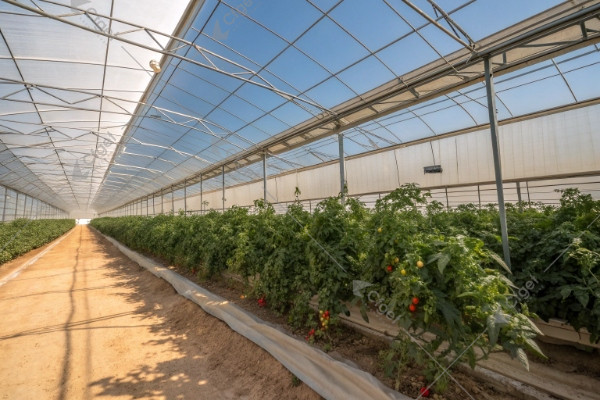
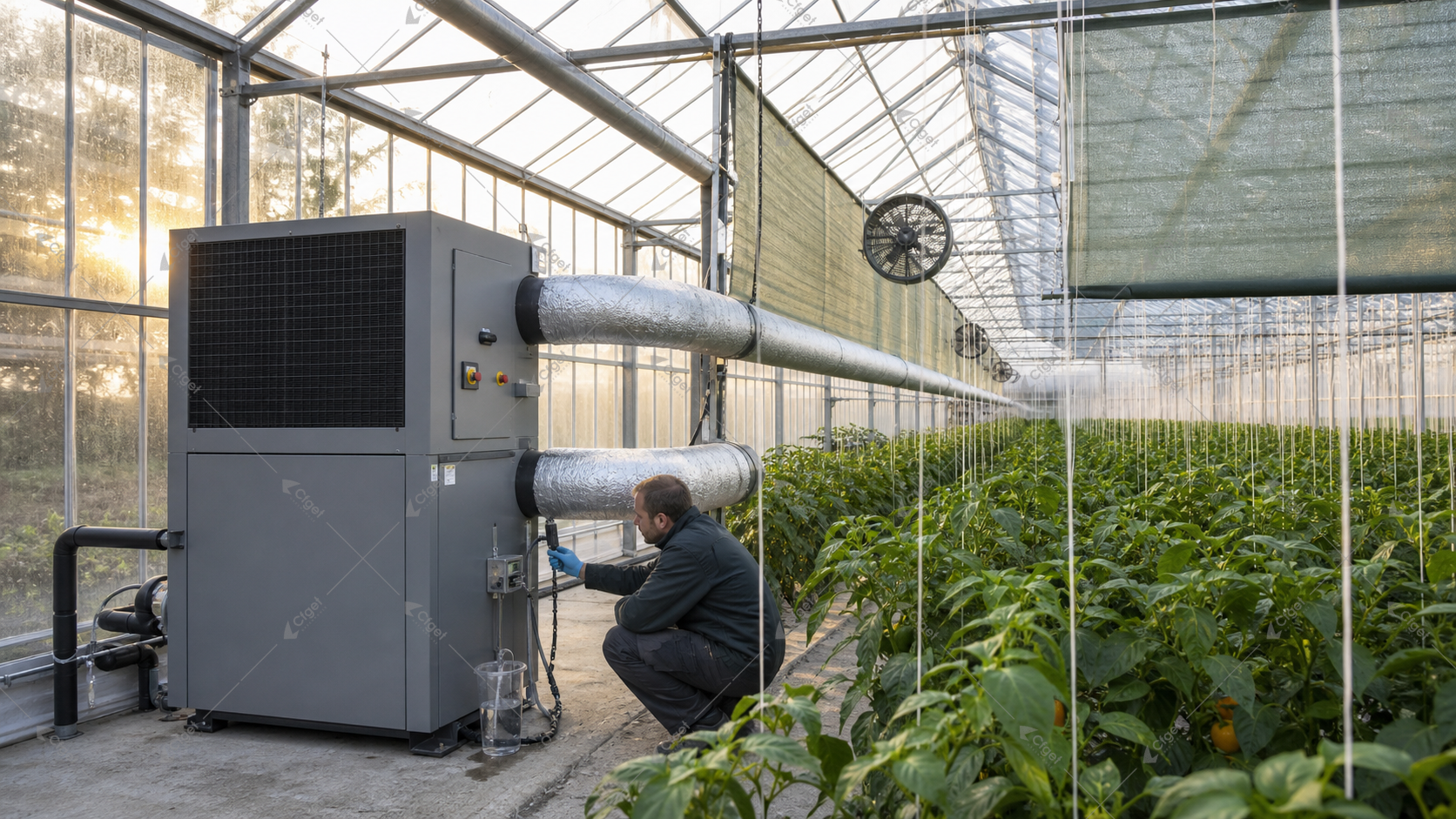
A staged cooling setup running during midday heat.
Almería’s “sea of greenhouses” is proof that protected cropping can scale in a dry, sunny region. NASA Earth Observatory<1> I use that as a reality check: the winners here do not chase gadgets. They run stable systems that protect fruit set and flavor.
Which cooling system works best for tomatoes in Almería extreme heat?
When heat hits, many growers jump straight to “stronger cooling.” That often adds humidity, creates gradients, and reduces fruit quality.
The best cooling system is not one device. It is a sequence: shading or whitening to reduce load, then ventilation to remove heat, then evaporative cooling only when it is effective. The goal is stable canopy temperature and VPD.
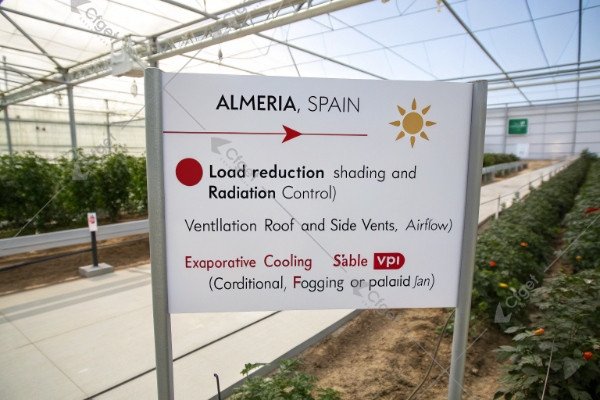
Cooling is a sequence, not a single machine.
A sequence prevents over-cooling and wet air.
Dive deeper
I start with one mindset: cooling capacity must match heat load. In Almería, solar radiation is intense. If I try to “cool my way out” without reducing load, I pay more and still suffer stress.
I build my plan around three layers:
1) Load reduction
Shading, reflective roofs, and smart screen staging reduce the amount of heat entering the greenhouse. This is the cheapest “cooling” per square meter because it prevents heat from entering.
2) Heat removal by air exchange
Natural or forced ventilation removes sensible heat. UC Davis explains that forced-air ventilation and fan systems can provide meaningful cooling, but gradients happen when air distribution is weak. UC Davis Greenhouse Climate Control<2> I treat distribution as part of cooling, not a separate topic.
3) Evaporative cooling as a conditional tool
Fan-and-pad or fogging can work, but it depends on outside humidity. UC Davis notes fan-and-pad cooling effectiveness depends on relative humidity. UC Davis Greenhouse Climate Control<2> If I ignore this, I can “cool” air while pushing RH into a disease range.
Here is the decision table I use:
| Outside condition | Best first move | If still too hot | Avoid this mistake |
|---|---|---|---|
| Hot + dry | shade/reflect | ventilation, then evap cooling | adding water before reducing load |
| Hot + humid spike | shade/reflect | ventilation + airflow | pushing pads/fog and trapping moisture |
| Hot + low wind | forced ventilation | airflow distribution | “fans on” but canopy still stagnant |
I do not chase the lowest air temperature. I chase stable plant behavior and stable fruit set.
How do I size ventilation and stop hot spots that ruin fruit set?
Many greenhouses “have vents,” but fruit set still drops because heat is uneven. One corner can be 3–5°C hotter than the sensor location.
I stop hot spots by increasing real air exchange, improving inlet design, and forcing uniform canopy airflow. A greenhouse is only as cool as its hottest zone.
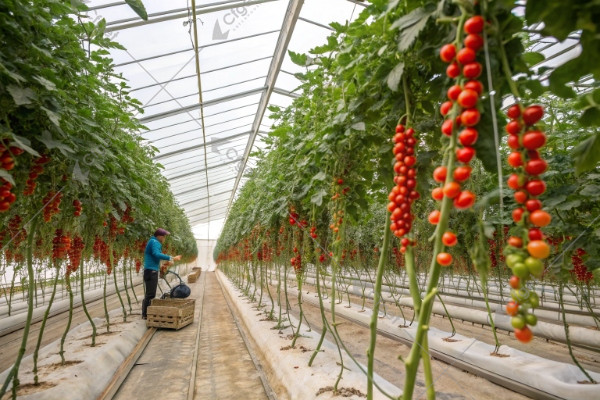
Uniform airflow protects pollen and fruit set.
Dive deeper
I separate two jobs: air exchange and air distribution.
- Air exchange removes heat and moisture from the building.
- Air distribution makes sure the canopy actually experiences that exchange.
UC Davis points out that ventilation can create gradients if the layout relies on certain openings, and distribution matters for uniform conditions. UC Davis Greenhouse Climate Control<2> This is exactly why “I opened vents” is not equal to “my crop cooled.”
My practical ventilation checklist:
- I confirm the airflow path from inlet to outlet.
- I avoid short-circuiting where air exits before reaching the canopy.
- I add circulation fans to break dead zones at crop level.
- I track multiple sensors, not one sensor near a walkway.
Structure choice also sets the ceiling of what ventilation can achieve. These CFGET pages help me match structure to ventilation performance in hot climates:
In extreme heat, I also reduce resistance to airflow. Fewer obstructions means fewer hot pockets. That is one reason wide-span layouts often run more uniformly.
A simple troubleshooting table:
| Symptom | What it usually means | My fastest test | My fix |
|---|---|---|---|
| Fruit set drops only in one block | hot spot | move a sensor to that block | airflow fan + inlet adjustment |
| Leaves curl at midday near walls | poor mixing | smoke test / ribbon test | add mixing or perforated tube inlet |
| RH differs between zones | uneven exchange | log 3-zone RH | balance vents + fan staging |
If the canopy feels the same everywhere, fruit set stabilizes everywhere.
When should I use fan-and-pad or fogging in Almería, and how do I avoid humidity traps?
Evaporative cooling can save a crop. It can also create Botrytis conditions if I run it blindly.
I use fan-and-pad or fogging when outside air is dry enough to absorb moisture. I avoid it during humidity spikes, and I always pair it with airflow and clear vent/door sealing rules.
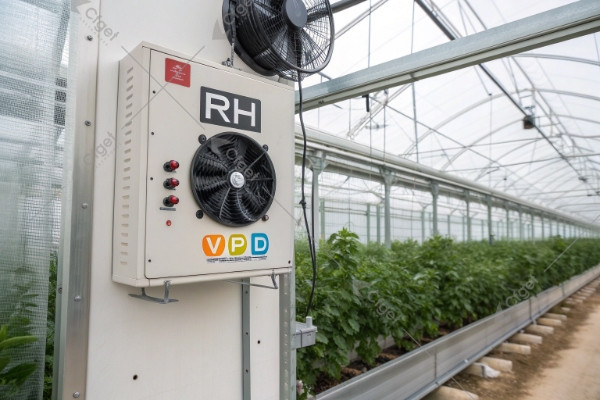
Evaporative cooling needs humidity limits and sealing.
Humidity limits prevent disease pressure.
Dive deeper
I treat evaporative cooling as a tool with a rule: it is only effective when the air can still absorb water.
UC Davis explains fan-and-pad cooling depends on relative humidity and requires closing roof vents and doors for proper operation. UC Davis Greenhouse Climate Control<2> UF/IFAS also explains fan-and-pad systems and how outside conditions affect performance. UF/IFAS Extension<3> These points are easy to ignore, but they decide whether evaporative cooling helps or harms.
My operating rules:
- I run pads/fog only when humidity allows real cooling.
- I avoid mixing “open vents” with pad operation unless the design is built for it.
- I watch canopy-level humidity, not only a sensor near the controller.
- I prevent wet zones by maintaining uniform airflow.
Here is the control table I use:
| Mode | What I close/open | What I watch | Stop condition |
|---|---|---|---|
| Ventilation cooling | vents open | canopy temp + VPD | hot spot persists |
| Pad cooling | vents/doors sealed by rule | RH/VPD + temp gradient | RH too high for too long |
| Fogging | staged pulses | leaf wetness risk | droplets visible on leaves |
If I want fewer mistakes from operators, I rely on control staging and alarms. That is why I connect these rules into Smart Auto & Control Solutions:
https://cfgreenway.com/solutions/smart-auto-control/
The best evaporative cooling is the one that cools without creating wet hours.
How do I keep VPD stable so I cool the greenhouse without losing Brix?
If I cool too aggressively, VPD can crash. Then transpiration slows, fruit flavor softens, and disease pressure rises.
I keep VPD stable by reducing solar load first, avoiding sudden humidity jumps, and maintaining steady airflow at canopy level. Stable VPD supports steady transpiration, so Brix and firmness stay strong.
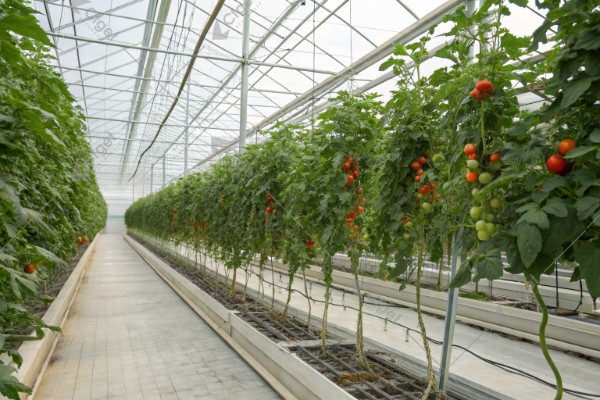
Stable VPD helps keep taste and firmness.
Stable transpiration supports higher Brix.
Dive deeper
VPD is my bridge metric because it connects temperature and humidity to plant behavior. Michigan State University Extension explains why VPD is useful for growers and how it relates to water loss and stress. MSU Extension<4> I use VPD because tomatoes are sensitive during flowering and fruit filling.
My “VPD-first cooling” routine:
- I shade early so temperature rise is slower.
- I ventilate to remove heat without flooding the greenhouse with wet air.
- I use evaporative cooling only when it will reduce temperature without pushing RH into a long wet period.
- I keep airflow steady so canopy conditions do not swing by zone.
I also link cooling to irrigation timing. If I cool and then over-irrigate late, I create a humid night. That increases disease risk and weakens fruit quality. If the greenhouse is built for automation, I run climate and irrigation staging together so plant water balance stays smooth.
A practical table I use:
| If VPD is… | What I see | What I change first | What I avoid |
|---|---|---|---|
| Too low for long | slow drying, disease risk | airflow + vent timing | adding more water cooling |
| Too high for long | stress, poor set | shade + controlled cooling | “full vent” during hottest hour |
| Swinging hard | cracking risk | smooth stages | sudden large changes |
This is how I cool without paying for lower Brix later.
Conclusion
In Almería extreme heat, tomato greenhouse cooling works when it is staged. I reduce solar load, increase real air exchange, and use evaporative cooling only when humidity allows it. This keeps VPD stable, protects fruit set, and preserves Brix.
External Links Footnotes (Authority Sources)
1> https://science.nasa.gov/earth/earth-observatory/almerias-sea-of-greenhouses-150070
<2> https://lieth.ucdavis.edu/Extension/GrhTransplant/1_GreenhouseBasics/GrhEnv/HCplain.html
<3> https://edis.ifas.ufl.edu/publication/AE069
<4> https://www.canr.msu.edu/news/why_should_greenhouse_growers_pay_attention_to_vapor_pressure_deficit_and_n
—
## Internal References (CFGET)
– **CFGET Homepage**
– **Commercial Greenhouse Systems**
– **Smart Auto & Control Solutions**
– **Multi-span Film Greenhouse**
– **Wide-span Greenhouse**
– **Sawtooth Greenhouse**
– **Shade Net & Rain Shelter Systems**
– **Contact**
—
## Internal Blog References (Related CFGET Articles)
– **Choosing the Best Greenhouse for Tomato Plants: Key Design and Climate Considerations**
Choosing the Best Greenhouse for Your Tomato Plants: Key Considerations?
– **How to Set Up a Commercial Greenhouse: An Essential Guide for Growers and Agribusinesses**
How to Set Up a Commercial Greenhouse: Essential Guide for Growers & Businesses?
– **Hydroponic Greenhouse Systems: Investment vs Yield, ROI Models, and Payback Periods**
Hydroponic Greenhouse System Investment vs Yield: Real ROI Models, Break-Even Yield & Payback Years?
– **How Much Does It Cost to Build a Smart Greenhouse? Hidden Costs You Should Know**
How Much Does It Cost to Build a Smart Greenhouse? What Are the Hidden Costs?
– **Why Sawtooth Greenhouses Beat the Heat with Zero-Energy Natural Ventilation**
https://cfgreenway.com/sawtooth-greenhouses-beat-the-heat-with-zero-cost-natural-ventilation/