A high reading from one tomato supports a statement about that measured sample. To make a claim about a lot, you need a defined sampling plan, a consistent method and the individual results, including the less impressive ones.
Before using a °Brix figure in a buyer conversation, establish what was sampled and what the instrument measured. Keep the claim within that evidence. A soluble-solids reading does not establish complete flavor, nutritional superiority, food safety or shelf life.
What does the reading tell you?
A refractometer measures the sample’s refractive index and reports a value on its scale. Ohio State University’s °Brix measurement guide treats the result as an indicator of soluble solids and potential sweetness, while emphasizing limits on broader quality claims.
In fruit juice, report the value as a soluble-solids reading under the stated method. Do not relabel it as a complete sugar analysis. The reading can be commercially useful without carrying more meaning than the test provides.
Tomato flavor has several dimensions. A 2008 study by Clément, Dorais and Vernon examined soluble solids alongside acidity, pH, firmness and other attributes. Its research categories are not a current buyer specification. Use the buyer’s agreed product requirements rather than borrowing a threshold to describe every tomato as premium.
Define the lot before choosing fruit
Record cultivar, crop block, product grade, maturity definition and picking interval. State whether the lot covers one harvest, several picks or another traceable production unit. A claim about one cultivar and maturity group should not silently include different fruit.
Choose the sampling locations and selection rule before measuring. Ask the buyer or quality adviser to agree sample size and acceptance logic where a commercial specification depends on the result. Do not select only the reddest, largest or most attractive fruit after deciding that a high number would help the sale.
Separate the number of fruit from the number of readings. Repeating a measurement on one fruit can help examine measurement consistency, but it does not create additional independently sampled fruit. Keep both counts in the record.
Ohio State recommends representative material from different growing locations and consistent sample preparation. Use those principles to document how the sample relates to your stated lot, without presenting a few convenient fruit as proof of the whole greenhouse.
Keep the measurement method consistent
Record instrument identity, method, check result and the manufacturer’s applicable instructions. Note sample temperature and how compensation is handled. Temperature affects refractive measurements, and a compensation feature still needs to be used within the instrument’s instructions.
Define the sampled portion and preparation method. Keep that method consistent between fruit and lots. Record any change rather than treating two preparation methods as interchangeable. Residual water or sample carryover can distort a reading; follow the documented cleaning and preparation procedure.
Assign each fruit an ID before preparation. Link every repeat reading to that ID, along with the operator, time and any exclusion reason. If a result is rejected because of a documented measurement problem, preserve the original entry and the reason instead of deleting an inconvenient low value.
The method should be agreed before results are visible. This article does not set instrument tolerances or a crop-wide sampling frequency. Those depend on the meter, purpose and acceptance plan.
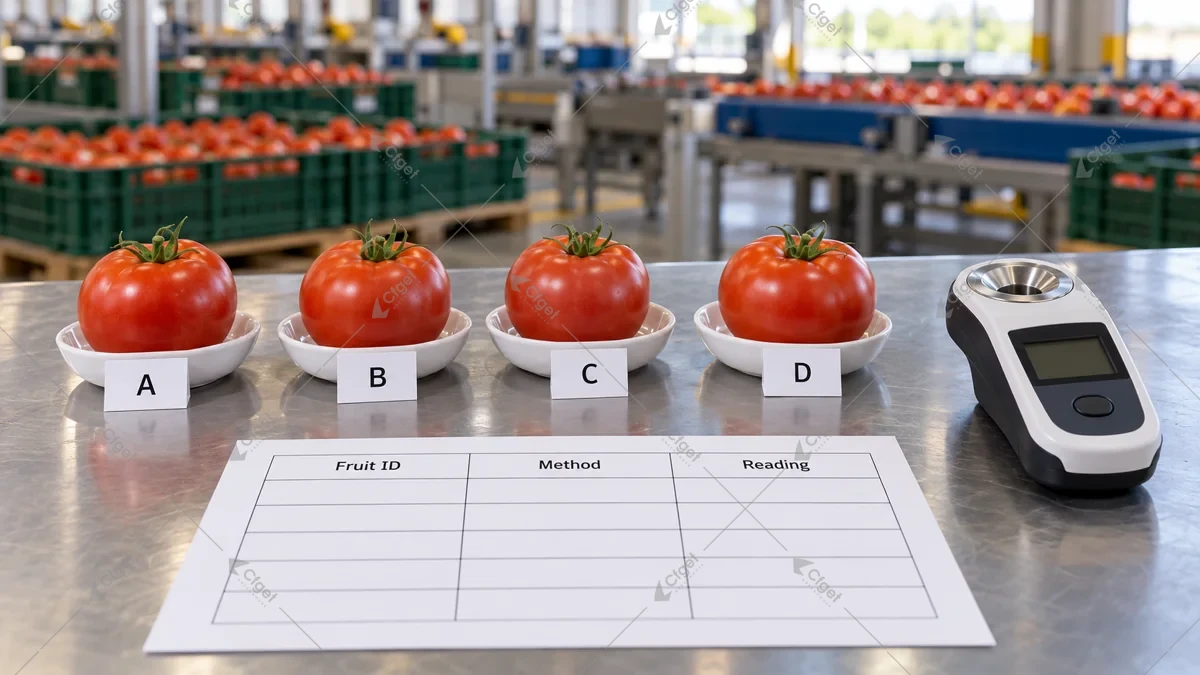
Use a sample-to-claim ledger
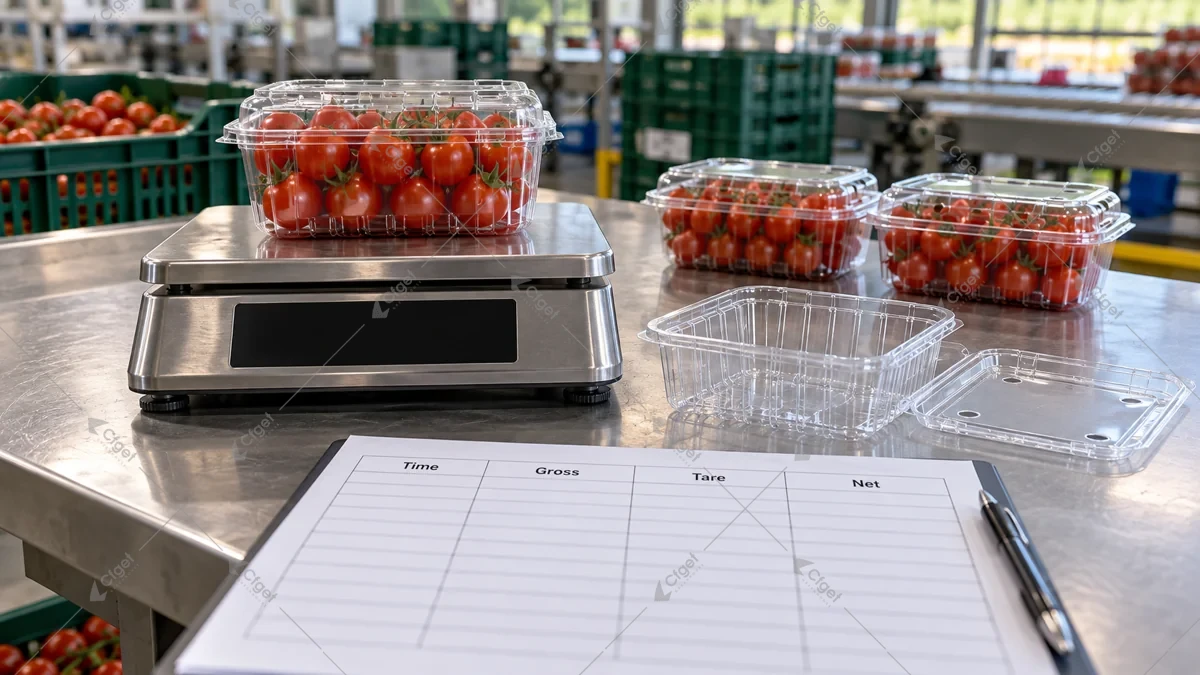
Download the individual-fruit ledger and the claim review card. The ledger preserves observations; the card records what those observations can support.
| Evidence group | Record |
|---|---|
| Lot | Product, cultivar, block, grade, maturity and picking interval |
| Selection | Locations, selection rule, planned fruit count and actual coverage |
| Specimen | Fruit ID, sampled portion, preparation and elapsed time before reading |
| Instrument | Meter ID, check result, instructions and temperature/compensation evidence |
| Results | Individual values, linked repeats, exclusions and missing observations |
| Summary | Fruit count, method of combining repeats, center and spread of results |
| Claim | Exact proposed wording, covered lot or period, specification and approval |
Retain the distribution as well as a summary. A maximum answers which measured sample was highest; it does not describe the typical sampled fruit. A mean can hide a wide spread, so keep individual values and a suitable measure of spread available for review.
If some fruit were measured more often than others, do not accidentally give them more weight in the lot summary. Apply the agreed method for combining repeats within each fruit before summarizing across fruit. State what you did.
Three different levels of claim
One measured sample: identify the sample, date and method. The wording should remain about that specimen. It does not establish a lot minimum or guarantee what another fruit will read.
A defined sampled lot: identify the lot and sampling basis, report the agreed summary and disclose relevant variation or limitations. A lot-level statement requires evidence that the plan and coverage support it.
Repeated comparable lots: retain results from each lot and describe the period, product and conditions covered. Consistency over those lots is not a promise about every future harvest or another cultivar.
Any buyer pass/fail limit belongs in the agreed specification with its sampling and acceptance method. Do not invent a universal premium-tomato °Brix threshold or translate one strong sample into a price claim.
What should a surprising result change?
First review identity, selection, preparation, meter checks and temperature conditions. If the method is credible, take the defined result and its context to the quality or crop adviser. Do not jump from a low reading to a salinity, irrigation or fertilizer intervention.
For a flavor claim, ask what other evidence the claim requires. For shelf life or safety, use the appropriate separate validation; neither follows from soluble solids alone.
The useful outcome is a statement a buyer can trace back to real samples and a clear method. That remains valuable even when the defensible claim is narrower than the best number on the meter.