Tomatoes are one of the most valuable greenhouse-grown vegetables in the world. In climates like California’s Central Valley, Southern Arizona, and parts of Florida, greenhouse tomatoes supply supermarkets year‑round and generate significant revenue.
The best greenhouse for commercial tomato production in these regions combines high light transmission, strong climate control, and durable structure to support stable yields under heat and seasonal variation.
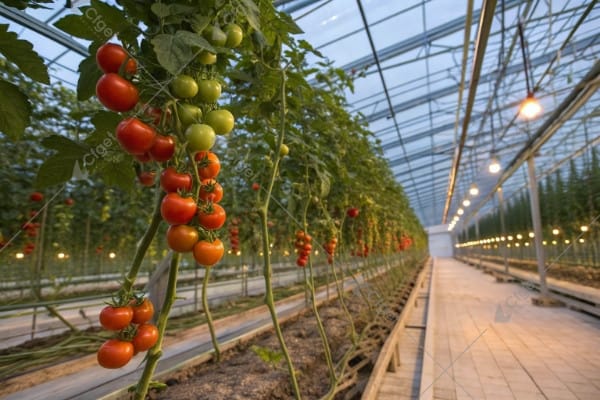
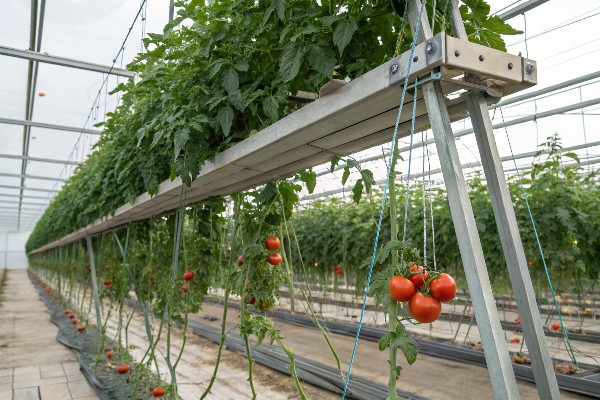
Tomatoes thriving inside a commercial greenhouse.
I wrote this from reviewing multiple commercial tomato operations in hot, sunny climates (Central California, Arizona, and Florida). These growers do not choose greenhouse types based solely on price— they choose structures that support heat control, year‑round growth, and predictable markets. Below is a detailed decision guide for selecting the best greenhouse type for tomato production.
Why greenhouse tomato production needs a different greenhouse than other vegetables
Tomatoes are powerful producers, but they are sensitive to climate fluctuations and require careful control of temperature, humidity, and light.
Tomatoes prefer a warm, stable environment (≈21–27°C with 40–70% humidity), and any deviation can reduce fruit set, quality, and yield. :contentReference[oaicite:0]{index=0}
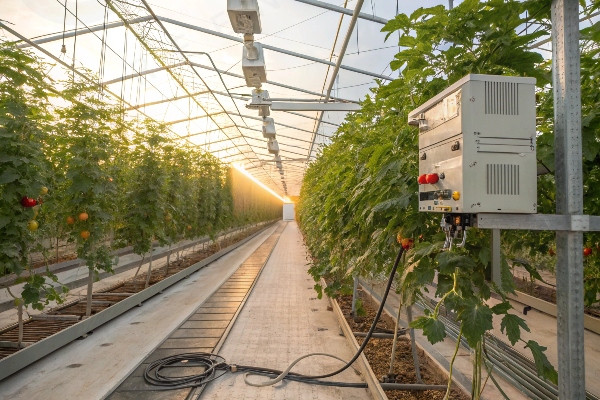
Temperature and humidity control are key for tomato fruit quality.
Dive deeper
Outdoors, tomatoes face heat stress, wind, and pests that reduce quality. Greenhouses create a controlled environment agriculture (CEA) setting where temperature, humidity, light, irrigation, and nutrients can be regulated precisely to optimize growth, harvest timing, and fruit uniformity. :contentReference[oaicite:1]{index=1}
In the U.S., greenhouse tomatoes are a high‑value crop with consistent demand, especially in areas like Central California’s valleys, the desert Southwest, and southern Florida. These regions’ abundant sunshine and long growing seasons make greenhouses highly productive year‑round. :contentReference[oaicite:2]{index=2}
However, the right greenhouse must not only let in light—it must manage heat load and provide uniform conditions. This requirement pushes growers toward specific structural choices rather than generic covers.
Best greenhouse types for commercial tomato production
There are three greenhouse types that most serious commercial tomato growers consider:
1. Venlo Glass Greenhouses
Description: Traditional glass greenhouse with high light transmission and excellent structural integrity.
Best for: High‑value, year‑round tomato production in temperate and high‑sun climates.
Why it works:
- Glass allows very high light transmission, critical for tomatoes’ high photosynthesis needs. :contentReference[oaicite:3]{index=3}
- Durable structure supports automated climate control (heating, cooling, ventilation).
- Longevity and resale value are strong.
Challenges:
- Higher initial cost compared with film or polycarbonate
- Requires skilled installation and advanced climate systems
When it’s best: Where growers want stable year‑round supply, reliable yield, and strong ROI in markets that pay premium prices.
2. Multi‑Span Plastic Greenhouses (Double‑Layer Film)
Description: Multiple connected hoop or frame structures covered in UV‑stabilized polyethylene film, often with double layers for better insulation.
Best for: Medium‑to‑large commercial farms balancing cost and performance.
Why it works:
- Lower upfront cost than glass
- A double layer provides better insulation for cold nights while still letting enough light for tomato growth. :contentReference[oaicite:4]{index=4}
- Modular design allows expansion as needed.
Challenges:
- Film has a shorter lifespan than glass and must be replaced periodically
- Climate control must be managed carefully to avoid heat spikes
When it’s best:
For growers who want scalable systems with lower initial investment while still producing high yields.
3. Solar‑Enhanced or Hybrid Systems (e.g., Sundrop‑Style Greenhouses)
Description: Advanced systems that use solar thermal energy or renewable sources to power cooling and desalinated water systems.
Best for: Large operations in extremely hot, arid climates with access to solar resources.
Why it works:
- Uses renewable energy to offset cooling and water costs
- Demonstrated success producing tens of thousands of tonnes of tomatoes annually in harsh climates (e.g., Sundrop Farms in Australia). :contentReference[oaicite:5]{index=5}
Challenges:
- Very high initial investment
- Complex engineering and integration
When it’s best:
For operations with long-term investment horizons and access to solar or renewable energy, especially in desert environments.
Key climate and system considerations
Tomatoes do best with stable temperatures and controlled humidity. Here is what you must consider:
Climate load
Tomatoes prefer:
- Daytime: ~21–27°C
- Nighttime: slightly cooler
- Relative humidity: ~40–70% to reduce fungal risk and support transpiration :contentReference[oaicite:6]{index=6}
Too much humidity encourages disease and lowers fruit quality. A greenhouse type that manages humidity while providing uniform airflow is essential.
Light requirements
Tomatoes need high light intensity for fruit development. Glass greenhouses outperform many plastics in winter and in low‑sun regions due to better transmission.
Airflow and uniformity
Uniform temperature and humidity reduce disease risk and improve fruit set. Large, continuous greenhouse structures with proper ventilation and circulation systems are better at maintaining this uniformity.
Production systems inside greenhouses
Tomato greenhouse systems vary by medium and support:
Soil or substrate
Many growers use substrate systems (e.g., rockwool) with vertical trellising to support vine tomatoes. This allows higher yields and more efficient use of space. :contentReference[oaicite:7]{index=7}
Hydroponics and CEA
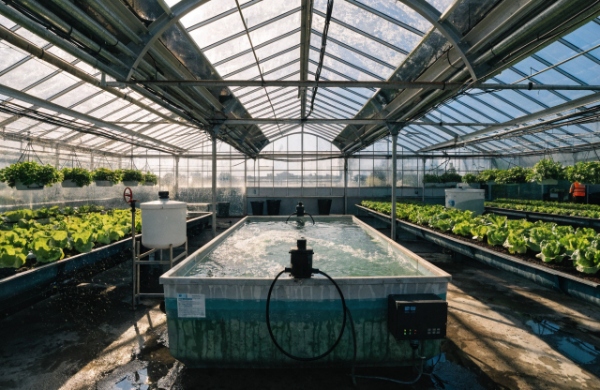
Hydroponic systems with nutrient film techniques or deep water culture increase control and often lead to higher yields. These systems are best paired with high‑control greenhouses (glass or tightly controlled film).
How to choose the right greenhouse for your tomato business
Choosing the best greenhouse should follow a decision framework:
- Define your market: Year‑round supply vs seasonal advantage
- Assess climate: Hot arid, high‑sun temperate, or humid subtropical
- Match structure to control needs: More automation and uniformity if you want stable year‑round
- Analyze OPEX vs CAPEX: Long‑term costs often outweigh initial investment
- Plan for scalability: Modular expansion helps adjust to market demand
In hot climates like Florida, California, and Arizona, you might start with a Venlo glass greenhouse with strong cooling controls. In more variable climates, a double‑film multi‑span structure might balance cost and performance.
Conclusion
For commercial tomatoes, the “best” greenhouse is not one universal type. It is the one that offers high light transmission, strong climate control, and operational stability in your specific climate and market context.
External References
-
Best greenhouse types for commercial vegetable farming – KyGreenhouse
https://www.kygreenhouse.com/industry-news/best-greenhouse-for-commercial-vegetable-farming.html :contentReference[oaicite:8]{index=8} -
Greenhouse tomato production climate needs
https://www.dutchgreenhouses.com/en/vegetables/tomatoes :contentReference[oaicite:9]{index=9} -
U.S. greenhouse tomato market and controlled environment agriculture
https://us.regasa.co/growing-the-red-gold-a-guide-to-greenhouse-tomato-production-in-the-u-s/ :contentReference[oaicite:10]{index=10} -
Case study: Sundrop Farms solar greenhouse tomato production
https://en.wikipedia.org/wiki/Sundrop_Farms :contentReference[oaicite:11]{index=11}
Internal References (CFGET)
-
Commercial Greenhouse Systems
https://cfgreenway.com/greenhouse/ -
Smart Auto & Control Solutions
https://cfgreenway.com/solutions/smart-auto-control/