Skip to content
Leafy greens look simple to grow, but commercial projects often fail quietly. Uneven temperature, excess humidity, and unstable airflow reduce quality and shorten shelf life.
For commercial leafy greens production in Europe, the best greenhouse type is usually a well-ventilated multi-span greenhouse (film or PC) with strong climate uniformity, not necessarily a high-tech glass structure.
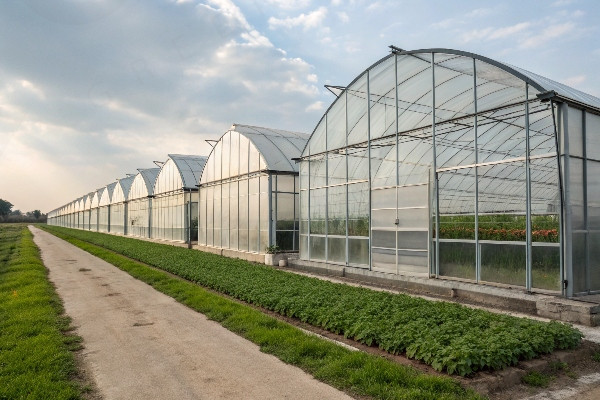
I write this from real project evaluations across different markets. Europe is one of the most advanced leafy greens markets in the world, especially for lettuce, baby leaf, spinach, and herbs. Buyers demand uniform size, clean leaves, and predictable delivery. The greenhouse type must support that reality, not marketing trends.
Why is choosing a greenhouse for leafy greens different from fruit crops?
Many articles treat all vegetables the same. That is the first mistake.
Leafy greens are driven by uniformity, airflow, and humidity control, not maximum light or extreme yield per plant.
Dive deeper
Leafy greens grow fast and have short cycles. That changes everything. Small temperature or humidity differences between zones quickly translate into uneven size and harvest timing. This increases labor cost and reduces pack-out efficiency.
Unlike tomatoes or cucumbers, leafy greens do not benefit as much from very high light levels. Excess heat and humidity are far more damaging. Research and production practices discussed by Wageningen University & Research – Greenhouse Horticulture emphasize climate uniformity as a key driver for leafy crop consistency.
This is why many European leafy greens producers avoid over-complex greenhouse types. A structure that is easier to ventilate evenly often performs better than a structure designed mainly for light capture. When I evaluate projects, I treat airflow distribution and humidity stability as financial indicators, not technical details.
Which greenhouse types are most commonly used for leafy greens in Europe?
Europe has a long history of protected leafy greens production. The market has already filtered out weak options.
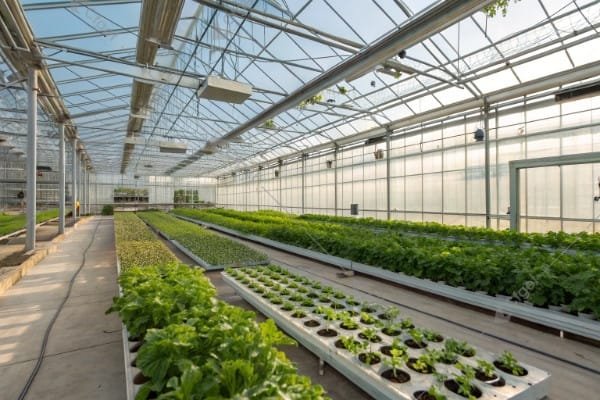
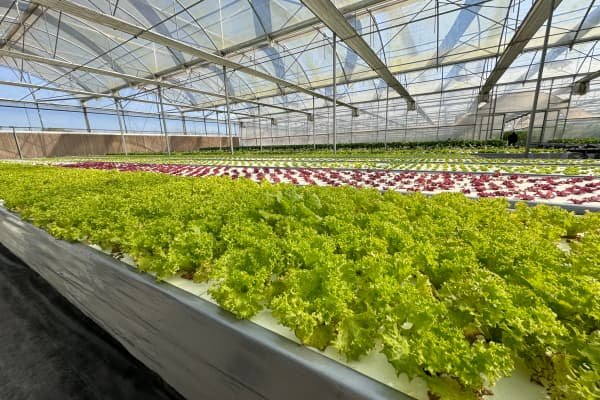
The most common and effective greenhouse types for commercial leafy greens in Europe are multi-span film greenhouses and multi-span PC greenhouses with strong natural ventilation.
Dive deeper
Single tunnels can grow leafy greens, but they struggle with scale and uniformity. For commercial volumes, multi-span structures dominate because they allow better airflow management and more consistent climate across large areas.
Film greenhouses are popular because they:
- allow large roof and side vents
- respond quickly to outside climate changes
- keep capital cost manageable
PC greenhouses are often chosen when durability, insulation, or longer lifespan is a priority. Glass Venlo greenhouses are used in some high-end or research settings, but for leafy greens they are often not the most cost-effective option unless year-round production with strict contracts is required.
European production models documented in policy and climate adaptation discussions by FAO – Food and Agriculture Organization of the United Nations highlight the importance of energy efficiency and risk reduction. Leafy greens producers often prefer systems that can stay stable without heavy energy input.
This explains why the “best greenhouse type” for leafy greens is often simpler than people expect.
How does Europe’s climate shape the best greenhouse choice for leafy greens?
Europe is not one climate, but it has common patterns that matter.
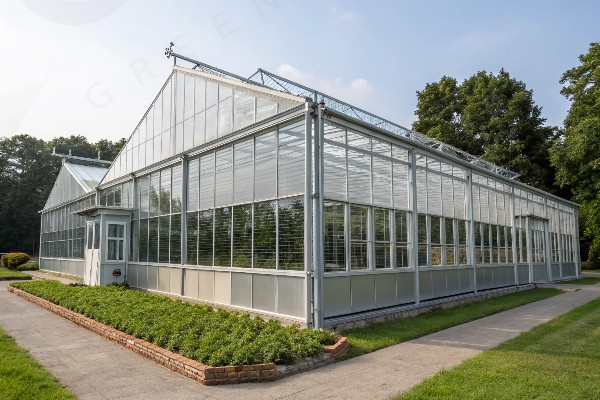
Moderate summers, high humidity risk, and energy cost sensitivity push leafy greens growers toward ventilated, energy-efficient greenhouse types.
Climate favors ventilation-focused designs.
Dive deeper
In much of Western and Northern Europe, extreme heat is less frequent than in tropical or desert regions. However, humidity and low air movement are persistent risks. Leafy greens are sensitive to tip burn, fungal disease, and condensation.
Extension and climate data from the World Bank Climate Change Knowledge Portal show increasing variability, including humid summers and warm nights. This increases disease pressure even when temperatures are moderate.
Cooling systems based on evaporative methods are less critical than airflow and dehumidification. Studies and guidelines from University of Florida IFAS Extension, while focused on warmer climates, clearly explain why evaporative cooling becomes ineffective or risky in humid environments. The same logic applies to Europe when humidity is high.
For leafy greens, the best greenhouse type is the one that:
- removes moist air quickly
- avoids condensation on leaves
- maintains gentle but constant airflow
This is easier to achieve in multi-span structures with large vent areas than in tightly sealed glass houses.
Is high-tech automation necessary for commercial leafy greens?
This question causes confusion.
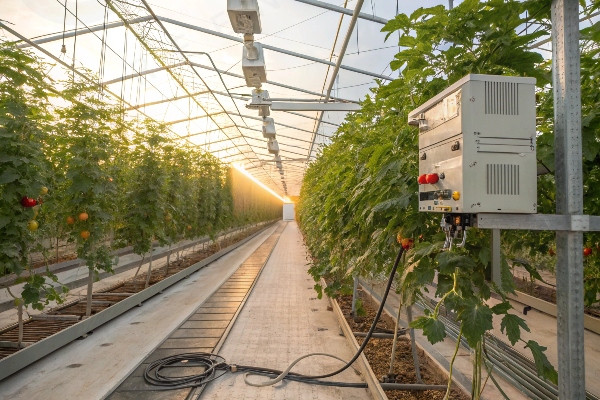
Leafy greens benefit more from simple, reliable control than from complex high-tech systems.
Dive deeper
High-tech systems are not wrong, but they are often unnecessary for leafy greens. What matters is consistency. If a control system is too complex, operators may override it, creating instability.
Energy planning resources from the Cornell University Controlled Environment Agriculture (CEA) Program show that simpler systems often achieve better energy efficiency when matched correctly to crop needs.
For leafy greens, I prefer:
- staged ventilation
- humidity-based vent control
- basic shading if needed
- clear alarm thresholds
This is why many European growers succeed with mid-tech systems rather than full automation. When automation is used, it must be tuned for airflow and humidity, not just temperature. Solutions like Smart Auto & Control should support growers, not replace judgment.
How do production systems influence greenhouse type for leafy greens?
Leafy greens are grown in many ways. The system matters.
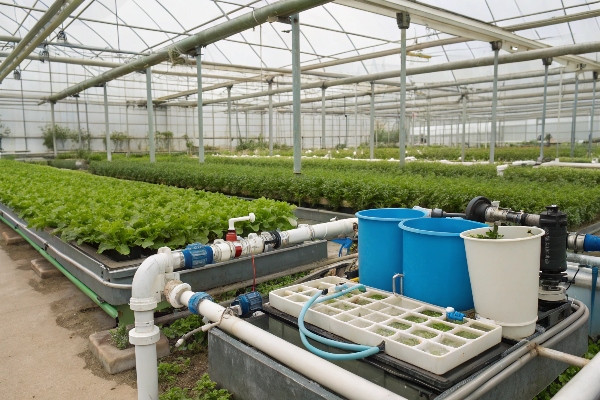
Hydroponic and substrate systems demand better climate uniformity, which reinforces the need for well-ventilated greenhouse types.
Dive deeper
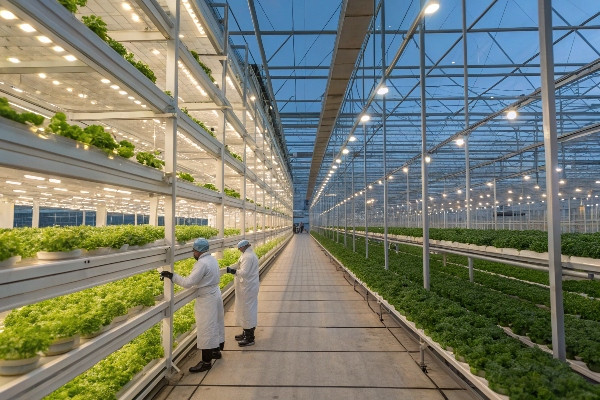
Hydroponic systems like NFT or DFT are common in Europe for leafy greens. They increase productivity and cleanliness but also increase sensitivity to climate fluctuation. Root temperature, dissolved oxygen, and transpiration are directly affected by air conditions.
Guidance from Rutgers University explains how humidity and airflow interact with plant health. Even though the document focuses on cooling, the underlying principles apply to leafy greens disease management.
This reinforces why greenhouse type selection must consider production system. A structure that cannot maintain uniform airflow will struggle with hydroponic leafy greens, regardless of how modern it looks.
For growers planning system integration, CFGET’s internal resources can help:
Which greenhouse type usually delivers the best ROI for leafy greens in Europe?
ROI answers the “best” question more honestly than labels.
For most commercial leafy greens operations in Europe, a mid-tech multi-span film or PC greenhouse delivers the best balance between cost, control, and yield stability.
Dive deeper
I evaluate greenhouse types using cost per kilogram, not build cost. Leafy greens margins depend on fast turnover and low waste. Structures that cause uneven growth increase labor and rejection rates.
High-tech glass houses may produce excellent results, but the added cost often does not translate into proportional value for leafy greens. This is different from fruiting crops. Data trends from USDA Economic Research Service show how controlled environment agriculture must align technology level with crop value.
For leafy greens, simpler structures often win financially, as long as climate control is well designed.
Conclusion
The best greenhouse type for leafy greens in Europe is the one that delivers uniform airflow, stable humidity, and predictable operating cost. Multi-span film or PC greenhouses usually meet these needs better than overly complex structures.
External References (Authority Sources)
-
FAO – Climate Change and Agriculture
https://www.fao.org/climate-change/en/ -
World Bank – Climate Change Knowledge Portal
https://climateknowledgeportal.worldbank.org/ -
Wageningen University & Research – Greenhouse Horticulture
https://www.wur.nl/en/research-results/research-institutes/plant-research/greenhouse-horticulture.htm -
University of Florida IFAS Extension – Fan and Pad Cooling Systems
https://edis.ifas.ufl.edu/publication/AE069 -
Rutgers University – Greenhouse Evaporative Cooling Guide
https://nj-vegetable-crops-online-resources.rutgers.edu/wp-content/uploads/2015/06/Greenhouse-Evaporative-Cooling.pdf -
Cornell University – Controlled Environment Agriculture Energy Resources
https://cea.cals.cornell.edu/energy/ -
USDA Economic Research Service – Controlled Environment Agriculture Trends
https://www.ers.usda.gov/data-products/charts-of-note/chart-detail?chartId=109422
Internal References (CFGET)
-
Commercial Greenhouse Systems
https://cfgreenway.com/greenhouse/ -
Smart Auto & Control Solutions
https://cfgreenway.com/solutions/smart-auto-control/ -
Growing Systems
https://cfgreenway.com/growing-systems/
Internal Blog References (Related CFGET Articles)
-
Polycarbonate Greenhouse Systems
https://cfgreenway.com/polycarbonate/ -
Semi-Closed Greenhouse Systems
https://cfgreenway.com/semi-closed/ -
Retractable Roof Greenhouses
https://cfgreenway.com/retractableroof/