Skip to content
In Biskra, growers lose money when peppers drop flowers in heat and water costs climb. Many projects fail because the greenhouse is built first, and the climate plan comes later.
In Biskra (North Africa), I can make sweet pepper greenhouses profitable when I design for heat control, strict irrigation efficiency, and pest-proof ventilation. This region is a major protected-cultivation hub, and peppers are already a proven greenhouse crop there. Impact of Agricultural Policies on Greenhouse Development in Biskra (data on tomato/pepper greenhouse area and output)<1>
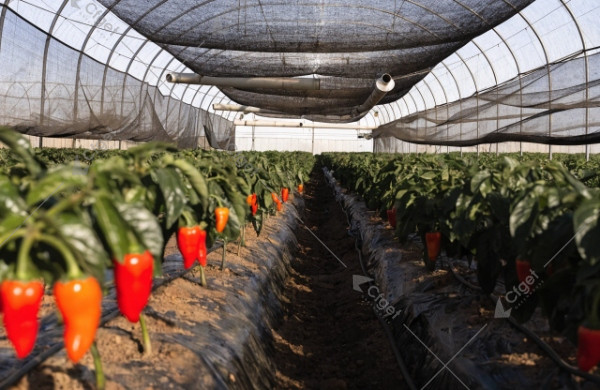
Peppers need heat control and clean airflow.
I am choosing Biskra on purpose. Research reports Biskra as a national pole for greenhouse crops, with large greenhouse area and high output, and peppers (hot and sweet) are among the main protected crops there. Biskra greenhouse crop structure and production (tomato + hot pepper + sweet pepper)<1>
CFGET Video
Why are peppers and tomatoes the “core greenhouse products” in Biskra?
Many people talk about “Africa greenhouse crops” in a vague way. That does not help a buyer. I need one region, one crop, and one clear reason why it works.
Biskra’s protected cultivation expanded fast, and data shows tomatoes and peppers dominate greenhouse area and output. So I treat peppers as a proven commercial product there, not an experimental crop. Biskra greenhouse statistics (2000 vs 2020 area and tons)<1>
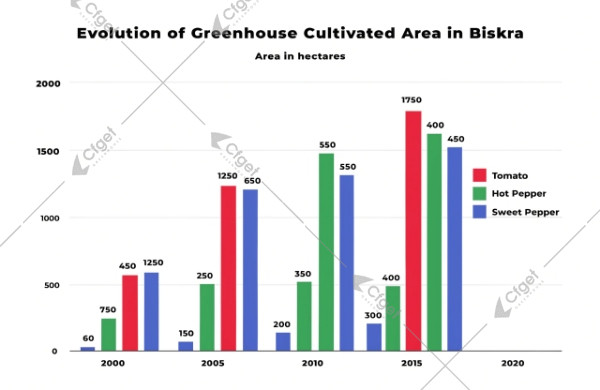
Crop focus explains why the region is investable.
What I take from the Biskra data (practical, not academic)
The Biskra study reports that in 2020 the greenhouse area is largely devoted to tomatoes, hot peppers, and sweet peppers, with large production volumes, and that Biskra represents a big share of national greenhouse planted area and output. Biskra as major Algerian greenhouse production pole<1>
This tells me two things:
- There is already market behavior, know-how, and input supply chains for peppers.
- My greenhouse design must beat the real local standard, not a “textbook greenhouse.”
My crop decision table for Biskra-style hot regions
| Crop | Why growers choose it | What usually breaks it | What I design for |
|---|---|---|---|
| Sweet pepper | strong demand, stable pricing windows | heat flower drop, whiteflies | shade + airflow + insect netting |
| Hot pepper | similar climate fit, strong local processing demand | pest pressure, uneven grades | sanitation + IPM + uniform climate |
| Tomato | proven greenhouse staple | humidity disease + heat spikes | ventilation geometry + irrigation timing |
If you sell structures into North Africa, peppers are a serious “greenhouse product,” not a side crop.
How do I design the greenhouse for desert heat so peppers do not drop flowers?
In extreme heat, pepper yield drops first in flower set and fruit size. If I solve heat load, the rest becomes easier.
I design the greenhouse in stages: reduce solar load (shade), increase natural air exchange (vent area), then add mechanical cooling only when needed. In hot zones, structure decisions control operating cost for years. A clear reference for national water-and-agriculture constraints is FAO AQUASTAT’s Algeria profile, which frames why water-efficient, low-energy cooling matters in the country context. FAO AQUASTAT: Algeria country profile (water resources, irrigation context)<2>
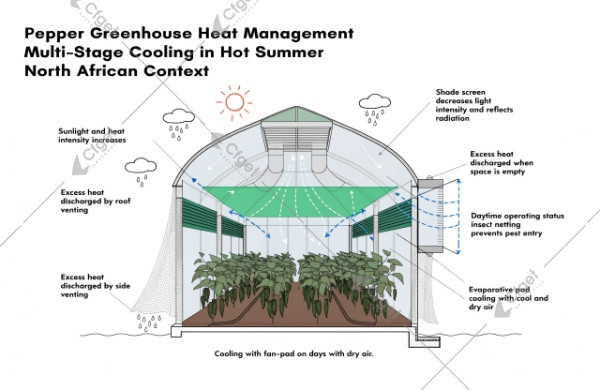
Staged cooling prevents high OPEX surprises.
My “heat-first” design checklist (what growers feel day-to-day)
1) Vent area is not decoration
If vent openings are small, fans will not save you. Hot air must leave fast.
2) Shade is the cheapest ton of yield
Shade reduces leaf temperature and protects fruit set. It also lowers water stress.
3) Cooling must match humidity reality
If air is dry, evaporative cooling can work well. If humidity climbs, I shift to airflow and shading first to avoid wet disease pressure.
To support this in CFGET structure choices, I often link growers to:
- Why Sawtooth Greenhouses Beat the Heat with Zero-Energy Natural Ventilation (natural airflow idea)
- Sawtooth Greenhouse (Structure Page) (structure options)
How do I irrigate peppers in Biskra-style conditions to save water and still push yield?
In North Africa, water efficiency is not a “nice value.” It is survival. Many farms still use mixed irrigation habits that waste water and reduce uniformity.
I treat drip + fertigation as the base system because it stabilizes root-zone moisture and reduces waste. In Biskra greenhouse surveys, drip irrigation showed higher water productivity and higher tomato yields versus furrow, which confirms the direction for protected crops in the region. Biskra greenhouse survey: drip irrigation improved yield and water productivity<3>
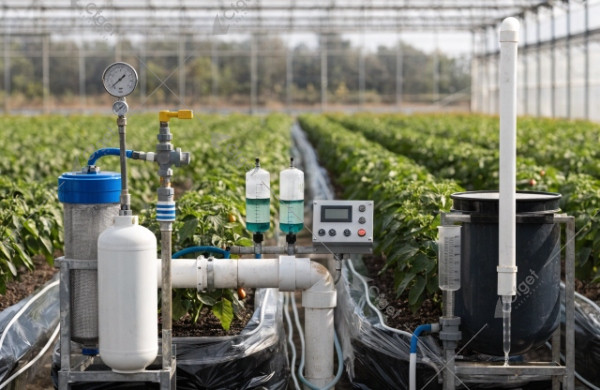
Uniform water gives uniform fruit size.
The “grower routine” that improves yield (simple and repeatable)
Morning
- I water earlier to reduce midday stress.
- I keep short pulses, not long floods.
Midday
- I check plant stress signals and greenhouse temperature.
- I avoid heavy irrigation during peak heat if oxygen in the root zone is already low.
Late afternoon
- I adjust to avoid overnight high humidity.
The Biskra irrigation paper reports greenhouse production timing (transplanting and harvest windows) and shows measurable yield and water productivity differences by irrigation method. Drip irrigation gains in Biskra greenhouse study<3>
That kind of evidence is exactly what a serious grower wants, because it links technique to yield.
For a CFGET-friendly implementation path, I also connect growers to:
My irrigation and yield table for greenhouse peppers (operator view)
| Target | What I measure | What I adjust | Why it raises yield |
|---|---|---|---|
| Uniformity | pressure + emitter flow | filtration + zoning | reduces small fruit and uneven grades |
| Water efficiency | drainage % and timing | pulse strategy | saves water and protects roots |
| Fruit set stability | midday stress signs | shade + timing | protects flowers in heat |
| Labor control | simple SOP | same routine daily | fewer “random changes” = less chaos |
Which pests ruin greenhouse peppers in Africa, and what IPM do I actually use?
In hot regions, whiteflies and virus risk can destroy pepper quality. If I rely only on chemicals, I create resistance and still lose.
I build IPM into greenhouse design: insect netting, sanitation, monitoring, and biological options where possible. For pepper, whiteflies are a key pest group, so I plan prevention, not only treatment. UC’s pest management guideline for peppers explains whitefly identification, damage, and integrated management logic in a practical way. UC IPM: Whiteflies on peppers (ID, damage, IPM)<4>
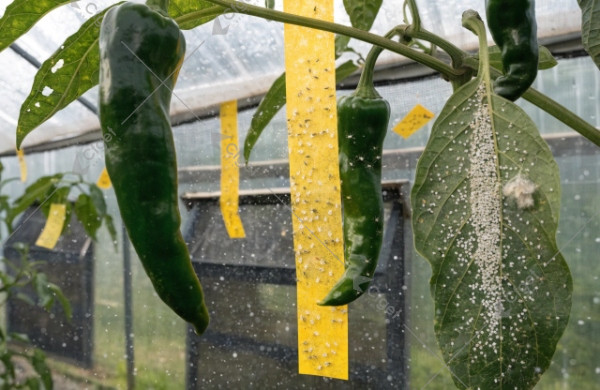
IPM starts with monitoring and exclusion.
My “no drama” IPM plan for peppers
Exclusion (design level)
- Insect netting on vents
- Double-door entry or simple hygiene zone
Monitoring (weekly discipline)
- Yellow sticky traps
- Leaf underside inspections
- Record trends, not feelings
Control (only when needed)
- Rotate modes of action
- Protect beneficials when possible
- Keep weeds and nearby host plants managed
This is why a greenhouse built only for “structure cost” is not enough. IPM is part of the product in Africa, because pests are not seasonal in the same way as temperate regions.
Conclusion
In North Africa, greenhouse products are not generic. In Biskra, peppers and tomatoes are proven protected crops. I win on yield when I design for heat, water efficiency, and pest-proof airflow from day one.
External Links (Footnotes)
1> https://www.mdpi.com/2071-1050/15/19/14396
<2> https://www.fao.org/aquastat/en/countries-and-basins/country-profiles/country/DZA/index.html
<3> https://agris.fao.org/search/en/providers/125212/records/6851784fc5e2f13848e2bd9c
<4> https://ipm.ucanr.edu/agriculture/peppers/whiteflies/
## Internal Blog References (Related CFGET Articles)
– **Sawtooth Greenhouses: Beat the Heat with Zero-Cost Natural Ventilation?**
Sawtooth Greenhouses: Beat the Heat with Zero-Cost Natural Ventilation?
– **Greenhouse Irrigation Systems: Complete Guide to Drip & Fertigation**
Greenhouse Irrigation Systems: The Ultimate Guide to Boosting Yields & Saving Water
– **How Much Does It Cost to Build a Smart Greenhouse? What Are the Hidden Costs?**
How Much Does It Cost to Build a Smart Greenhouse? What Are the Hidden Costs?
– **Best Greenhouse Type for Commercial Tomato Production in Mexico: Multi-Span vs Venlo Decision Guide**
## Internal References (CFGET Pages)
– **CFGET Homepage**
– **Sawtooth Greenhouse (Structure Page)**
– **Wide-span Greenhouse**
– **Greenhouse (Materials and Structure Overview)**
https://cfgreenway.com/greenhouse/