A sawtooth greenhouse can provide strong natural ventilation, but the roof shape does not make cooling free and it does not guarantee a temperature drop. A commercial design still needs site weather, wind direction, crop resistance, inlet and outlet areas, insect net pressure loss, rain control, structure loads, controls, and a mechanical fallback. Buyers should compare the stated design basis and acceptance tests, not a claim such as “zero-cost ventilation.”
The sawtooth form places a continuous opening near each roof high point. Wind and indoor to outdoor temperature differences can move air through these openings when matching inlets are available. Performance changes when the wind is weak, nearby buildings block flow, screens are closed, the crop canopy becomes dense, or rain controls limit the vents. This is why one standard temperature reduction cannot be carried from one project to another.
Start with the site and crop duty
Give the supplier the project map pin, elevation, greenhouse orientation, adjacent obstructions, local weather source, production months, crop height, crop support loads, growing system, pest exclusion target, and acceptable heat-risk strategy. Record whether the house is intended for rain protection, seasonal production, propagation, vegetables, flowers, or another crop duty. The structure and ventilation brief should match that operating purpose.
| Design input | Buyer information | Supplier output |
|---|---|---|
| Weather and exposure | Wind speed and direction, temperature, humidity, rainfall, storms and obstructions | Named design conditions, data source, orientation basis and operating limits |
| Crop resistance | Crop height, row direction, support system, screens and expected canopy density | Air-path assumptions at early and mature crop stages |
| Pest exclusion | Target pests and required mesh or screen specification | Net free area, pressure-loss basis, cleaning access and compensation method |
| Risk response | Allowable heat exposure, power reliability and backup water | Vent sequence, alarms, mechanical assist and emergency operating plan |
Ask for the complete ventilation path
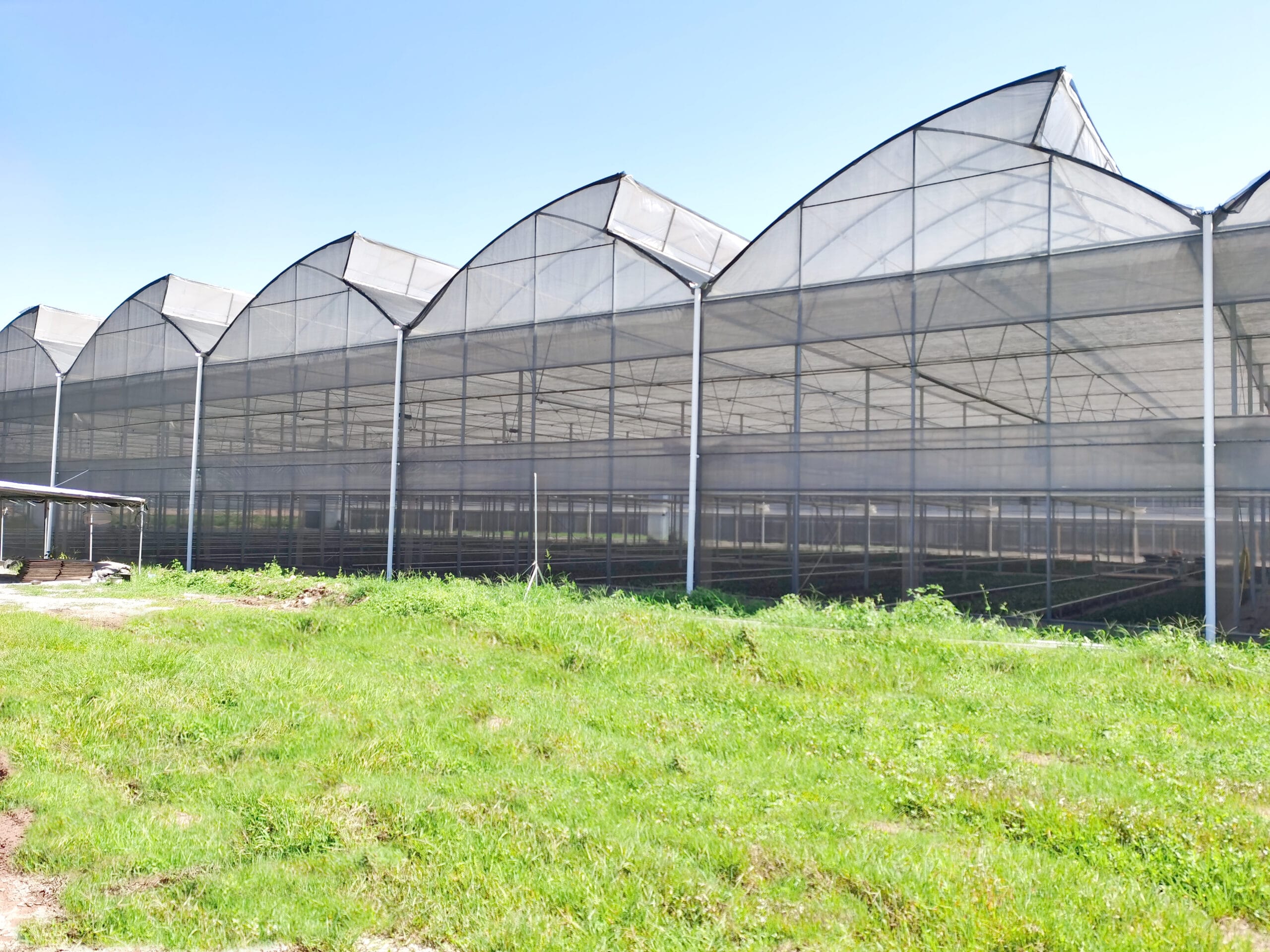
A roof outlet is only one part of the path. Incoming air needs a clear route through sidewall or end-wall openings, across the crop zone, and out through the roof. The quotation should give gross opening dimensions and the net free area after frames, insect net, drives and protective details are included. It should also show whether doors are part of the designed inlet area. Normal production should not depend on leaving a vehicle door open.
A University of Arizona publication on naturally ventilated gutter-connected greenhouses evaluated multi-span sawtooth arrangements under different roof openings, side openings and wind speeds. The useful procurement lesson is that opening configuration and outside wind work together. A result from one tested arrangement is not a universal promise for every sawtooth house.
| Item | Question for the bidder | Evidence before award |
|---|---|---|
| Roof outlets | What is the clear opening by bay and at each control position? | Dimensioned section, vent schedule and actuator travel |
| Air inlets | Where does replacement air enter with the crop and screens installed? | Opening schedule, net free area and obstruction review |
| Wind response | Which vents close or modulate by wind direction and speed? | Control sequence, thresholds, sensor location and safe position |
| Rain response | How is rain entry limited without trapping heat? | Rain overlap detail, drain path and staged vent logic |
| Low-wind period | What happens when natural driving force is insufficient? | Temperature response plan, circulation or exhaust assist and alarms |
Separate natural ventilation from cooling claims
Natural ventilation exchanges indoor and outdoor air. It cannot cool the greenhouse below outdoor dry-bulb temperature by itself. Solar load, roof transmission, crop transpiration, ground conditions, ventilation rate and sensor location all affect the measured difference. Shade, evaporative cooling or another system may be required when the crop limit is below what ventilation alone can hold.
North Carolina State University extension guidance explains that natural greenhouse ventilation depends on wind and temperature gradients, and that roof and side openings must work as a system. Use extension guidance to understand the mechanism, then require the supplier to show the basis used for the project. Do not accept a copied vent percentage without the dimensions, net free area and screen resistance behind it.
Define the measurement plan before construction
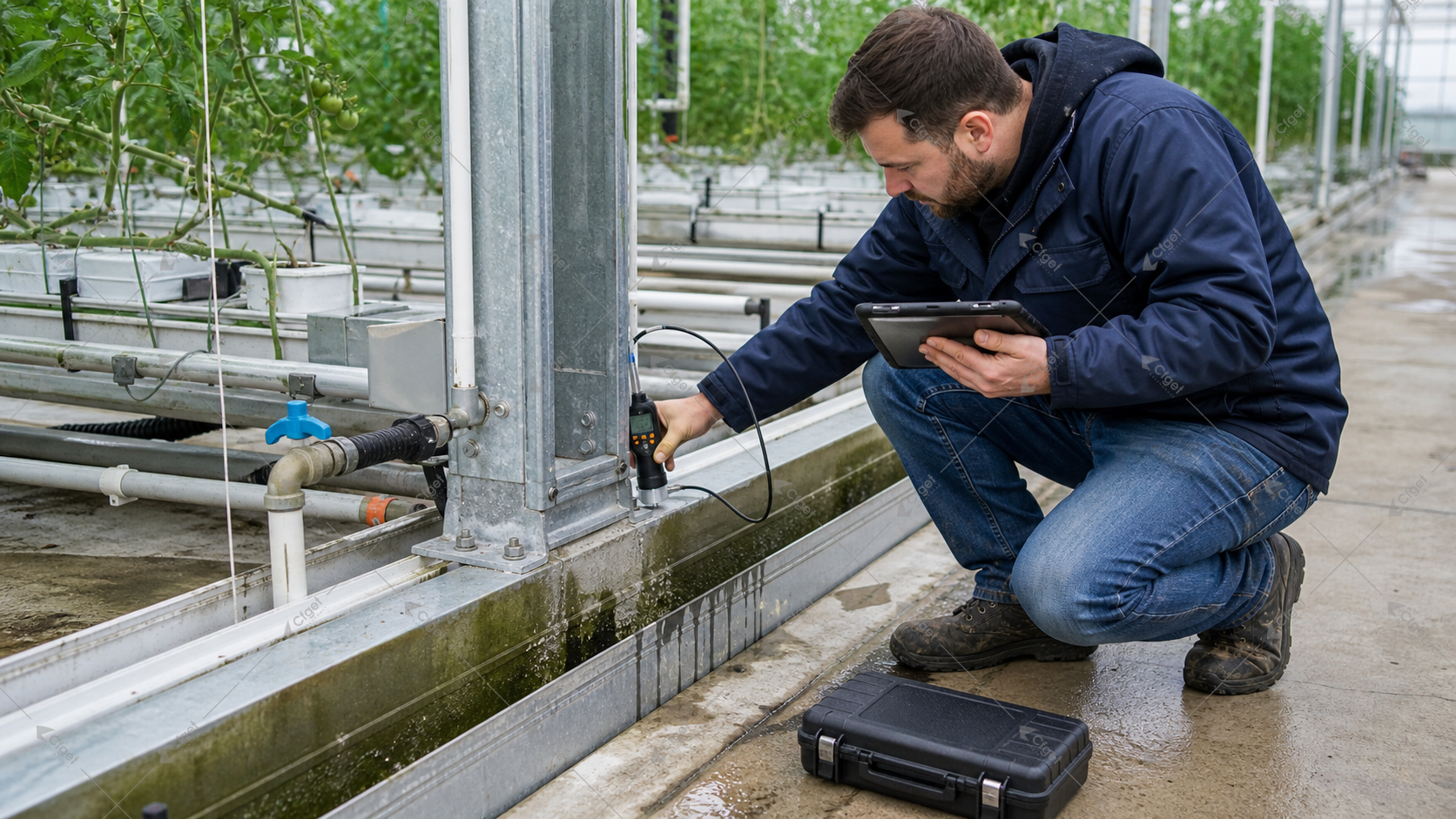
Agree where outdoor and indoor sensors will be mounted, how they will be shielded, and which crop-zone points will be compared. Record wind, vent position, screen position, outside and inside temperature, humidity, and any fan or cooling command during the test. A single handheld reading near an open doorway is not commissioning evidence.
Coordinate structure, rain and maintenance
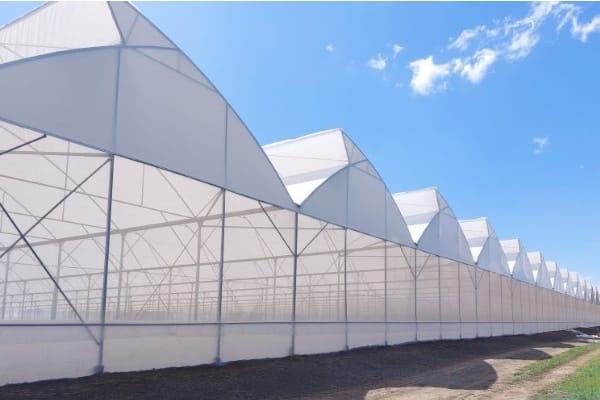
Roof openings add frames, hinges, actuators, seals and local loads. The structural design must include the vents in their operating and storm positions, along with the covering, crop supports, screens, gutters and maintenance loads. Wind and snow criteria must come from the project jurisdiction and site, not a generic catalogue line.
Rain overlap and gutters need their own details. Ask where wind-driven rain can enter, how water leaves the vent sill, how condensate is controlled, and how workers reach seals and drives. The quotation should identify corrosion protection, fasteners, replacement parts and inspection intervals. If an insect screen will be replaced later, the access method should be shown before the order is placed.
The sawtooth greenhouse product page shows the structure family. Use the temperature-control systems overview when natural ventilation needs staged support. The commercial greenhouse overview helps compare other structure families, while this article owns the ventilation design and procurement intent.
Commission the installed system
Test every vent through its full command range. Confirm direction, travel, limit switches, manual operation, position feedback, wind and rain response, alarms, and recovery after a power interruption. Inspect screens, seals, gutters and drainage. Check that no member, crop wire, screen or service blocks the intended air path.
Run an occupied-condition test with representative screen and crop resistance when practical. Record the weather and operating state so the result can be interpreted. If the design includes fans, test the changeover sequence rather than proving natural and mechanical modes separately. Handover should include as-built drawings, the control narrative, sensor list, calibration records, maintenance access, spares and a defect-response route.
RFQ inputs for a sawtooth greenhouse
- Project city, map pin, elevation, site plan, greenhouse orientation and nearby obstructions
- Crop, production season, growing system, mature canopy height and crop support loads
- Weather source, design wind and snow criteria, rainfall, temperature and humidity conditions
- Bay width, gutter height, length, number of spans, covering and expansion plan
- Gross and net roof-outlet and inlet areas, vent direction, insect net and pressure-loss data
- Vent actuators, zones, travel, position feedback, manual operation and safe positions
- Wind, rain, heat, power-loss and sensor-failure control sequences with alarm destinations
- Shade, circulation, exhaust or evaporative-cooling interface and changeover logic
- Gutters, rain overlap, condensate path, corrosion protection and maintenance access
- Drawings, calculations, schedules, commissioning tests, manuals, spares, training and warranty terms
Technical references
- University of Arizona: Fluid dynamic evaluation of naturally ventilated gutter-connected greenhouses
- North Carolina State University Extension: Greenhouse Cooling
Send the site brief through the CFGET contact page. Ask each bidder to return the same vent schedule, control narrative and acceptance-test matrix so the offers can be compared on one basis.