CO₂ levels fluctuate wildly in greenhouses without proper monitoring. Plants suffer reduced photosynthesis while expensive CO₂ gets wasted. Smart monitoring systems optimize plant growth and maximize return on investment through precise control.
CO₂ monitoring systems increase crop yields by 15-25% while reducing CO₂ waste by 40-60%. Real-time monitoring maintains optimal 800-1200 ppm levels for maximum photosynthesis and efficient resource utilization.
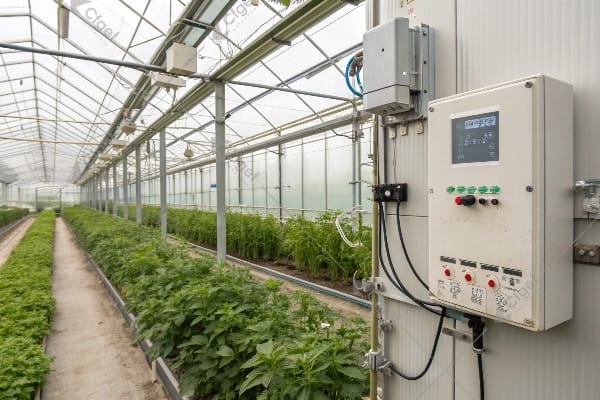
After installing CO₂ systems across five continents for 29 years, I have learned that monitoring separates successful operations from wasteful ones. The difference between guessing and knowing CO₂ levels determines profitability in modern greenhouse production.
From Sensor to Action: The Automation Loop of Real-Time CO₂ Control?
Automated CO₂ control creates a continuous feedback loop that maintains optimal growing conditions. Sensors detect concentration changes while controllers adjust injection rates instantly. This automation eliminates human error and ensures consistent plant performance.
Automated CO₂ control systems respond to concentration changes within 30-60 seconds, maintaining target levels within ±50 ppm accuracy. This precision increases photosynthetic efficiency by 20-30% compared to manual control methods.
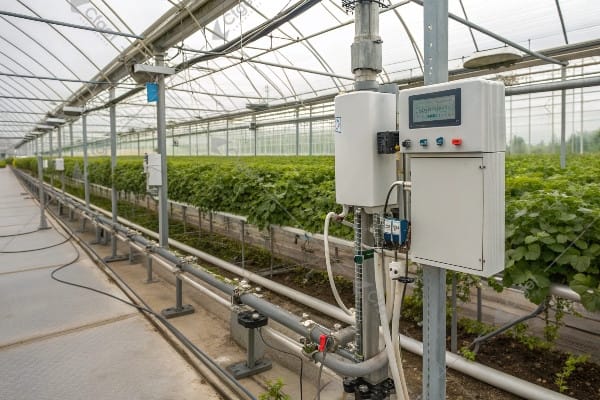
The automation process begins with strategically placed sensors that continuously measure CO₂ concentrations throughout the greenhouse. These sensors transmit data to central controllers every 10-30 seconds, creating real-time awareness of atmospheric conditions. Modern sensors achieve accuracy levels within ±30 ppm while maintaining calibration for months without adjustment.
Control algorithms analyze sensor data and compare readings to preset target levels. When concentrations drop below setpoints, controllers automatically activate CO₂ injection systems. The injection rate adjusts based on the magnitude of deficiency and environmental conditions like temperature and humidity that affect CO₂ demand.
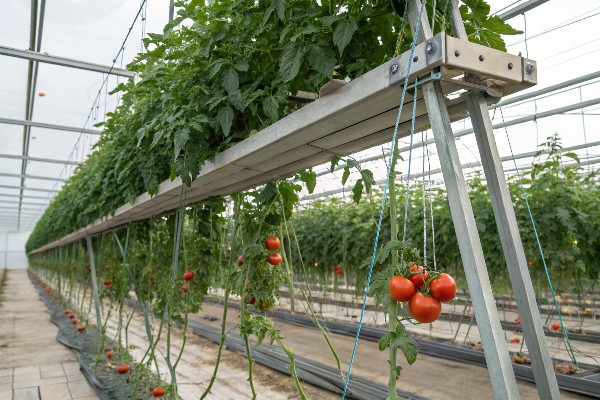
I installed an advanced monitoring system for a tomato producer in Netherlands facing inconsistent yields despite expensive CO₂ enrichment. The manual system relied on timer-based injection that ignored actual plant demand and environmental conditions. CO₂ levels swung from 300 ppm to 1800 ppm throughout the day, creating stress and waste.
The automated system transformed production immediately. Sensors placed every 50 meters provided comprehensive coverage while controllers maintained 900-1000 ppm levels consistently. Tomato yields increased 22% in the first growing cycle while CO₂ consumption decreased 35% through precise demand-based injection.
Environmental integration enhances control system effectiveness by considering factors that influence CO₂ demand. Light levels directly affect photosynthetic activity and CO₂ consumption rates. Temperature influences plant metabolism while humidity affects stomatal opening that controls CO₂ uptake.
| Control Parameter | Response Time | Accuracy | Integration Factor | Yield Impact |
|---|---|---|---|---|
| CO₂ Concentration | 30-60 seconds | ±30 ppm | Light intensity | 15-25% increase |
| Light Compensation | 2-5 minutes | ±5% | Temperature | 10-15% increase |
| Temperature Adjustment | 5-10 minutes | ±0.5°C | Humidity levels | 5-10% increase |
| Ventilation Coordination | 1-3 minutes | ±10% | Plant growth stage | 8-12% increase |
Ventilation integration prevents CO₂ waste during necessary air exchange periods. Smart controllers reduce or stop CO₂ injection when vents open for temperature or humidity control. This coordination prevents expensive CO₂ from escaping while maintaining optimal growing conditions for plant health.
The system learns from historical data and environmental patterns to optimize injection timing and rates. Machine learning algorithms identify peak demand periods and adjust injection schedules accordingly. Predictive control anticipates CO₂ needs based on weather forecasts and light projections.
Data logging capabilities track system performance and identify optimization opportunities. Historical records show CO₂ consumption patterns, yield correlations, and system efficiency trends. This information guides system tuning and validates the economic benefits of automated control.
Remote monitoring allows growers to supervise CO₂ levels from anywhere while receiving alerts for system malfunctions or unusual conditions. Mobile apps provide real-time data access while email notifications ensure immediate response to critical situations that could affect crop production.
Safety systems prevent dangerous CO₂ accumulations that could harm workers or plants. High-limit alarms stop injection when concentrations exceed safe levels while ventilation systems activate automatically to reduce excessive accumulation. These safety features protect both personnel and crops from CO₂ toxicity.
The #1 Way to Stop Wasting CO₂ (And Maximize Your ROI)?
CO₂ waste destroys profitability while providing no plant benefit. Excessive injection, poor timing, and ventilation losses consume expensive CO₂ without improving yields. Smart monitoring eliminates waste and maximizes return on investment.
Demand-based CO₂ injection reduces waste by 50-70% while maintaining optimal plant growth conditions. Monitoring systems prevent over-injection that costs $2,000-5,000 annually per hectare in wasted CO₂.
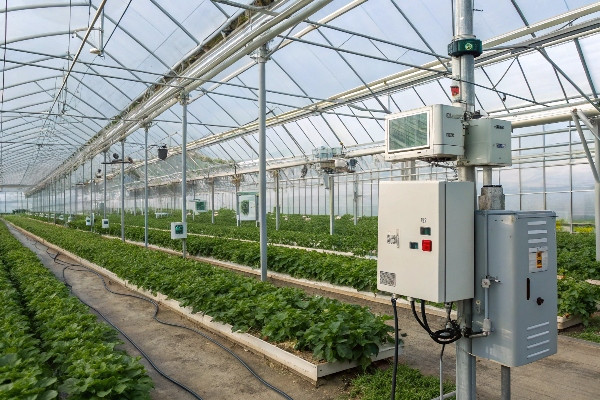
The primary source of CO₂ waste occurs during over-injection that exceeds plant uptake capacity. Plants can only utilize CO₂ at rates determined by light intensity, temperature, and growth stage. Injecting beyond these physiological limits wastes expensive CO₂ while potentially harming plant health through excessive concentrations.
Photosynthetic CO₂ compensation points vary throughout the day based on environmental conditions. During low light periods, plants require only 400-600 ppm for optimal photosynthesis. High light conditions increase CO₂ demand to 1000-1200 ppm. Fixed injection rates ignore these variations and waste CO₂ during low demand periods.
Ventilation timing creates massive CO₂ losses when injection continues during air exchange periods. A single ventilation cycle can exhaust thousands of cubic meters of CO₂-enriched air in minutes. Coordinated control systems stop injection during ventilation while resuming optimal levels once vents close.
I analyzed CO₂ waste at a cucumber facility in Germany spending €35,000 annually on CO₂ with disappointing yield results. The timer-based system injected CO₂ continuously regardless of plant demand or ventilation status. Measurements showed CO₂ levels reaching 2000+ ppm during low light periods while dropping to 200 ppm after ventilation.
The monitoring system installation immediately revealed the waste patterns. CO₂ injection during ventilation periods accounted for 40% of total consumption with zero plant benefit. Over-injection during low light conditions wasted another 25% of CO₂ purchases. The monitoring system reduced CO₂ costs by €18,000 annually while increasing yields 15%.
| Waste Source | Percentage of Total | Annual Cost (per hectare) | Prevention Method | Savings Potential |
|---|---|---|---|---|
| Over-injection | 30-40% | €1,500-2,000 | Demand-based control | High |
| Ventilation losses | 25-35% | €1,200-1,800 | Coordinated systems | Very high |
| Night injection | 15-20% | €750-1,000 | Light-based control | Moderate |
| Leakage losses | 10-15% | €500-750 | Proper sealing | Moderate |
Night-time CO₂ injection represents pure waste since plants cannot photosynthesize without light. Many systems continue injection throughout dark periods, providing no plant benefit while consuming expensive CO₂. Light-integrated controls eliminate night injection while resuming optimal levels at sunrise.
Greenhouse air leakage allows CO₂ to escape continuously, requiring constant injection to maintain target levels. Poor sealing around doors, vents, and structural joints creates ongoing losses that increase CO₂ consumption significantly. Proper greenhouse sealing reduces baseline CO₂ requirements by 20-30%.
Injection system maintenance affects CO₂ efficiency and waste levels. Clogged injectors create uneven distribution that requires higher overall injection rates to maintain adequate levels throughout the greenhouse. Poorly calibrated flow meters cause over-injection that wastes CO₂ while potentially harming plants.
The economic analysis clearly demonstrates monitoring system value through waste reduction alone. A typical monitoring system costs €8,000-15,000 installed while preventing €15,000-25,000 in annual CO₂ waste. The payback period ranges from 6-12 months with ongoing savings throughout system life.
Quality improvements from consistent CO₂ levels provide additional economic benefits beyond waste reduction. Uniform CO₂ distribution eliminates growth variations that reduce crop uniformity and market value. Premium quality produce commands higher prices that further justify monitoring system investments.
The Urban Farming Advantage: Achieving Perfect Consistency with PPM Monitoring?
Urban farming environments demand precise CO₂ control due to limited space and high-value crops. Consistent conditions maximize production density while ensuring premium quality. PPM monitoring enables the precision control essential for urban agriculture success.
Urban farming operations achieve 95% consistency in CO₂ levels through continuous PPM monitoring, compared to 60-70% consistency with manual control. This precision increases space utilization efficiency by 25-40% in high-density growing systems.
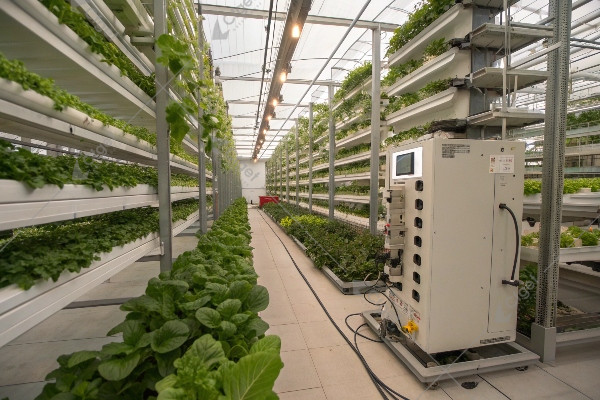
Urban farming faces unique challenges that make CO₂ monitoring essential for success. Limited growing space requires maximum productivity from every square meter. High real estate costs demand optimal plant performance to justify facility expenses. Premium urban markets expect consistent quality that commands higher prices.
Vertical growing systems create complex airflow patterns that affect CO₂ distribution. Multiple growing levels can experience dramatically different CO₂ concentrations without proper monitoring and distribution. Lower levels may suffer CO₂ depletion while upper levels receive excessive concentrations that waste resources.
The controlled environment advantages of urban farming allow precise CO₂ optimization that outdoor agriculture cannot achieve. Sealed growing environments prevent CO₂ losses while enabling accurate concentration control. This precision translates directly to improved yields and consistent quality that meets urban market demands.
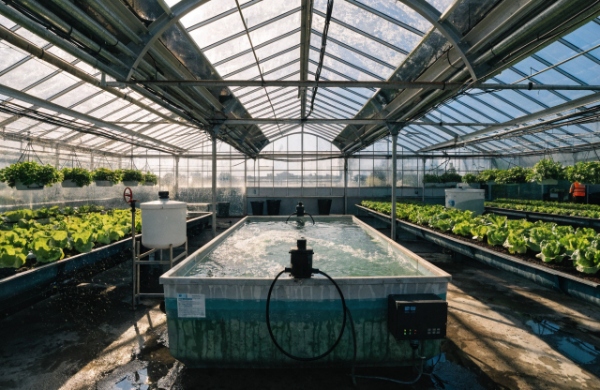
I designed a monitoring system for a vertical lettuce operation in Singapore producing 15 crops annually in a 500 square meter facility. The multi-level growing system created challenging CO₂ distribution problems with significant variations between growing levels. Manual control could not maintain consistent conditions across all growing zones.
The comprehensive monitoring system included sensors at each growing level with zone-specific injection control. CO₂ levels maintained 800-900 ppm consistently across all zones while injection rates adjusted automatically for each level’s specific requirements. Lettuce production increased 28% while quality uniformity improved dramatically for premium restaurant markets.
| Urban Farming Metric | Without Monitoring | With PPM Monitoring | Improvement | Economic Impact |
|---|---|---|---|---|
| CO₂ Level Consistency | 60-70% | 95% | +35% | Higher yields |
| Space Utilization | 75% | 95% | +20% | More revenue |
| Quality Uniformity | 70% | 92% | +22% | Premium pricing |
| Production Cycles | 12/year | 15/year | +25% | Increased turnover |
Energy efficiency becomes critical in urban farming operations with high electricity costs and sustainability requirements. Smart CO₂ monitoring integrates with LED lighting systems to optimize injection timing with photosynthetic activity. This coordination maximizes CO₂ utilization while minimizing energy consumption.
The rapid crop turnover in urban farming requires quick environmental adjustments between growing cycles. Different crops have varying CO₂ requirements that must be programmed into control systems. Automated monitoring enables seamless transitions between crop types while maintaining optimal conditions for each variety.
Data analytics from continuous monitoring provide insights for production optimization and crop planning. Historical data reveals optimal CO₂ levels for different crops and growth stages. This information guides variety selection and production scheduling for maximum profitability.
Worker safety considerations become more critical in urban facilities with higher personnel density and enclosed spaces. CO₂ monitoring systems include safety alarms that prevent dangerous accumulations in worker areas. Automated ventilation systems maintain safe working conditions while protecting crop production environments.
The integration with building automation systems allows comprehensive facility management through single control platforms. CO₂ monitoring coordinates with HVAC systems, lighting controls, and security systems for efficient facility operation. This integration reduces operational complexity while improving system performance.
Urban farming’s proximity to consumers enables rapid response to market demands through environmental control optimization. CO₂ monitoring allows quick adjustments to enhance specific quality characteristics like color, flavor, or nutritional content. This flexibility provides competitive advantages in dynamic urban markets.
Sensor Placement, Calibration, & Integration: A 3-Step Setup Guide?
Proper sensor installation determines monitoring system accuracy and reliability. Strategic placement ensures representative readings while calibration maintains measurement precision. Integration with control systems enables automated responses that optimize plant growth.
Optimal sensor placement requires 1 sensor per 200-300 square meters with strategic positioning 1.5-2 meters above crop canopy. Proper installation and calibration ensure ±30 ppm accuracy for reliable automated control and data collection.
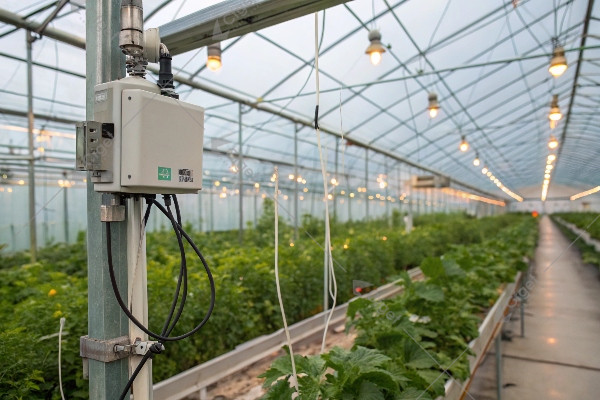
Step one involves strategic sensor placement that provides accurate representation of CO₂ levels throughout the growing environment. Sensor height affects readings significantly since CO₂ is heavier than air and tends to stratify. Positioning sensors 1.5-2 meters above the crop canopy captures CO₂ concentrations in the active photosynthetic zone.
Airflow patterns influence sensor placement decisions and measurement accuracy. Sensors should avoid direct exposure to CO₂ injection points that create artificially high readings. Dead air zones with poor circulation provide readings that do not represent general greenhouse conditions. Strategic placement considers natural and mechanical air movement patterns.
Multiple sensors provide comprehensive coverage in large facilities while identifying localized problems. Sensor spacing typically ranges from 200-300 square meters depending on greenhouse size and airflow characteristics. Additional sensors may be needed in areas with unique microclimates or specialized growing conditions.
Environmental protection ensures sensor longevity and measurement accuracy in harsh greenhouse conditions. High humidity, chemical exposure, and temperature fluctuations can damage sensitive electronic components. Proper housing protects sensors while allowing adequate air circulation for accurate readings.
| Installation Factor | Specification | Impact on Accuracy | Maintenance Requirement |
|---|---|---|---|
| Height Above Crop | 1.5-2.0 meters | ±15 ppm variation | Low |
| Sensor Spacing | 200-300 m² coverage | ±20 ppm variation | Low |
| Airflow Exposure | Moderate circulation | ±25 ppm variation | Medium |
| Environmental Protection | IP65 rating minimum | ±10 ppm variation | High |
Step two focuses on calibration procedures that ensure measurement accuracy and system reliability. Initial calibration establishes baseline accuracy using certified reference gases. Two-point calibration using 0 ppm (nitrogen) and known concentration (typically 1000 ppm) provides optimal accuracy across the measurement range.
Calibration frequency depends on sensor technology and environmental conditions. NDIR (Non-Dispersive Infrared) sensors typically require calibration every 3-6 months while electrochemical sensors may need monthly attention. Harsh greenhouse environments with high humidity and chemical exposure accelerate calibration drift.
Automated calibration systems reduce maintenance requirements while ensuring consistent accuracy. These systems use certified reference gases and automated valves to perform calibration cycles on predetermined schedules. Automated calibration eliminates human error while providing documentation for quality assurance programs.
Calibration verification procedures confirm sensor accuracy between formal calibration events. Portable reference instruments can verify sensor readings quickly without disrupting automated systems. Regular verification identifies sensors requiring immediate attention before accuracy degradation affects control performance.
Step three addresses integration with control systems and data management platforms. Communication protocols must match between sensors and controllers to ensure reliable data transmission. Common protocols include Modbus, BACnet, and proprietary systems specific to greenhouse control manufacturers.
Data logging capabilities preserve historical information for analysis and system optimization. Cloud-based platforms enable remote monitoring while providing data backup and analysis tools. Integration with farm management software allows correlation between CO₂ levels and production metrics.
Alarm systems notify operators of sensor malfunctions, calibration requirements, or dangerous CO₂ levels. Multiple notification methods including email, SMS, and audible alarms ensure immediate response to critical situations. Alarm setpoints should account for normal CO₂ variations while detecting genuine problems.
Control loop programming defines how sensors interact with CO₂ injection systems and environmental controls. PID (Proportional-Integral-Derivative) control algorithms provide smooth, stable responses to CO₂ level changes. Proper tuning prevents oscillations while ensuring rapid response to changing conditions.
System commissioning verifies proper installation, calibration, and integration before full operation begins. Commissioning procedures include sensor verification, control loop testing, and alarm function confirmation. Documentation provides baseline performance data for ongoing system maintenance and optimization.
Conclusion
CO₂ monitoring systems provide the precision control essential for modern greenhouse production. Proper sensor placement, calibration, and integration ensure optimal plant growth while maximizing return on investment through reduced waste and increased yields.