Your plants are starving for CO₂ and you might not even realize it. Ambient air contains only 400 PPM of CO₂, but your crops need 1,000-1,500 PPM for maximum photosynthesis.
CO₂ supplementation can increase crop yields by 20-40% by providing the carbon dioxide levels plants need for optimal photosynthesis. This enhancement is especially critical in sealed greenhouses where natural CO₂ levels drop below 200 PPM during peak growing periods.
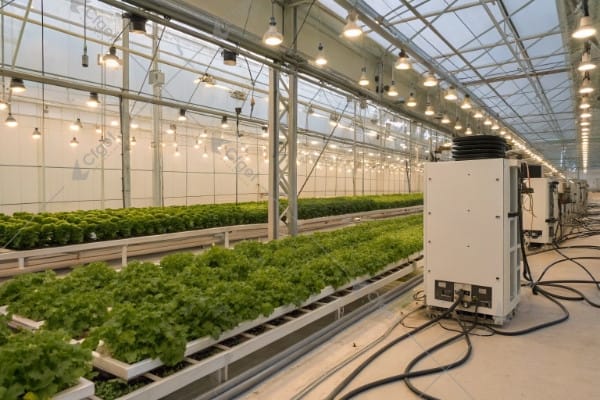
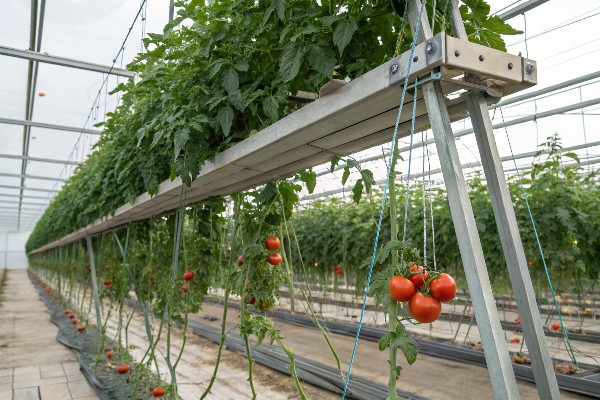
CO₂ enrichment transforms plant growth potential in controlled environments.
After implementing CO₂ systems in high-output growing operations across more than 20 countries, I have witnessed the dramatic transformation that proper carbon dioxide management creates. The difference becomes visible within weeks of installation. Plants develop larger leaves, stronger stems, and significantly higher fruit production. Our CFGET greenhouse designs now incorporate CO₂ enrichment as standard equipment for fruit and vegetable operations because the yield improvements are so substantial. These systems work particularly well in our sealed greenhouse structures where environmental control is most precise.
The Science of CO₂: Why It’s the Limiting Factor in High-Yield Greenhouses?
Most growers focus on light, water, and nutrients while ignoring the most basic requirement for plant growth. Without adequate CO₂, even perfect conditions cannot produce maximum yields.
Plants use CO₂ as the primary building block for photosynthesis, converting carbon dioxide and water into sugars that fuel growth. When CO₂ levels drop below 300 PPM, photosynthesis slows dramatically, limiting plant development regardless of other optimal conditions.
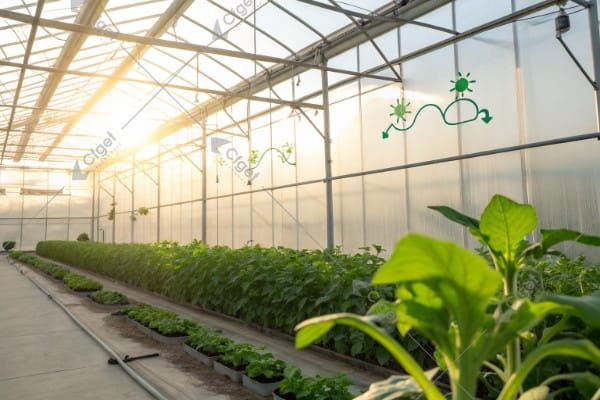
CO₂ provides the carbon atoms plants need to build sugars and grow.
Understanding the photosynthesis equation reveals why CO₂ becomes so critical for plant growth. The basic formula shows that six molecules of CO₂ combine with six molecules of water to produce one molecule of glucose plus oxygen. Without adequate CO₂, this fundamental process cannot operate at full capacity, regardless of how much light, water, or nutrients you provide.
Natural CO₂ depletion occurs rapidly in enclosed growing spaces. Outdoor air contains approximately 400 PPM of CO₂, but this level drops quickly when plants begin active photosynthesis. In a sealed greenhouse during peak daylight hours, CO₂ levels can fall below 200 PPM within 30 minutes. This severe depletion creates a bottleneck that limits growth potential.
The relationship between CO₂ concentration and photosynthesis rates follows a predictable curve. At 200 PPM, photosynthesis operates at only 50% of potential capacity. At 400 PPM (normal outdoor levels), plants achieve about 70% of maximum photosynthesis. Optimal levels of 1,000-1,500 PPM allow plants to reach 95-100% of their photosynthetic potential.
Temperature interactions significantly affect CO₂ utilization efficiency. Higher temperatures increase the rate at which plants can process CO₂, but only up to species-specific limits. Most greenhouse crops benefit from CO₂ enrichment when temperatures range between 75-85°F. Below 70°F, plants cannot utilize supplemental CO₂ effectively.
Light intensity determines how much CO₂ plants can actually use for photosynthesis. Under low light conditions, plants cannot process high CO₂ levels effectively. This is why CO₂ enrichment works best during bright daylight hours and becomes less beneficial during cloudy weather or winter months with reduced natural light.
The carbon-to-nitrogen ratio in plant tissues changes with CO₂ supplementation. Higher CO₂ levels increase carbon availability, which can dilute nitrogen concentrations in plant tissues. This effect requires careful nutrient management to maintain optimal plant nutrition during CO₂ enrichment programs.
Calculating the ROI: How CO₂ Enrichment Directly Boosts Your Profitability?
CO₂ systems require significant investment in equipment and ongoing operational costs. Many growers question whether the yield improvements justify these expenses.
CO₂ enrichment typically increases yields by 20-40% while adding $0.15-0.25 per square foot in annual operating costs. For high-value crops like tomatoes or cucumbers, this yield increase generates $8-15 additional revenue per square foot annually.

Yield increases from CO₂ enrichment create substantial profit improvements.
Real-world production data demonstrates the financial impact clearly. Consider a 1,000 square foot greenhouse producing tomatoes without CO₂ enrichment. Typical yields might reach 8 pounds per square foot annually, generating $24,000 in revenue at $3 per pound. The same greenhouse with proper CO₂ supplementation can produce 11-12 pounds per square foot, increasing revenue to $33,000-36,000 annually.
| Production System | Yield per sq ft | Revenue per sq ft | Total Revenue (1000 sq ft) | Net Gain |
|---|---|---|---|---|
| Without CO₂ | 8 lbs | $24 | $24,000 | Baseline |
| With CO₂ | 11 lbs | $33 | $33,000 | $9,000 |
| ROI Calculation | 37.5% increase | 37.5% increase | 37.5% increase | $9,000 |
Operating costs for CO₂ systems include equipment amortization, CO₂ supply, and monitoring equipment. A typical system costs $2,000-3,000 to install per 1,000 square feet, with annual operating costs of $150-250 for CO₂ supply and maintenance. These costs represent a small fraction of the additional revenue generated.
The payback period for CO₂ systems typically ranges from 6-12 months depending on crop value and local CO₂ costs. High-value crops like specialty vegetables, herbs, or cut flowers show faster payback because their higher selling prices amplify the benefit of increased yields.
Quality improvements add another layer of financial benefit. CO₂ enrichment often produces larger, more uniform fruits and vegetables that command premium prices. Tomatoes grown with optimal CO₂ levels typically grade higher and store longer, increasing their market value beyond the simple yield calculation.
Labor efficiency improves when CO₂ enrichment increases plant productivity. The same amount of planting, maintenance, and harvesting labor produces more saleable product, effectively reducing labor cost per unit of production. This efficiency gain can improve profitability by an additional 10-15%.
Energy cost considerations become important in cold climates where CO₂ enrichment requires sealed greenhouse operation. The increased heating costs must be factored against the yield benefits. However, our experience shows that the revenue gains typically exceed the additional energy costs by a factor of 3:1 or better.
Market timing advantages can multiply the financial benefits. CO₂ enrichment allows faster crop development, which can help growers hit premium market windows. Early season vegetables or flowers often command prices 50-100% higher than peak season production.
Best Practices for Sealed Greenhouses & Hydroponics: Achieving Optimal PPM Levels?
Successful CO₂ enrichment requires precise control and monitoring systems. Many growers struggle with maintaining optimal levels throughout changing daily conditions.
Optimal CO₂ levels range from 1,000-1,500 PPM during daylight hours, dropping to ambient levels at night. Sealed greenhouse systems with automated controls can maintain these levels consistently while preventing waste and ensuring safety.

Automated systems maintain precise CO₂ levels for optimal plant growth.
Timing control forms the foundation of effective CO₂ management. Plants only utilize CO₂ during photosynthesis, which occurs during daylight hours. We program systems to begin CO₂ injection 30 minutes after sunrise and stop 30 minutes before sunset. Night-time injection wastes CO₂ and can create safety hazards in enclosed spaces.
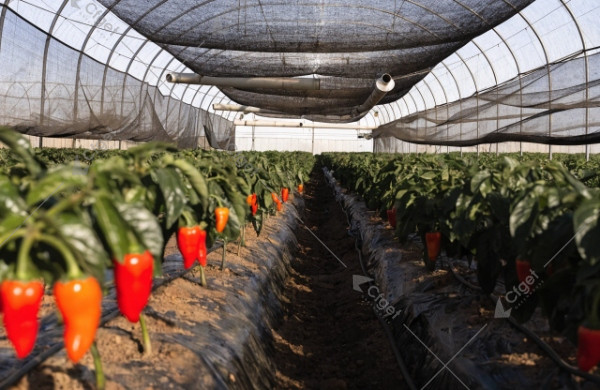
Target PPM levels vary by crop type and growing conditions. Most greenhouse vegetables perform best at 1,000-1,200 PPM during peak daylight hours. Leafy greens may benefit from slightly lower levels (800-1,000 PPM), while fruiting crops like tomatoes and peppers respond well to higher concentrations (1,200-1,500 PPM).
Distribution system design ensures uniform CO₂ levels throughout the growing space. We install perforated distribution tubes at plant canopy level to deliver CO₂ directly where plants can utilize it most effectively. Proper distribution prevents hot spots of high concentration and dead zones with inadequate CO₂ levels.
Monitoring equipment provides the feedback needed for precise control. We install multiple CO₂ sensors throughout the greenhouse to account for variations in plant density and air circulation patterns. These sensors feed data to automated control systems that adjust injection rates based on real-time conditions.
Integration with ventilation systems prevents CO₂ waste and maintains optimal growing conditions. During hot weather when vents open for cooling, CO₂ injection must stop to prevent waste. Advanced control systems coordinate CO₂ enrichment with heating, cooling, and ventilation to maximize efficiency.
Sealed greenhouse operation maximizes CO₂ utilization efficiency. When vents remain closed, injected CO₂ stays in the growing environment where plants can use it. This approach requires careful environmental control to prevent overheating and maintain proper humidity levels.
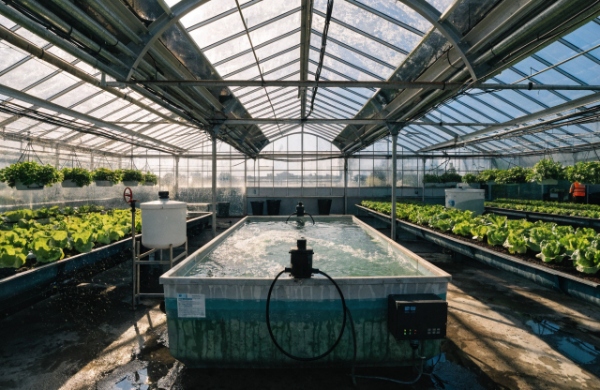
Hydroponics systems show particularly strong responses to CO₂ enrichment because other limiting factors are already optimized. When nutrition, water, and root environment are perfect, CO₂ becomes the primary factor limiting growth. Hydroponic growers often see 30-50% yield increases with proper CO₂ supplementation.
pH monitoring becomes important in sealed systems because CO₂ dissolves in water to form carbonic acid. This can affect nutrient solution pH in hydroponic systems. Regular monitoring and adjustment prevent pH drift that could harm plant growth.
3 Critical Mistakes to Avoid with CO₂ Enrichment (Safety & Efficiency)?
Improper CO₂ management can waste money, reduce effectiveness, and create serious safety hazards. These common mistakes prevent many growers from achieving optimal results.
The three critical mistakes are: running CO₂ during ventilation periods (wastes 60-80% of supply), ignoring safety monitoring in enclosed spaces, and failing to coordinate with temperature and light conditions. Avoiding these errors ensures safe, efficient CO₂ enrichment.
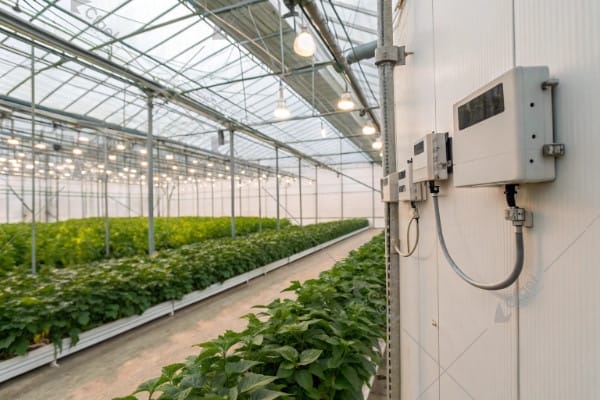
Proper safety monitoring prevents dangerous CO₂ accumulation in work areas.
Ventilation coordination represents the most expensive mistake growers make with CO₂ systems. When vents open for temperature control, injected CO₂ immediately escapes to the atmosphere. This waste can consume 60-80% of your CO₂ supply without providing any benefit to plants. We design systems that automatically stop CO₂ injection when vents open and resume when the greenhouse seals for optimal growing conditions.
Safety monitoring becomes critical in enclosed growing environments. CO₂ concentrations above 5,000 PPM can cause drowsiness and impaired judgment in workers. Levels above 10,000 PPM become dangerous and can cause unconsciousness. We install safety alarms that alert workers when CO₂ levels exceed safe thresholds and automatically activate ventilation systems to clear dangerous concentrations.
Temperature and light coordination prevents wasted CO₂ during non-optimal conditions. Plants cannot utilize supplemental CO₂ effectively when temperatures drop below 70°F or when light levels are insufficient for active photosynthesis. Running CO₂ systems during these conditions wastes supply and provides no growth benefit.
| Critical Mistake | Impact on System | Prevention Strategy | Cost of Error |
|---|---|---|---|
| CO₂ during ventilation | 60-80% waste | Automated vent coordination | $500-1000/year |
| Poor safety monitoring | Worker hazard | Multiple safety sensors | Potential injury |
| Ignoring environmental factors | Reduced effectiveness | Integrated controls | 30-50% efficiency loss |
Leak detection prevents gradual CO₂ loss that reduces system efficiency over time. Small leaks in distribution systems can waste significant amounts of CO₂ without obvious symptoms. We recommend regular pressure testing and visual inspection of all CO₂ lines and connections. Even minor leaks can increase operating costs by 20-30%.
Over-concentration creates diminishing returns and potential plant damage. Some growers assume that higher CO₂ levels always produce better results, but concentrations above 1,500 PPM provide minimal additional benefit for most crops. Extremely high levels (above 2,000 PPM) can actually stress plants and reduce growth rates.
Poor sensor placement leads to inaccurate readings and inefficient system operation. CO₂ sensors must be positioned at plant canopy level where concentrations matter most for photosynthesis. Sensors placed too high or too low provide readings that do not reflect actual growing conditions, leading to over- or under-dosing.
Ignoring nighttime safety protocols creates the most serious hazard with CO₂ systems. Some growers disable safety systems or ignore alarms during off-hours when workers are not present. However, equipment malfunctions can occur at any time, and dangerous CO₂ accumulations can persist into the next work day. Safety systems must operate continuously to protect workers entering the greenhouse.
Regular maintenance prevents system failures that can waste CO₂ and create safety hazards. Distribution lines can clog with dust or moisture, sensors can drift out of calibration, and control systems can malfunction. We recommend monthly system inspections and annual professional calibration to ensure optimal performance and safety.
Conclusion
CO₂ supplementation unlocks 20-40% yield increases by providing the carbon dioxide plants need for maximum photosynthesis, making it essential for profitable greenhouse operations.