Skip to content
Many aquaponics projects fail because the budget is wrong, not because the idea is wrong. One missing item—backup air, solids removal, or cooling—can wipe out fish and revenue fast.
A commercial aquaponics greenhouse budget must cover two full systems: greenhouse climate control + recirculating aquaculture (RAS). If I price only the greenhouse shell, I will pay later through fish loss, downtime, and unstable yields. FAO: Small-scale aquaponic food production (system design + management)<1>
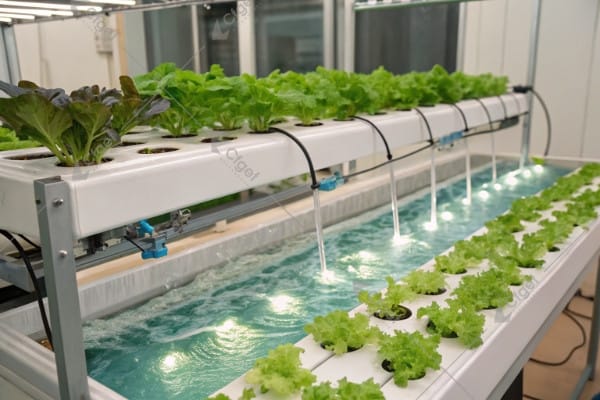
If I want this page to bring inquiries, I must answer what buyers actually ask: “How much will it cost, what will I forget, and how do I choose the right equipment level for my climate?”
YouTube (CFGET Video Module)
What are the main cost buckets for a commercial aquaponics greenhouse?
Many ranking pages list “greenhouse cost per m²” and stop. That is incomplete. In aquaponics, the RAS and stability systems often decide success.
My cost buckets are: greenhouse shell, climate systems, RAS tanks and plumbing, solids removal, biofiltration, aeration, sensors/alarms, water treatment, labor tools, and contingency. I budget by risk, not by wish. FAO: aquaponics design and management topics<1>
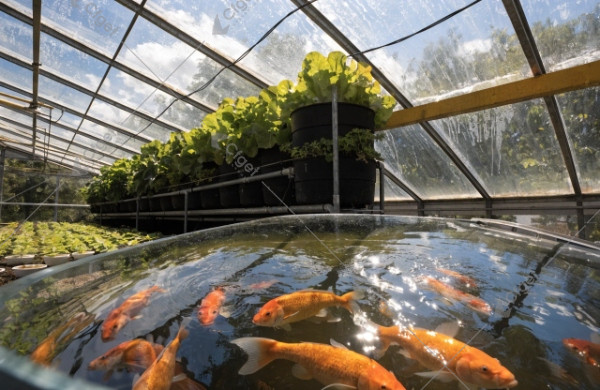
The CAPEX items most people forget
- backup air / backup pumping capacity
- solids removal sized for peak feeding
- greenhouse shading + ventilation “area” (not just fans)
- alarms and night monitoring logic
- isolation valves and easy-clean access lanes
A simple cost bucket table I use
| Bucket | What is inside | Why it is “make-or-break” |
|---|---|---|
| Greenhouse structure | frame + cover + doors | determines heat gain and durability |
| Climate control | vents, shade, fans, cooling, heating | controls fish stress and crop disease |
| RAS core | tanks, sump, plumbing | flow and turnover stability |
| Filtration | mechanical + biofilter media | controls ammonia/nitrite and clarity |
| Aeration | blowers, diffusers | protects DO and fish survival |
| Monitoring | pH, DO, temperature, alarms | prevents late discovery at night |
| Food safety | hygiene zones, cold chain basics | protects sales and trust |
| Contingency | 8–15% typical | biology is not perfect |
If I skip one “critical” item, I may save 3% CAPEX and lose 30% revenue.
Hidden costs are not “secret.” They are simply not included in typical greenhouse quotes. Aquaponics is more sensitive to downtime.
The top hidden costs are: power interruptions, oxygen failure risk, solids handling labor, pH/alkalinity consumption, heat stress, and product handling (cold chain for leafy greens). US EPA: dissolved oxygen and fish stress risk<2>
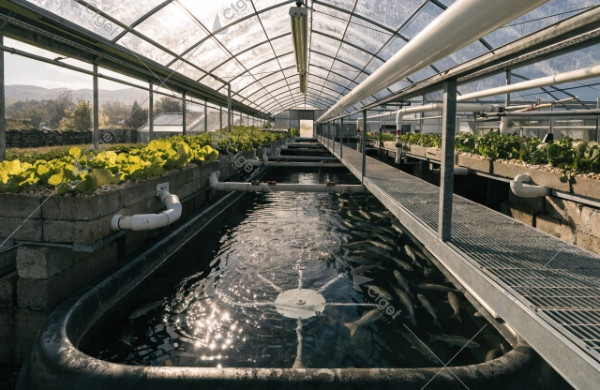
Hidden cost 1: Oxygen and night-time failure risk
If dissolved oxygen drops, fish can die quickly. That is why I treat Dissolved Oxygen<2> as life support, not a “nice to have.”
Hidden cost 2: pH and alkalinity consumption
Nitrification consumes alkalinity over time. If I do not plan for buffering and monitoring, pH can crash. Cornell’s aquaponics greenhouse project highlights how alkalinity is consumed and why balancing pH between fish and plants is a core challenge. Cornell / USDA NIFA aquaponics greenhouse project<3>
Hidden cost 3: Cooling and humidity control in harsh climates
In hot arid zones, a modern assessment found that evaporative cooling + shading + mechanical cooling can be needed to control temperature and humidity, and dehumidification can improve water efficiency. Wageningen University & Research (2025): industrial aquaponics in arid zones<4>
Hidden cost 4: Postharvest temperature control (especially leafy greens)
If I sell leafy greens, cold holding is part of food safety and shelf life. FDA guidance emphasizes keeping cut leafy greens at 41°F (5°C) or less in retail storage/display to reduce pathogen growth risk. FDA: temperature control of cut leafy greens<5>
Here is the hidden-cost “killer” table I use:
| Hidden cost | What causes it | What I include in the plan |
|---|---|---|
| Fish loss event | power/air failure | backup air + alarm + SOP |
| Labor creep | messy layout + clogged filters | clean zoning + fast-access filters |
| Yield instability | heat swings + humidity traps | shade + vent area + staged cooling |
| pH crash | low alkalinity buffer | monitoring + slow buffering routine |
| Product rejection | poor cold chain | simple cold storage discipline |
What design level should I choose: entry-level commercial vs high-control commercial?
Not every project needs a “fully automated” greenhouse on day one. But if I under-build for my climate, I will pay forever.
I choose design level based on climate risk and sales requirement. Entry-level commercial focuses on ventilation, shade, and stable filtration. High-control adds tighter humidity control, better automation, and stronger redundancy. FAO: aquaponics management and troubleshooting<1>
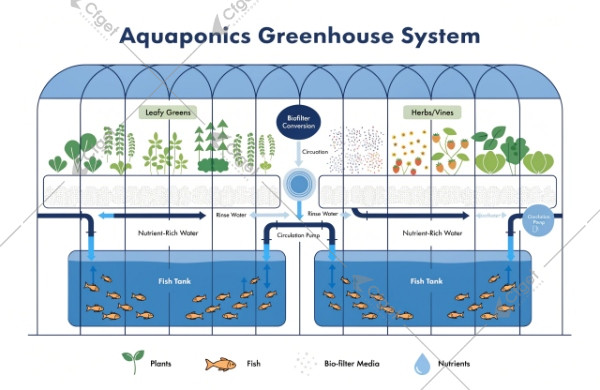
Entry-level commercial (good for learning + early cashflow)
Must-haves
- strong natural ventilation + shade strategy
- solids removal that is easy to clean
- biofilter sized for peak feed
- basic sensors (temperature + pH) and manual routine
- backup aeration plan
High-control commercial (good for extreme climates and strict buyers)
Upgrades that pay back
- better ventilation geometry + airflow management
- more stable cooling and humidity strategy
- alarms with night response plan
- better harvest handling and cold chain discipline
A decision table I use with buyers:
| Condition | Best design level | Why |
|---|---|---|
| mild climate + direct local sales | entry-level commercial | lower CAPEX, faster start |
| extreme heat or arid water stress | high-control commercial | stability decides survival |
| strict buyers + cold chain needs | high-control commercial | quality and safety are pricing power |
| low labor availability | higher automation | reduces daily workload |
How do I reduce cost per m² without reducing survival and stability?
Cheap aquaponics is usually expensive later. My cost reduction must not remove stability systems.
I reduce costs by simplifying layout, using staged climate control, standardizing crop choice, and buying “upgrade-ready” infrastructure. I never cut backup aeration, filter access, or vent area. US EPA: dissolved oxygen (fish survival risk)<2>
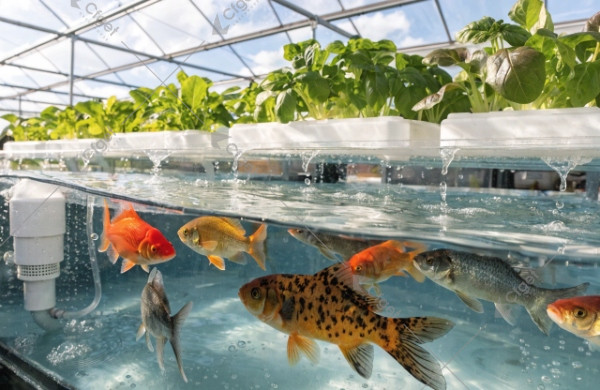
Where I safely save money
- fewer crop types in the first season
- modular expansion plan (add beds/tanks later)
- simple workflow design that cuts labor minutes
- staged shading and ventilation before expensive cooling
Where I never save money
- Dissolved oxygen safety<2> (backup aeration is non-negotiable)
- filtration access and cleaning speed
- alarms or at least a night-check routine
- food safety basics and cold chain discipline
For global food hygiene framing, I also align with public standards and health authority guidance rather than competitors. WHO: Food safety fact sheet (updated Oct 4, 2024)<6> and FAO/WHO Codex guidance (fresh produce context)<7> support the idea that hygiene routines and temperature control matter for trust and trade.
Conclusion
A commercial aquaponics greenhouse budget is not “greenhouse cost.” It is a stability budget: climate control, filtration, aeration redundancy, monitoring, and food safety. If I fund stability first, ROI becomes realistic.
External Links (Footnotes)
1> https://www.fao.org/family-farming/detail/en/c/1743021/
<2> https://www.epa.gov/caddis/dissolved-oxygen
<3> https://portal.nifa.usda.gov/web/crisprojectpages/1010413-development-of-aquaponic-systems-for-the-production-of-lettuce-and-strawberries.html
<4> https://research.wur.nl/en/publications/environmental-assessment-of-industrial-aquaponics-in-arid-zones-u/
<5> https://www.fda.gov/food/retail-food-industryregulatory-assistance-training/program-information-manual-retail-food-protection-recommendations-temperature-control-cut-leafy
<6> https://www.who.int/news-room/fact-sheets/detail/food-safety
<7> https://www.fao.org/4/a1389e/a1389e00.htm
## Internal Blog References (Related CFGET Articles)
– **How to Set Up a Commercial Greenhouse: An Essential Guide for Growers and Agribusinesses**
How to Set Up a Commercial Greenhouse: Essential Guide for Growers & Businesses?
– **Hydroponic Greenhouse Systems: Investment vs Yield, ROI Models, and Payback Periods**
Hydroponic Greenhouse System Investment vs Yield: Real ROI Models, Break-Even Yield & Payback Years?
– **How Much Does It Cost to Build a Smart Greenhouse? Hidden Costs You Should Know**
How Much Does It Cost to Build a Smart Greenhouse? What Are the Hidden Costs?
– **Greenhouse Irrigation Systems: The Ultimate Guide to Boosting Yields & Saving Water**
Greenhouse Irrigation Systems: The Ultimate Guide to Boosting Yields & Saving Water
– **Why Sawtooth Greenhouses Beat the Heat with Zero-Energy Natural Ventilation**
Sawtooth Greenhouses: Beat the Heat with Zero-Cost Natural Ventilation?
## Internal References (CFGET Pages)
– **CFGET Homepage**
– **Multi-span Film Greenhouse**
– **Wide-span Greenhouse**
– **Temperature Solutions (Cooling / Shading / Ventilation)**
– **Smart Auto & Control Solutions**
https://cfgreenway.com/solutions/smart-auto-control/