You need a greenhouse covering that lasts decades. Cheaper films break down fast, and replacement costs kill your budget. You need a high-end material that performs for 30 years or more.
When comparing F-Clean film greenhouse systems to polycarbonate panels, F-Clean film offers superior light transmission—often over 92%—and a self-cleaning surface that guarantees better light quality over a 30-year lifespan. While polycarbonate is stronger against hail, F-Clean’s long-term transparency and UV stability make it the top choice for maximizing crop growth.
Choosing the right covering material is the most important decision you will make. The covering is what protects your plants and lets in the sunlight they need to grow. If your covering gets dirty or yellow, your yields go down. We know that long-term performance is what truly saves money. Let us compare the two best options for your high-tech commercial farm.
The Durability Debate: F-Clean Film Greenhouse vs Polycarbonate Comparison on Light and Life?
You are worried about the covering material yellowing over time. Yellowing means less light reaches your plants, and your production slows down. You need a covering material with proven, long-lasting clarity.
The main difference in the F-Clean film greenhouse vs polycarbonate comparison is long-term clarity and weight. F-Clean film uses a special Fluoropolymer material that resists almost all chemicals and UV damage, keeping its high light transmission for over 20 years. Polycarbonate is rigid and highly impact-resistant, but its light transmission may drop faster over the same period due to surface scratches and dust accumulation.
Dive Deeper: Why F-Clean’s Clarity is a Money Maker
Light is the fuel for your crops. The more pure light you get, the more your plants grow and the faster you make money. This is why the material’s ability to stay clear is worth the high cost.
F-Clean film, also known as ETFE film, is very thin and very strong. It is the same material used for famous structures like stadium roofs. Its surface is so smooth that dirt and dust cannot stick to it easily. When it rains, the water washes the film clean. This is the self-cleaning surface feature. Because it is so clear, it usually lets through over 92% of the available light. This high light transmission rate is a huge advantage for high-value crops like tomatoes or flowers in places like Europe and North America where light is precious in winter.
Polycarbonate (PC) is a thicker, rigid panel. It is extremely strong and can handle big hail storms or a lot of weight. However, PC panels are usually multi-wall (hollow) for better insulation. This multi-wall structure already reduces light transmission below glass or F-Clean. Over time, the surface can get scratched, and dust can settle inside the chambers, making the panel appear hazy. This haze reduces the light reaching your plants, which directly reduces your yield. When we work with research institutions and large commercial growers, we always stress that stable light transmission is the key to long-term profit. That is where F-Clean wins the durability debate. Our CFGET experience shows that choosing the right material at the start prevents costly light loss later.
| Feature | F-Clean (ETFE) Film | Polycarbonate (PC) Sheet |
|---|---|---|
| Light Transmission | Excellent (92%+) | Good (75% – 85% for multi-wall) |
| Lifespan | 20+ Years | 10 – 15 Years (before significant yellowing) |
| Impact Strength | High (Flexible, tear-resistant) | Very High (Rigid, hail-resistant) |
| Weight | Very Light | Medium/Heavy (Requires stronger structure) |
| Self-Cleaning | Yes | No |
Essential Maintenance: Your Greenhouse Roof Cleaning and Maintenance Schedule for Maximum Light Transmission?
Dust, pollution, and algae build up on your roof. That dirt layer steals light from your plants, costing you thousands in lost revenue. You need a simple, routine cleaning plan to keep your roof transparent.
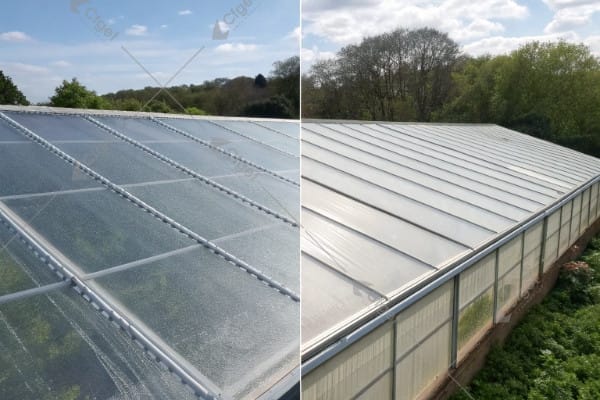
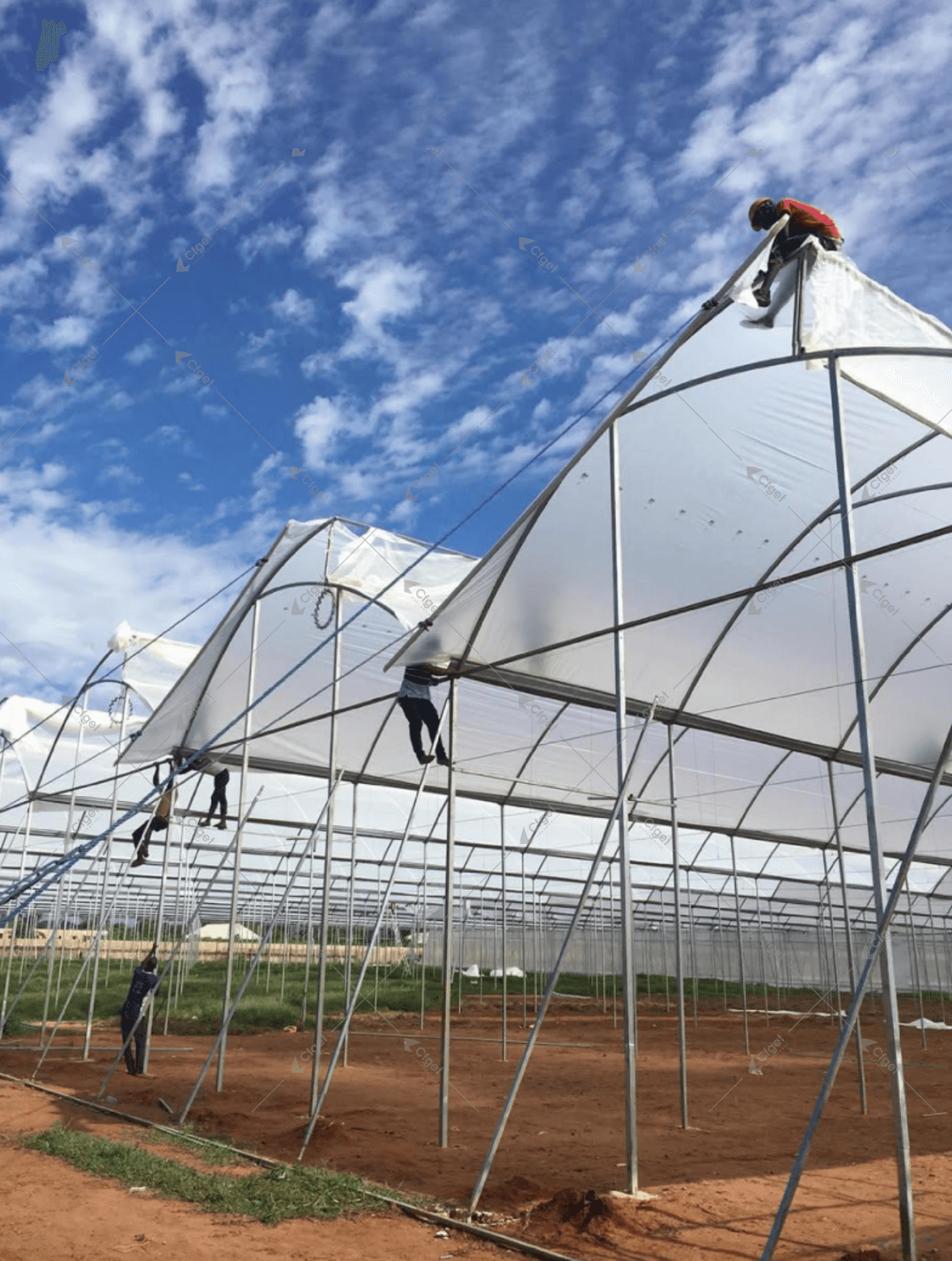
Your greenhouse roof cleaning and maintenance schedule should include deep cleaning every 1 to 2 years, depending on your local pollution levels. For plastic films, use soft brushes and non-abrasive soap to avoid scratching. For glass, check the sealants twice a year. Maintaining a clean roof is the cheapest way to instantly increase your light transmission and boost crop yield.
Dive Deeper: Protecting Your Investment with Simple Steps
A clean greenhouse roof is not just about looks; it is about efficiency. We always tell our clients, especially in industrial areas, that light loss from dirt can be as high as 10% to 20%. That means 10% to 20% less food you can sell.
Your maintenance schedule should focus on two parts: Cleaning and Inspection.
Cleaning should be done right after the main harvest season or before the low-light season (like winter). You should never use harsh chemicals or pressure washers. These can damage the UV protective layer on PC panels or stretch the plastic film. Our CFGET team recommends a simple, mild soap solution and soft brushes. For F-Clean film, the cleaning is often just a quick rinse because of its self-cleaning nature.
Inspection is critical for structural integrity. You must check the steel frame, the gutters, and the connections for any signs of rust or looseness. If you use glass, check the sealant lines for cracks where water or air might leak. Water leaks can lead to disease, and air leaks waste expensive heat in winter. For our partners in Central Asia, who experience extreme temperatures, checking the seals twice a year is mandatory to maintain the heating efficiency we built into the structure. Regular maintenance ensures the long-term profitable goals we promised are met.
Cost-Effective Upgrade: Replacing Old Greenhouse Glass with Polycarbonate Panels for Better Insulation?
Your old glass greenhouse is safe, but it loses too much heat. Your heating bills in winter are skyrocketing, making planting unprofitable. You can upgrade your structure by installing multi-wall polycarbonate sheets.
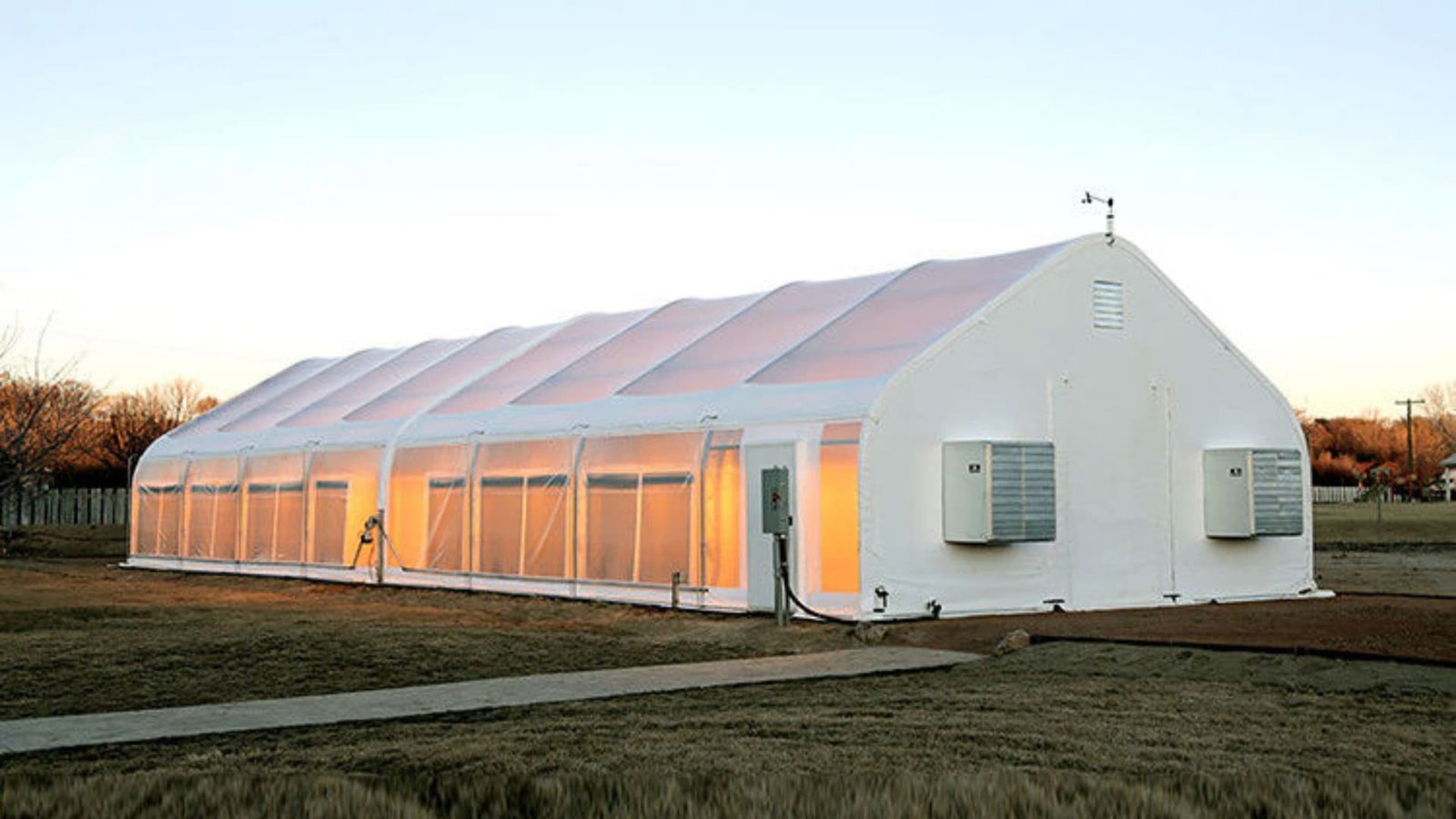
Replacing old greenhouse glass with polycarbonate panels is a cost-effective modernization strategy to dramatically improve your structure’s insulation value. Multi-wall PC sheets trap air inside their chambers, which acts as a thermal barrier. This can cut your winter heating costs by 30% to 50% compared to a single layer of glass, while also offering much better safety against breaking.
Dive Deeper: Insulation Benefits of PC for Retrofitting
Many older commercial greenhouses in Europe and North America used single-pane glass. While glass is clear, it has very low insulation value. It is like leaving a window open all winter.
Switching to multi-wall polycarbonate panels (PC) is a smart way to modernize. PC panels, which can have 4mm, 8mm, or even 10mm thickness, have air pockets inside. Air is a very good insulator. These air pockets stop the expensive heat from escaping the greenhouse. The increase in insulation is measured by the U-value. A good PC panel can have a U-value that is 50% better than single glass. This means a lot less money spent on gas or electricity every month.
Furthermore, PC is very lightweight and almost unbreakable. This makes it safer for workers and protects your crops from damage. If you are an agent or grower looking to renovate an old structure, the original steel frame might still be strong. Our CFGET team can help you check the old frame’s load-bearing capacity. Because PC is light, it puts less stress on the old frame, which simplifies the replacement project. This is a crucial retrofit solution, offering high cost-effectiveness for clients who want to improve an existing building.
Engineering Excellence: Why Gothic Arch Multi-span Greenhouse Design Advantages Help Shed Snow and Water?
Your standard rounded arch greenhouse holds snow and water on the roof. The risk of roof collapse is high, and standing water causes leaks. You need a structure with a peaked roof that naturally forces snow and water off the covering.
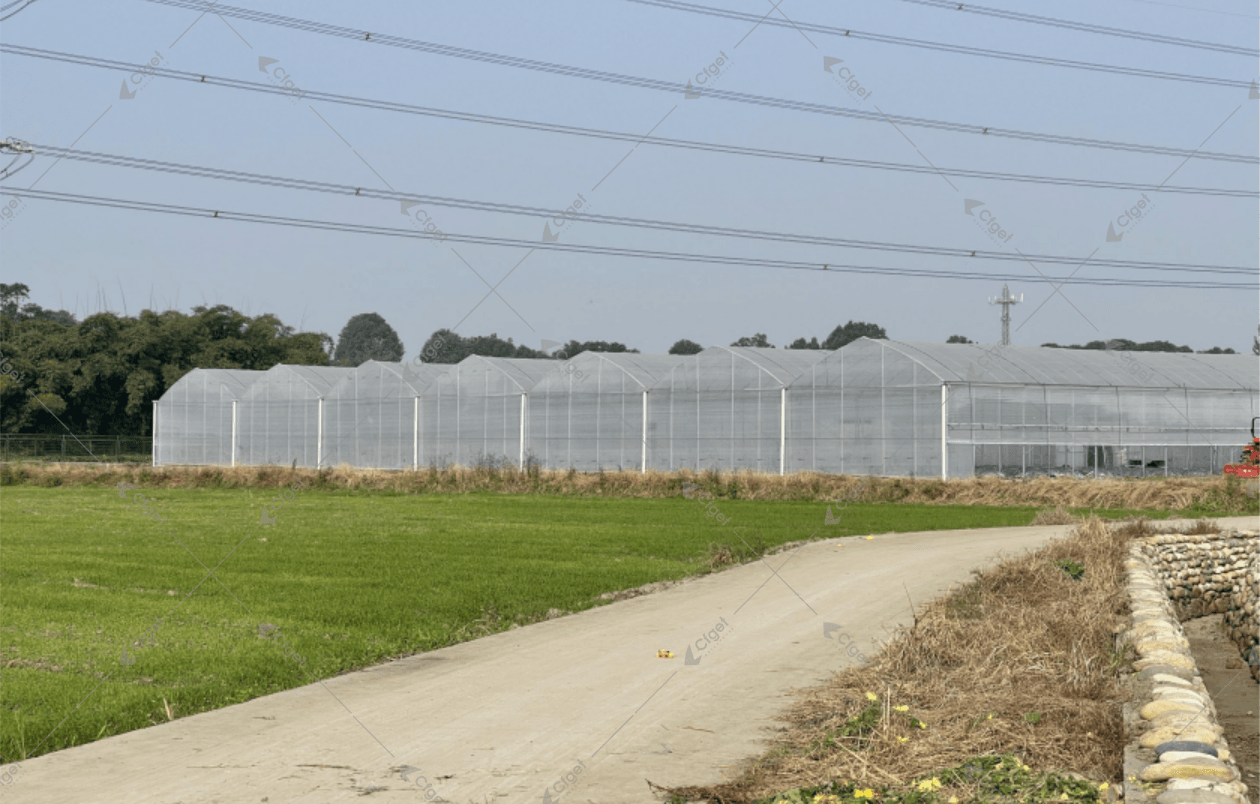
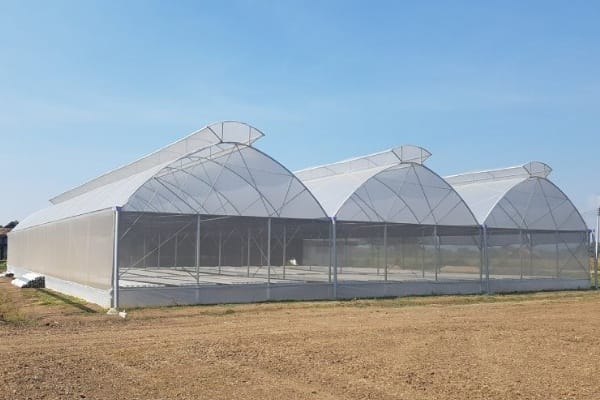
The Gothic arch multi-span greenhouse design offers a distinct advantage over standard rounded tunnels because of its peaked, pointed shape at the apex. This steeper angle allows heavy snow and rainwater to slide off the roof naturally and quickly. This design prevents water pooling, reduces the load on the steel structure, and ensures higher light transmission during the winter months.
Dive Deeper: Structural Benefits of the Gothic Arch
The shape of the roof is not just about looks; it is about engineering strength and function. While the Venlo structure (which we discussed earlier) is the gold standard for glass, the Gothic Arch is a popular choice for plastic film or flexible PC coverings.
A standard rounded arch is strong, but snow can stick to the flatter top. When snow melts slightly and then refreezes, it can add a huge amount of weight to the structure. The Gothic arch solves this problem because it is pointed and steeper near the top. This design uses gravity to its advantage. The snow slides right off the roof. This is a massive safety benefit for our clients in places with heavy snowfall, like parts of Canada or Central Asia.
Another advantage is the increased usable space. The Gothic arch provides more internal height near the sides of the structure than a rounded arch. This extra vertical space means better air circulation and more room for vertical crop systems (like hanging baskets or high-wire tomatoes). We recommend the Gothic Arch multi-span design as a durable and cost-effective alternative for growers needing large covered areas who choose film or PC coverings over glass. This design detail ensures your investment is safe from the elements.
Conclusion
Choosing between F-Clean film and polycarbonate depends on your goals: F-Clean offers maximum light, while PC offers maximum impact protection and better insulation for retrofits. Both require regular maintenance, and smart structural designs like the Gothic arch are essential for safety and profitability.