Extreme heat destroys crops and devastates greenhouse profits. Traditional cooling methods fail when temperatures soar above 40°C. Fan and pad systems offer the proven solution for hot climate agriculture.
Fan and pad cooling systems reduce greenhouse temperatures by 8-12°C through evaporative cooling and negative pressure ventilation. This combination provides the most cost-effective cooling solution for high-temperature regions worldwide.
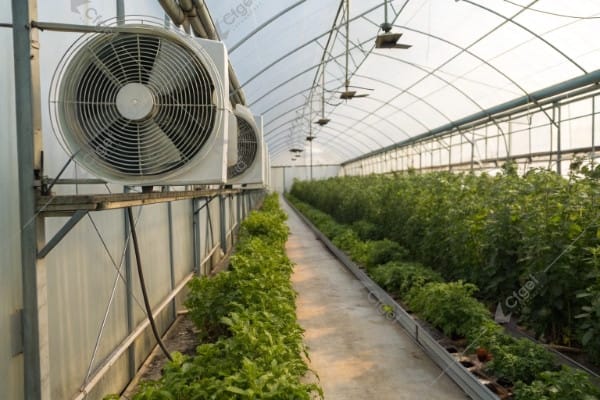
Working in greenhouse cooling for nearly three decades, I have installed fan and pad systems across the hottest regions on Earth. From Saudi Arabia’s desert heat to Thailand’s humid summers, this technology consistently delivers results when other systems fail.
The Power of Evaporation: How a Fan & Pad System Drastically Lowers Temperatures?
Physics drives fan and pad cooling effectiveness. Water evaporation absorbs massive amounts of heat energy. This natural process creates the foundation for reliable greenhouse temperature control in extreme climates.
Evaporative cooling absorbs 2,260 kilojoules of energy per kilogram of water evaporated. Fan and pad systems harness this process to reduce greenhouse temperatures by 8-12°C below ambient conditions.

The evaporative cooling process begins when hot outside air contacts the wet cooling pads. These pads contain specially designed cellulose material that holds water while allowing maximum air contact. As hot air passes through the saturated pad material, water molecules absorb heat energy and change from liquid to vapor state. This phase change removes substantial heat from the air stream, creating cooler air that enters the greenhouse.
Negative pressure ventilation amplifies the cooling effect. Large exhaust fans create suction that draws outside air through the wet pads at controlled velocities. This forced air movement ensures consistent cooling performance regardless of natural wind conditions. The negative pressure also prevents hot outside air from entering through cracks or openings, maintaining uniform internal temperatures.
The cooling capacity depends on ambient temperature and humidity levels. In dry climates with low relative humidity, fan and pad systems achieve maximum cooling effectiveness. Desert regions with 10-20% humidity can experience temperature reductions of 12-15°C. Higher humidity areas still benefit significantly, with cooling reductions of 6-10°C in tropical conditions.
| Climate Condition | Ambient Temp | Relative Humidity | Cooling Achieved | Final Temp |
|---|---|---|---|---|
| Desert (Saudi) | 45°C | 15% | 12°C | 33°C |
| Semi-Arid (Turkey) | 40°C | 25% | 10°C | 30°C |
| Tropical (Thailand) | 38°C | 60% | 8°C | 30°C |
| Mediterranean (Spain) | 42°C | 35% | 11°C | 31°C |
Air velocity through the cooling pads affects performance significantly. Optimal air speeds range from 1.5 to 2.0 meters per second through the pad face. Slower speeds reduce cooling capacity while higher speeds can carry water droplets into the greenhouse, creating humidity problems and reducing pad life.
Water quality impacts system efficiency and longevity. Hard water with high mineral content clogs pad pores and reduces cooling capacity over time. Salt deposits build up on pad surfaces, blocking air flow and creating uneven cooling patterns. Regular maintenance and water treatment prevent these issues and maintain peak performance.
The system creates uniform temperature distribution throughout the greenhouse. Cool air enters at the pad wall and gradually warms as it travels toward the exhaust fans. This temperature gradient rarely exceeds 2-3°C in properly designed systems, ensuring consistent growing conditions for all plants.
The Essential System for Growers in the Middle East, SEA, & Africa?
Hot climate agriculture faces unique challenges. Extreme temperatures make greenhouse production impossible without effective cooling. Fan and pad systems provide the reliable solution that enables year-round cultivation in these demanding regions.
Fan and pad cooling systems are essential for greenhouse production in regions where summer temperatures exceed 35°C. These systems enable profitable cultivation in the Middle East, Southeast Asia, and Africa where other cooling methods prove inadequate.
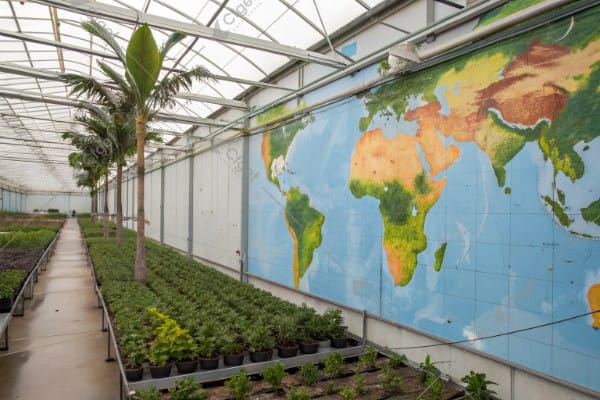
My experience across these regions reveals the critical importance of fan and pad cooling for agricultural success. In the United Arab Emirates, I worked with a tomato producer facing 48°C summer temperatures. Without cooling, the greenhouse became uninhabitable for both plants and workers. Traditional air conditioning proved prohibitively expensive for the 8,000 square meter facility.
We installed a comprehensive fan and pad system with 36 exhaust fans and 200 meters of cooling pad wall. The transformation was remarkable. Interior temperatures dropped from deadly 50°C+ levels to manageable 32-35°C ranges. Tomato plants resumed normal growth and fruit production throughout the summer months. The investment paid for itself within 18 months through increased yields and extended growing seasons.
Southeast Asian installations face different challenges with high humidity and frequent rainfall. In Vietnam’s Mekong Delta, we adapted fan and pad systems for tropical conditions. The key modifications included larger pad areas to compensate for reduced cooling efficiency and enhanced drainage systems to handle monsoon conditions.
African projects often deal with limited infrastructure and water quality issues. A successful installation in Kenya required custom water treatment systems to handle high mineral content in local water supplies. We also incorporated solar power integration to reduce operating costs in areas with expensive or unreliable electricity.
| Region | Primary Challenge | System Adaptation | Typical Cooling | Growing Season Extension |
|---|---|---|---|---|
| Middle East | Extreme dry heat | Larger fan capacity | 12-15°C | 4-6 months |
| Southeast Asia | High humidity | Increased pad area | 6-10°C | 2-4 months |
| North Africa | Water quality | Treatment systems | 10-12°C | 3-5 months |
| Sub-Saharan Africa | Power limitations | Solar integration | 8-11°C | 3-4 months |
The economic impact extends beyond just enabling production. Fan and pad cooling allows growers to compete in export markets by maintaining consistent quality standards. Temperature-stressed crops produce inferior fruits and vegetables that cannot meet international specifications. Proper cooling ensures premium quality that commands higher prices.
Labor conditions improve dramatically with effective cooling. Workers can maintain productivity during hot weather instead of limiting work to early morning and evening hours. This extended working capability increases operational efficiency and reduces labor costs per unit of production.
The system reliability proves crucial in remote locations with limited technical support. Fan and pad systems use simple mechanical components that local technicians can maintain and repair. This accessibility contrasts sharply with complex refrigeration systems that require specialized expertise and expensive replacement parts.
Optimizing Your Setup: A CFGET Guide to Fan & Pad Sizing and Configuration?
Proper system sizing determines cooling effectiveness and energy efficiency. Incorrect calculations lead to inadequate cooling or excessive operating costs. Our proven methodology ensures optimal performance for any greenhouse size and climate condition.
Optimal fan and pad sizing requires 0.04-0.06 cubic meters per second of air flow per square meter of greenhouse floor area. Pad area should equal 1.5-2.0 square meters per 1,000 cubic meters per hour of air flow capacity.
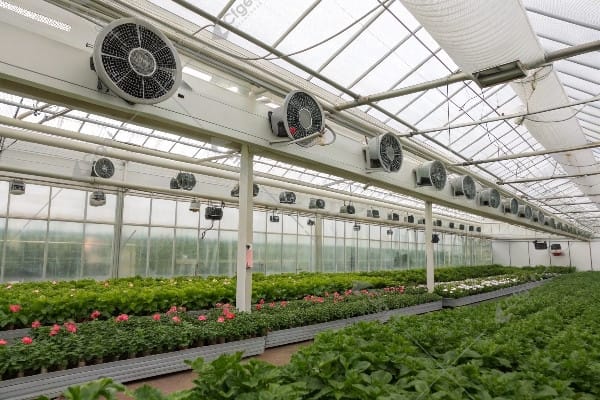
The sizing process begins with accurate greenhouse volume calculations. Length times width times average height provides the basic cubic meter measurement. However, internal structures like benches, walkways, and equipment reduce the effective air volume. We typically apply a 15-20% reduction factor to account for these obstructions.
Air exchange rate determines fan capacity requirements. Hot climate greenhouses need 40-60 complete air changes per hour to maintain adequate cooling. This translates to moving the entire greenhouse air volume every 1-2 minutes during peak cooling periods. Higher exchange rates provide better cooling but increase energy consumption and operating costs.
Fan placement affects air distribution patterns throughout the greenhouse. Exhaust fans should be located on the side opposite the cooling pads to create uniform air flow. Multiple smaller fans provide better distribution than fewer large fans. We typically space fans no more than 7 meters apart along the exhaust wall to prevent dead air zones.
Pad area calculations must account for face velocity limitations. Air speeds exceeding 2.0 meters per second through pad faces cause water carryover and reduce cooling efficiency. Insufficient pad area forces higher face velocities that compromise system performance. Our standard formula provides 1.5-2.0 square meters of pad area per 1,000 cubic meters per hour of air flow.
| Greenhouse Size | Floor Area | Air Volume | Fan Capacity | Pad Area | Number of Fans |
|---|---|---|---|---|---|
| Small | 500 m² | 2,000 m³ | 30 m³/s | 54 m² | 6 fans |
| Medium | 2,000 m² | 8,000 m³ | 120 m³/s | 216 m² | 18 fans |
| Large | 5,000 m² | 20,000 m³ | 300 m³/s | 540 m² | 36 fans |
| Commercial | 10,000 m² | 40,000 m³ | 600 m³/s | 1,080 m² | 60 fans |
Water distribution systems require careful design to ensure uniform pad wetting. Insufficient water flow creates dry spots that allow hot air bypass. Excessive water flow wastes energy and can cause structural problems. We design distribution systems to provide 2-4 liters per minute per linear meter of pad width.
Control systems optimize performance while minimizing energy consumption. Temperature sensors trigger fan operation when cooling is needed. Humidity controls prevent excessive moisture buildup that can promote plant diseases. Variable speed drives allow fans to operate at reduced speeds during moderate conditions, saving energy while maintaining comfort.
Backup systems ensure continuous operation during equipment failures. Redundant fans and water pumps prevent total system shutdown during critical hot weather periods. Emergency generators or battery backup systems maintain operation during power outages that could otherwise result in crop losses.
The greenhouse orientation influences cooling system effectiveness. East-west oriented structures receive more direct sunlight and require larger cooling capacity. North-south orientation provides more even temperature distribution but may need additional shading to optimize cooling performance.
4 Common Mistakes to Avoid When Installing Your Evaporative Cooling System?
Installation errors compromise cooling performance and increase operating costs. These mistakes occur frequently in both professional and self-installed systems. Learning from common problems saves money and ensures reliable operation.
The four most critical installation mistakes are undersized pad areas, improper fan placement, inadequate water distribution, and poor air sealing. These errors reduce cooling capacity by 30-50% and increase energy consumption significantly.
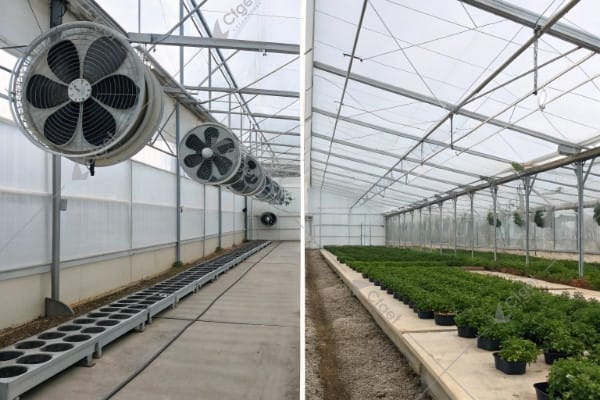
Undersized pad areas represent the most common and costly mistake. Many installers reduce pad area to save initial costs without understanding the performance consequences. Insufficient pad area forces excessive air velocities that reduce cooling efficiency and cause water carryover problems. The result is inadequate cooling performance that cannot be corrected without major system modifications.
I encountered this problem at a cucumber facility in Jordan. The original installer provided only 60% of the required pad area to reduce project costs. The system struggled to maintain acceptable temperatures, with interior conditions reaching 38°C during peak summer heat. Plants showed severe stress symptoms and yields dropped 40% below expectations.
We retrofitted the facility with properly sized cooling pads, increasing the pad area by 70%. The improvement was immediate and dramatic. Interior temperatures dropped to 30-32°C during the same weather conditions. Cucumber production recovered to normal levels within two growing cycles, validating the importance of proper pad sizing.
Improper fan placement creates uneven cooling and dead air zones. Fans installed too close together waste energy by competing for the same air volume. Fans spaced too far apart leave areas with insufficient air movement. The optimal spacing depends on fan size and greenhouse dimensions but typically ranges from 5-8 meters between fan centers.
| Common Mistake | Performance Impact | Correction Cost | Prevention Method |
|---|---|---|---|
| Undersized pads | 30-40% less cooling | High retrofit cost | Proper calculations |
| Poor fan spacing | Uneven temperatures | Moderate relocation | Professional design |
| Inadequate water flow | Dry spots, hot air bypass | Low maintenance cost | Quality distribution |
| Air leaks | Reduced efficiency | Low sealing cost | Careful construction |
Inadequate water distribution creates dry spots in cooling pads that allow hot air to bypass the evaporative cooling process. This problem often results from undersized water pumps or poorly designed distribution headers. Dry spots reduce overall cooling capacity and create uneven temperature patterns throughout the greenhouse.
Water quality issues compound distribution problems. Hard water with high mineral content clogs distribution nozzles and creates uneven flow patterns. Regular maintenance and water treatment prevent these issues, but many operators overlook this requirement until problems become severe.
Poor air sealing allows hot outside air to enter the greenhouse without passing through the cooling pads. These air leaks reduce system efficiency and create hot spots near the entry points. Common leak locations include doors, vents, structural joints, and equipment penetrations. Proper sealing during construction prevents these problems and maintains optimal cooling performance.
The fourth major mistake involves inadequate electrical infrastructure for fan operation. Large cooling fans require substantial electrical capacity and proper motor protection. Undersized electrical systems cause voltage drops that reduce fan performance and can damage motors. Professional electrical design ensures reliable operation and prevents costly equipment failures.
Control system errors also compromise performance. Improperly calibrated temperature sensors cause fans to operate at wrong times or speeds. Inadequate humidity controls can create excessive moisture that promotes plant diseases. Professional commissioning ensures all control systems operate correctly and optimize cooling performance.
Conclusion
Fan and pad cooling systems provide essential temperature control for greenhouse production in extreme heat. Proper sizing, installation, and maintenance ensure reliable cooling performance and profitable operations in the world’s hottest climates.