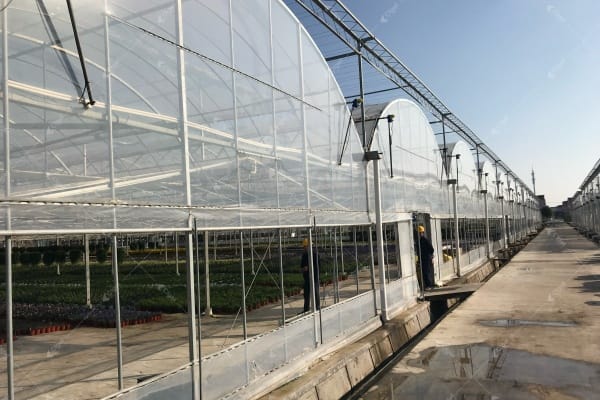
Extreme heat breaks greenhouse plans faster than any other factor. Many systems look correct on paper, but once temperatures rise above limits, crops suffer and control systems lose effect.
A greenhouse cooling system fails in extreme heat not because cooling equipment is missing, but because heat load, humidity limits, airflow design, and control logic are not matched to real climate conditions.
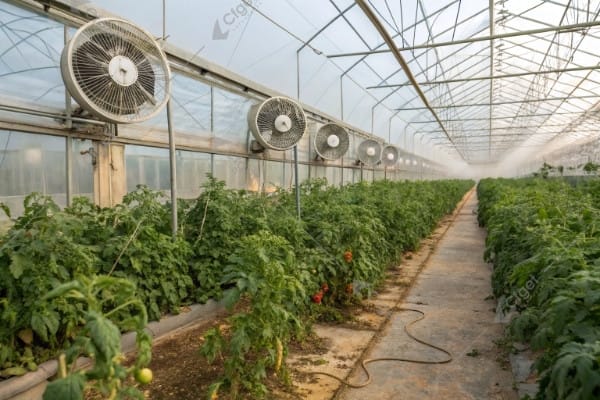
I write this article from real project review experience. I have seen greenhouses with fans, pads, and sensors still overheat during heat waves. This article does not list equipment. It diagnoses failure causes step by step and shows how to solve extreme heat problems in a realistic way.
Why does a greenhouse cooling system fail during extreme heat events?
Extreme heat is not a normal hot day. It is a different operating condition.
Most greenhouse cooling systems fail during extreme heat because they are designed for average summer days, not peak heat loads that last for hours or days.
Dive deeper
Many top-ranking pages talk about “hot climate cooling,” but they do not define extreme heat. In real projects, extreme heat usually means outside temperatures above 40°C, sometimes above 45°C, combined with strong solar radiation and limited night cooling. Under these conditions, the greenhouse is under constant thermal pressure.
From an engineering view, cooling capacity must exceed heat load. If the incoming solar and ambient heat is higher than what ventilation and cooling can remove, temperature will rise no matter how many systems are installed. Research and practical guidelines summarized by FAO – Food and Agriculture Organization of the United Nations show that heat stress rapidly increases plant respiration and water demand, which means crop damage happens even before visible wilting appears.
Another reason is design assumptions. Many systems are sized using “typical summer” values. However, climate data from the World Bank Climate Change Knowledge Portal shows that extreme heat events are becoming more frequent and longer. Designing only for average conditions is no longer safe.
Finally, control logic matters. If fans, pads, and shading all run at full power without coordination, humidity can spike, airflow can short-circuit, and effective cooling drops. Extreme heat exposes these hidden weaknesses quickly.
Is evaporative cooling still effective under extreme heat and high humidity?
Evaporative cooling is often the first solution people think about. But it has limits.
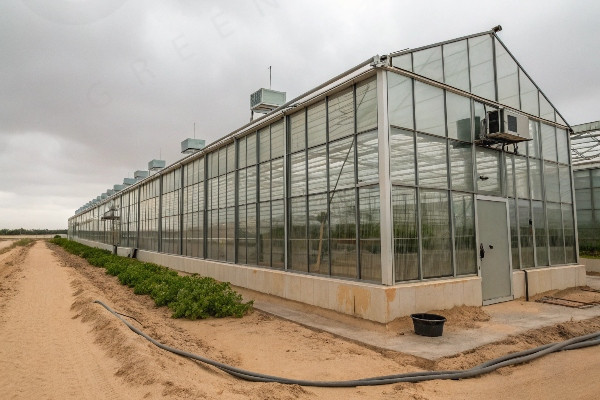
Evaporative cooling loses effectiveness during extreme heat when humidity is high, because air can no longer absorb enough moisture to drop temperature.
Dive deeper
Most articles say, “Evaporative cooling works best in dry climates.” That statement is correct, but incomplete. The real limit is the wet-bulb temperature. When outside air humidity is high, the difference between dry-bulb and wet-bulb temperature becomes small. Then even a perfect fan-and-pad system cannot deliver large temperature drops.
This limitation is clearly explained by University of Florida IFAS Extension and University of Massachusetts Greenhouse Crops Research. Their guidance shows that during hot and humid periods, evaporative cooling may reduce temperature only a few degrees, not enough to protect sensitive crops.
In extreme heat, this creates a dangerous cycle. Operators increase pad water flow to chase lower temperatures. Humidity rises further. Transpiration slows. Disease risk increases. Cooling efficiency drops again. Many systems fail here, not because equipment is wrong, but because expectations are wrong.
This is why evaporative cooling must be evaluated together with humidity control, airflow, and shading. In extreme heat, it should be part of a combined strategy, not the only solution.
Many greenhouses have fans, but airflow is still insufficient.
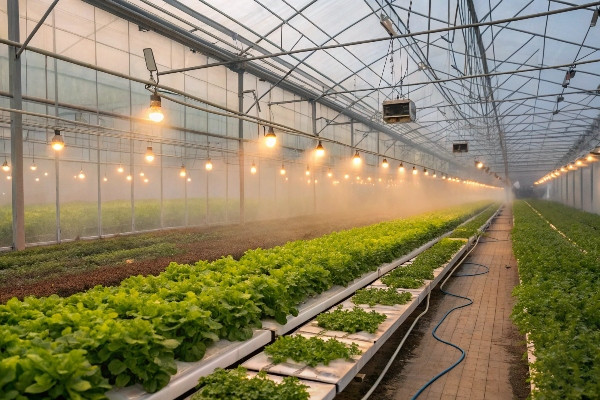
In extreme heat, ventilation capacity often becomes the main bottleneck because airflow rates are too low or airflow paths are poorly designed.
Dive deeper
Ventilation removes heat. Cooling systems only work if hot air can leave the greenhouse. In many failed projects, fan numbers look correct, but real air exchange is far below target.
Fan performance and airflow testing standards published by ASABE (American Society of Agricultural and Biological Engineers) explain why rated fan capacity does not always equal real airflow. Static pressure, leaks, poor sealing, and short airflow paths reduce effective ventilation.
Another common issue is greenhouse length. In long greenhouses with fan-and-pad systems, the air warms as it travels from pad to fan. This creates a temperature gradient. Crops near the exhaust side suffer most during extreme heat. Many ranking pages mention this problem but do not explain how strongly it affects performance under heat waves.
Ventilation design must also match structure. Roof vents, side vents, and mechanical ventilation must work together. Research from Wageningen University & Research – Greenhouse Horticulture emphasizes that ventilation area and airflow path design directly control internal climate stability.
Without sufficient and well-directed airflow, even the best cooling equipment cannot solve extreme heat problems.
How should cooling systems be diagnosed and upgraded for extreme heat conditions?
Solving extreme heat problems requires diagnosis, not equipment stacking.
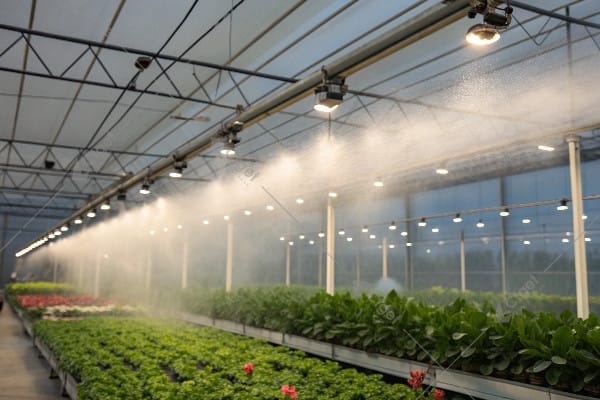
The correct approach is to diagnose heat load, humidity limits, airflow capacity, and control logic in sequence, then upgrade the weakest link first.
Dive deeper
I always start with heat load. This includes solar radiation, outside temperature, and internal equipment heat. If heat input exceeds system capacity, temperature will rise no matter what.
Next, I check humidity limits. Extension guidance from Rutgers University – Greenhouse Evaporative Cooling Guide shows how humidity directly limits evaporative cooling and increases maintenance issues like scaling and algae growth.
Then I evaluate airflow. Using fan data aligned with ASABE standards, I confirm whether real air exchange meets extreme-heat demand, not average demand. Many systems need higher airflow or better sealing, not more cooling pads.
Control strategy is the final step. In extreme heat, staged control is critical. Fans, shading, and cooling should activate in steps. Humidity limits should block further evaporative cooling when risk rises. Energy planning frameworks from the Cornell University Controlled Environment Agriculture (CEA) Program show that correct control logic can reduce energy waste while improving stability.
For commercial projects, I often link these upgrades to real solutions such as Commercial Greenhouse systems combined with Smart Auto & Control solutions, where climate sensors and staged control reduce risk during extreme heat.
Extreme heat cannot be eliminated, but it can be managed with correct system balance.
Conclusion
Extreme heat exposes weak greenhouse cooling design. Solving the problem requires understanding limits, diagnosing bottlenecks, and upgrading the right systems in the right order.
External References
-
FAO – Food and Agriculture Organization of the United Nations (Climate and Heat Stress)
https://www.fao.org/climate-change/en/ -
World Bank – Climate Change Knowledge Portal
https://climateknowledgeportal.worldbank.org/ -
ASABE – Greenhouse Ventilation Fan Performance Standards
https://elibrary.asabe.org/azdez.asp?AID=37167&Abstract=565.htm&CID=s2000&JID=2&T=3 -
University of Florida IFAS Extension – Fan and Pad Evaporative Cooling Systems
https://edis.ifas.ufl.edu/publication/AE069 -
University of Massachusetts – Fan and Pad Evaporative Cooling Systems
https://www.umass.edu/agriculture-food-environment/greenhouse-floriculture/fact-sheets/fan-pad-evaporative-cooling-systems -
Rutgers University – Greenhouse Evaporative Cooling Guide (PDF)
https://nj-vegetable-crops-online-resources.rutgers.edu/wp-content/uploads/2015/06/Greenhouse-Evaporative-Cooling.pdf -
Wageningen University & Research – Greenhouse Horticulture
https://www.wur.nl/en/research-results/research-institutes/plant-research/greenhouse-horticulture.htm -
Cornell University – Controlled Environment Agriculture Energy Resources
https://cea.cals.cornell.edu/energy/