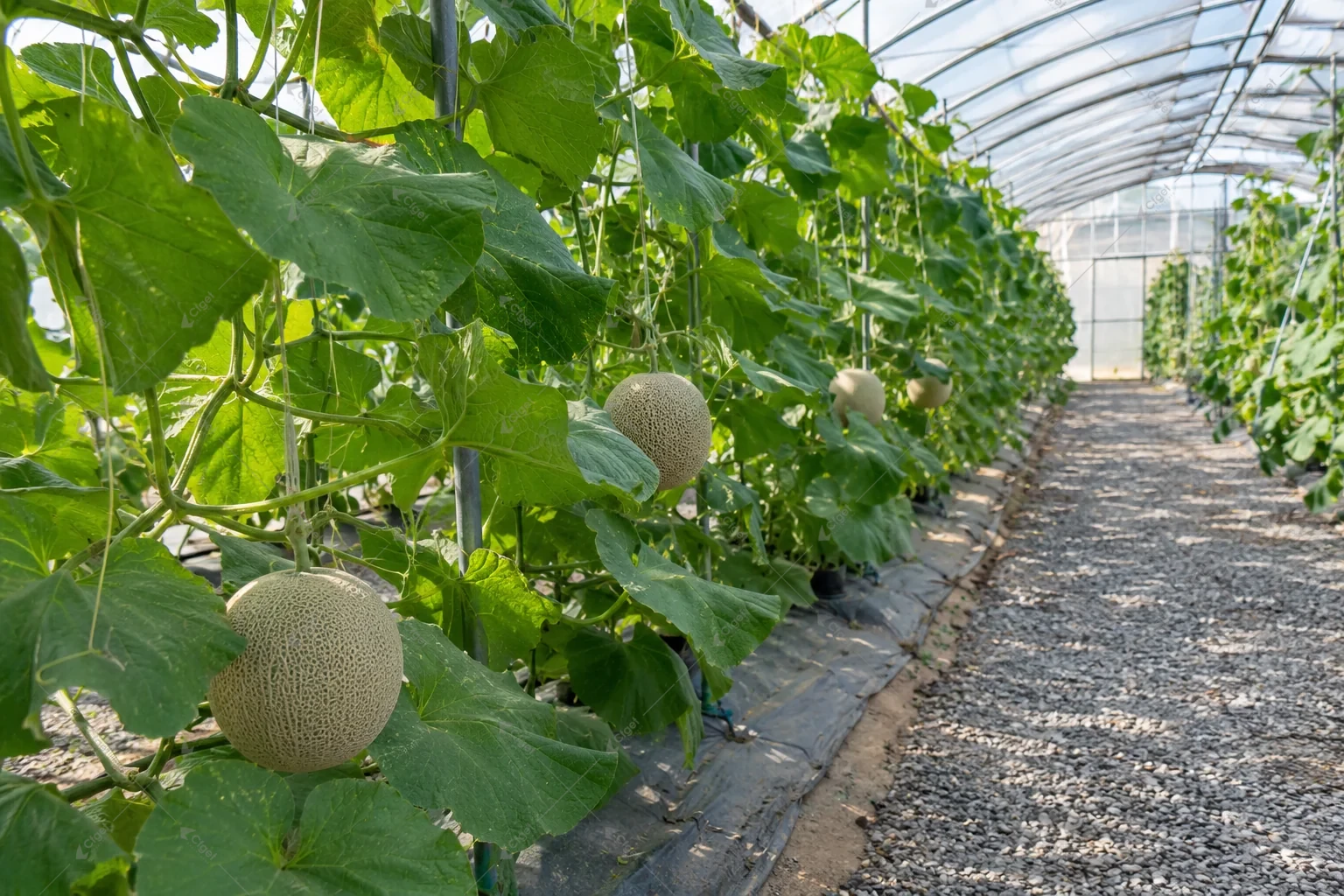
A vertical vine can look well supported while the fruit hanging from it has no support of its own. For trellised muskmelons, the answer is cultivar specific: some need a separate fruit sling, while others have a fruit attachment capable of carrying the melon. Establish which case applies before the first heavy fruit makes the decision for you.
Ask the seed or young-plant supplier about the named cultivar, its expected fruit size and its behavior on a trellis. Then ask the greenhouse or trellis supplier what the installation was designed to carry. Those are different questions. The grower can answer the first without being qualified to sign off on the second.
Start with the fruit attachment, not the vine clips
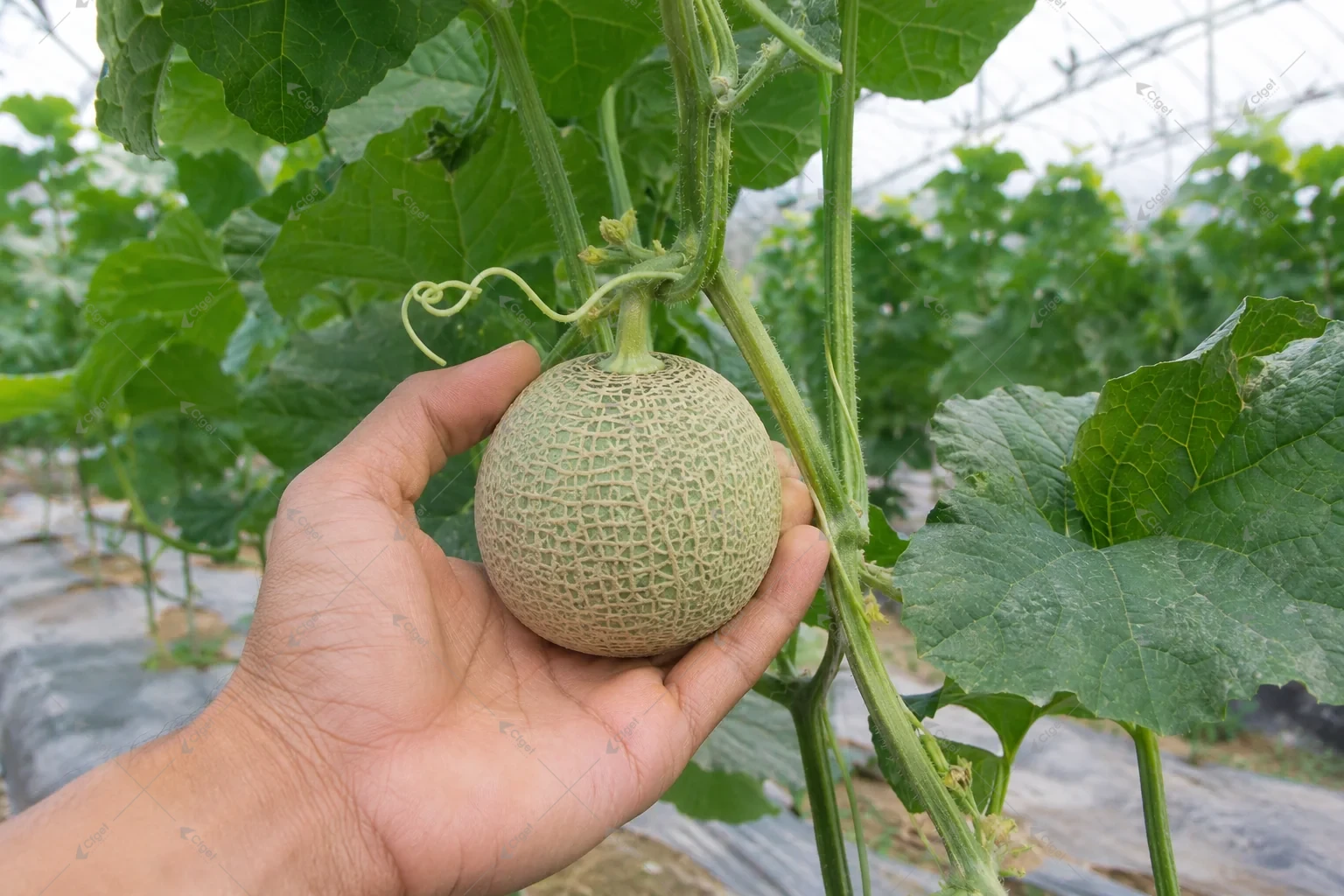
Consider two orders described simply as “small greenhouse melons.” One may be a netted muskmelon for a local market; the other may be a mini watermelon. The fruit look small on the order sheet, but the production advice does not transfer on size alone. Confirm the crop and cultivar before buying a season’s supply of supports.
University of Missouri Extension’s high-tunnel guide draws that distinction in its trellising section. Some muskmelon cultivars have rigid fruit stems and may be grown without individual slings. The guide treats trellised mini watermelons differently. Its point is useful precisely because the recommendations differ: “trellised melon” is too broad a description to decide the matter.
For a muskmelon block, ask the supplier for its experience with the cultivar at the fruit size you intend to sell. A firm attachment on a young melon tells you what it looks like today. It cannot tell you how that attachment will behave later, particularly if the crop stays on the vine longer than originally planned.
Walk the proposed row with the production supervisor. Point out what holds the vine upright and what, if anything, will carry each fruit. If the answer to the second question is “the same string,” establish whether that is part of the approved crop-support design or an assumption made at crop setup.
Judge a proposed sling where it meets the rind
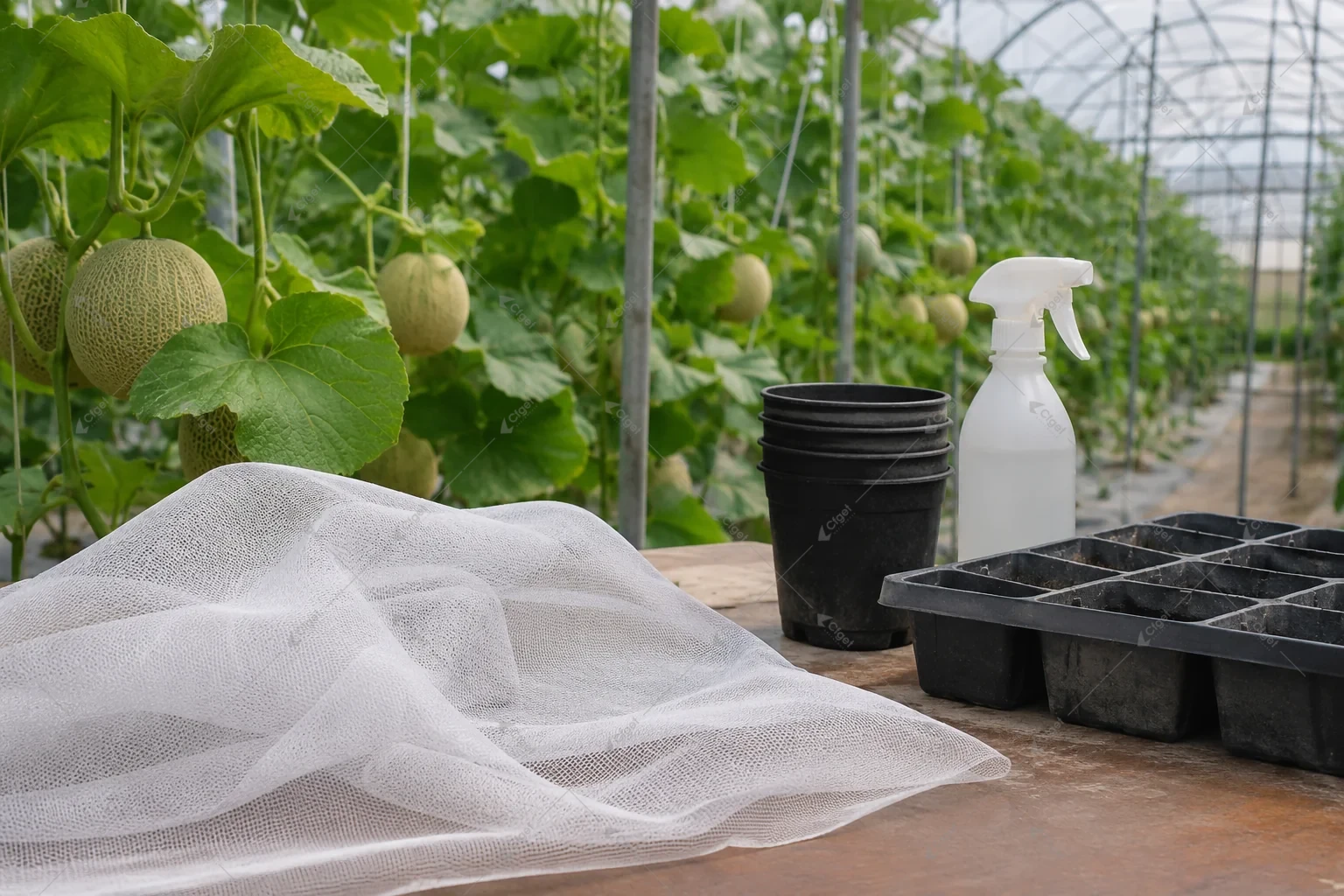
A support must fit the fruit it will carry, including the space that fruit still needs to grow. On a representative plant, examine the contact area from the side and from below. Look for fabric touching only a narrow strip, an edge pressing against the fruit, or material resting against the surrounding foliage. Record the position before making a change so the grower can see what prompted it.
Moisture is another reason to look beneath the fruit. A material that seems airy when held up at the packing bench can fold differently around a growing melon. The Missouri guide discusses materials that let light through and do not hold moisture. University of Maryland Extension likewise identifies quick drying as a useful property for slings in a small-fruited garden crop. Neither source certifies a material’s strength or service life in a commercial greenhouse.
Compare candidate products using the operation’s ordinary handling conditions. Can staff see the underside of the melon during inspection? Can they recognize a damaged support? Does the supplier specify an intended use, or is the material being considered only because it is already in the store room? Keep unresolved product questions with the supplier instead of improvising a load rating.
When a new cultivar or support enters production, retain a photograph of the actual crop at the stage reviewed. Use it at the next round to compare contact and fit. A photograph taken before the fruit expanded is a useful starting point, not permanent approval.
Identify what will carry the fruit weight
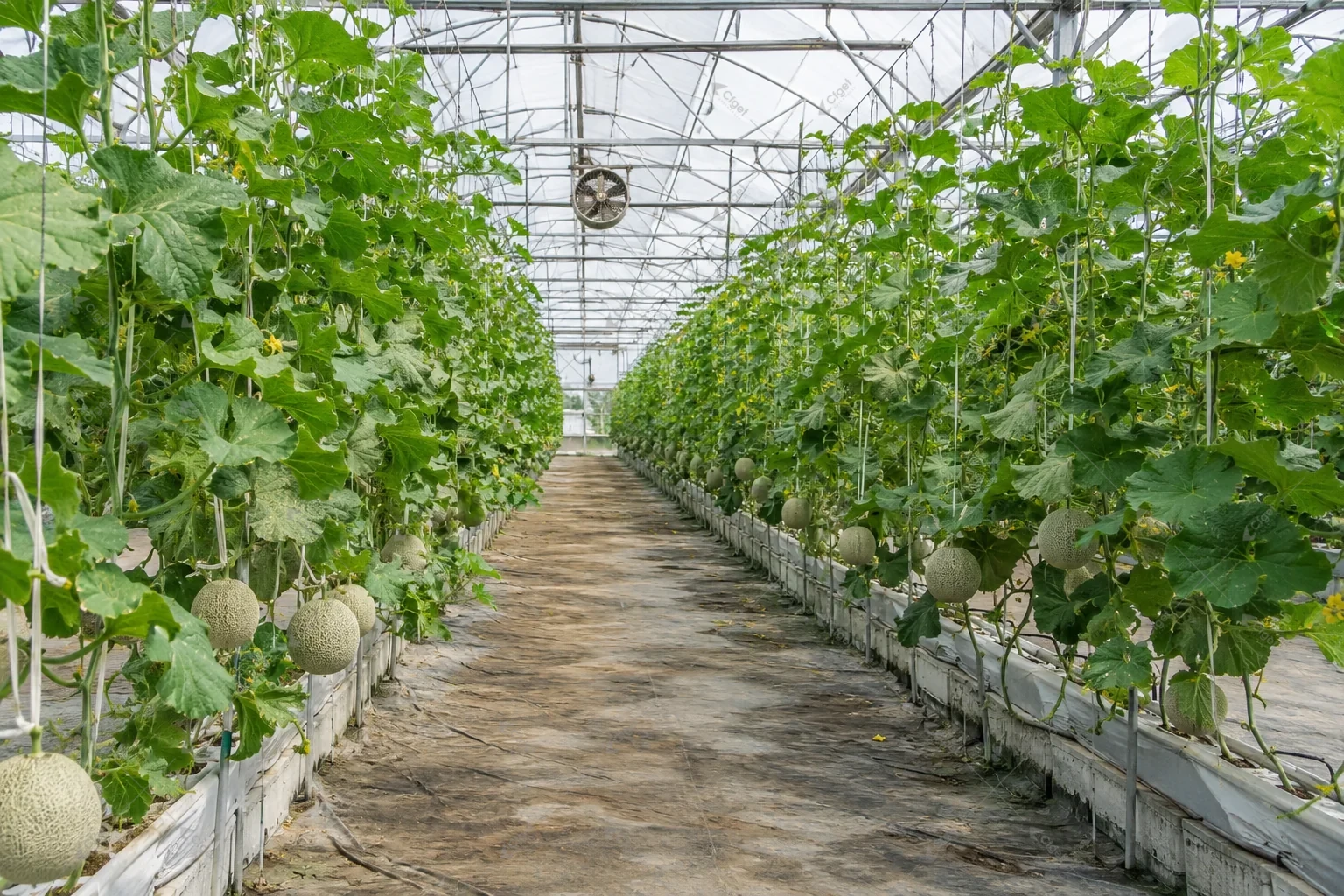
Follow the proposed arrangement back from the fruit to the system intended to support it. The individual sling, its support line, the trellis and any connection to the greenhouse may have different suppliers. A product description for one part does not establish capacity for the whole installation.
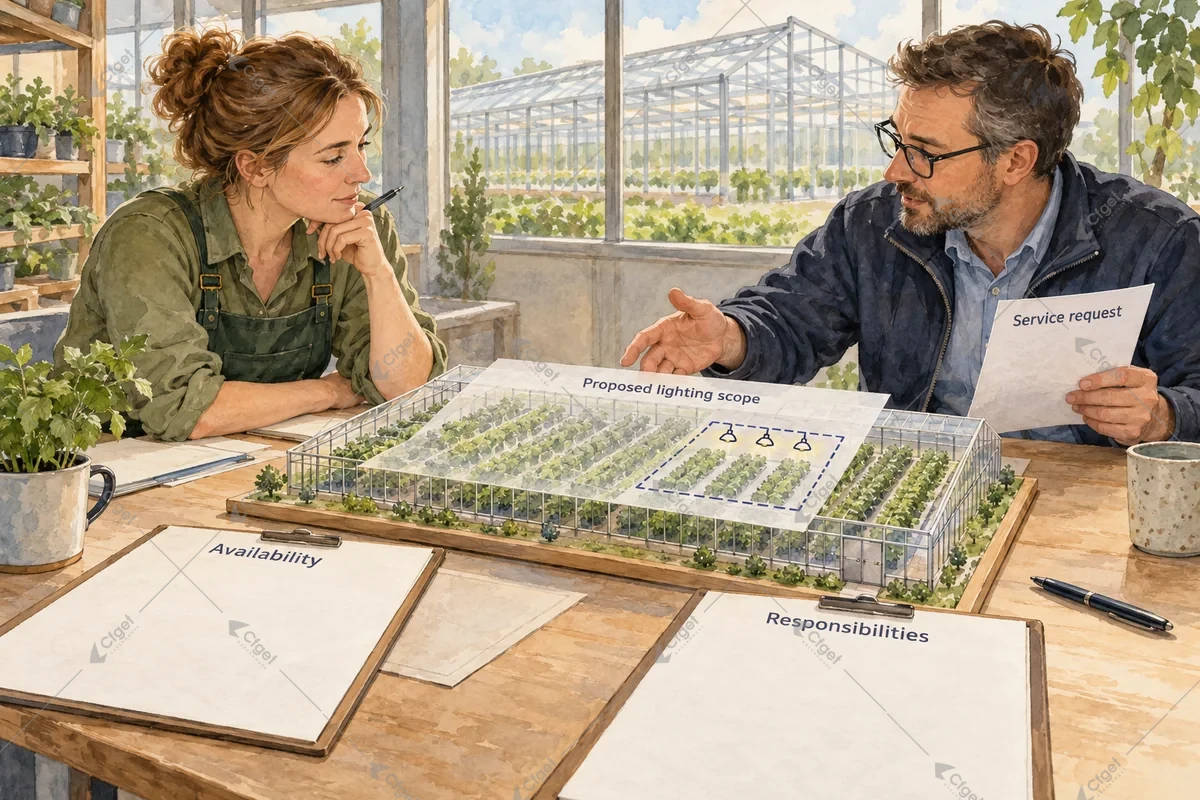
Prepare a row plan that the responsible designer can interpret. Include the cultivar, expected fruit size, number and position of fruit-bearing rows, training arrangement and any other crop loads sharing the system. Use the grower’s actual production assumptions. A wire specification from a high-tunnel publication is not a design for a different span or an existing structure with an unknown history.
For an installed greenhouse, recover the original trellis drawings and any later changes. An added row, a moved line or a different crop can alter the arrangement from the one the supplier reviewed. If the proposed support relies on a structural point absent from the drawings, leave that point unresolved until the responsible supplier or engineer confirms it.
Give the grower and installation team separate decisions to record. One determines whether the cultivar needs individual support. The other confirms which approved system may carry it. A decision to use a sling settles neither the greenhouse capacity nor the position of a suitable connection.
Plan the inspection and harvest route together
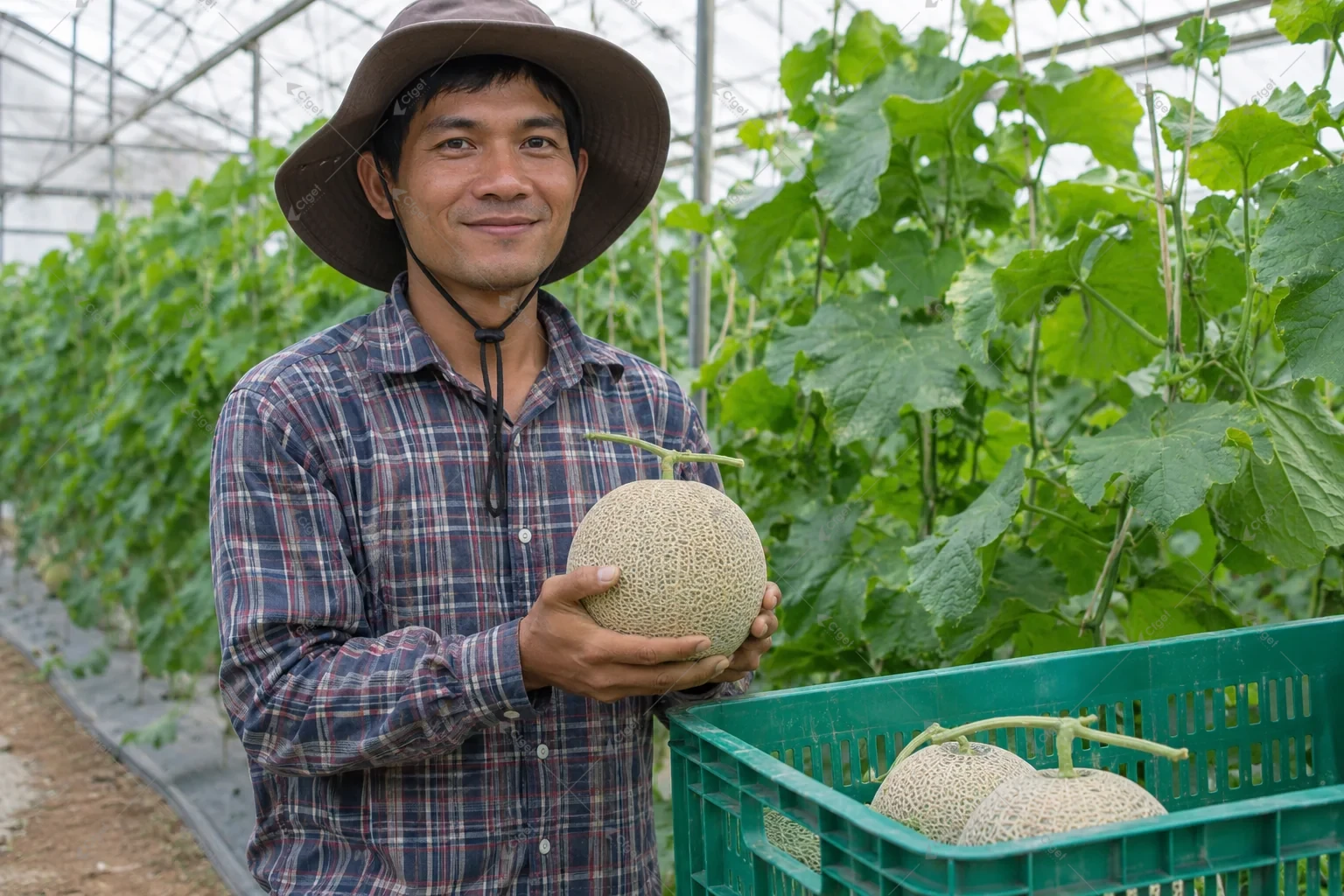
Before the crop fills the aisle, ask a picker and the person who tends the vines to walk the same row. The grower may have a good view of the fruit from one side while the picker must reach it from the other. Check that the team can inspect the contact area, handle the fruit and move it into a crate without having to disturb neighbouring plants unnecessarily.
Keep support condition separate from harvest maturity. A melon sitting securely in its support may still be too early to pick. Conversely, the way a fruit separates from its stem depends on the cultivar. The existing guide to full-slip melon harvest explains that maturity question in its own right.
Assign responsibility for checking the first supported fruit, returning after expansion and dealing with a damaged or poorly fitting support. Tell harvest staff where to record an issue and which supervisor can approve a replacement. Counts of marked fruit and handling losses from the actual block will be more useful next season than a general claim that a particular sling “worked.”
For a new project, the most useful documents are the named cultivar plan, a row layout, the intended support route and a sketch of picking access. Together they give the crop adviser and the greenhouse designer enough information to review the same crop without guessing which part of the system the other person has approved.