A restaurant buyer asks for tomatoes picked only after its order is placed. You may already have suitable fruit, but accepting the request changes more than the product description. The order must reach the farm while there is still time to pick, pack and dispatch it for the buyer’s intended use.
Consider this as a defined service for customers whose routines fit your operation. Before offering it widely, follow an actual order through the people and departure slots it would depend on.
An operator example, with a clear distinction
Broxburn Vegetables, near Lethbridge in Alberta, Canada, describes daily harvesting of vine-ripened greenhouse tomatoes. Separately, its commercial-sales page says its fresh produce is harvested after ordering and transported to destinations in Alberta and the east Kootenays of British Columbia.
The first statement is specifically about tomatoes; the second describes the wider produce service. These undated operator accounts show how harvesting and regional sales can be organised together. They provide no measured tomato rejection rate, price premium or profit comparison. For another farm, the useful question is whether its own buyer and dispatch arrangements can support orders before picking.
Agree what the buyer is actually asking for
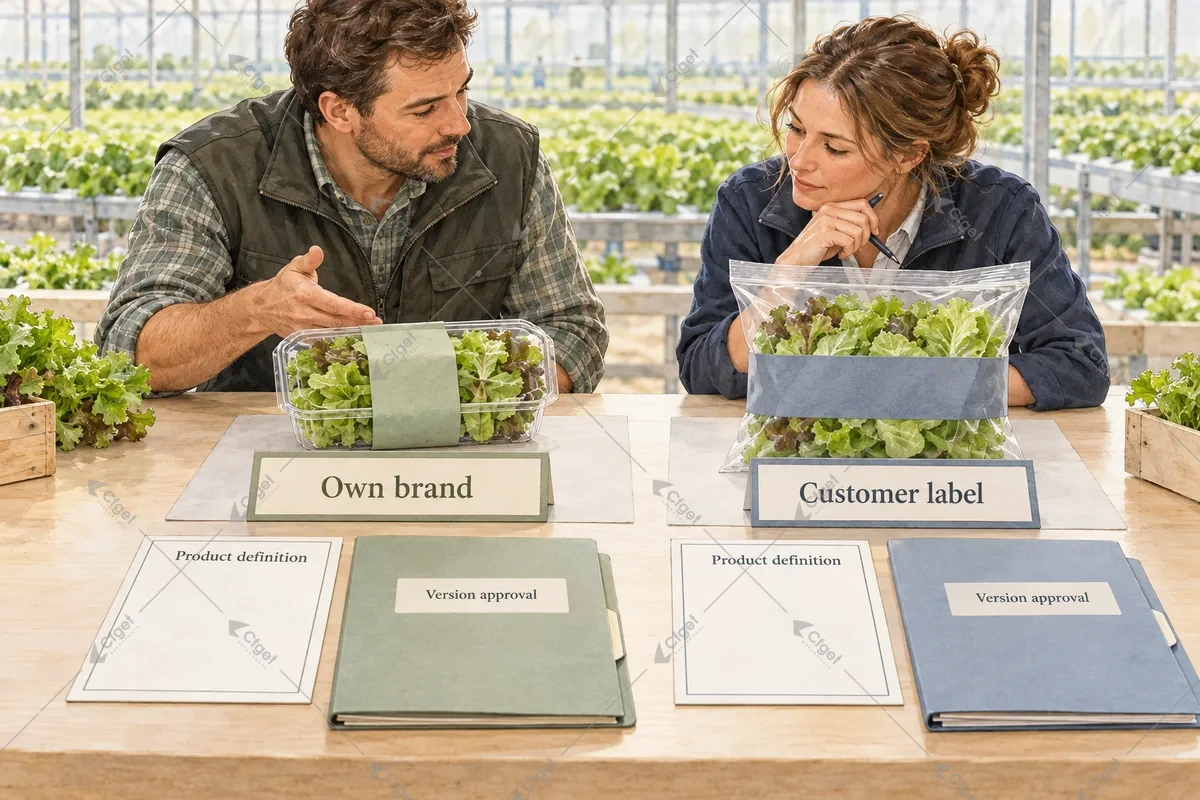
Ask the customer why this service matters. Does the kitchen need fruit ready for a particular menu service? Is a retailer expecting further display time? “Picked to order” describes the sequence, but it does not fully describe the product the buyer expects on arrival.
The Government of Alberta’s tomato harvest guidance relates harvest colour to the market being served, including distance and specialty outlets. Use that principle to agree the tomato type, acceptable condition and intended use with the buyer. An attractive ripe label is not enough to resolve different expectations.
There is also a handling tradeoff. Alabama Cooperative Extension’s guide, reviewed in February 2025, explains that individual tomatoes may be picked before fully ripe to reduce bruising during packing and transport. A later-picked offer therefore deserves attention to the handling path, rather than assuming that an existing packing routine will suit it unchanged.
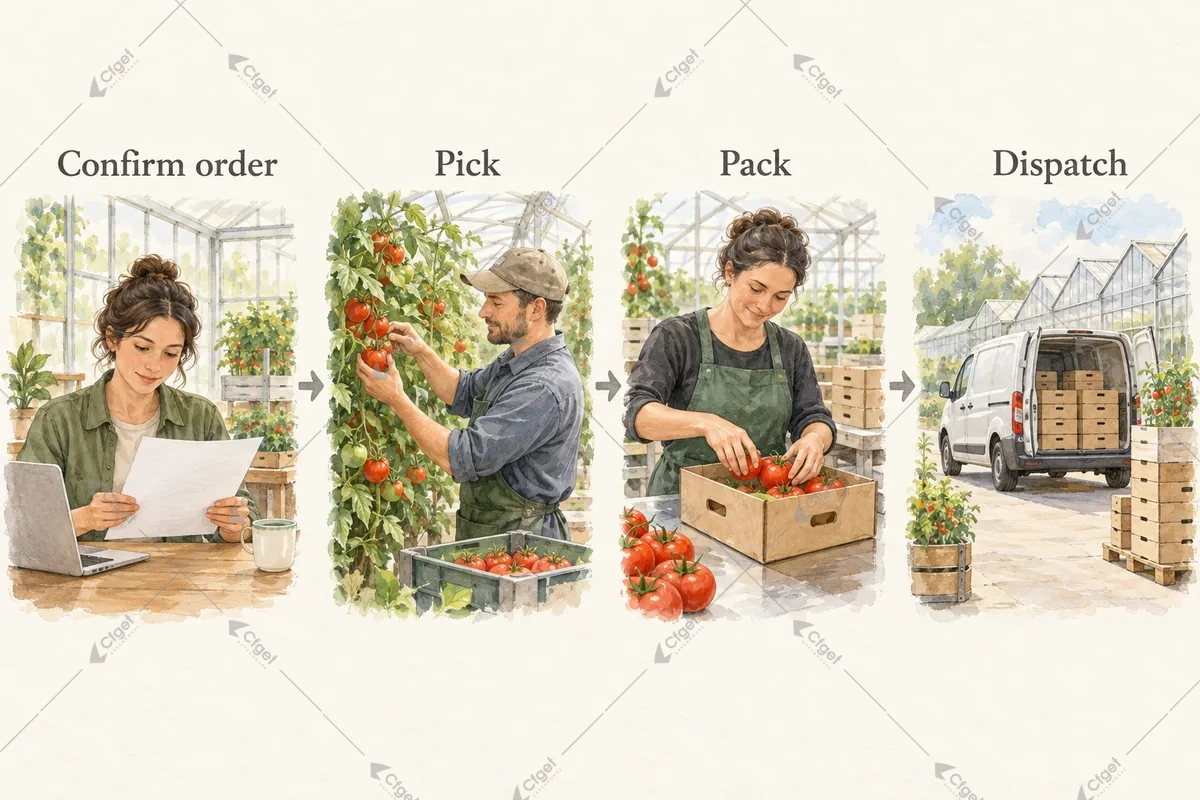
Walk one order through the working day
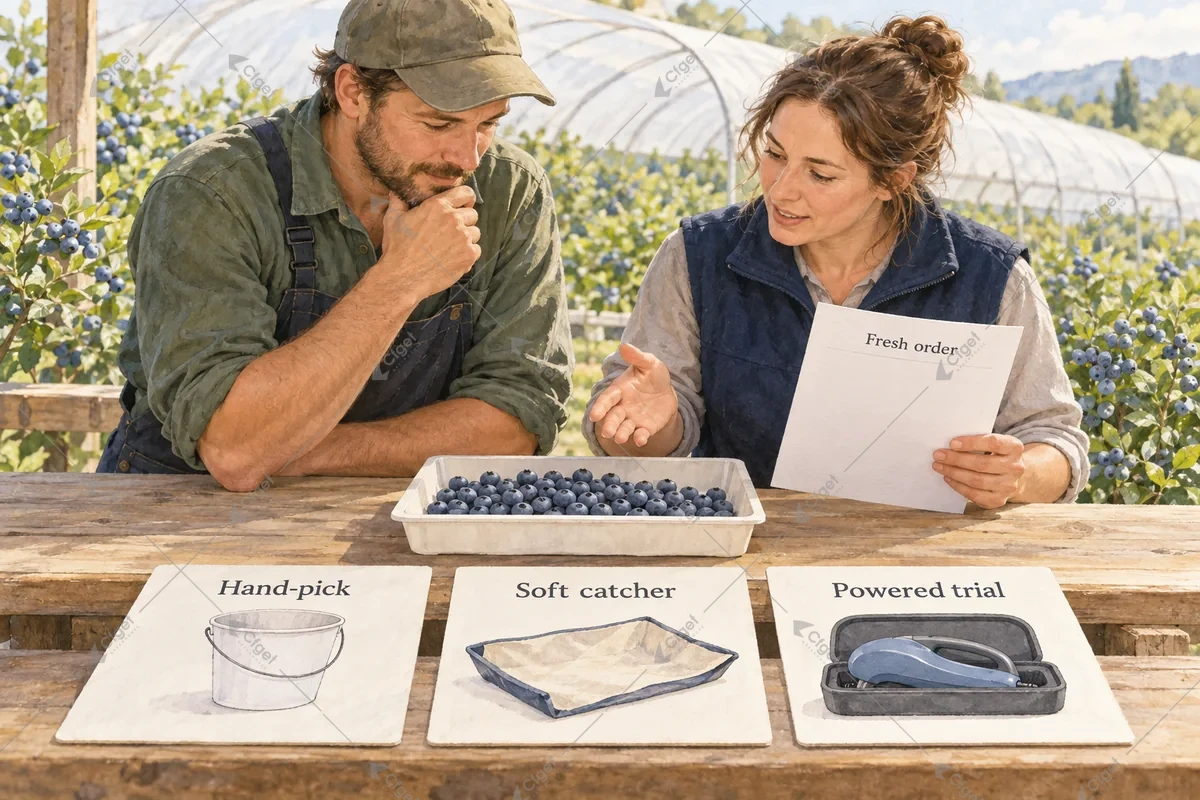
Start with the buyer’s real ordering habit. If the order usually arrives after your picking crew has moved to other work, something must change before you accept the new service. An earlier agreed cutoff may work. An extra picking round may be possible, but its staff time belongs in the decision.
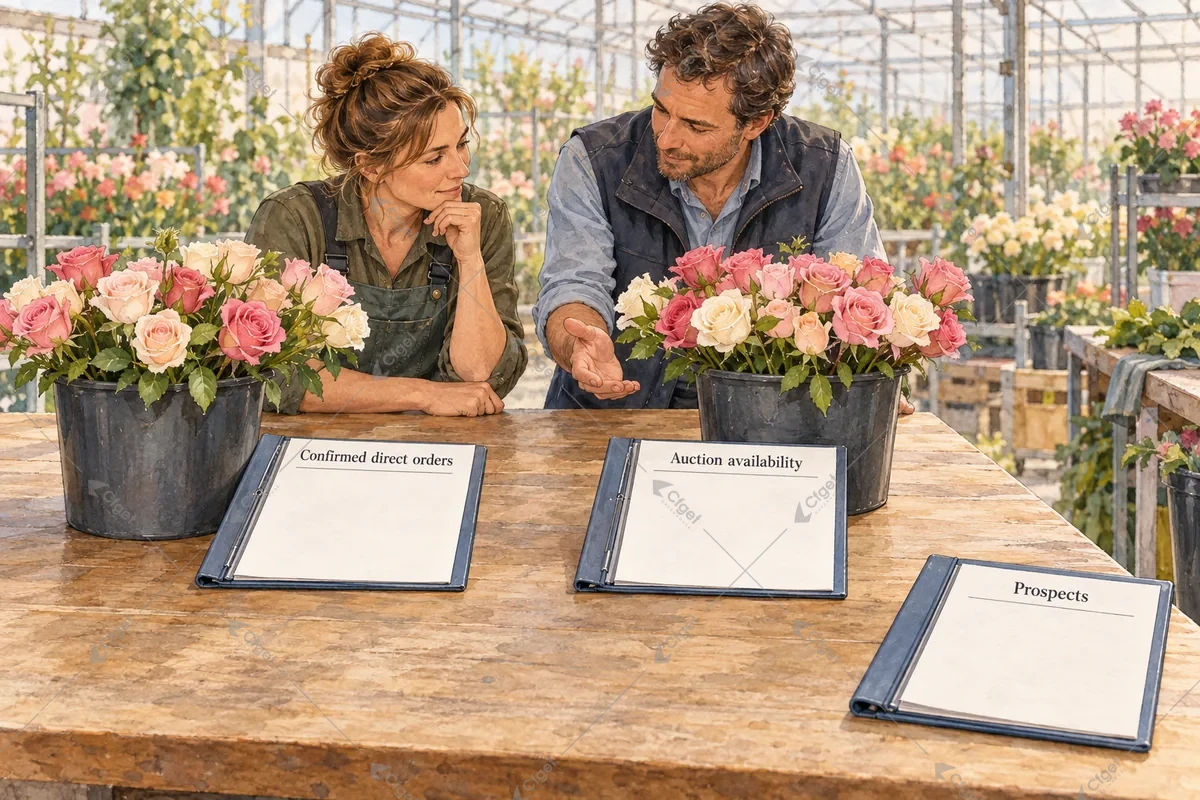
Next, ask the crop team what quantity can meet the agreed condition for that departure. A customer order does not make fruit ready. Confirm availability before committing, and distinguish fruit offered for this service from stock already harvested for other orders.
Then identify who will pick and pack the order and which departure it will use. If that vehicle leaves before packing can finish, the service is not ready merely because the farm is nearby. Include the customer’s receiving window: a successful dispatch is only one part of getting the intended product to the intended use.
Finally, decide how the team will respond to a missed cutoff, unavailable fruit or delayed collection. Agree changes with the customer rather than silently substituting a different harvest or delivery. Staff should know when to stop and call, instead of trying to rescue a promise they cannot meet.
Offer the version you can reliably organise
A limited service may be the sensible starting point: selected buyers, agreed dispatch days and quantities the crop team can confirm. The buyer may accept those boundaries in exchange for the requested harvest sequence. If it needs last-minute flexibility that your operation cannot provide, keep the existing offer or negotiate a different one.
Check whether the actual selling terms support any additional picking, coordination and packing work. Do not budget a premium simply because the service sounds fresher. Likewise, any promise about how long the tomatoes will remain acceptable needs evidence for the product and route; order timing alone cannot supply it.
Use the produce handling and cold-storage review for the equipment side of the chain. The immediate decision here is simpler: can the customer and farm agree an order sequence that both can carry out? If so, offer that specific service clearly.