Picking pressure can make faster blueberry collection attractive. For an existing fresh-market order, however, the first question is whether the collected fruit will still meet the product requirement. A quicker picking task is useful only if the operation can deliver the right berries afterwards.
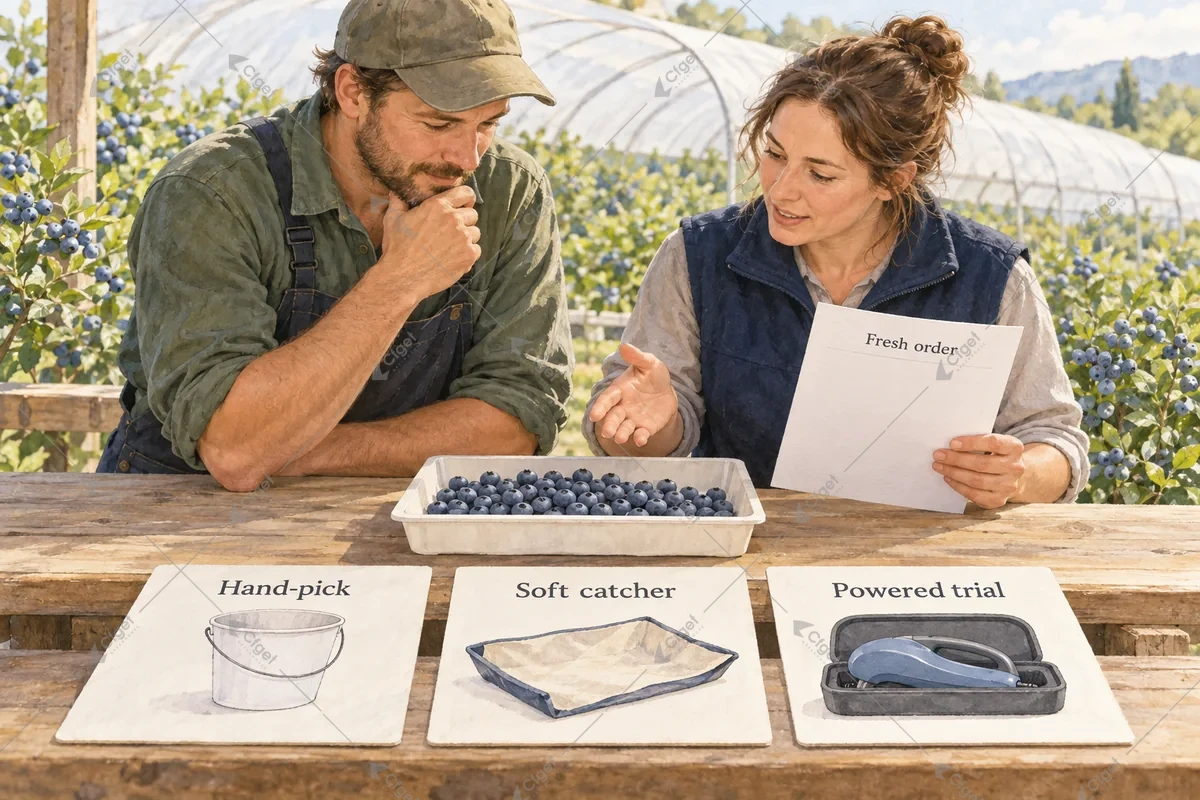
Keep three choices open: selective hand-picking, hand-picking with a soft catcher, and powered detachment into a catcher. They change different parts of the job and deserve different commercial questions.
Separate selection, detachment and collection
With hand-picking into a bucket, the picker selects and removes the berries. Adding a soft catcher can change how detached fruit is collected while leaving selection and detachment with the person. A handheld shaker changes the detachment step too, while people still position and operate the equipment.
That distinction helps identify what you want to improve. If collecting and handling the picked fruit is the difficulty, a catch-assisted approach may be worth examining before changing detachment. If powered detachment is the proposed solution, fruit composition becomes central to the decision.
A small tunnel trial shows why speed needs context
A feasibility study published in 2024 by Sim and colleagues used six Masena bushes in a commercial tunnel at Pukehina, New Zealand, and two operators working together. The field calendar year was not stated. Early timed-and-graded samples were excluded because the interval since the preceding orchard harvest was shorter than planned.
| Method | Berries per minute of timed harvest | Classified marketable |
|---|---|---|
| Hand to bucket | 71.8 | 84.4% |
| Shaker to soft catcher | 81.3 | 68.0% |
Source: Table IV of the paper. Setup time was excluded. Rates describe the two-operator task, not individual-worker productivity; percentages reflect the trial packhouse’s classification of berries, not accepted commercial weight. Different bushes carried different crop loads, and bloom retention was not established.
The faster gross collection result therefore cannot be treated as a wage saving or permission to supply an existing order with a different harvest method.
Start with the order the fruit has to satisfy
Bring the grower, packhouse and buyer into the decision before assigning the proposed method to a committed fresh lot. Identify the fruit characteristics that determine acceptance and ask whether the packhouse assessment covers them. A convenient grading output is not automatically the buyer’s complete specification.
Pay attention to what reaches the catcher, not only what leaves the branch. Extra unripe fruit can add sorting work and cannot simply be counted as useful production for today’s order. It also raises a separate question about fruit removed before a later selective pick. Keep that observation visible without turning one trial into a season-long loss forecast.
Consider the job after picking. Who moves and empties the catcher, separates unsuitable fruit and presents the lot to the packhouse? If a proposed improvement shifts work into those steps, include that work when reviewing the method. The collection clock covers only part of the operation.
Choose the next step that protects the fresh product
Keep selective hand-picking for the committed order when the alternative’s product fit is unresolved. A soft-catcher trial can be a useful intermediate choice when the aim is to change collection while keeping manual selection. A powered-detachment trial can be considered on a defined block when the team can evaluate its fruit separately before making a wider commitment.
Have the crop team and packhouse agree what evidence would allow the method into the intended order, what would keep it under evaluation, and when to retain the existing method. Use the established product-quality checks rather than accepting the appearance of a newly collected bucket as the final result.
The blueberry crop-calendar guide can connect the decision to existing harvest records. Once fresh-product fit is supported, assess the complete job and its costs. The useful outcome is a method that relieves the right part of the work while still delivering the fruit the customer ordered.