Space costs money in commercial growing operations. Every square meter that produces more plants directly increases your bottom line and competitive advantage.
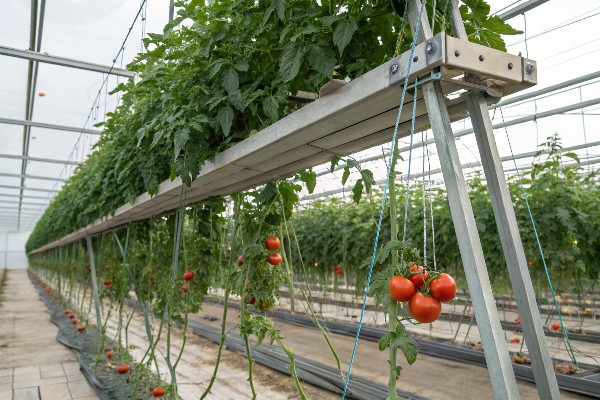
Growing trays and channels maximize planting density through vertical systems and efficient space utilization. These lightweight structures can double or triple plant capacity in the same greenhouse footprint while reducing labor costs and improving crop uniformity.
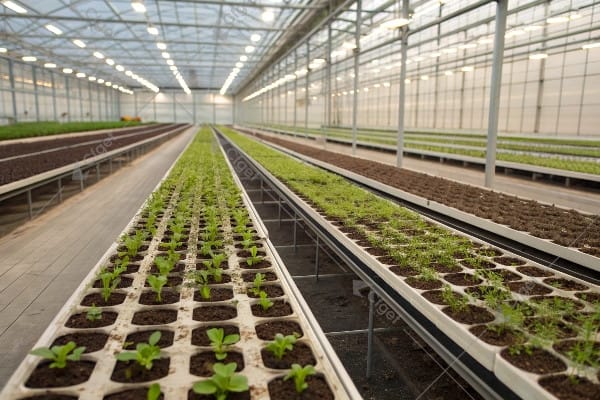
After nearly three decades in the greenhouse industry, I’ve watched growing trays and channels revolutionize how commercial operators approach space management. What started as simple plastic containers has evolved into sophisticated systems that can transform a struggling nursery into a profitable enterprise. The difference between success and failure often comes down to how efficiently you use your available space.
The Vertical Advantage: How to Double Your Planting Density Without Adding Space?
Traditional flat growing wastes valuable vertical space. Smart growers think in three dimensions to maximize their investment returns.
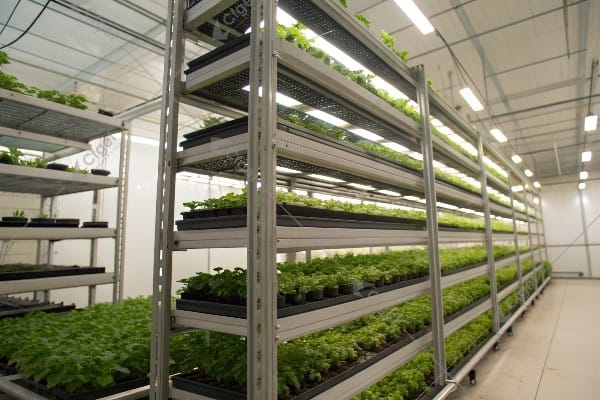
Vertical growing systems using tiered trays can increase planting density by 200-300% in the same floor space. Multi-level structures utilize natural or artificial lighting to create multiple growing zones within standard greenhouse heights.
Understanding Vertical Economics
Vertical growing changes the economics of greenhouse operations completely. Instead of thinking about cost per square meter of floor space, successful growers calculate cost per cubic meter of growing volume. This shift in thinking opens up new possibilities for profit generation.
I worked with a lettuce grower in the Netherlands who was struggling to compete with larger operations. His 1000 square meter greenhouse could barely support his family. After installing a four-tier vertical growing system, he increased his production capacity to match a 4000 square meter facility. His revenue quadrupled while his heating and cooling costs increased by only 30%.
The key to vertical success lies in understanding light distribution and air circulation. Each level needs adequate light for photosynthesis and proper airflow to prevent disease problems. LED lighting systems work best for vertical applications because they generate less heat and can be positioned close to plants.
| Vertical Level | Light Requirements | Air Circulation | Best Crops |
|---|---|---|---|
| Top Tier | Natural + LED | Excellent | Leafy greens |
| Second Tier | LED primary | Good | Herbs, microgreens |
| Third Tier | LED intensive | Moderate | Seedlings, propagation |
| Bottom Tier | LED specialized | Enhanced fans | Root vegetables |
Structural Considerations
Vertical systems require proper engineering to handle plant weight, water loads, and environmental stresses. Lightweight aluminum frames work better than steel because they resist corrosion and reduce structural loads. The growing trays themselves should be made from food-grade materials that can withstand repeated cleaning and sterilization.
Weight distribution becomes critical in multi-tier systems. A fully loaded tray with plants, growing media, and water can weigh 15-20 kg per square meter. Multiply this across multiple levels and the structural requirements become significant. Proper foundation design and support columns ensure long-term stability and safety.
The return on investment for vertical systems typically pays back within 2-3 years through increased production capacity. However, the initial capital investment runs 3-4 times higher than traditional flat growing systems. Growers need adequate cash flow and market access to justify the investment.
A Nursery Operator’s Guide: Streamlining Seedling Propagation for Profit?
Seedling propagation represents the foundation of successful commercial growing. Efficient propagation systems determine both quality and profitability of downstream operations.
Professional propagation trays with precise cell sizes, drainage systems, and mobility features increase germination rates by 15-25% while reducing labor costs. Standardized tray systems enable automated seeding, watering, and transplanting operations.

Propagation Tray Selection
The choice of propagation tray affects every aspect of seedling production from germination through transplanting. Cell size, shape, and depth must match the specific requirements of each crop. Too small cells restrict root development. Too large cells waste growing media and increase costs.
Round cells work best for most vegetable seedlings because they promote natural root development. Square cells maximize space utilization but can cause root circling in some crops. The depth of cells affects root development and transplant success. Shallow cells work for quick-growing crops like lettuce. Deeper cells benefit slower-developing plants like tomatoes and peppers.
Drainage becomes critical in propagation systems. Excess water kills more seedlings than drought conditions. Each cell needs drainage holes sized appropriately for the growing media. Too large holes allow media to wash out. Too small holes restrict drainage and create waterlogged conditions.
Automation Integration
Modern propagation systems integrate with automated equipment to reduce labor costs and improve consistency. Vacuum seeders can plant hundreds of trays per hour with precise seed placement. Automated watering systems deliver exact amounts of water based on plant needs and environmental conditions.
I remember visiting a tomato propagation facility in Spain that produced over 50 million seedlings annually. Their automated line could seed, water, and move trays with minimal human intervention. The consistency of their seedlings allowed them to guarantee transplant success rates above 95%, commanding premium prices from commercial growers.
| Automation Level | Labor Savings | Investment Cost | Best Applications |
|---|---|---|---|
| Manual Operations | Baseline | Low | Small nurseries |
| Semi-Automated | 40-60% | Medium | Regional suppliers |
| Fully Automated | 70-85% | High | Large-scale operations |
| AI-Integrated | 80-90% | Very High | Premium propagators |
Quality Control Systems
Consistent seedling quality requires systematic monitoring and control throughout the propagation process. Temperature, humidity, light, and nutrition must stay within optimal ranges for each crop and growth stage. Digital monitoring systems track these parameters continuously and alert operators to any deviations.
Germination testing provides early warning of potential problems. Random sampling of seeded trays allows propagators to identify issues before they affect entire production runs. Poor germination rates often indicate problems with seed quality, environmental conditions, or growing media consistency.
The most successful propagators maintain detailed records of every production batch. They track germination rates, growth rates, transplant success, and customer feedback. This data helps them continuously improve their processes and identify the most profitable crops and varieties.
Choosing the Right Channel for Your Hydroponic System (NFT, DWC, etc.)?
Channel selection determines the success or failure of hydroponic operations. Each system has specific advantages that match different crops, climates, and management styles.
NFT channels work best for leafy greens and herbs with shallow root systems. DWC channels excel for larger plants like tomatoes and cucumbers that need extensive root development. The choice depends on crop requirements, water quality, and maintenance capabilities.

NFT Channel Systems
Nutrient Film Technique (NFT) channels create a thin film of nutrient solution that flows continuously past plant roots. This system works exceptionally well for crops with fibrous root systems like lettuce, spinach, and herbs. The constant flow provides fresh nutrients while maintaining high oxygen levels in the root zone.
NFT channels require precise slope calculations to maintain proper flow rates. Too steep slopes create excessive flow that washes away fine roots. Too gentle slopes allow stagnation and algae growth. The optimal slope ranges from 1:30 to 1:40 depending on channel length and flow rate.
The main advantage of NFT systems lies in their water and nutrient efficiency. Recirculating systems use 90% less water than soil farming while maintaining precise nutrient control. This efficiency becomes crucial in water-scarce regions or areas with expensive water costs.
However, NFT systems are vulnerable to power failures and pump breakdowns. Plants can suffer severe stress within hours if nutrient flow stops. Backup power systems and redundant pumps become essential for commercial operations.
DWC Channel Applications
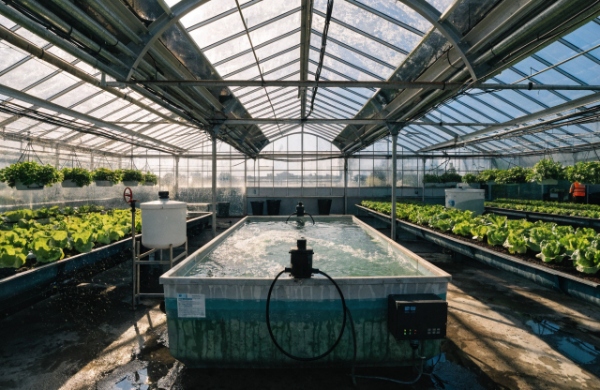
Deep Water Culture (DWC) channels suspend plant roots in oxygenated nutrient solutions. This system supports larger plants with extensive root systems that would clog NFT channels. Tomatoes, cucumbers, and peppers thrive in DWC systems because their roots have unlimited space to develop.
Oxygen levels become critical in DWC systems. Without adequate aeration, roots quickly develop anaerobic conditions that lead to root rot and plant death. Air pumps and diffusers must provide continuous oxygenation throughout the growing cycle.
| System Type | Best Crops | Water Usage | Maintenance | Initial Cost |
|---|---|---|---|---|
| NFT | Leafy greens, herbs | Very Low | Moderate | Low |
| DWC | Tomatoes, cucumbers | Low | High | Medium |
| Ebb & Flow | Mixed crops | Medium | Low | Low |
| Drip Systems | All crops | Medium | Medium | Medium |
Hybrid Channel Solutions
Many successful growers combine different channel systems to optimize production for multiple crops. NFT channels handle quick-growing leafy greens while DWC channels support long-season fruiting crops. This diversification reduces risk and maximizes facility utilization.
The integration of different systems requires careful planning of water circulation, nutrient management, and environmental controls. Each system may need different nutrient concentrations and pH levels. Separate reservoirs and control systems prevent cross-contamination between different crop types.
Climate considerations also affect channel selection. Hot climates favor systems with good root cooling like DWC. Cold climates may benefit from NFT systems that warm nutrient solutions through circulation. Humidity levels affect disease pressure and influence the choice between open and closed channel designs.
3 Key Features to Look for in a Commercial-Grade Growing Tray?
Commercial growing trays must withstand years of intensive use while maintaining plant health and production efficiency. Cheap trays cost more in the long run through replacements and crop losses.
Commercial-grade growing trays require UV-resistant materials, precise drainage systems, and standardized dimensions for automation compatibility. These features ensure 5-10 year service life while maintaining consistent plant performance and operational efficiency.
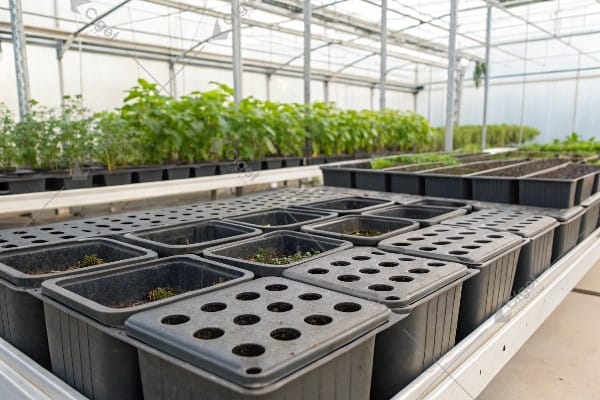
Feature 1: Material Quality and Durability
The material composition of growing trays determines their lifespan and performance under commercial conditions. Food-grade polypropylene offers the best combination of durability, chemical resistance, and plant safety. This material withstands repeated washing with disinfectants while maintaining structural integrity.
UV stabilization becomes essential for trays used in greenhouse environments. Standard plastic materials degrade quickly under intense sunlight and high temperatures. UV-stabilized materials maintain their strength and appearance for 5-10 years under normal greenhouse conditions.
Wall thickness affects both durability and cost. Thicker walls provide better structural support but increase material costs. The optimal thickness balances strength requirements with economic considerations. Most commercial trays use wall thickness between 1.5-2.5mm depending on size and application.
Flexibility versus rigidity represents another important consideration. Flexible trays handle better during transport and stacking but may sag under heavy plant loads. Rigid trays maintain their shape better but can crack under impact. The best commercial trays balance these characteristics through strategic ribbing and wall design.
Feature 2: Drainage and Root Health
Proper drainage prevents root diseases that destroy crops and reduce yields. Each cell or growing area needs drainage holes sized appropriately for the growing media and watering system. The hole size, shape, and placement affect both drainage performance and root development.
Drainage hole diameter typically ranges from 3-8mm depending on the growing media. Smaller holes work with fine media like peat moss. Larger holes accommodate coarser media like bark chips. The number of drainage holes per cell affects drainage speed and root aeration.
Raised bottom designs improve drainage by creating air gaps under the growing media. This design prevents waterlogging even when trays sit on flat surfaces. The raised areas also strengthen the tray bottom and reduce material usage.
| Drainage Feature | Benefit | Best Applications |
|---|---|---|
| Multiple small holes | Even drainage | Fine growing media |
| Fewer large holes | Fast drainage | Coarse media |
| Raised bottom | Air circulation | Wet climates |
| Sloped bottom | Complete drainage | Automated systems |
Feature 3: Standardization and Compatibility
Standardized dimensions enable automation integration and equipment compatibility. Trays that match industry standards work with existing seeding machines, conveyor systems, and transplanting equipment. Custom sizes may offer specific advantages but limit equipment options and increase costs.
The most common tray sizes follow international standards developed for automated greenhouse operations. These standards specify overall dimensions, cell sizes, and mounting features. Adherence to these standards ensures compatibility with equipment from multiple manufacturers.
Stacking features become important for storage and transport efficiency. Trays should stack securely without jamming while minimizing storage height. Nesting designs reduce shipping costs but may limit structural strength. The best commercial trays balance stacking efficiency with durability requirements.
Identification systems help track production batches and maintain quality records. Molded-in date codes, batch numbers, or barcode areas enable automated tracking systems. This traceability becomes essential for food safety compliance and quality management programs.
The investment in high-quality growing trays pays back through reduced replacement costs, improved plant performance, and enhanced operational efficiency. While premium trays cost 2-3 times more than basic alternatives, their extended service life and superior performance justify the investment for serious commercial operations.
Conclusion
Growing trays and channels represent the foundation of efficient commercial plant production. The right combination of vertical systems, propagation equipment, hydroponic channels, and quality trays can transform marginal operations into highly profitable enterprises through maximized space utilization and operational efficiency.