Before buying a hydroponic fodder unit, name the feed purchase you expect it to reduce. Is the aim to replace part of a regular forage order, cover a seasonal shortage or reduce dependence on a difficult delivery route? Each objective needs a different comparison.
A proposal expressed only as kilograms of fresh fodder per day leaves that question unanswered. The business needs to know what usable feed it will produce, what seed and daily work it will consume, and which existing purchase can actually change.
Fresh harvest weight is not the same as feed supplied
Dry matter is the material remaining after water is removed. It gives a more useful starting point for comparing feed quantities than fresh weight alone, although equal dry matter does not establish equal nutritional value.
A USDA-ARS factsheet listed in 2015 illustrates the distinction. In its research-tray comparison, about 0.29 lb of barley grain became 1.22 lb of sprouted barley by fresh weight. The corresponding dry-matter amounts were about 0.27 lb and 0.23 lb. Fresh mass increased while dry matter declined in this particular experiment.
The barley was sprouted in climate-controlled growth chambers. The accompanying nutritional work used laboratory fermentation units; it was not a live-cow milk-output trial. These rounded tray values explain why a large fresh harvest cannot be treated as an equivalent amount of avoided feed purchases. They are not production targets for a commercial rack.
Identify the purchase that could disappear
Take the current feed plan and purchase records to a qualified animal-nutrition professional. Ask what role the proposed harvested material could serve and which existing feed, if any, could be reduced while meeting the animals’ requirements.
That review needs analysis of the actual harvested feed, not just a supplier’s photograph or fresh-weight claim. Keep seed input, fresh output and dry matter on a consistent batch basis. Record unusable output separately so a gross harvest figure does not become the quantity assumed available for feeding.
Then connect the reviewed feeding role to a real purchase. A seasonal forage shortage may justify investigating a limited production period. If an existing feed order would remain unchanged, the unit may be adding another feed-producing activity rather than delivering the claimed saving.
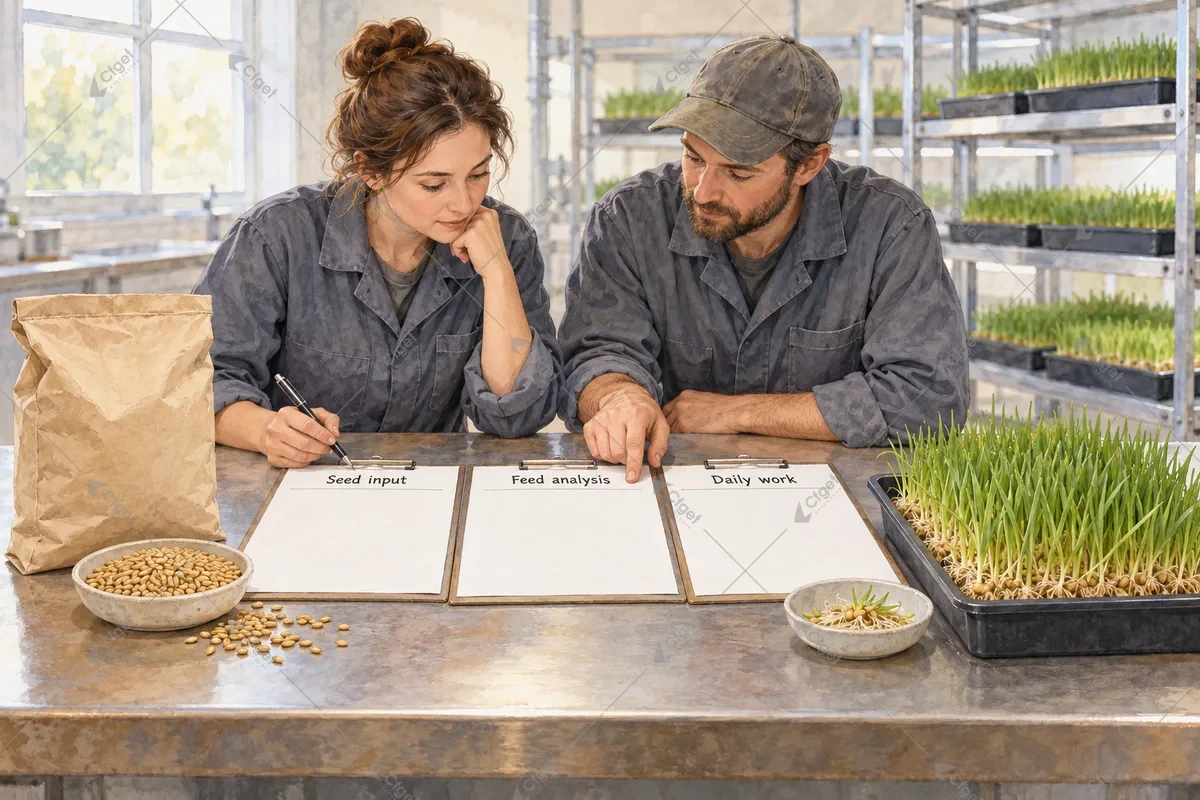
Put the daily routine beside the feed benefit
The original SARE project report describes three selected Pennsylvania dairy farms, using late-2014 interviews and 2015 monitoring of the two farms initially still producing sprouts. The third contributed experience and historical records after discontinuing production. Labor, barley supply, mold and equipment repairs appear among the operating challenges. Incomplete records prevented economic calculations for two farms.
These observations help identify work to check locally; they do not settle the economics of a hot-climate fodder project. Walk through the proposed routine with the people who would run it:
- Seed supply: establish the available source, required quality, delivered cost and replenishment routine.
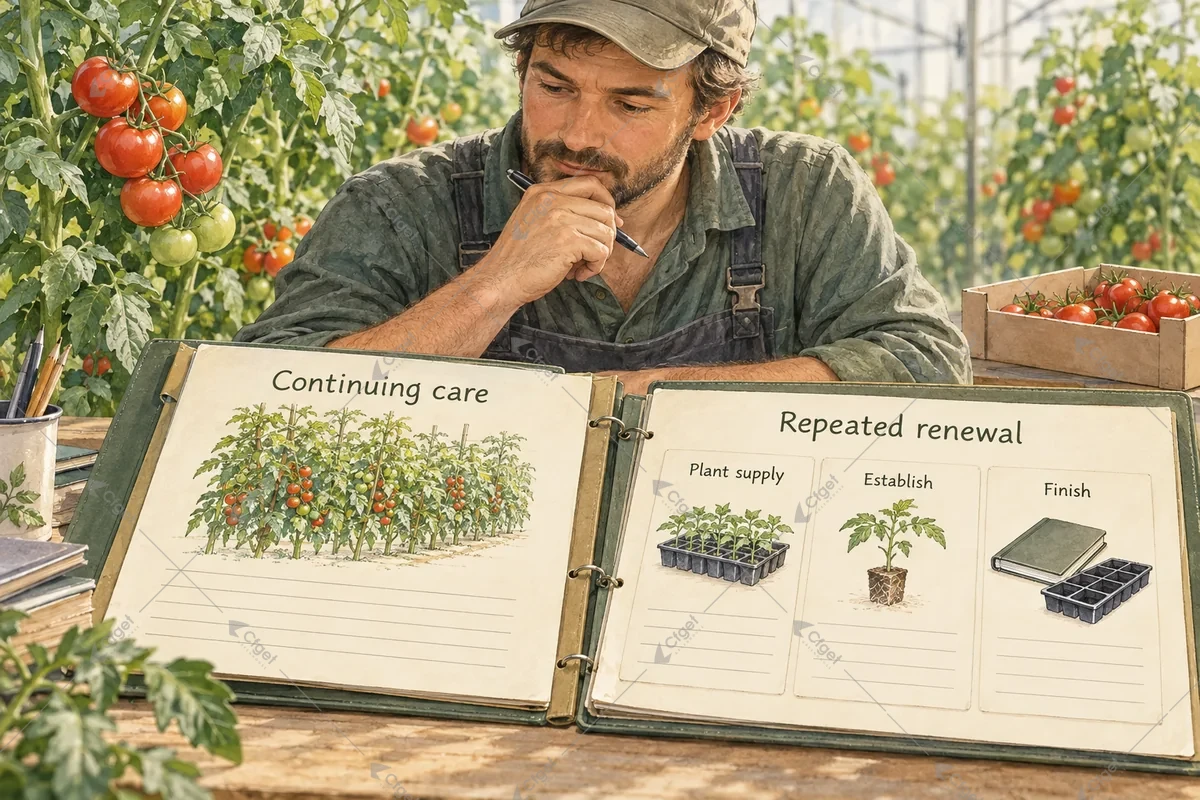
- Daily work: include tray preparation, loading, harvest handling, cleaning and moving feed to its point of use. Count family labor as well as paid time.
- Unusable batches and interruptions: record discarded output, stoppages and the feed still needed when production is unavailable.
- Facility operation: include water, power, climate control, repairs and the space occupied by the complete routine, not only the growing racks.
These recurring commitments sit alongside the investment in the building and equipment. A larger fresh harvest is useful only if the accepted feeding role and the operating burden still make sense together.
Measure the proposed job before buying the full facility
Use a limited local production trial to collect consistent seed-input, accepted-output, feed-analysis, labor and utility records under the conditions the intended operation will face. Have the nutrition professional assess the material’s role before assuming a feed reduction.
Compare the resulting purchase change with the full proposed commitment. The decision may be to proceed, serve only the identified seasonal gap, adjust the proposal or retain the existing feed supply. None requires treating every kilogram of fresh sprouts as a kilogram of purchased forage saved.
Once the feed role is clear, use the commercial hydroponic facility guide for broader integration questions. The fodder process still needs its own building and operating assessment before equipment is selected.