Weather changes. Seasons shift. Your crops don’t have to suffer. LED grow lights give you control over nature’s timing and let you grow anything, anywhere, anytime.
LED grow lights provide artificial light sources that match natural sunlight wavelengths. They enable year-round cultivation in cloudy, winter, or poorly lit areas by enhancing photosynthesis efficiency. This technology eliminates seasonal growing limitations and increases crop yields by up to 40%.
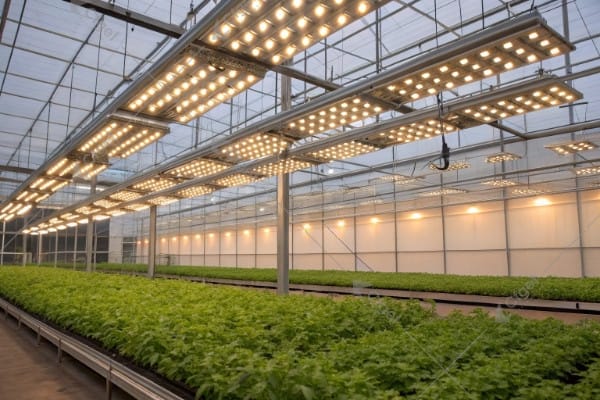
I’ve spent 29 years watching growers struggle with weather patterns and seasonal limitations. The breakthrough came when we started installing LED systems in our greenhouse projects across different climates. From the humid tropics of Southeast Asia to the harsh winters of Central Asia, LED technology changed everything.
The Science of PAR: Matching the Light Spectrum to Your Crop’s Needs?
Plants see light differently than humans do. The wrong spectrum wastes energy and stunts growth. Understanding PAR (Photosynthetically Active Radiation) transforms your growing results.
PAR measures light wavelengths between 400-700 nanometers that plants use for photosynthesis. Different crops require specific light spectrums at various growth stages. Matching LED spectrum to plant needs increases photosynthesis efficiency by 25-35% compared to broad-spectrum lighting.
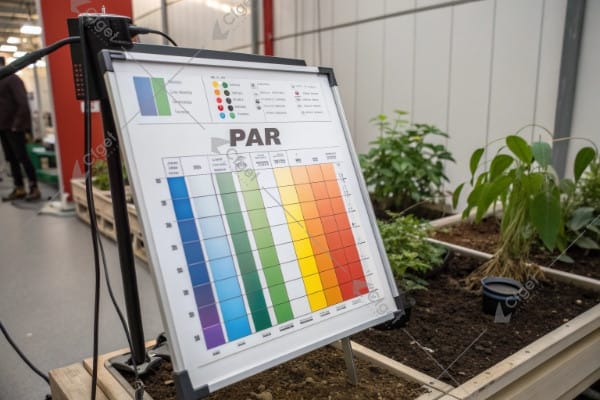
The science behind PAR reveals why generic lighting fails. Plants absorb specific wavelengths for different biological processes. Blue light (400-500nm) drives vegetative growth and leaf development. Red light (600-700nm) triggers flowering and fruiting. Far-red light (700-800nm) influences stem elongation and shade avoidance responses.
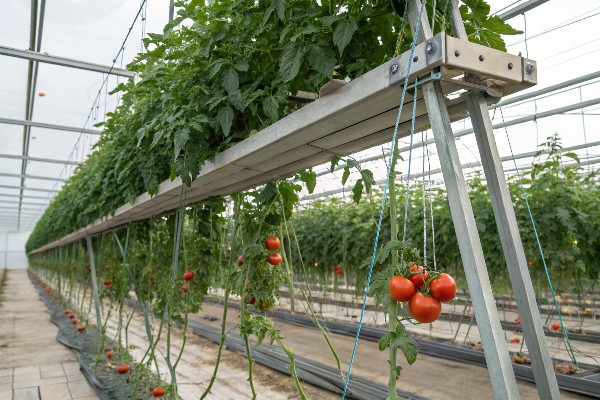
I remember working with a tomato grower in the Netherlands who struggled with poor fruit set. His existing HPS lights provided broad spectrum but lacked the precise red wavelengths needed during flowering. We installed full-spectrum LEDs with adjustable red channels. Within two growing cycles, his fruit set improved by 30%.
Different crops demand different spectral recipes. Leafy greens like lettuce and spinach thrive under blue-heavy spectrums that promote compact, dense growth. Fruiting crops like tomatoes and peppers need balanced blue-red ratios during vegetative growth, then red-dominant light during reproduction. Root vegetables respond well to full-spectrum light with enhanced far-red components.
The timing of spectrum delivery matters as much as the wavelengths themselves. Young seedlings need gentle, blue-rich light to establish strong root systems. Mature plants require higher intensities and red wavelengths to maximize photosynthesis. Flowering plants benefit from specific red-to-far-red ratios that trigger hormonal responses.
| Growth Stage | Optimal Spectrum | Light Intensity (PPFD) | Duration |
|---|---|---|---|
| Seedling | Blue-heavy (70% blue, 30% red) | 100-200 μmol/m²/s | 14-16 hours |
| Vegetative | Balanced (40% blue, 60% red) | 200-400 μmol/m²/s | 16-18 hours |
| Flowering | Red-dominant (20% blue, 80% red) | 400-800 μmol/m²/s | 12-14 hours |
Modern LED systems allow precise spectrum control throughout the growing cycle. Programmable controllers adjust wavelength ratios automatically based on crop type and growth stage. This precision eliminates guesswork and maximizes plant response to artificial lighting.
The Urban & High-Latitude Advantage: How LEDs Erase the Seasons?
Cities block sunlight. Winter shortens growing seasons. LEDs break these natural barriers and bring agriculture indoors. Urban farming becomes profitable when you control the light.
LED grow lights eliminate seasonal and geographic growing limitations by providing consistent, controllable light year-round. Urban and high-latitude locations benefit most, as LEDs compensate for reduced natural sunlight and enable multiple growing cycles annually, increasing productivity by 200-300%.
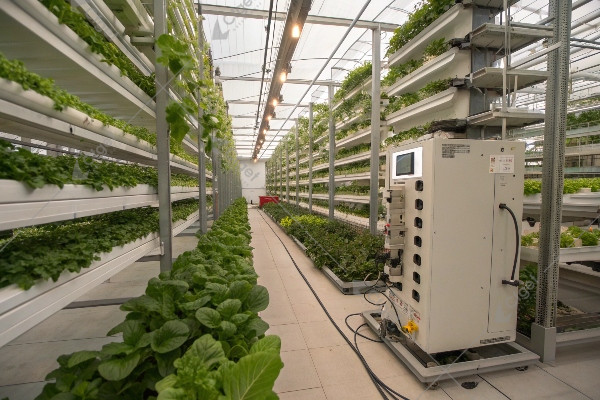
Location no longer determines what you can grow or when you can grow it. I’ve installed LED systems in basement facilities in Moscow and rooftop greenhouses in Singapore. Both achieve the same consistent results because artificial lighting creates identical growing conditions regardless of external weather.
Urban environments present unique challenges that LEDs solve effectively. Tall buildings cast shadows that reduce natural light penetration. Air pollution filters specific wavelengths. Seasonal variations in day length affect plant development. LED systems overcome all these obstacles by providing consistent, high-quality light independent of external conditions.
High-latitude regions face extreme seasonal variations that make traditional agriculture difficult. During winter months, some areas receive less than 6 hours of weak sunlight daily. Plants cannot complete photosynthesis effectively under these conditions. LED supplemental lighting extends photoperiods and maintains optimal light intensities throughout the year.
The economic advantages multiply in challenging locations. A greenhouse operation in northern Canada installed our LED system and achieved four lettuce crops annually instead of the traditional single summer crop. The initial investment paid back within 18 months through increased production volume and premium off-season pricing.
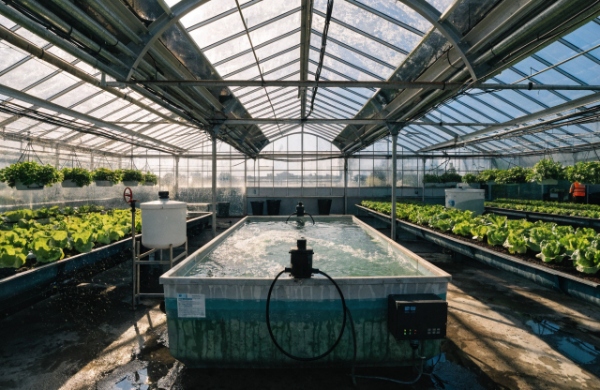
Vertical farming represents the ultimate expression of location-independent agriculture. Multi-level growing systems maximize space utilization in expensive urban real estate. LED lights enable precise control over each growing level independently. A single warehouse can produce the equivalent of 10-15 acres of traditional farmland.
Climate control integration amplifies LED benefits in urban settings. Sealed growing environments prevent pest infiltration and eliminate weather-related crop losses. Automated systems maintain optimal temperature, humidity, and CO2 levels alongside precise lighting schedules. This combination creates ideal growing conditions impossible to achieve in traditional outdoor agriculture.
The technology enables year-round production of high-value crops in any location. Herbs, microgreens, and specialty vegetables command premium prices when grown locally and harvested fresh. LED-powered urban farms supply restaurants and markets with consistent, high-quality produce regardless of season or weather conditions.
LED vs. HPS: Analyzing the Long-Term Energy Savings & ROI?
Energy costs eat profits. Equipment replacements drain budgets. The initial LED investment seems high until you calculate long-term savings. Smart growers choose LEDs for financial reasons.
LED grow lights consume 40-50% less electricity than HPS systems while producing equivalent or superior plant growth. Combined with longer lifespans (50,000+ hours vs. 10,000 hours) and reduced cooling costs, LEDs typically achieve positive ROI within 2-3 years despite higher upfront costs.
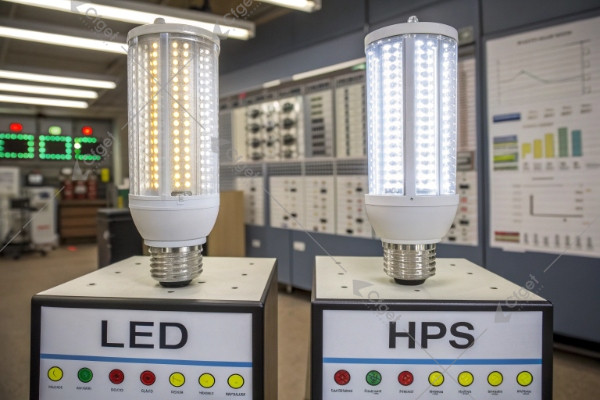
The numbers tell the complete story. A typical 1000W HPS fixture consumes 1100W including ballast losses. An equivalent LED fixture produces the same light output using 450-500W. Over a 12-hour daily photoperiod, this difference saves 7.2-7.8 kWh daily per fixture.
I analyzed actual energy bills from a tomato operation in California that switched from HPS to LED. Their monthly electricity costs dropped from $12,000 to $6,500 while maintaining the same production levels. The annual savings of $66,000 justified the LED investment within 30 months.
Heat generation creates hidden costs with HPS systems. These fixtures produce significant waste heat that requires additional cooling capacity. Air conditioning systems work harder to maintain optimal growing temperatures. LED systems generate minimal heat, reducing cooling loads by 30-40% in most installations.
Maintenance expenses favor LEDs significantly. HPS bulbs require replacement every 12-18 months as light output degrades. Ballasts fail regularly and need replacement every 3-4 years. LED systems maintain consistent output for 5-7 years with minimal maintenance requirements. Labor costs for lamp changes disappear almost entirely.
| Cost Factor | HPS System | LED System | Annual Savings |
|---|---|---|---|
| Energy Consumption | $8,760/1000W | $3,942/450W | $4,818 |
| Lamp Replacement | $120/year | $0/year | $120 |
| Cooling Costs | $2,400/year | $1,440/year | $960 |
| Maintenance Labor | $480/year | $120/year | $360 |
| Total Annual Savings | $6,258 |
Light quality improvements with LEDs often increase yields beyond energy savings. Better spectrum control and more uniform light distribution enhance plant development. Many growers report 15-25% yield increases after switching to LED systems. These production gains accelerate payback periods significantly.
The reliability advantage becomes critical in commercial operations. HPS system failures during critical growth periods can destroy entire crops. LED systems rarely fail completely, and individual diode failures don’t compromise overall light output. This reliability prevents costly crop losses that can exceed the entire lighting system investment.
Dimming capabilities provide additional energy savings opportunities. LEDs adjust output based on natural light availability or growth stage requirements. Automatic dimming systems reduce energy consumption by 20-30% while maintaining optimal growing conditions. HPS systems operate at fixed output regardless of actual lighting needs.
4 Mistakes to Avoid When Designing Your Supplemental Lighting Layout?
Poor planning wastes money and kills crops. Common design mistakes repeat across different projects. Learning from others’ errors saves time, money, and harvests.
Supplemental lighting layout mistakes include inadequate light uniformity, incorrect mounting heights, poor heat management, and ignoring photoperiod control. These errors reduce crop yields by 20-40% and increase energy costs unnecessarily. Proper planning and professional design prevent these costly oversights.
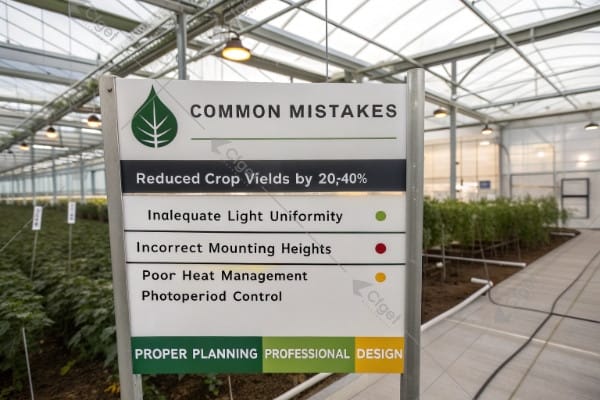
Mistake number one involves light uniformity across the growing area. Many installers focus on average light levels instead of distribution consistency. Plants in darker areas struggle while those under bright spots may suffer light stress. I’ve measured variations exceeding 50% in poorly designed systems.
The solution requires careful fixture spacing and height calculations. Light meters help identify hot spots and shadows during installation. Professional design software models light distribution before installation begins. Uniform coverage typically requires 20-30% overlap between fixture coverage areas.
Mounting height represents the second critical error. Fixtures placed too close cause light burn and uneven coverage. Heights that are too great waste energy and create insufficient intensity. The optimal distance depends on fixture power, beam angle, and crop canopy height.
Heat management failures destroy crops and waste energy. LEDs generate less heat than HPS but still require proper ventilation. Inadequate airflow causes hot spots that stress plants and reduce LED lifespan. Sealed fixtures trap heat and fail prematurely without adequate cooling.
I worked with a vertical farm that mounted LEDs too close to lettuce crops. The intense light bleached leaves and stunted growth. We raised fixture height by 12 inches and added reflectors to maintain intensity. Crop quality improved immediately, and yields increased by 25%.
Photoperiod control mistakes cost money and reduce yields. Many growers run lights continuously, thinking more light always means better growth. Plants need dark periods for proper metabolic processes. Excessive lighting wastes energy and can actually reduce photosynthesis efficiency.
Timer programming errors create inconsistent photoperiods that confuse plant circadian rhythms. Sudden light changes stress plants and trigger unwanted responses like premature flowering. Gradual sunrise and sunset transitions using dimming controls provide more natural light cycles.
| Common Mistake | Problem Caused | Proper Solution | Yield Impact |
|---|---|---|---|
| Uneven Light Distribution | 30-50% variation across canopy | Professional spacing calculation | +15-25% |
| Incorrect Height | Light burn or insufficient intensity | Manufacturer height recommendations | +10-20% |
| Poor Heat Management | Hot spots and LED degradation | Adequate ventilation design | +5-15% |
| Wrong Photoperiod | Plant stress and energy waste | Crop-specific light schedules | +10-30% |
Integration with existing greenhouse systems requires careful planning. Lighting controls must coordinate with environmental systems to maintain optimal growing conditions. Temperature sensors should trigger ventilation when lights generate excess heat. Humidity controls need adjustment for different photoperiods and light intensities.
The final mistake involves ignoring crop-specific requirements during design. Different plants need different light intensities, spectrums, and photoperiods. A single lighting design cannot optimize growth for multiple crop types. Zoned lighting systems allow independent control for different growing areas.
Conclusion
LED grow lights transform agriculture by providing precise, efficient, and reliable artificial lighting that eliminates seasonal and geographic limitations while delivering superior energy efficiency and long-term cost savings.