Manual greenhouse management consuming endless hours while crops suffer from inconsistent conditions? Human error and delayed responses costing you thousands in lost yields and wasted resources?
Smart control systems integrate all greenhouse operations through automated sensors and AI-driven responses, reducing labor costs by 40-60% while increasing yields up to 30%. These systems optimize growing conditions 24/7 with precision impossible through manual management.
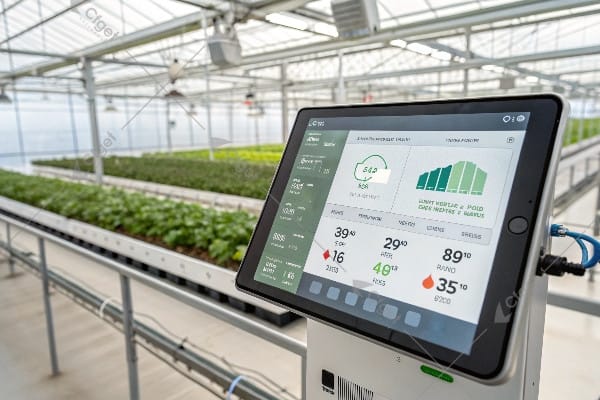
After three decades of designing integrated control systems for operations ranging from research facilities to 50-acre commercial farms, I’ve watched this technology evolve from basic timers to sophisticated AI platforms. Today’s systems don’t just automate tasks – they learn, predict, and optimize in ways that consistently outperform even the most experienced growers.
The Brain of the Modern Greenhouse: From Sensor Data to Automated Action
Modern greenhouse control systems process thousands of data points hourly, making split-second decisions that maintain optimal growing conditions without human intervention.
Integrated sensor networks monitor temperature, humidity, light, soil moisture, CO2, and plant health indicators continuously. Advanced algorithms analyze this data stream and automatically adjust heating, cooling, irrigation, fertigation, and lighting systems to maintain perfect growing conditions.
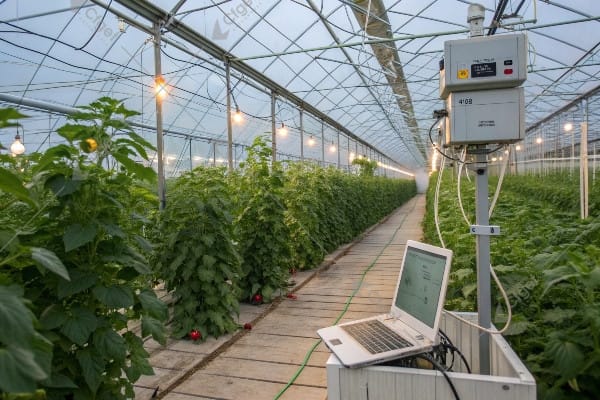
Real-Time Environmental Orchestration
Temperature control becomes surgical when systems monitor multiple zones simultaneously and respond within seconds to changing conditions. Instead of broad facility-wide adjustments, smart systems create microclimates tailored to specific crops or growth stages throughout the same structure.
Humidity management integrates ventilation, heating, and misting systems to maintain precise vapor pressure deficit (VPD) levels that optimize plant transpiration. The system continuously calculates VPD based on temperature and humidity readings, adjusting multiple systems simultaneously to maintain ideal ranges.
Light optimization coordinates natural sunlight with supplemental lighting systems, adjusting intensity and spectrum throughout the day. Photosynthetic photon flux density (PPFD) sensors ensure plants receive optimal light levels while minimizing energy consumption during peak rate periods.
CO2 enrichment systems inject carbon dioxide precisely when plants can utilize it most effectively. Smart systems monitor photosynthetic activity through light sensors and adjust CO2 levels accordingly, preventing waste during low-light periods when plants cannot process additional carbon.
Irrigation timing becomes predictive rather than reactive, with soil moisture sensors throughout the growing area providing continuous feedback. Systems learn plant water consumption patterns and adjust irrigation schedules based on weather forecasts, growth stages, and seasonal variations.
Advanced Data Integration and Learning
Machine learning algorithms analyze historical performance data to identify optimization opportunities that human operators cannot detect. These systems recognize subtle patterns between environmental conditions and plant responses, continuously refining control strategies for maximum productivity.
Weather integration uses local forecasting services to anticipate environmental changes hours or days in advance. Systems pre-cool facilities before heat waves, adjust irrigation before storms, and modify ventilation patterns based on predicted wind and temperature changes.
Crop modeling software predicts plant development stages and adjusts environmental parameters accordingly. Systems know when plants will enter flowering phases and automatically modify nutrition, lighting, and climate conditions to support optimal development.
Energy optimization algorithms balance growing conditions with utility costs, shifting energy-intensive operations to off-peak rate periods when possible. Systems can pre-heat or pre-cool facilities during low-rate hours, reducing operational costs without compromising plant health.
Fault detection and diagnostics identify equipment problems before they affect crops or escalate into expensive repairs. Systems monitor pump pressures, motor currents, and sensor readings to detect anomalies that indicate impending failures.
Slashing Costs & Boosting Yields: The Real ROI of an Integrated Control System
Smart control systems deliver measurable returns through multiple channels that compound over time, creating compelling investment justifications for operations of any size.
Integrated control systems typically reduce operational costs by 25-40% while increasing yields 15-30%. Most installations achieve complete payback within 24-36 months through energy savings, labor reduction, and improved crop quality.
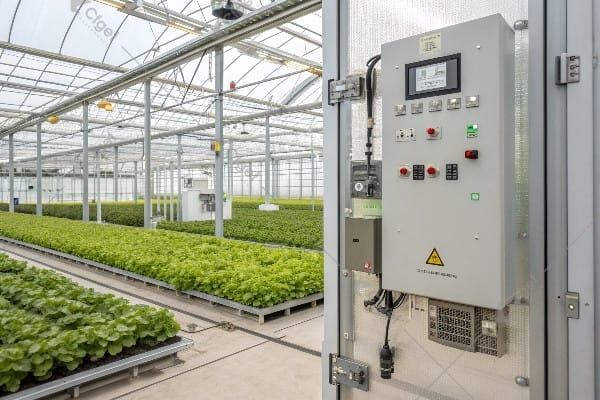
Quantifying Operational Savings
Energy cost reduction represents the largest single savings category for most operations. Smart systems optimize heating, cooling, and lighting usage based on real-time conditions and utility rate structures. Typical energy savings range from 20-35% annually, worth $2-$8 per square foot depending on climate and energy costs.
Labor savings accumulate through automated tasks that previously required constant human attention. Climate monitoring, irrigation scheduling, and equipment adjustments happen automatically, reducing labor requirements by 2-4 hours daily. Annual savings of $15,000-$30,000 are common for medium-sized operations.
Water conservation through precision irrigation and climate control reduces consumption by 15-25% while improving crop quality. Smart systems eliminate over-watering while ensuring plants never experience moisture stress, optimizing both resource usage and plant health.
Fertilizer efficiency improvements of 20-30% result from automated fertigation systems that deliver nutrients precisely when and where plants need them. Reduced waste and improved uptake efficiency lower input costs while supporting higher yields.
Crop loss prevention through consistent environmental control eliminates the devastating losses that occur during equipment failures or extreme weather events. Smart systems maintain backup protocols and emergency responses that protect crops when primary systems fail.
Revenue Enhancement Opportunities
Yield increases of 15-30% are consistently documented in controlled studies comparing automated versus manual greenhouse management. These gains result from consistent optimal conditions that eliminate growth-limiting stress throughout the crop cycle.
Quality improvements create premium pricing opportunities in markets that reward consistency, shelf life, and nutritional content. Automated systems produce more uniform crops with better post-harvest characteristics that command higher prices.
Production scheduling becomes precise when environmental conditions are controlled rather than dependent on weather or manual management. Growers can time harvests for peak market demand, maximizing revenue per crop cycle.
Crop diversification becomes possible when different environmental zones can be maintained automatically within single structures. Operations can grow multiple crop types simultaneously, accessing diverse market opportunities without additional facilities.
Extended growing seasons result from precise climate control that maintains optimal conditions regardless of external weather. Operations in challenging climates can produce crops year-round instead of being limited to favorable seasons.
Advanced Financial Benefits
Risk reduction through automated monitoring and backup systems protects against catastrophic crop losses that can destroy entire growing seasons. Insurance companies often offer premium discounts for operations with comprehensive monitoring and control systems.
Data-driven decision making improves long-term profitability through detailed performance tracking and analysis. Operations can identify their most profitable crops, optimal growing conditions, and efficiency opportunities that manual management cannot detect.
Scalability advantages allow operations to expand without proportional increases in management complexity or labor requirements. Automated systems handle larger facilities with the same management effort required for smaller operations.
Certification compliance becomes automatic when systems maintain detailed records of environmental conditions, input applications, and operational procedures. Many organic and sustainable certifications require documentation that smart systems provide automatically.
A Blueprint for the Future: Why Smart Control is Essential for Large-Scale Farms
Large-scale greenhouse operations face complexity challenges that make manual management impossible and smart control systems absolutely essential for success.
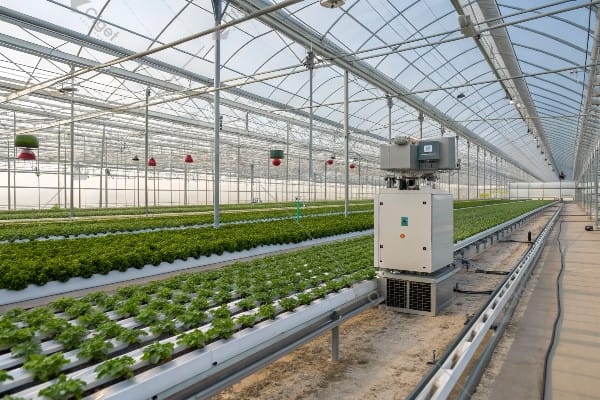
Facilities exceeding 10,000 square feet require automated control systems to maintain consistent conditions across multiple zones while managing operational complexity that overwhelms human capacity. Smart systems become the only viable management solution at commercial scale.
Managing Operational Complexity at Scale
Multi-zone management becomes critical when large facilities house different crops or growth stages that require distinct environmental conditions. Smart systems can maintain dozens of different climate zones simultaneously, something impossible through manual control.
Staff coordination improves when automated systems provide centralized oversight of all facility operations. Instead of multiple workers managing different systems independently, smart control enables single-operator oversight of entire facilities.
Equipment integration challenges multiply with facility size as heating, cooling, irrigation, and lighting systems become more complex. Smart systems coordinate all equipment automatically, preventing the conflicts and inefficiencies that plague manually managed large operations.
Quality consistency across large areas requires precision that human management cannot maintain. Environmental variations that are acceptable in small facilities become problematic at scale, making automated control essential for uniform crop quality.
Resource optimization becomes critical when utility costs and input expenses scale with facility size. Smart systems identify efficiency opportunities and implement optimizations that provide substantial savings in large operations.
Scalability and Future-Proofing
Modular expansion capabilities allow large operations to grow incrementally without redesigning entire control systems. Smart platforms accommodate additional zones, equipment, and capabilities as operations expand.
Technology integration ensures systems remain current with advancing agricultural technology. Modern control platforms accept new sensors, equipment types, and analytical tools without requiring complete system replacement.
Data analytics capabilities become more valuable as operations generate larger datasets. Smart systems can identify subtle optimization opportunities that become significant when applied across large facilities.
Remote management becomes essential for large operations where on-site presence cannot cover all areas effectively. Smart systems enable comprehensive facility oversight from any location with internet access.
Standardization benefits allow large operations to implement consistent procedures across multiple facilities or growing zones. Smart systems ensure identical growing protocols regardless of location or staff variations.
Competitive Advantages
Production efficiency gains from smart control systems become more significant at larger scales where small percentage improvements translate into substantial financial benefits. A 5% efficiency gain in a 100,000 square foot facility generates far more value than the same improvement in smaller operations.
Market responsiveness improves when large operations can adjust production quickly to meet changing demand patterns. Smart systems enable rapid transitions between crops or growing protocols that manual management cannot achieve.
Regulatory compliance becomes manageable when automated systems maintain detailed records of all operational parameters. Large operations face increased scrutiny that requires documentation capabilities only smart systems can provide.
Sustainability metrics improve through optimized resource usage that reduces environmental impact per unit of production. Large operations often face sustainability requirements that smart systems help achieve through precision resource management.
Beyond the Dashboard: 4 Critical Features Your AI Control System Must Have
Professional-grade control systems require specific capabilities that separate industrial platforms from basic automation systems. These features determine long-term success and return on investment.
Advanced control systems must provide predictive analytics, adaptive learning, comprehensive integration, and robust security features. Systems lacking these capabilities cannot deliver the performance and reliability required for commercial success.

Feature #1: Predictive Analytics and Forecasting
Weather integration capabilities use meteorological data to anticipate environmental changes hours or days in advance. Systems adjust facility conditions proactively rather than reactively, preventing plant stress and optimizing resource usage based on predicted conditions.
Crop modeling algorithms predict plant development stages and automatically adjust environmental parameters to support optimal growth. These models learn from historical data and continuously refine predictions based on actual plant responses.
Energy forecasting helps optimize utility usage by predicting demand patterns and shifting operations to minimize costs. Systems can pre-condition facilities during off-peak rate periods, reducing energy expenses without compromising growing conditions.
Equipment maintenance predictions use operational data to forecast when components need service or replacement. This predictive maintenance prevents unexpected failures while optimizing service schedules to minimize operational disruption.
Market analysis integration can adjust production schedules based on price forecasts and demand predictions. Systems help optimize harvest timing and crop selection to maximize revenue opportunities.
Feature #2: Adaptive Learning and Optimization
Machine learning algorithms analyze operational data continuously to identify optimization opportunities that static programming cannot detect. These systems improve performance over time by learning from successful strategies and avoiding ineffective approaches.
Environmental response modeling tracks how plants respond to different conditions and automatically adjusts parameters to maximize desired outcomes. Systems learn the subtle relationships between environmental factors and plant performance.
Resource efficiency optimization identifies waste patterns and implements corrections automatically. Systems detect when irrigation, heating, or lighting usage exceeds optimal levels and adjust operations accordingly.
Seasonal adaptation allows systems to modify strategies based on changing external conditions throughout the year. Programs that work well in summer may be inappropriate for winter conditions, and adaptive systems make these transitions automatically.
Performance benchmarking compares current operations against historical data and industry standards to identify improvement opportunities. Systems can recommend operational changes that improve productivity or reduce costs.
Feature #3: Comprehensive System Integration
Equipment compatibility ensures control systems work with diverse manufacturers’ equipment without requiring proprietary components. Open communication protocols allow integration of heating, cooling, irrigation, and lighting systems from different suppliers.
Data standardization enables information sharing between different system components and external applications. Standardized data formats support integration with business management software, financial systems, and regulatory reporting requirements.
Scalability architecture allows systems to accommodate facility expansion or equipment additions without requiring complete replacement. Modular designs protect initial investments while supporting business growth.
Third-party integration capabilities enable connection with external services like weather forecasting, energy management, and market analysis platforms. These connections enhance system capabilities without internal development costs.
Legacy system support allows integration with existing equipment and control systems, protecting previous investments while enabling gradual upgrades to modern capabilities.
Feature #4: Enterprise-Grade Security and Reliability
Cybersecurity features protect against unauthorized access and data breaches that could compromise operations or expose sensitive business information. Industrial control systems require security measures appropriate for critical infrastructure.
Data backup and recovery systems ensure operational continuity during equipment failures or disasters. Redundant storage and automated backup procedures protect against data loss that could disrupt operations.
Network reliability includes redundant communication paths and failover capabilities that maintain system operation during network interruptions. Critical control functions must continue operating even when communication systems experience problems.
User access management provides role-based permissions that limit system access based on job responsibilities. Different staff members need different levels of system access, and proper management prevents unauthorized changes.
Audit trails maintain detailed logs of all system changes and user actions for regulatory compliance and troubleshooting purposes. These records support quality assurance programs and regulatory reporting requirements.
Conclusion
Smart control systems transform greenhouse operations from labor-intensive manual management into optimized automated facilities that maximize productivity while minimizing costs through intelligent environmental management.