Growing crops without soil might sound impossible. But after 29 years in the greenhouse industry, I’ve seen substrate cultivation transform ordinary farms into export powerhouses.
Substrate cultivation uses growing media like coco coir and rockwool instead of soil. This method gives growers precise control over nutrients and water. The result is higher yields and better quality crops that meet international export standards.
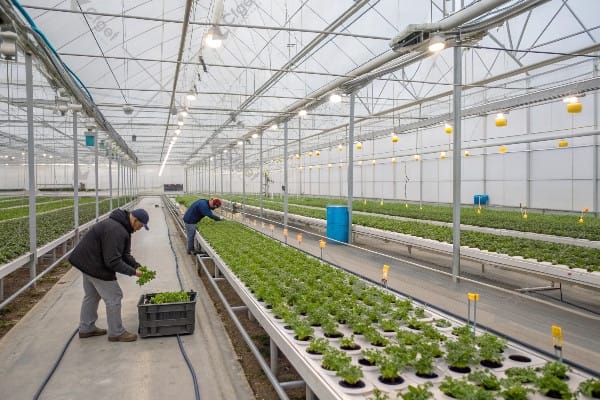
The shift from traditional soil farming to substrate systems represents one of the biggest advances in modern agriculture. When I first started working with CFGET in the 1990s, most growers were skeptical about soilless growing. Today, our substrate systems operate in over 20 countries, producing premium tomatoes and strawberries that compete in global markets.
Beyond Soil: The Power of Precision Root Zone Management?
Root zone control separates amateur growers from professionals. Most people think plants just need water and nutrients. The truth is more complex.
Precision root zone management controls temperature, moisture, pH, and nutrient levels around plant roots. This creates optimal growing conditions that soil cannot match. Plants grow faster and produce higher quality fruits.

Understanding Root Zone Dynamics
Root zone management works by creating a controlled environment where every factor affects plant growth. Traditional soil farming leaves too many variables to chance. Weather, soil composition, and drainage patterns all vary across a field. Substrate systems eliminate these variables.
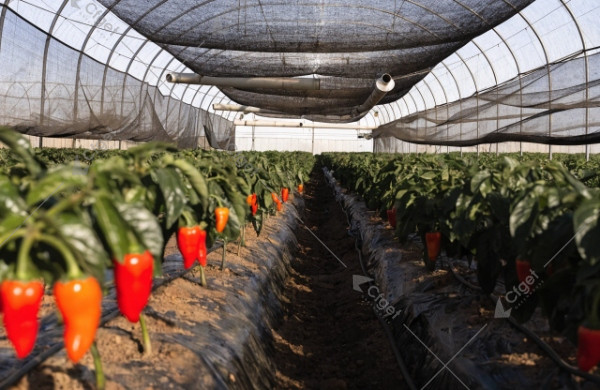
The root zone in substrate cultivation operates like a precision machine. We control water delivery through drip irrigation systems. Nutrient solutions feed plants exactly what they need, when they need it. Temperature sensors monitor root temperatures and adjust heating or cooling systems accordingly.
| Root Zone Factor | Soil Farming | Substrate Cultivation |
|---|---|---|
| Water Control | Rain dependent | Precise irrigation |
| Nutrient Delivery | Soil dependent | Custom solutions |
| Temperature | Weather dependent | Climate controlled |
| pH Management | Soil buffering | Active monitoring |
| Drainage | Natural drainage | Engineered systems |
The economic benefits become clear when you compare yields. Our clients typically see 3-4 times higher production per square meter compared to soil farming. More importantly, the quality consistency allows them to secure premium export contracts. European buyers pay top prices for tomatoes and strawberries grown in our substrate systems because they know the quality will be consistent year-round.
Coco Coir vs. Rockwool: Choosing the Right Substrate for Your Crop?
Choosing the wrong substrate costs growers thousands of dollars in lost production. Each growing medium has specific advantages that match different crops and growing conditions.
Coco coir offers excellent water retention and root aeration for long-season crops like tomatoes. Rockwool provides precise water control and sterile conditions ideal for high-value strawberries. The choice depends on your crop, climate, and management style.
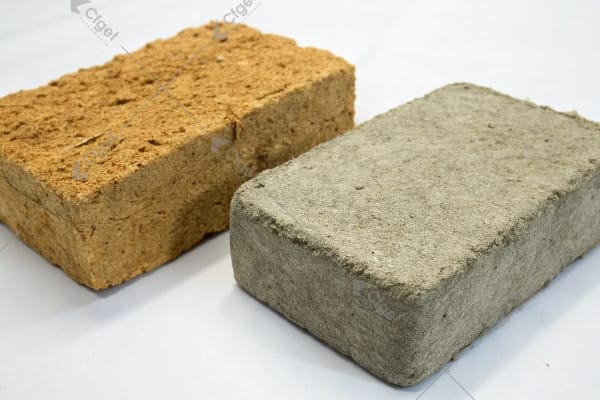
Coco Coir: The Natural Choice
Coco coir comes from coconut husks and offers several advantages for commercial growers. The fiber structure creates excellent drainage while holding enough water for plant roots. This balance works especially well in hot climates where plants need consistent moisture.
I remember working with a tomato grower in Thailand who struggled with traditional soil farming during the dry season. His yields dropped by 40% during hot months. After switching to coco coir substrate, his production remained stable year-round. The coir held enough moisture to keep plants healthy even when outside temperatures reached 40°C.
Coco coir also provides natural disease resistance. The material contains compounds that suppress harmful fungi and bacteria. This reduces the need for chemical treatments and helps growers meet organic certification requirements.
| Coco Coir Advantages | Best Applications |
|---|---|
| High water retention | Hot, dry climates |
| Natural disease resistance | Organic production |
| Renewable resource | Long-season crops |
| Good root aeration | Tomatoes, cucumbers |
| Easy disposal | Environmentally conscious farms |
Rockwool: Precision Growing
Rockwool offers the highest level of control for demanding crops. The material starts as molten rock spun into fibers, creating a sterile growing environment. This sterility becomes crucial when growing high-value crops like strawberries that command premium prices.
European strawberry growers prefer rockwool because it allows precise water and nutrient management. The material holds exactly the right amount of water while providing excellent drainage. Excess water flows away quickly, preventing root diseases that destroy strawberry plants.
The initial cost of rockwool runs higher than coco coir, but the investment pays off through higher yields and better quality. Our clients using rockwool systems typically achieve 15-20% higher yields compared to coco coir for strawberry production.
A Commercial Grower’s Guide to Growing High-Value Tomatoes & Strawberries?
High-value crops require different approaches than commodity vegetables. Export markets demand consistent quality, appearance, and taste that only substrate systems can deliver reliably.
Commercial tomato and strawberry production in substrates focuses on variety selection, plant density, and harvest timing. These crops generate 5-10 times more revenue per square meter than traditional vegetables when grown properly in substrate systems.
Tomato Production Strategies
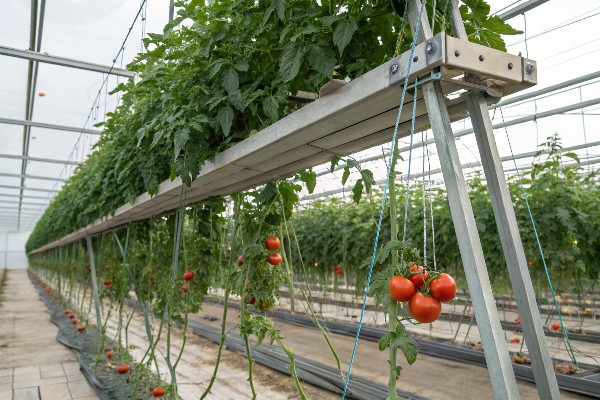
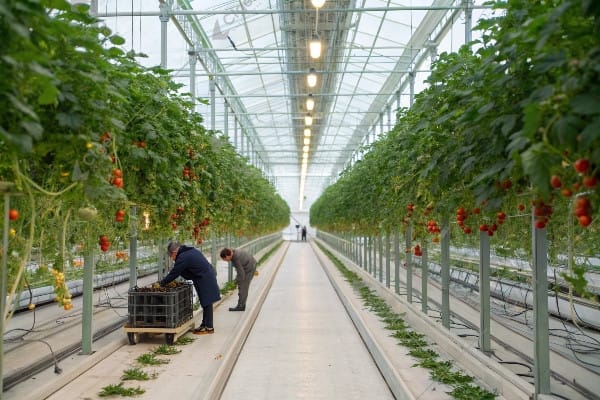
Tomato production in substrate systems starts with variety selection. Export markets prefer specific varieties that ship well and have long shelf life. Cherry tomatoes command the highest prices but require more labor for harvesting. Large beefsteak tomatoes offer easier harvesting but lower prices per kilogram.
Plant density affects both yield and quality. Too many plants create competition and reduce fruit size. Too few plants waste valuable greenhouse space. The optimal density depends on the variety, climate, and market requirements.
Our most successful tomato growers use a systematic approach to plant management. They remove lower leaves regularly to improve air circulation. They prune side shoots to direct energy into fruit production. They support plants with strong trellising systems that can handle heavy fruit loads.
Strawberry Production Excellence
Strawberry production requires even more precision than tomatoes. The plants are more sensitive to environmental changes and have shorter production cycles. However, the profit potential is much higher when done correctly.
Day-neutral strawberry varieties work best in substrate systems because they produce fruit continuously rather than in seasonal flushes. This allows growers to supply markets year-round and command premium prices during off-seasons.
| Crop Management Factor | Tomatoes | Strawberries |
|---|---|---|
| Planting Density | 2.5-3 plants/m² | 6-8 plants/m² |
| Production Cycle | 10-11 months | 6-8 months |
| Harvest Frequency | 2-3 times/week | Daily |
| Labor Requirements | Moderate | High |
| Market Price | $2-4/kg | $8-15/kg |
The key to profitable strawberry production lies in maintaining optimal growing conditions throughout the production cycle. Temperature, humidity, and light levels must stay within narrow ranges. Any deviation reduces fruit quality and shelf life.
Mastering Fertigation: 4 Keys to Nutrient Management in Soilless Systems?
Fertigation mistakes destroy crops and waste money. Most growers either overfeed plants or create nutrient imbalances that reduce yields and quality.
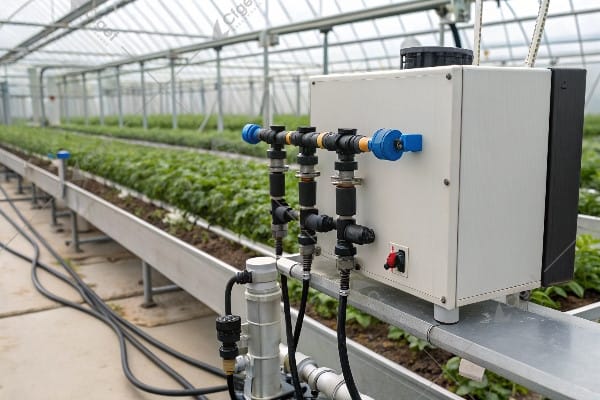
Successful fertigation requires monitoring EC levels, maintaining proper pH, timing nutrient delivery, and adjusting formulations based on plant growth stages. These four factors determine whether substrate cultivation succeeds or fails.
Key 1: EC Level Management
Electrical conductivity (EC) measures the total dissolved salts in nutrient solutions. Too high EC stresses plants and reduces water uptake. Too low EC limits plant nutrition and reduces yields.
The optimal EC level changes throughout the growing season. Young plants need lower EC levels around 1.5-2.0 mS/cm. Mature plants producing fruit can handle higher levels up to 3.0-3.5 mS/cm. Hot weather requires lower EC levels because plants take up more water relative to nutrients.
I learned this lesson working with a cucumber grower who kept his EC constant at 2.5 mS/cm year-round. His plants showed salt stress during summer months, with leaf burn and reduced fruit set. After implementing variable EC management, his yields increased by 25% and fruit quality improved significantly.
Key 2: pH Control
pH affects nutrient availability more than any other factor. Most nutrients become unavailable if pH moves outside the optimal range of 5.5-6.5. Iron deficiency appears first when pH rises too high. Phosphorus becomes unavailable when pH drops too low.
Automatic pH control systems maintain stable levels throughout the day. These systems inject acid or base solutions to keep pH within the target range. Manual pH adjustment works for small operations but becomes impractical for commercial production.
Key 3: Timing and Frequency
Nutrient timing affects plant uptake efficiency and reduces waste. Plants uptake nutrients most actively during morning hours when photosynthesis rates are highest. Feeding during hot afternoon periods often results in nutrient runoff without plant uptake.
Multiple small feedings work better than fewer large applications. This approach maintains consistent nutrient levels in the root zone and reduces leaching losses. Most successful growers feed plants 3-6 times daily during active growth periods.
Key 4: Growth Stage Adjustments
Plant nutrient needs change dramatically throughout the growing cycle. Vegetative growth requires high nitrogen levels to build plant structure. Fruit production needs more potassium and phosphorus to develop quality fruits.
| Growth Stage | Nitrogen (N) | Phosphorus (P) | Potassium (K) | Key Focus |
|---|---|---|---|---|
| Seedling | Low | Medium | Low | Root development |
| Vegetative | High | Medium | Medium | Plant structure |
| Flowering | Medium | High | Medium | Flower formation |
| Fruit Development | Medium | Medium | High | Fruit quality |
| Harvest | Low | Low | High | Shelf life |
Successful growers adjust their nutrient formulations every 2-3 weeks based on plant development. They monitor plant tissue analysis to confirm their nutrient programs are working correctly. This data-driven approach eliminates guesswork and maximizes both yield and quality.
Conclusion
Substrate cultivation transforms ordinary greenhouse operations into export-quality production systems. The combination of precise root zone management, appropriate growing media selection, and professional fertigation creates the foundation for commercial success in today’s competitive agricultural markets.