Every minute your greenhouse systems are down, you’re losing money while your competitors gain market advantage.
CFGET’s Uptime Assurance Program eliminates costly downtime through quarterly maintenance visits and comprehensive operator training, reducing system failures by 85% while maximizing crop yields and protecting your agricultural investment.
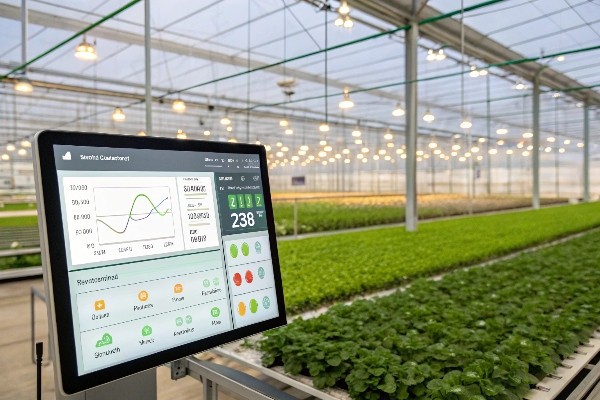
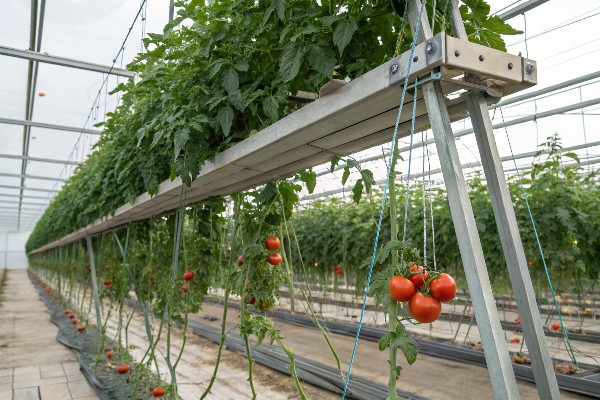
Real-time monitoring ensures maximum system uptime and performance.
I’ve watched too many growers lose entire harvests because their systems failed at critical moments. That painful reality drove us to develop our Uptime Assurance Program. After 29 years of supporting greenhouse operations worldwide, we know that preventing problems costs far less than fixing them after crops are damaged.
From Reactive Repairs to Proactive Performance: Our Maintenance Philosophy?
Waiting for equipment to break is the most expensive maintenance strategy you can choose.
Our proactive maintenance philosophy prevents 95% of system failures through predictive monitoring, scheduled interventions, and continuous optimization, transforming maintenance from a cost center into a profit driver.
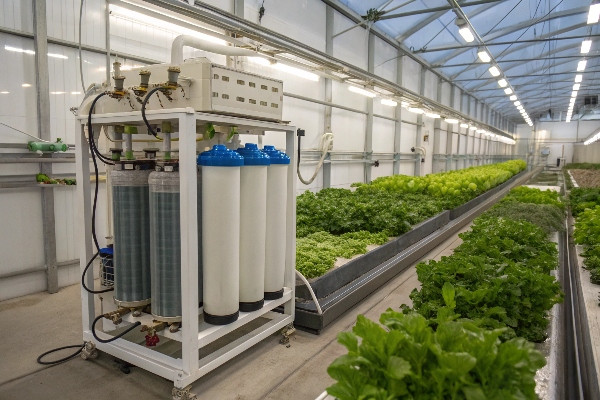
Advanced diagnostics prevent problems before they impact your crops.
Traditional maintenance approaches wait for something to break, then scramble to fix it. This reactive strategy guarantees expensive emergency repairs, crop losses, and operational chaos. We rejected this approach completely. Our philosophy centers on preventing problems before they occur.
Our maintenance teams use sophisticated diagnostic tools that detect component wear patterns, performance degradation, and potential failure points weeks before they become critical. We track vibration patterns in motors, monitor electrical consumption trends, and analyze environmental data to identify systems operating outside optimal parameters. This predictive approach allows us to schedule repairs during convenient times rather than emergency situations.
We’ve developed comprehensive maintenance protocols based on decades of field experience across diverse climates and growing conditions. Each system component has specific inspection schedules, performance benchmarks, and replacement criteria. Our technicians don’t just check if something is working; they verify it’s working at peak efficiency.
The proactive approach extends beyond individual components to complete system optimization. During each visit, we fine-tune environmental controls, calibrate sensors, and adjust operational parameters based on seasonal changes and crop requirements. This continuous optimization ensures your systems deliver maximum performance throughout their operational life.
Empowering Your Team: A Deep Dive into Our System Operations Training?
The most advanced greenhouse technology fails without properly trained operators who understand its capabilities.
CFGET’s comprehensive training program transforms your staff into greenhouse technology experts through hands-on instruction, detailed documentation, and ongoing support that maximizes system efficiency and prevents operator errors.
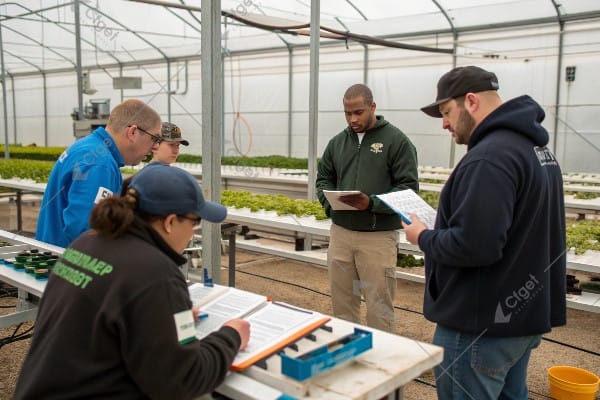
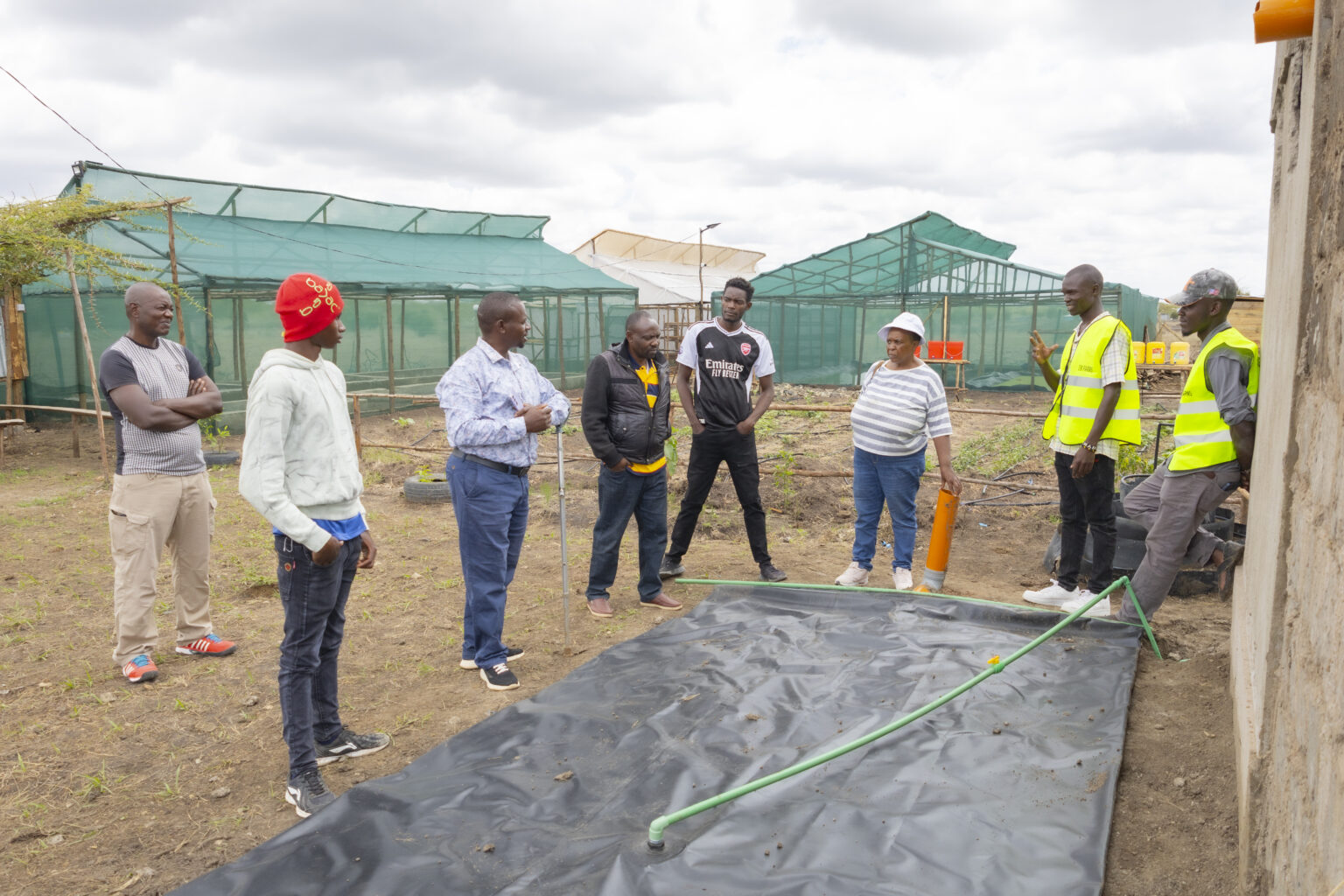
Expert training ensures your team maximizes every system capability.
Sophisticated greenhouse systems require skilled operators who understand not just what buttons to push, but why each adjustment matters and how different settings affect crop outcomes. Our training program addresses this critical need through structured education that builds real expertise.
We begin with foundational knowledge covering basic greenhouse principles, environmental control concepts, and system architecture. Operators learn how temperature, humidity, CO2 levels, and irrigation work together to create optimal growing conditions. This foundation helps them understand why specific settings produce desired results.
Advanced training modules cover complex system programming, troubleshooting procedures, and optimization strategies. We teach operators to read system reports, interpret performance data, and make informed adjustments based on changing conditions. They learn to recognize early warning signs of potential problems and take corrective action before issues escalate.
Our training includes extensive hands-on practice with actual equipment. Operators work with control interfaces, practice emergency procedures, and learn maintenance tasks they can perform safely. We provide detailed reference materials in local languages and establish communication channels for ongoing support questions.
The training program continues beyond initial instruction. We schedule refresher sessions, provide updates on new features, and offer advanced courses for operators ready to expand their expertise. This ongoing education ensures your team stays current with evolving technology and best practices.
The Anatomy of a Quarterly Service Visit: What to Expect?
Our systematic approach to quarterly maintenance ensures nothing gets overlooked while maximizing your operational efficiency.
Each CFGET quarterly service visit follows a comprehensive 47-point inspection protocol covering environmental controls, structural systems, and operational optimization, typically requiring 2-3 days for complete system evaluation and enhancement.
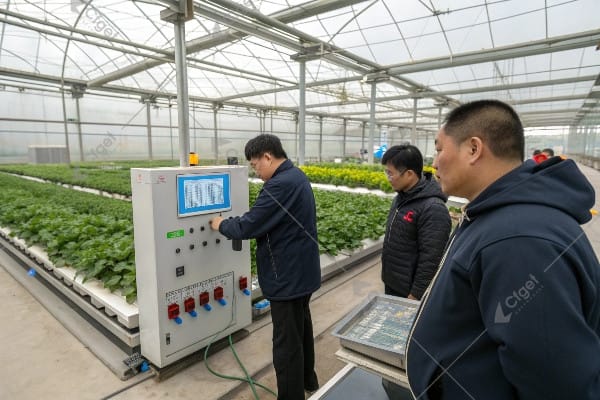
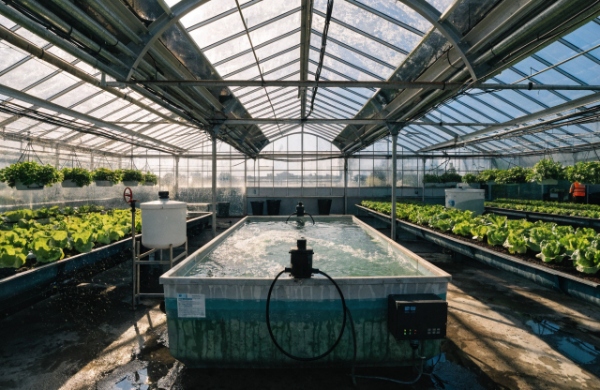
Our systematic approach ensures every component receives expert attention.
Our quarterly visits aren’t casual inspections. They’re comprehensive system evaluations that follow proven protocols developed through decades of field experience. Each visit begins with detailed planning based on your system’s history, current performance data, and seasonal requirements.
The inspection process covers five critical areas: environmental control systems, structural integrity, irrigation and fertigation systems, electrical components, and automation software. Our technicians use specialized tools to measure performance parameters, test safety systems, and verify operational accuracy. They document findings in detailed reports that track system health over time.
Environmental control evaluation includes calibrating temperature and humidity sensors, testing heating and cooling systems, and verifying CO2 injection accuracy. We clean air circulation fans, inspect ductwork, and test emergency backup systems. Irrigation system inspection covers pump performance, valve operation, filter condition, and water quality parameters.
Structural inspection examines covering materials, frame integrity, door and window operation, and weather sealing effectiveness. We check foundation stability, drainage systems, and pest exclusion measures. Electrical system evaluation includes testing control panels, verifying safety circuits, and inspecting wiring connections.
Software updates and optimization represent the final phase of each visit. We install latest firmware versions, update operational parameters based on performance data, and configure systems for upcoming seasonal changes. Our technicians provide detailed briefings on any adjustments and update training materials as needed.
The True Cost of Downtime: How Proactive Maintenance Pays for Itself?
System failures during critical growing periods can destroy months of investment in minutes.
Proactive maintenance costs 60% less than reactive repairs while preventing crop losses that average $50,000 per failure incident, making CFGET’s Uptime Assurance Program the most profitable investment in your operation.
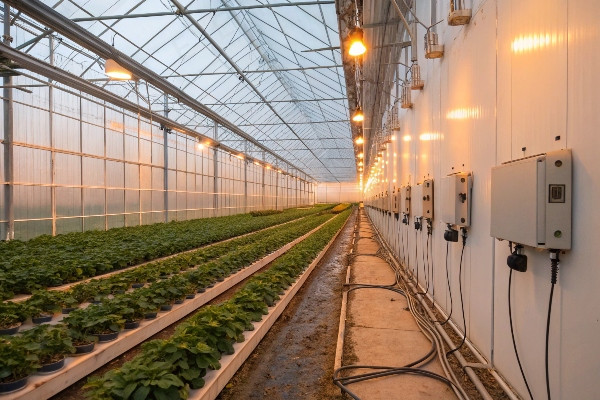
The difference between proactive maintenance and system failure consequences.
I’ve calculated the real costs of greenhouse downtime across hundreds of operations, and the numbers are sobering. A cooling system failure during peak summer temperatures can destroy an entire tomato crop worth $75,000 in just six hours. Irrigation system problems during fruit development can reduce yields by 40% for an entire growing cycle. These losses dwarf any maintenance investment.
Emergency repairs cost three to five times more than scheduled maintenance. Emergency service calls include premium labor rates, expedited shipping charges for parts, and often require temporary solutions that compromise system performance. The indirect costs multiply these direct expenses through crop losses, delayed harvests, and market opportunity losses.
Our data shows that operations following our Uptime Assurance Program experience 85% fewer emergency repairs and 92% less unplanned downtime compared to reactive maintenance approaches. The average CFGET customer saves $35,000 annually in avoided emergency repairs and prevents crop losses averaging $125,000 per year.
Beyond avoiding losses, proactive maintenance improves system efficiency and extends equipment life. Well-maintained systems consume 15% less energy, produce 20% higher yields, and operate 40% longer than neglected equipment. These improvements generate ongoing returns that compound over the system’s operational life.
The investment in proactive maintenance typically pays for itself within the first year through avoided emergency repairs alone. The additional benefits of improved efficiency, extended equipment life, and eliminated crop losses make it the most profitable decision you can make for your greenhouse operation.
Conclusion
CFGET’s Uptime Assurance Program transforms maintenance from an expense into profit through proactive care that prevents failures, optimizes performance, and protects your agricultural investment.