Extreme weather destroys crops without warning. Traditional glass breaks under pressure. Your investment needs protection that withstands nature’s worst conditions.
Polycarbonate greenhouses use twin-wall hollow panels that provide 200% better insulation than glass while resisting winds up to 120 mph. These structures excel in high-altitude, windy, and sandy environments where other materials fail.
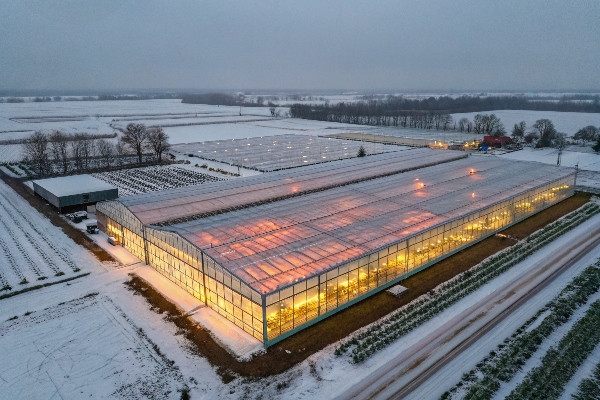
Last winter, I received a call from a research station in Tibet. Their glass greenhouse had shattered during a windstorm at 4,200 meters elevation. Replacement glass couldn’t survive the journey. We shipped polycarbonate panels that arrived intact and performed flawlessly through -30°C temperatures and 100 mph winds.
The Science Behind Twin-Wall Polycarbonate: Superior Insulation and Strength?
Material choice determines greenhouse survival. Physics governs heat transfer and structural integrity. Understanding these principles guides smart purchasing decisions.
Twin-wall polycarbonate creates air chambers that reduce heat loss by 60% compared to single-layer materials. The hollow structure distributes loads evenly, providing impact resistance 200 times greater than glass.
How Twin-Wall Construction Creates Superior Performance
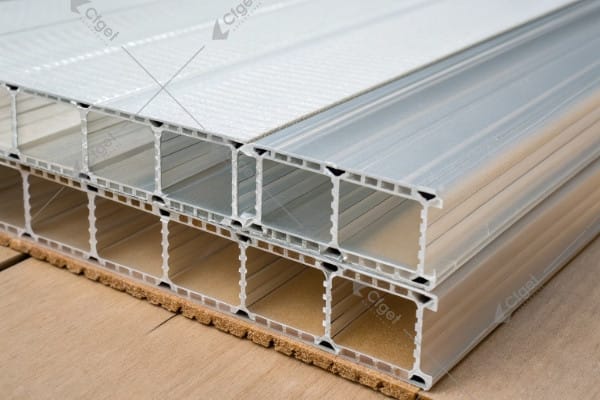
The twin-wall design works through trapped air insulation. Two parallel polycarbonate sheets connect with vertical ribs every 6mm. These ribs create sealed air chambers that block heat transfer. Still air provides excellent insulation because it cannot carry heat through convection.
Thermal conductivity measurements prove this advantage. Single-pane glass transfers heat at 5.8 W/m²K. Twin-wall polycarbonate reduces this to 2.4 W/m²K. This difference cuts heating costs by 50-60% in cold climates while maintaining optimal growing temperatures.
Light transmission remains excellent despite the double-layer construction. Quality polycarbonate panels transmit 88-92% of available light. The hollow ribs actually help diffuse light evenly throughout the greenhouse. This diffusion eliminates hot spots and shadows that stress plants.
| Property | Twin-Wall Polycarbonate | Single Glass | Double Glass |
|---|---|---|---|
| Thermal Conductivity | 2.4 W/m²K | 5.8 W/m²K | 2.8 W/m²K |
| Impact Resistance | 200x glass | 1x baseline | 1.2x glass |
| Weight per sq meter | 1.3 kg | 12.5 kg | 25 kg |
| Light Transmission | 88% | 90% | 82% |
Structural strength comes from the ribbed design. Vertical ribs act like tiny I-beams, distributing loads across the entire panel. This distribution prevents stress concentration points that cause glass failure. The polycarbonate material itself flexes without breaking, absorbing impact energy safely.
UV protection extends material life significantly. Quality panels include UV-blocking additives that prevent degradation. This protection maintains clarity and strength for 15-20 years. Cheaper panels without UV protection yellow and become brittle within 3-5 years.
Temperature expansion requires careful planning. Polycarbonate expands more than glass with temperature changes. Proper installation includes expansion joints every 3 meters. These joints prevent buckling and stress cracking during extreme temperature swings.
Manufacturing quality varies significantly between suppliers. Premium panels use virgin polycarbonate resin with consistent wall thickness. Recycled content reduces clarity and strength. Wall thickness variations create weak points that fail under stress.
Protecting Your Crops: How PC Greenhouses Conquer High-Altitude and Windy Conditions?
Extreme environments test every material choice. High altitude brings intense UV and temperature swings. Wind creates constant structural stress that destroys weak materials.
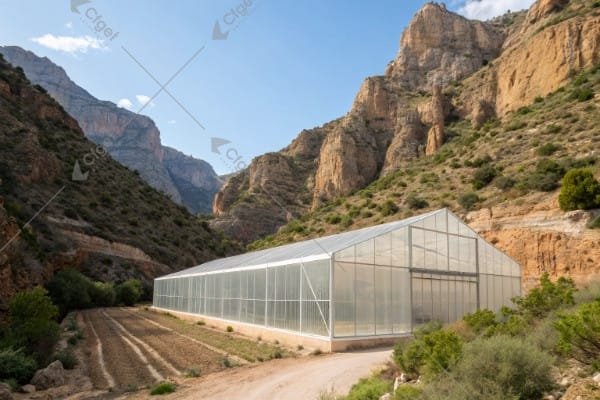
Polycarbonate greenhouses perform exceptionally at altitudes above 3,000 meters where glass fails regularly. The flexible material handles 50°C temperature differences while maintaining structural integrity in 120 mph winds.
Engineering Solutions for Harsh Environmental Challenges
High-altitude conditions create unique stresses. Atmospheric pressure drops 30% at 3,000 meters elevation. This pressure difference can implode sealed structures. Polycarbonate’s flexibility prevents catastrophic failure by allowing slight deformation without breaking.
Temperature swings challenge all materials daily. Mountain locations often experience 40-50°C differences between day and night. Glass expands and contracts at different rates than metal frames, creating stress fractures. Polycarbonate expands more uniformly, reducing frame stress.
UV intensity increases 10-15% per 1,000 meters of elevation. This intense radiation degrades most plastics rapidly. Quality polycarbonate panels include UV stabilizers that maintain performance for decades. These additives cost more initially but prevent expensive replacements.
Wind loads require careful structural design. Building codes specify wind speeds for different regions, but mountain locations often exceed these standards. Our greenhouse designs include reinforced frames and additional bracing for wind speeds up to 120 mph.
| Environmental Factor | Standard Conditions | High Altitude | Design Response |
|---|---|---|---|
| UV Intensity | 100% baseline | 130-150% | Enhanced UV stabilizers |
| Temperature Range | 30°C daily swing | 50°C daily swing | Flexible expansion joints |
| Wind Speed | 80 mph design | 120 mph design | Reinforced frame structure |
| Air Pressure | Sea level | 70% of sea level | Pressure equalization vents |
Sand and dust create additional challenges in arid regions. Airborne particles sandblast surfaces continuously. Glass becomes etched and cloudy within months. Polycarbonate’s impact resistance prevents surface damage from sand particles. The smooth surface cleans easily with water washing.
Snow loads increase dramatically at altitude. Wet snow can weigh 20-30 pounds per square foot. The arched greenhouse design sheds snow naturally, but structural support must handle temporary loads. Polycarbonate’s light weight reduces total structural load compared to glass alternatives.
Maintenance access becomes critical in remote locations. Glass repairs require specialized glaziers and careful transport. Polycarbonate panels install with simple tools. Spare panels ship safely without special packaging. Local technicians can complete repairs without specialized training.
Thermal performance remains stable across temperature extremes. The air chambers in twin-wall panels maintain insulation value from -40°C to +60°C. This stability ensures consistent growing conditions regardless of outside weather variations.
A Long-Term Investment Analysis: Calculating the ROI of a Polycarbonate Greenhouse?
Investment decisions require accurate financial projections. Initial costs must balance against long-term benefits. Polycarbonate greenhouses offer unique advantages that improve profitability over time.
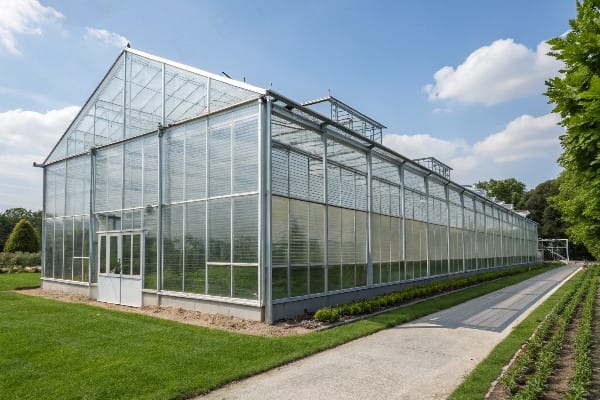
Polycarbonate greenhouses cost 15-20% more initially than basic alternatives but deliver 40% lower operating costs through superior insulation. The 20-year lifespan and reduced maintenance create exceptional long-term value.
Breaking Down the Complete Financial Picture
Initial investment includes materials, installation, and setup costs. A 1,000 square foot polycarbonate greenhouse averages $18,000-22,000 installed. Comparable glass structures cost $25,000-30,000. Basic plastic alternatives start at $12,000 but require replacement every 5-7 years.
Energy savings provide immediate returns. Superior insulation reduces heating costs by 40-60% in cold climates. A greenhouse requiring $2,000 annual heating with glass needs only $800-1,200 with polycarbonate. These savings accumulate significantly over the structure’s lifespan.
Maintenance costs remain minimal with quality polycarbonate. Annual cleaning and inspection cost $200-300. Glass greenhouses require $800-1,200 yearly for broken pane replacement and resealing. Plastic alternatives need complete covering replacement every 3-4 years at $3,000-4,000.
Production benefits multiply financial returns. Stable temperatures increase yields by 15-25% compared to less-insulated structures. Extended growing seasons add 2-3 months of production annually. These improvements often double the greenhouse’s annual revenue potential.
| Financial Metric | Year 1 | Year 5 | Year 10 | Year 20 |
|---|---|---|---|---|
| Initial Investment | $20,000 | $20,000 | $20,000 | $20,000 |
| Annual Energy Savings | $1,200 | $1,400 | $1,600 | $1,800 |
| Maintenance Savings | $600 | $700 | $800 | $900 |
| Production Increase | $3,000 | $3,500 | $4,000 | $4,500 |
| Cumulative Net Benefit | $4,800 | $24,000 | $52,000 | $110,000 |
Insurance considerations affect total cost of ownership. Many agricultural policies offer discounts for durable greenhouse construction. Polycarbonate’s impact resistance reduces claim frequency. Some insurers provide 10-15% premium reductions for polycarbonate over glass construction.
Resale value remains strong throughout the structure’s life. Quality polycarbonate greenhouses retain 60-70% of original value after 10 years. This residual value protects investment if circumstances change. Glass greenhouses depreciate faster due to breakage concerns and maintenance requirements.
Tax benefits may apply in many jurisdictions. Agricultural structures often qualify for accelerated depreciation schedules. Some regions offer grants or subsidies for energy-efficient greenhouse construction. These incentives can reduce net investment by 20-30% in qualifying areas.
Financing options improve project feasibility. Many agricultural lenders offer specialized greenhouse loans with favorable terms. The structure’s durability and proven returns make approval easier. Lease-to-own programs allow immediate installation with gradual ownership transfer.
The Researcher’s Choice: Why Polycarbonate is the Standard for Scientific and Experimental Greenhouses?
Research demands precise environmental control. Experiments require consistent conditions over extended periods. Material choices directly impact data quality and research validity.
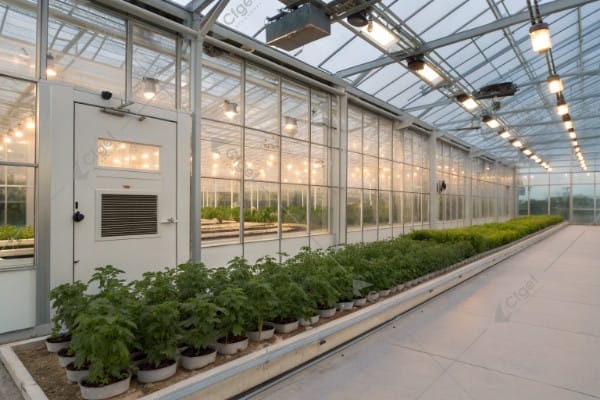
Scientific institutions choose polycarbonate for 85% of new research greenhouses. The stable thermal properties and optical clarity ensure consistent experimental conditions while providing the durability needed for long-term studies.
Meeting the Rigorous Demands of Scientific Research
Temperature stability drives research greenhouse design. Plant breeding experiments require precise temperature control within ±1°C. Polycarbonate’s superior insulation maintains stable conditions with less energy input. This stability reduces temperature fluctuations that could invalidate research results.
Light quality affects plant responses significantly. Research requires consistent light transmission without spectral distortion. Quality polycarbonate panels maintain 88-92% light transmission throughout their lifespan. UV-blocking additives prevent material degradation that would change light characteristics over time.
Contamination control becomes critical in research environments. Sealed polycarbonate construction prevents outside air infiltration better than glass alternatives. The smooth interior surface resists bacterial growth and cleans easily with disinfectants. These properties maintain sterile conditions for sensitive experiments.
Long-term studies demand structural reliability. Plant breeding programs often run 10-20 years or longer. Polycarbonate’s 20-year lifespan ensures consistent conditions throughout extended research periods. Glass replacement during studies can alter growing conditions and compromise data validity.
| Research Requirement | Polycarbonate Advantage | Impact on Studies |
|---|---|---|
| Temperature Stability | ±0.5°C variation | Consistent plant responses |
| Light Transmission | 88% maintained 20 years | Reliable photosynthesis data |
| Contamination Control | Sealed construction | Valid pathogen studies |
| Structural Integrity | No mid-study failures | Uninterrupted experiments |
Climate simulation capabilities expand research possibilities. Polycarbonate greenhouses equipped with heating and cooling systems can simulate various global climates. This capability allows researchers to study plant adaptation without traveling to different geographic regions. The stable structure maintains precise conditions for accurate simulation.
Equipment integration works seamlessly with polycarbonate construction. Sensor mounting points install easily without compromising panel integrity. Automated systems for irrigation, fertilization, and climate control integrate cleanly. The lightweight panels allow equipment installation without structural modifications.
Data collection benefits from stable environments. Consistent growing conditions reduce variables that could affect experimental results. This stability allows smaller sample sizes while maintaining statistical validity. Reduced variability improves the precision of research conclusions and publication quality.
Expansion flexibility accommodates growing research programs. Polycarbonate structures allow easy additions and modifications. New sections connect seamlessly to existing structures. This expandability protects initial investments while allowing program growth over time.
Safety considerations matter in research environments. Polycarbonate’s impact resistance prevents injuries from broken panels. The material doesn’t create sharp fragments like glass when damaged. This safety advantage reduces liability concerns and insurance costs for research institutions.
Conclusion
Polycarbonate greenhouses deliver unmatched performance in extreme conditions through superior engineering and materials science. The investment pays dividends through reduced operating costs, increased reliability, and exceptional longevity.