In Nigeria, tomatoes can be profitable and still feel impossible. Heat stress, pests, and massive postharvest losses can erase margins even when demand is strong.
A profitable year-round tomato greenhouse in Nigeria needs three things: a heat-first greenhouse design, a pest-proof production routine, and a postharvest plan that protects value after harvest. If I ignore any one, I will lose money even with good yields. Nigeria’s tomato value chain has documented high loss pressure and major pest shocks, including the Tuta absoluta outbreak (“Tomato Ebola”) that caused severe yield loss in past seasons. IFDC / HortiNigeria scoping report<1>
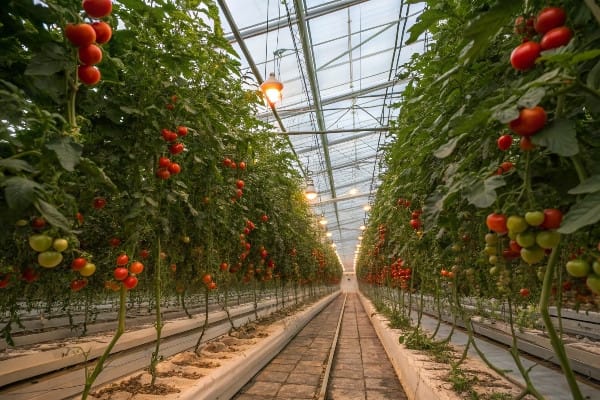
I’m writing this as a grower-builder. I care about cost per kg, marketable rate, and stable weekly output. I also care about reality: Nigeria’s losses often happen after harvest, and pests can wipe out crops fast if biosecurity is weak.
CFGET Video
Why does Nigeria have strong demand but unstable tomato profits?
If demand is high, people assume profit is easy. It’s not. In Nigeria, instability comes from losses and shocks, not only from “low yields.”
Tomato profits collapse when losses happen at harvest, transport, storage, and market, and when pests like Tuta absoluta hit during production. So my greenhouse is not only for yield—it is for risk control. A Kano State value chain study found tomato wastage occurs across harvesting, packaging, loading/offloading, storage, and transportation, and it links losses to lack of storage and other constraints. Journal of Agripreneurship and Sustainable Development (2024)<2>
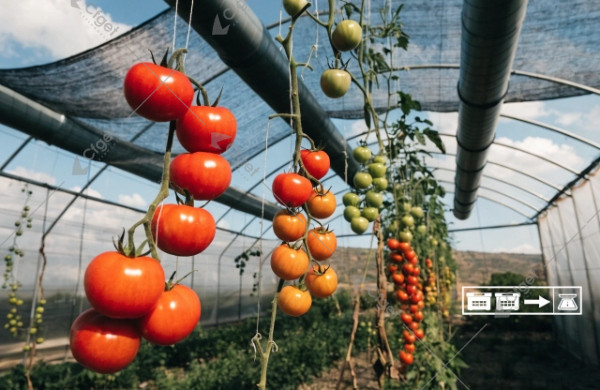
A practical Nigerian market study reported measurable postharvest losses among marketers, driven by poor packaging and poor storage. Agriculture and Food Sciences Research (2021)<3> Another multi-country study (Nigeria/Rwanda/India), funded and supervised with World Bank involvement, reported that using a Zero Energy Cooling Chamber (ZECC) reduced tomato loss dramatically versus current practice in Nigeria. African Journal of Science, Technology, Innovation and Development (2022)<4>
My takeaway: Nigeria tomato is not “only production.” It is production + protection + postharvest discipline. A greenhouse becomes valuable because it makes production more predictable, and it gives me a platform to justify better postharvest handling.
What greenhouse type works best for commercial tomatoes in Nigeria?
Nigeria has hot seasons and strong pest pressure. If I build the wrong structure, I pay for it every day in heat stress and pest control.
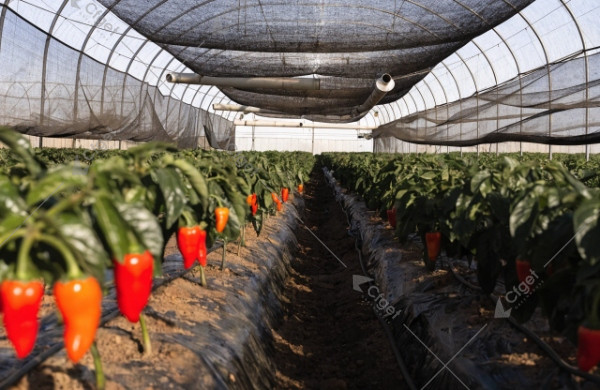
For Nigeria, a multi-span film greenhouse with strong ventilation, shading, and pest barriers is often the best ROI starting point. It scales fast and supports the heat-first design that tomatoes need. If I need bigger mechanized lanes and cleaner workflow, I move toward wide-span layouts.
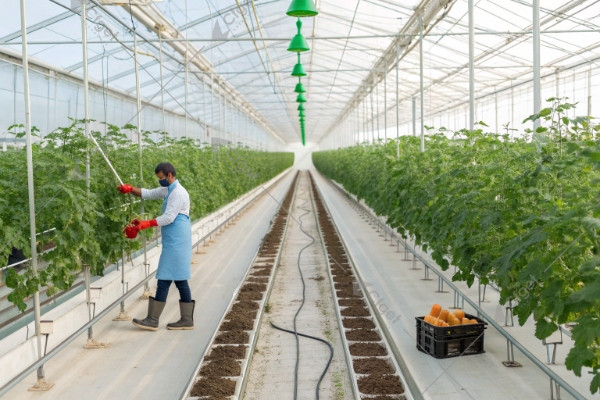
My structure decision is simple:
- If my greenhouse cannot dump heat fast, fruit set will drop.
- If my greenhouse cannot block pests, virus risk will rise.
- If my greenhouse is hard to operate, labor costs will climb.
CFGET structure references I use internally:
- https://cfgreenway.com/multi-span/
- https://cfgreenway.com/wide-span/
- https://cfgreenway.com/sawtooth/
How do I design for heat so tomatoes keep setting fruit?
In Nigeria, heat can destroy set and quality. The mistake is trying to “cool harder” without reducing load first.
I manage heat in stages: reduce solar load first (shade), increase air exchange second (ventilation), then add cooling only when it actually helps. This protects fruit set and reduces cracking pressure.
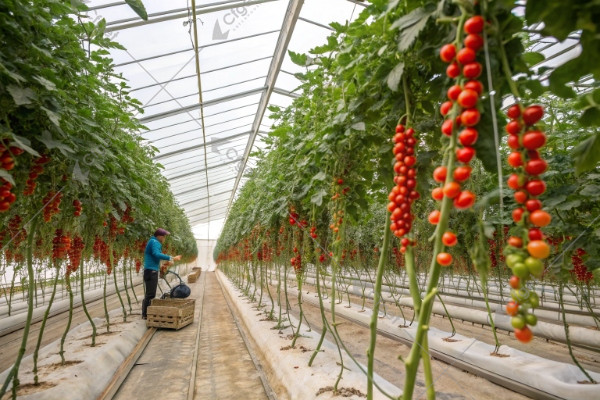
My daily heat routine looks like this:
- Shade early before the house overheats.
- Ventilate to remove heat, not just to “feel air movement.”
- Use airflow fans to stop hot corners.
- Use cooling systems only when outside conditions allow real benefit.
This is why “temperature solutions” must be planned as a system, not as a single machine:
How do I control pests and avoid another “Tomato Ebola” situation?
Pests and viruses are where Nigerian greenhouses can win or lose big. The goal is prevention, not panic spraying.
I reduce pest and virus risk by combining exclusion (nets, sealing), monitoring (traps, scouting), and clean workflow (tools, workers, waste). This lowers the chance of a fast, farm-wide outbreak. The IFDC/HortiNigeria scoping document notes the severe Tuta absoluta shock in Nigeria’s tomato chain and frames why pest and loss technologies matter commercially. IFDC / HortiNigeria report<1>
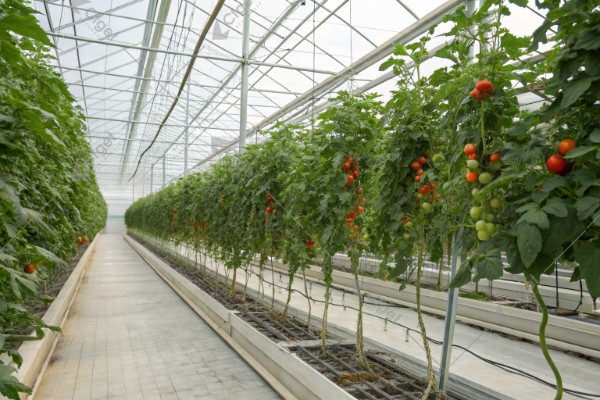
I use a simple IPM stack:
- insect netting on vents and doors
- clean entry routine
- scouting schedule with records
- remove plant waste quickly
- protect beneficials when possible
This links directly to CFGET’s system approach:
How do I cut postharvest losses so greenhouse tomatoes actually turn into cash?
Many growers stop at harvest. That is where Nigeria tomato money often disappears.
I protect cash by improving packaging, cooling, and handling after harvest. Even low-tech improvements can reduce losses and increase profit per kg. A Scientific Reports paper found low adoption of reusable plastic crates (RPCs) among Northern Nigeria tomato growers and links adoption incentives to reduced transit losses and better market outcomes. Scientific Reports (2025)<5> A packaging field study also found substantially lower transit losses when packaging design improved versus traditional conical baskets in a long-distance transport test. Nigerian Journal of Scientific Research (2022)<6>
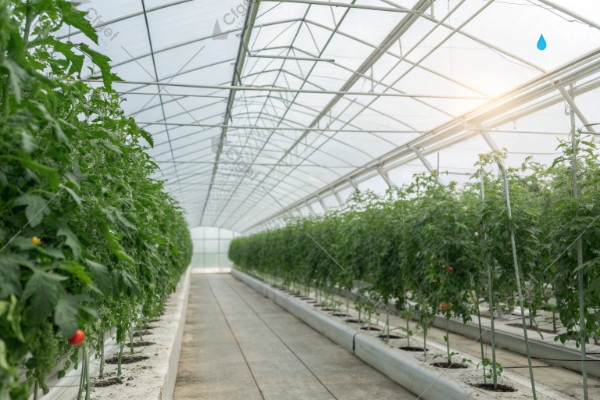
My postharvest “minimum viable system”:
- harvest into stronger packaging (avoid crushing)
- shade the harvest point immediately
- move product fast to a cooler area (even a ZECC can help)
- sort and remove damaged fruit early to reduce spread
The World Bank–supervised multi-country study reported a ZECC reduced tomato loss significantly compared with immediate sales practice in Nigeria. T&F article (World Bank supervised project)<4>
This is the link between greenhouse investment and cash: if I raise quality but still lose product after harvest, I did not build a profitable system.
Conclusion
A year-round tomato greenhouse in Nigeria becomes profitable when I design for heat control, build pest-proof routines, and stop postharvest losses. The greenhouse is not only for yield—it is for stability and predictable cashflow.
External Links (Footnotes)
1> https://hub.ifdc.org/items/7c9214f5-e965-4061-9616-34f32a0ad683
<2> https://www.njaat.com.ng/index.php/jasd/article/view/756
<3> https://www.asianonlinejournals.com/index.php/AESR/article/view/3521
<4> https://www.tandfonline.com/doi/full/10.1080/20421338.2021.1961986
<5> https://www.nature.com/articles/s41598-025-15618-0
<6> https://journals.abu.edu.ng/index.php/njsr/article/view/350
—
## Internal References (CFGET)
– **CFGET Homepage**
– **Commercial Greenhouse Systems**
– **Multi-span Film Greenhouse**
– **Wide-span Greenhouse**
– **Sawtooth Greenhouse**
– **Temperature Solutions**
– **Pest Barriers**
– **Smart Auto & Control Solutions**
– **Contact**
—
## Internal Blog References (Related CFGET Articles)
– **How to Set Up a Commercial Greenhouse: An Essential Guide for Growers and Agribusinesses**
How to Set Up a Commercial Greenhouse: Essential Guide for Growers & Businesses?
– **How to Build an Efficient Greenhouse in Hot Regions: Cooling, Materials & Energy-Saving Secrets**
How to Build an Efficient Greenhouse in Hot Regions: Cooling, Materials & Energy-Saving Secrets?
– **Greenhouse Climate Control Systems for Extreme Heat: Why Your Greenhouse Still Overheats and What to Do**
– **Greenhouse Irrigation Systems: The Ultimate Guide to Boosting Yields & Saving Water**
Greenhouse Irrigation Systems: The Ultimate Guide to Boosting Yields & Saving Water
– **How Much Does It Cost to Build a Smart Greenhouse? Hidden Costs You Should Know**
https://cfgreenway.com/how-much-does-it-cost-to-build-a-smart-greenhouse-what-are-the-hidden-costs/