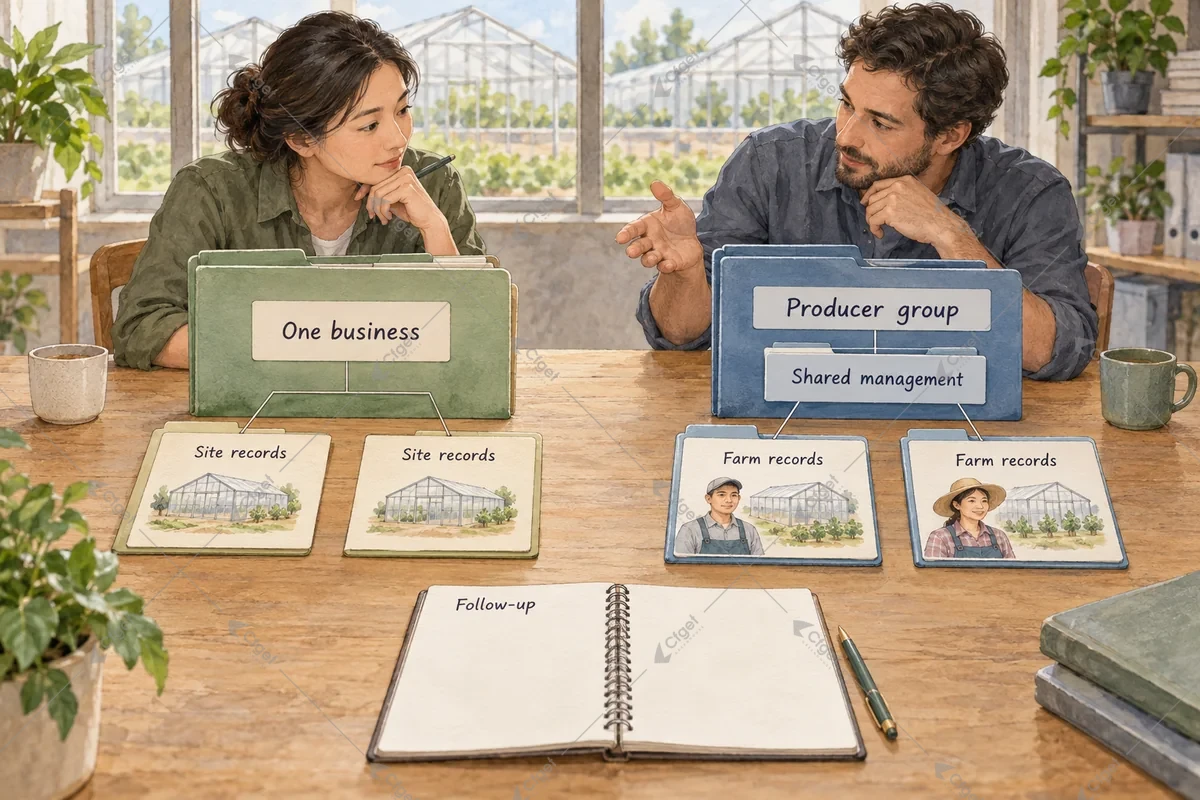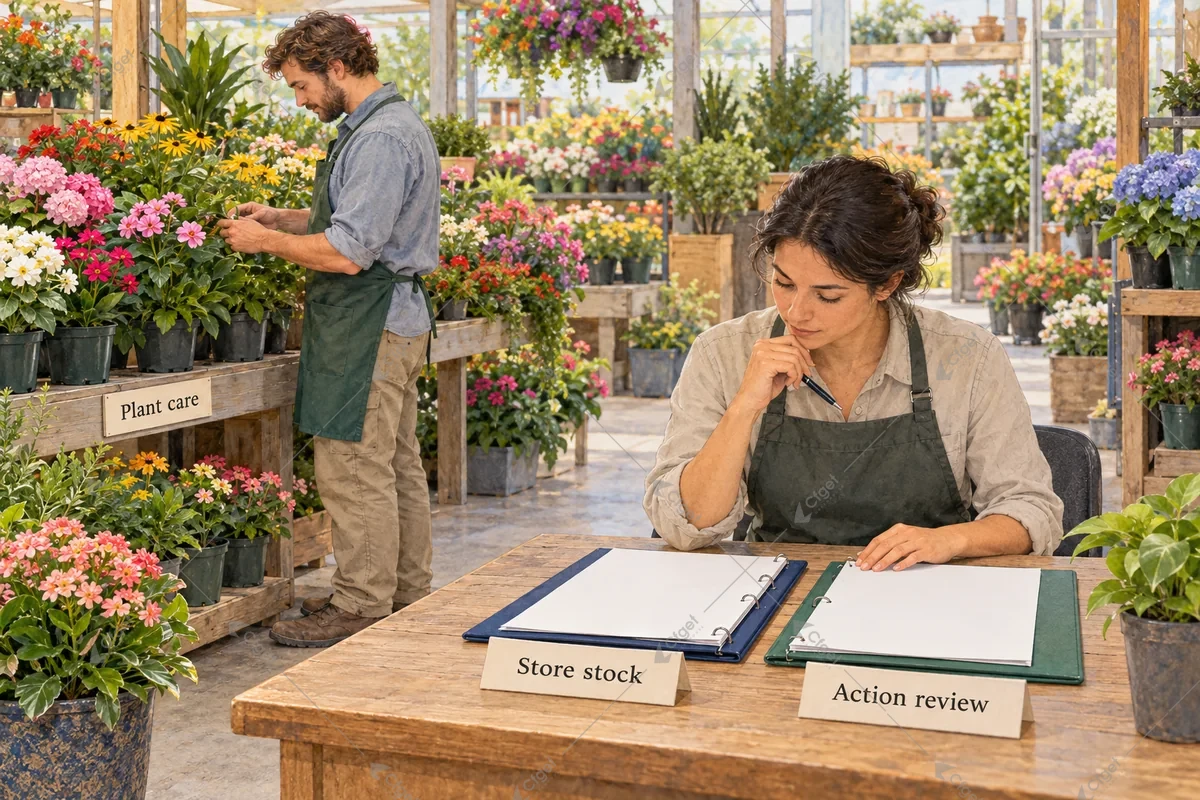
Before asking how many plants a greenhouse can produce, decide what the customer will buy. A tray of young plants sold to another grower and a finished pot sold to a garden retailer represent different promises, even when the crop is the same.
Choose the sale stage that matches the customers you can serve and the work your business can reliably complete. Keeping plants through finishing adds a product to sell, but also leaves that production work and the search for a suitable finished-plant buyer with your team.
A young plant can be the product
The USDA’s 2024 Census of Horticultural Specialties definitions describe unfinished plants as material that specialist producers sell to other growers for further growing. A business can therefore have a complete commercial offer while selling plants that still need another production stage.
For one bounded example, Table 28 reports about US$120.1 million in 2024 US sales of plug seedlings in the annual bedding/garden plants category. This is a national sales aggregate within the census’s coverage, not a profit result or an estimate of demand around a proposed greenhouse. It shows that intermediate plants are a recorded commercial product category.
Keep the production stage separate from the sales channel. Finished pots can also be sold wholesale to other businesses. Choosing to finish plants does not require opening a retail shop, just as identifying a potential grower customer does not yet define the young-plant specification they will purchase.
Compare two offers for the same crop
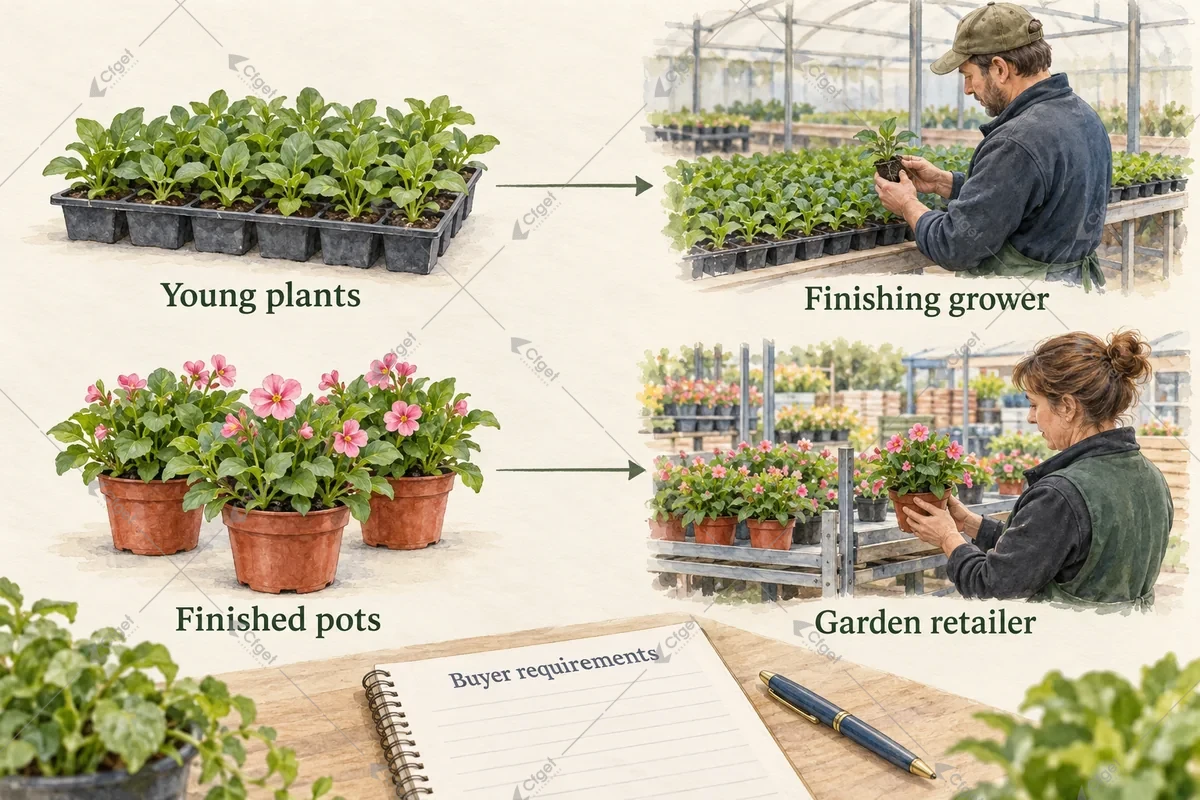
Consider a hypothetical bedding-plant business with two possible customers. A finishing grower wants young plants to enter its own production program. A garden retailer wants finished pots in an agreed condition for its sales offer. Both may be business-to-business customers; the point at which your production obligation ends is different.
For the young-plant offer, discuss the crop and cultivar, supplied form, agreed plant condition and dispatch window with the finishing grower. Ask how the supplied plants will enter that grower’s program. The useful commercial question is whether your team can consistently deliver the product being requested, rather than whether it can produce something broadly described as a seedling.
For the finished-pot offer, establish what the retailer means by ready for sale: the intended container and presentation, plant condition, labeling requirements and delivery arrangement. Work backward with the production manager to identify the growing and preparation tasks your business would retain. A photograph of an attractive pot does not settle those obligations.
Then examine the uncertain part of each proposal. Does the young-plant route have an identifiable finishing customer and an agreed product? Does the finished-pot route have the capability to complete the crop and a buyer for that particular presentation? An assumed higher selling price is insufficient reason to retain finishing when the additional work, occupied space and selling responsibility remain unresolved.
Give a mixed business clear limits
You can sell both stages, but specify which products follow each route. For example, a proposed business might offer a defined young-plant line to growers while evaluating one finished-pot line for a separate customer group. That is more manageable than treating every unsold tray as an automatic candidate for finishing.
If a young-plant sale falls through, carrying the plants onward needs its own decision. Confirm a feasible finishing route, available space and a credible outlet before assuming that a later sale will recover the original plan. The second product has its own requirements.
Before requesting a facility proposal, write a short commercial brief naming the product stage, intended buyer, required condition at sale and the production work retained on site. For a mixed offer, distinguish the lines and the space they would use. The nursery-greenhouse overview can inform the subsequent facility discussion; the customer promise should lead it.
The next step is to discuss that brief with prospective buyers and the production manager. Their answers may support a young-plant business, a finished-pot business or a narrower combination. Decide which sale your greenhouse is being built to deliver before committing to the capability to produce every stage.