Many growers search for the “best greenhouse type” and expect one clear answer. In reality, choosing the wrong type often leads to unstable yield, rising costs, and slow payback.
There is no single best greenhouse type for commercial vegetable production. The right choice depends on crop type, climate load, production model, and long-term operating cost, not structure alone.
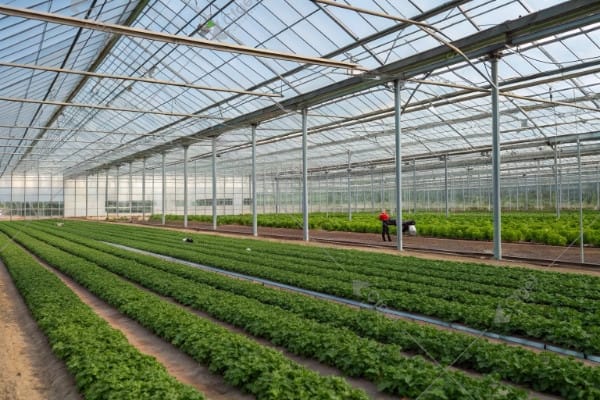
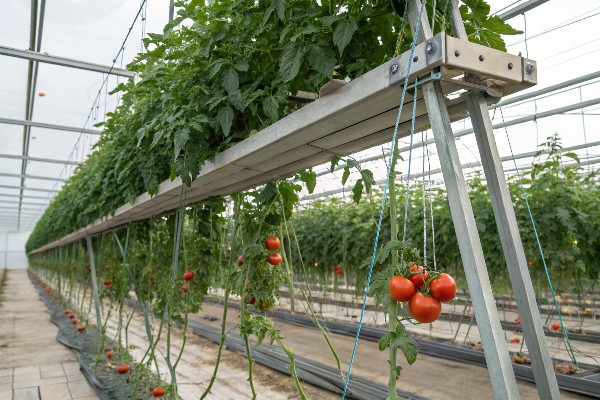
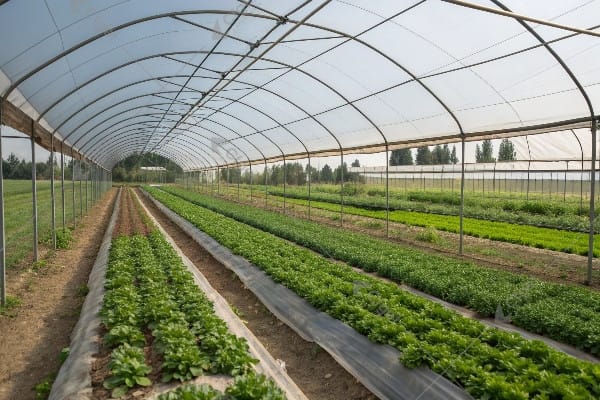
Commercial vegetable greenhouse with stable and uniform growth.
I write this from a project review perspective. I have seen high-tech greenhouses fail and simple structures succeed. The difference was not the label of the greenhouse type. It was whether the system matched the real production goal. This article explains how to choose correctly, step by step.
Why is there no single “best” greenhouse type for commercial vegetables?
The idea of “best” often hides the real problem. Commercial vegetable production is not one scenario.
A greenhouse type can only be called “best” when it matches a specific crop, climate, and business model. Outside that context, it becomes inefficient or risky.
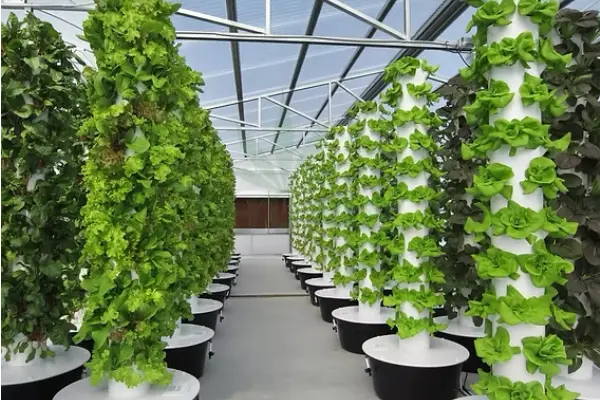
Different greenhouse types serve different production goals.
Dive deeper
Most ranking pages list greenhouse types like high tunnels, multi-span film greenhouses, and Venlo glass greenhouses. They describe features, but they skip decision logic. Commercial vegetable growers do not buy structures. They buy predictable yield, stable quality, and controllable costs.
From a climate risk view, FAO – Food and Agriculture Organization of the United Nations highlights that heat stress, water stress, and climate variability are now major constraints in food production. This applies directly to greenhouse vegetables. A structure that cannot manage heat or humidity becomes a liability.
From an engineering view, Wageningen University & Research – Greenhouse Horticulture shows that greenhouse performance depends on climate control capacity and uniformity, not appearance. This is why the same greenhouse type performs very differently in different regions.
So instead of asking “Which greenhouse is best?”, the real question is:
- Best for which vegetable?
- Best under which climate?
- Best for which production rhythm and market?
Without answering these, any recommendation is incomplete.
Which greenhouse type works best for different vegetable categories?
Vegetables do not share the same environmental needs. This is where many articles fail.
The best greenhouse type changes depending on whether you grow leafy greens, fruiting vegetables, or seedlings.

Different vegetables require different greenhouse environments.
Dive deeper
Leafy greens like lettuce, spinach, and herbs prioritize uniform temperature, moderate light, and strong airflow. They grow fast and are sensitive to humidity-related disease. For these crops, multi-span film or PC greenhouses with good ventilation often outperform complex glass structures when budgets are limited.
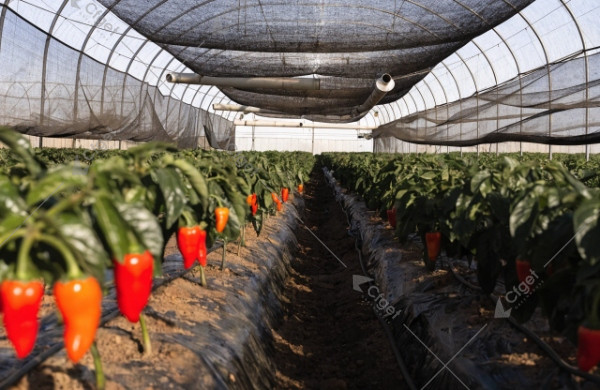
Fruiting vegetables such as tomatoes, cucumbers, and peppers require high light levels, CO₂ enrichment, and stable root-zone conditions. This is why Venlo glass greenhouses are often chosen for large-scale tomato production in Europe and North America. Industry analysis and research summarized by Wageningen University & Research show that light transmission and climate uniformity directly influence fruit yield and quality.
Seedling and nursery production focuses on control precision and consistency. Here, smaller-span or compartmentalized greenhouses reduce risk. Uniformity matters more than total size.
The key mistake in many top-ranking pages is treating “vegetables” as one category. In commercial production, crop physiology decides structure choice, not marketing labels.
How does climate determine the best greenhouse type?
Climate is not background information. It is the main constraint.
The same greenhouse type can be profitable in one climate and fail in another due to heat load, humidity limits, and energy demand.
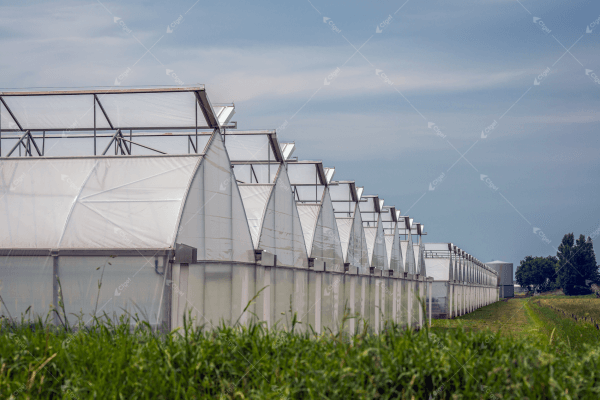
Climate strongly influences greenhouse performance.
Dive deeper
In hot and humid regions, the challenge is heat removal and moisture control. High solar radiation and high humidity limit evaporative cooling. Research from University of Florida IFAS Extension explains why fan-and-pad systems lose efficiency under high humidity. In these regions, multi-span film greenhouses with large ventilation openings and external shading often outperform glass structures without advanced cooling.
In dry hot climates, evaporative cooling works better. Larger structures with controlled airflow can manage extreme heat effectively, as long as water quality and airflow capacity are sufficient.
In cold climates, heat retention and light transmission matter most. Venlo glass greenhouses perform well due to high light transmission and tight structure. However, they require higher energy investment. Data trends referenced by USDA Economic Research Service show that energy cost becomes a major operating factor in controlled environment agriculture.
Long-term climate data from the World Bank Climate Change Knowledge Portal shows that extreme events are increasing. This means greenhouses must be designed for peak conditions, not average seasons.
Is CAPEX or OPEX more important when choosing greenhouse type?
Many buyers focus on construction cost. This is often the wrong focus.
For commercial vegetables, operating cost and yield stability matter more than initial greenhouse price.
Dive deeper
A low-cost greenhouse with unstable climate often produces uneven crops. This increases labor cost, reduces grade A yield, and causes unpredictable harvest schedules. These losses rarely appear in brochures.
High-control greenhouses cost more upfront, but they can reduce energy waste and improve uniformity. Energy optimization research from the Cornell University Controlled Environment Agriculture (CEA) Program shows that correct system matching reduces unnecessary energy use over time.
I always compare greenhouse types using total cost per kilogram of vegetables, not cost per square meter. This method reveals why some “cheap” greenhouses fail financially after two or three seasons.
Which greenhouse types fit different commercial business models?
Commercial vegetable production is not one business.
The best greenhouse type depends on whether you target seasonal markets, wholesale stability, or premium year-round supply.
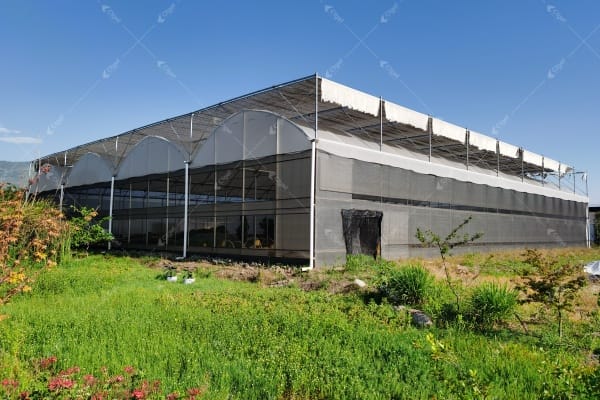
Market strategy influences greenhouse choice.
Dive deeper
Season-extension growers often succeed with simpler structures. Single-span or basic multi-span film greenhouses allow early and late production with low investment.
Producers supplying supermarkets year-round need stable volume and quality. Multi-span film or PC greenhouses with automation often provide the best balance between cost and control. For high-end tomato and pepper producers, Venlo glass greenhouses support branding, traceability, and consistency.
Research and training programs summarized by FAO emphasize that climate-resilient systems protect long-term food supply. This aligns with choosing greenhouse types based on risk reduction, not only yield maximization.
How do production systems affect greenhouse type selection?
Structure alone is not enough. Production system matters.
Soil, substrate, and hydroponic systems place different demands on greenhouse structure and control.
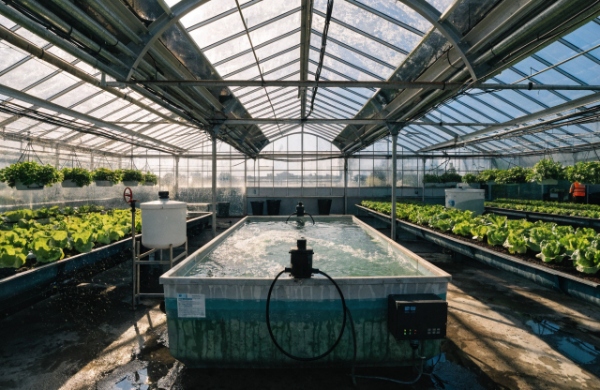
[Insert image: hydroponic and substrate vegetable production in greenhouses]
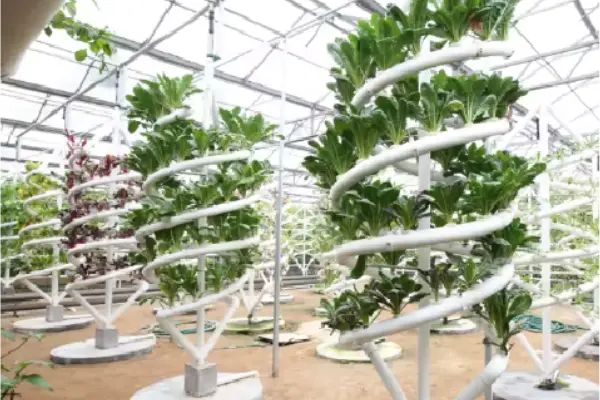
Production system changes greenhouse requirements.
Dive deeper
Hydroponic systems demand stable temperature, clean water, and precise control. Poor ventilation or humidity control quickly leads to disease. Substrate systems tolerate slightly wider conditions but still require uniformity.
University extension research, including materials from Rutgers University, shows how water quality, humidity, and airflow interact with crop health. These factors influence greenhouse type choice more than steel thickness or roof shape.
How do I narrow down to the right greenhouse type?
Choosing the best greenhouse type is a process, not a list.
The correct greenhouse type emerges after matching crop, climate, system, and business goals.
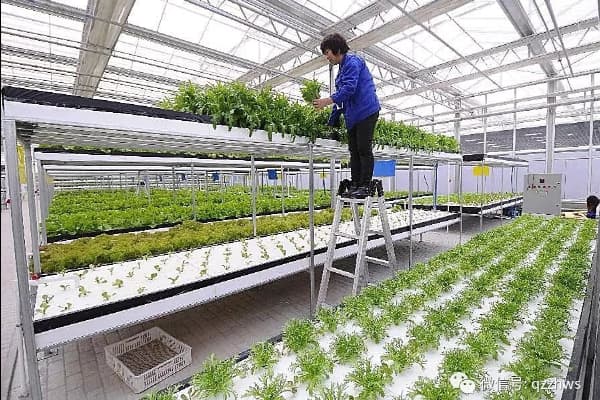
Correct decisions reduce long-term risk.
Dive deeper
I follow a simple decision sequence:
- Define target vegetables and yield goals
- Classify climate and extreme conditions
- Choose production system
- Set acceptable operating cost range
- Select greenhouse structure that supports all above
For commercial projects, I often compare options against real systems such as Commercial Greenhouse solutions combined with Smart Auto & Control systems to ensure climate stability and scalability.
This approach avoids choosing a greenhouse type based on trends or marketing.
Conclusion
The best greenhouse type for commercial vegetable production is the one that matches crop needs, climate load, and long-term operating reality, not the one with the most features.
External References
-
FAO – Climate Change and Agriculture
https://www.fao.org/climate-change/en/ -
FAO – Climate Adaptation Resources
https://www.fao.org/climate-change/resources/en/ -
Wageningen University & Research – Greenhouse Horticulture
https://www.wur.nl/en/research-results/research-institutes/plant-research/greenhouse-horticulture.htm -
World Bank – Climate Change Knowledge Portal
https://climateknowledgeportal.worldbank.org/ -
University of Florida IFAS Extension – Fan and Pad Cooling Systems
https://edis.ifas.ufl.edu/publication/AE069 -
Rutgers University – Greenhouse Evaporative Cooling Guide
https://nj-vegetable-crops-online-resources.rutgers.edu/wp-content/uploads/2015/06/Greenhouse-Evaporative-Cooling.pdf -
Cornell University – Controlled Environment Agriculture Energy Resources
https://cea.cals.cornell.edu/energy/ -
USDA Economic Research Service – Controlled Environment Agriculture Trends
https://www.ers.usda.gov/data-products/charts-of-note/chart-detail?chartId=109422
Internal References (CFGET)
-
Commercial Greenhouse Systems
https://cfgreenway.com/greenhouse/ -
Smart Auto & Control Solutions
https://cfgreenway.com/solutions/smart-auto-control/
Internal Blog References (Related CFGET Articles)
-
Polycarbonate Greenhouse Systems
https://cfgreenway.com/polycarbonate/ -
Venlo Glass Greenhouse Design
https://cfgreenway.com/venlo/ -
Semi-Closed Greenhouse Systems
https://cfgreenway.com/semi-closed/ -
Retractable Roof Greenhouses
https://cfgreenway.com/retractableroof/