Growing expensive crops like cannabis or orchids is risky. One mistake with light or temperature can ruin your entire harvest and cost you a fortune. You need an automated system that controls nature perfectly.
A light deprivation greenhouse, also known as a blackout greenhouse, gives you total control over the light cycle. By using automated blackout curtains, you can trick plants into flowering on your schedule, not nature’s. This allows for multiple harvests per year and guarantees top-quality crops that sell for a higher price.
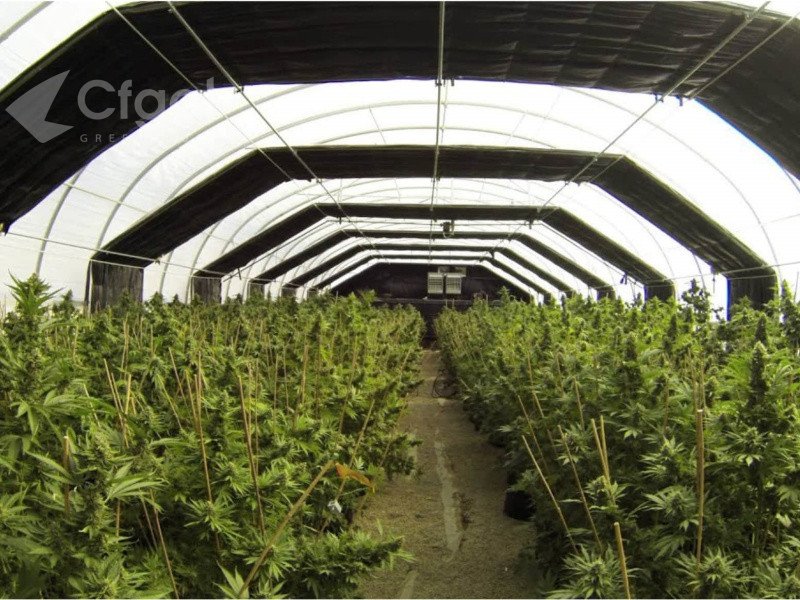
High-value crops need more than just a roof. They need a perfect environment. Whether you are growing medicinal cannabis, premium mushrooms, or delicate flowers, the key to profit is consistency. Automation removes the guesswork. Let us look at the systems that turn a simple greenhouse into a factory for premium products.
Precision Farming: Automated Climate Control System for Greenhouse Temperature and Humidity?
You cannot watch your plants 24 hours a day. If the temperature spikes while you are asleep, your plants suffer stress and stop growing. You need a brain for your greenhouse that never sleeps.
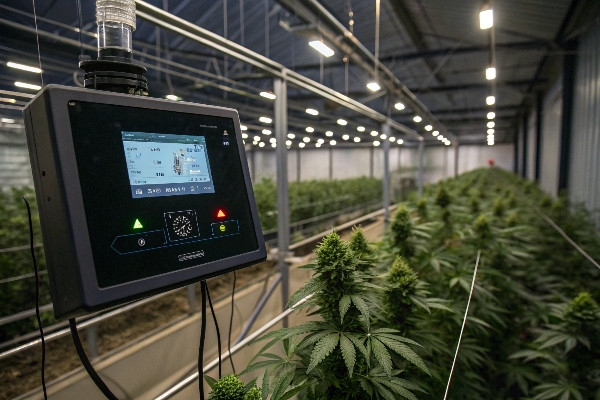
An automated climate control system for greenhouse environments uses sensors to monitor temperature, humidity, and CO2 levels constantly. It connects to a central computer that automatically opens vents, turns on fans, or activates irrigation the moment conditions change, ensuring your plants stay in their "sweet spot" all day and night.
Dive Deeper: The Brain Behind the Operation
Think of the automated control system as the brain of your farm. In the past, farmers had to run to the greenhouse to open windows when the sun came out. This was slow and required a lot of labor. Today, labor costs are rising everywhere, from Europe to Southeast Asia. This is why automation is the best investment.
The system works in a loop. First, sensors placed around the plants "feel" the air. They measure heat, moisture, and light. Second, they send this data to the controller. The controller compares the data to your settings. If it is too hot, it sends a command. Third, the equipment reacts. The roof vents open, or the misting system turns on. This happens in seconds.
At CFGET, we integrate these systems into our greenhouse designs from the start. For our clients in North America who focus on sustainability, these systems save energy. They only run heaters or fans when absolutely necessary. For our partners in tropical regions, the system manages humidity spikes instantly to prevent mold. It reduces the need for workers to manually adjust equipment. This lowers your monthly payroll and increases your profit margin. Precise control means every plant grows at the same speed, making harvest time easy to predict.
| Feature | Function | Benefit for Grower |
|---|---|---|
| Sensor Network | Measures Temp, Humidity, CO2 | Provides real-time data accuracy. |
| Central Controller | Processes data & sends commands | Removes human error and labor costs. |
| Remote Access | Control via phone/laptop | Manage your farm from anywhere in the world. |
| Data Logging | Records history | Helps you improve your growing recipe next season. |
Maximizing Space: Strawberry Vertical Farming and Commercial Tomato Greenhouse Design Layout?
Land is expensive and hard to find. Growing on the ground limits how much you can produce, capping your income. You need to grow up, not out, to multiply your yield.
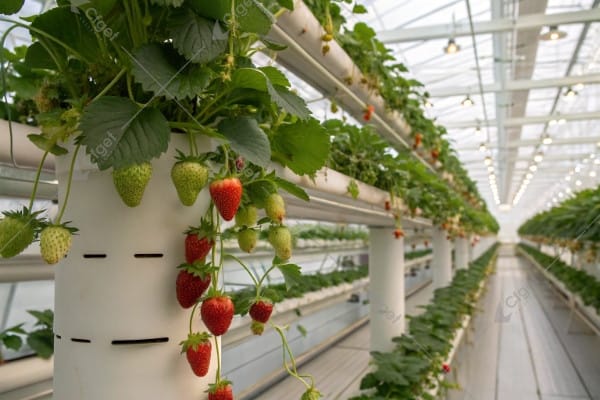
Strawberry vertical farming uses stacked layers of growing troughs or hanging gutters to increase planting density by 3 to 5 times compared to traditional ground planting. This method, combined with a smart commercial tomato greenhouse design layout, optimizes vertical space and creates an ergonomic working environment for faster harvesting.
Dive Deeper: Growing Upwards for Higher Profits
Vertical farming is changing the game for high-value fruits. When you grow strawberries or tomatoes on the ground, you waste all the empty air above them. By using a vertical farming greenhouse, you fill that air with money.
For strawberries, we often use "A-frame" racks or hanging gutters that can be raised and lowered. This does two amazing things. First, it multiplies your yield. Instead of one row of plants, you have three or four rows in the same footprint. Second, it makes harvesting faster. Workers do not need to bend down to the ground all day. The fruit is at eye level. This makes workers happier and faster.
For tomatoes, the "commercial tomato greenhouse design layout" is crucial. We use a "high-wire" system. As the tomato plant grows, we lower the vine but keep the fruit at an easy height for picking. This requires a tall greenhouse structure, usually a Venlo glasshouse with high posts (up to 6 or 7 meters). This layout allows the plants to grow indefinitely—sometimes up to 15 meters long! Our design team at CFGET helps clients calculate the perfect row spacing. If rows are too close, plants shade each other. If they are too far, you waste space. We find the perfect balance to maximize your output per square meter.
Beyond Light: Essential Blackout Greenhouse Features for Mushroom Growing and Seedling Nursery?
Some crops need total darkness or specific light cycles to grow. Even a tiny crack of light can confuse the plants, ruin the flowering cycle, or lower crop quality. You need a professionally sealed blackout system.
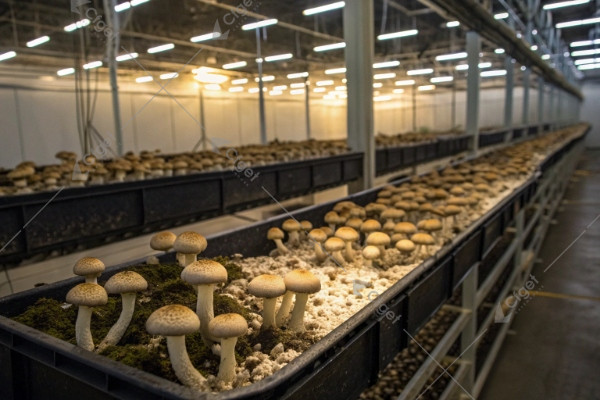
A mushroom growing blackout greenhouse requires 100% light-blocking screens that are also breathable to prevent heat and humidity buildup. Similarly, seedling nurseries use these screens to control the day length, ensuring young plants are strong and ready for transplanting at the exact right time.
Dive Deeper: The Science of Darkness
Light is food for plants, but darkness is the signal to flower or fruit. For high-value crops like medicinal cannabis, this is the most critical factor. This technique is called Light Deprivation. By shortening the daylight hours artificially, you force the plant to flower. This allows you to have 4 or 5 harvests a year instead of just one in the fall.
However, it is not as simple as throwing a tarp over the roof. A professional blackout system uses three layers of material. It must be 100% opaque. If light leaks in, the plants get confused and may turn into hermaphrodites (producing seeds), which destroys their value.
For mushrooms, the need is different. Mushrooms often need dark, cool, and humid conditions. The challenge here is air exchange. If you seal a greenhouse tight to block light, it can get very hot and stuffy. This is why CFGET uses "breathable" blackout materials for specific crops. The fabric blocks light but lets air pass through. We also install light traps on the exhaust fans. These are special boxes that let air out but stop light from coming in. Whether you are growing mushrooms or conditioning seedlings, the quality of your blackout system directly affects your product quality. We test our systems rigorously to ensure zero light leaks.
Water and Life: Designing an Orchid Greenhouse for Optimal Humidity Control and Health?
Orchids are very expensive and very sensitive. Dry air causes flowers to drop, but wet leaves cause rot. It is a delicate balance. You need a specialized humidity system that creates a fog, not a shower.
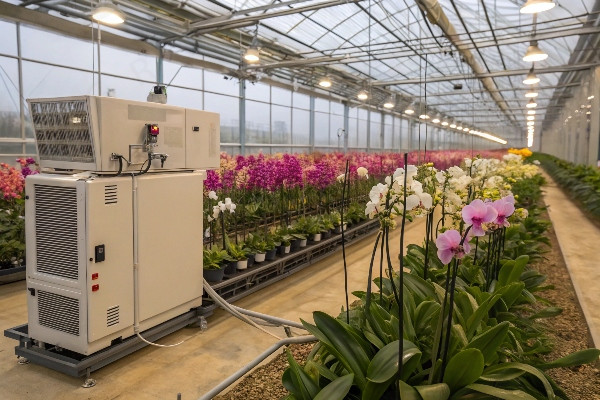
Orchid greenhouse humidity control relies on high-pressure fogging systems that create a fine mist (less than 10 microns) which evaporates before it hits the leaves. This raises the humidity to the ideal 60-80% range without wetting the plant tissue, preventing fungal diseases while keeping the roots healthy.
Dive Deeper: The Art of Humidity
Orchids are often called the "Formula 1" of flowers. They are high-performance and high-maintenance. Most orchids are epiphytes, meaning they grow on trees in nature, not in soil. They drink water from the air.
In a commercial greenhouse, you must recreate a tropical rainforest. But you must be careful. If you use standard sprinklers, large water drops sit on the leaves. In a warm greenhouse, this is a recipe for bacteria and rot. You will lose your crop. The solution is high-pressure fogging.
This system pumps water at very high pressure through tiny nozzles. The water explodes into a fog of billions of microscopic droplets. These droplets hang in the air and evaporate, raising the humidity instantly. At CFGET, we combine this fogging with horizontal airflow fans. These fans keep the air moving gently. Moving air prevents stagnant pockets where disease can start. It also helps the plants "breathe" (transpire). For our flower export clients in Europe and Asia, this precise control is the difference between a flower that lasts two weeks and one that dies in two days. We design these systems to work automatically with the climate computer, ensuring the perfect "Vapor Pressure Deficit" (VPD) for maximum growth.
Conclusion
To make money with high-value crops, you must control the environment perfectly. Investing in automated climate systems, vertical layouts, and professional blackout screens reduces risk and guarantees premium quality.