Many lettuce projects in the Middle East start with strong demand and good prices. Then extreme heat, water loss, and unstable quality reduce margins fast.
For commercial lettuce production in the Middle East, the best greenhouse type is usually a high-roof multi-span greenhouse with strong ventilation and cooling integration, or a semi-closed greenhouse for high-value, year-round supply.
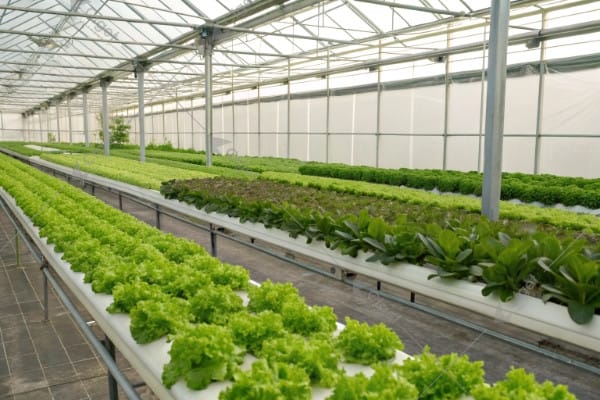
Heat and water control define lettuce success.
I write this from a system and market reality perspective. The Middle East is one of the fastest-growing regions for protected lettuce production. Countries like the UAE, Saudi Arabia, and Qatar rely heavily on imports and now invest in local greenhouse systems. That makes greenhouse type selection a survival decision, not an optimization exercise.
Why is lettuce especially challenging to grow in the Middle East?
Lettuce is a cool-season crop with shallow roots and high sensitivity to heat.
High temperature, low humidity control, and water efficiency are the main constraints for lettuce in the Middle East.
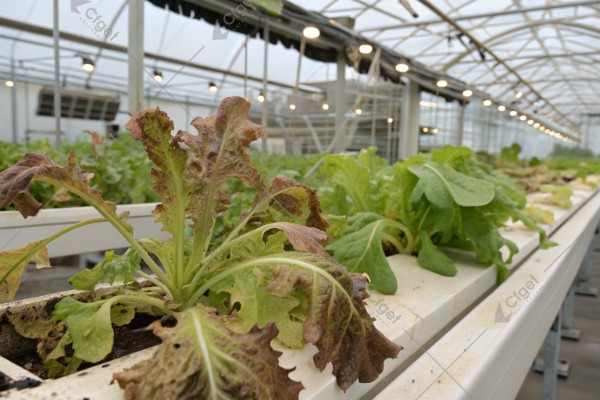
Heat stress quickly reduces lettuce quality.
Dive deeper
Unlike tomatoes or cucumbers, lettuce responds immediately to heat stress. High temperatures cause bolting, bitterness, and leaf burn. Even short heat spikes can make a crop unmarketable.
Climate risk is not theoretical. FAO – Food and Agriculture Organization of the United Nations identifies heat stress and water scarcity as major threats to food production in arid regions. Lettuce sits at the most sensitive end of this spectrum.
Because lettuce has short cycles, losses happen fast. A greenhouse that cannot stabilize temperature and humidity during peak summer days will fail economically. This is why “simple tunnels” that work in mild climates often collapse under Middle Eastern heat.
Which greenhouse types are actually used for lettuce in the Middle East?
Market reality filters options quickly.
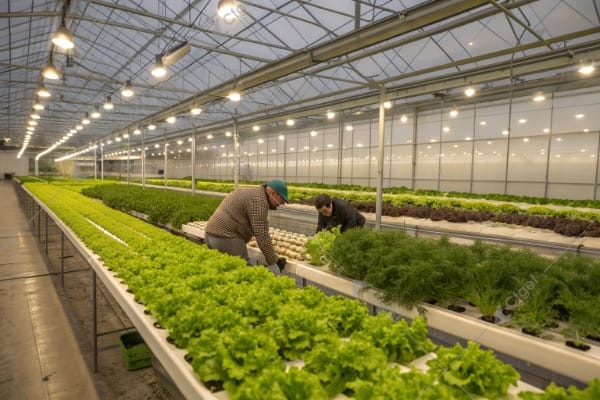
In the Middle East, commercial lettuce is mainly produced in high-roof multi-span greenhouses, with semi-closed greenhouses used for premium or year-round supply.
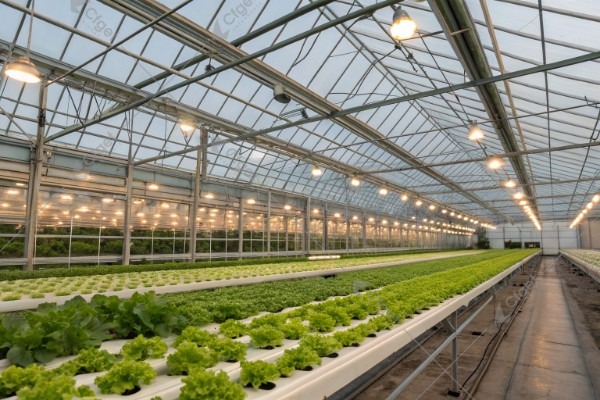
High internal volume improves cooling efficiency.
Dive deeper
Single-span tunnels struggle with heat buildup and uneven cooling. Lettuce needs uniform conditions across the crop. Multi-span greenhouses allow:
- large ventilation areas
- integration of cooling systems
- zoning for climate control
- higher internal air volume to buffer heat
Film greenhouses dominate because they allow flexible ventilation and lower CAPEX. Polycarbonate is used when insulation or durability is needed, but for lettuce, ventilation usually matters more than insulation.
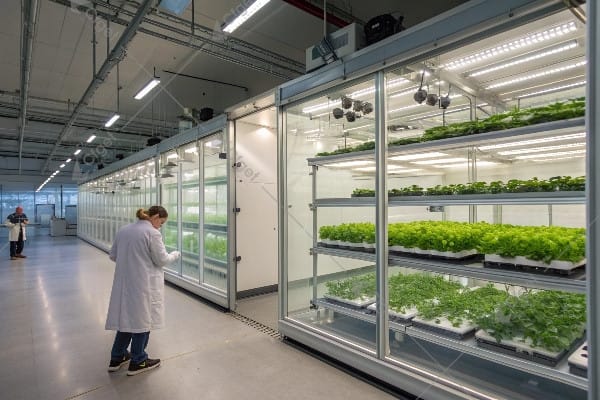
Semi-closed greenhouses are becoming popular for high-value projects. They reduce water consumption and improve climate stability, especially when outside conditions are extreme.
CFGET’s internal pages reflect these platforms:
How does extreme heat change the definition of “best greenhouse”?
In hot climates, greenhouse design priorities reverse.
In the Middle East, the best greenhouse type is the one that removes heat efficiently, not the one that traps it.
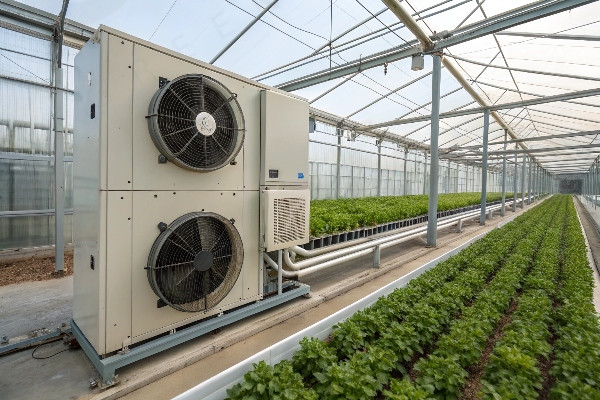
Cooling capacity defines viability.
Dive deeper
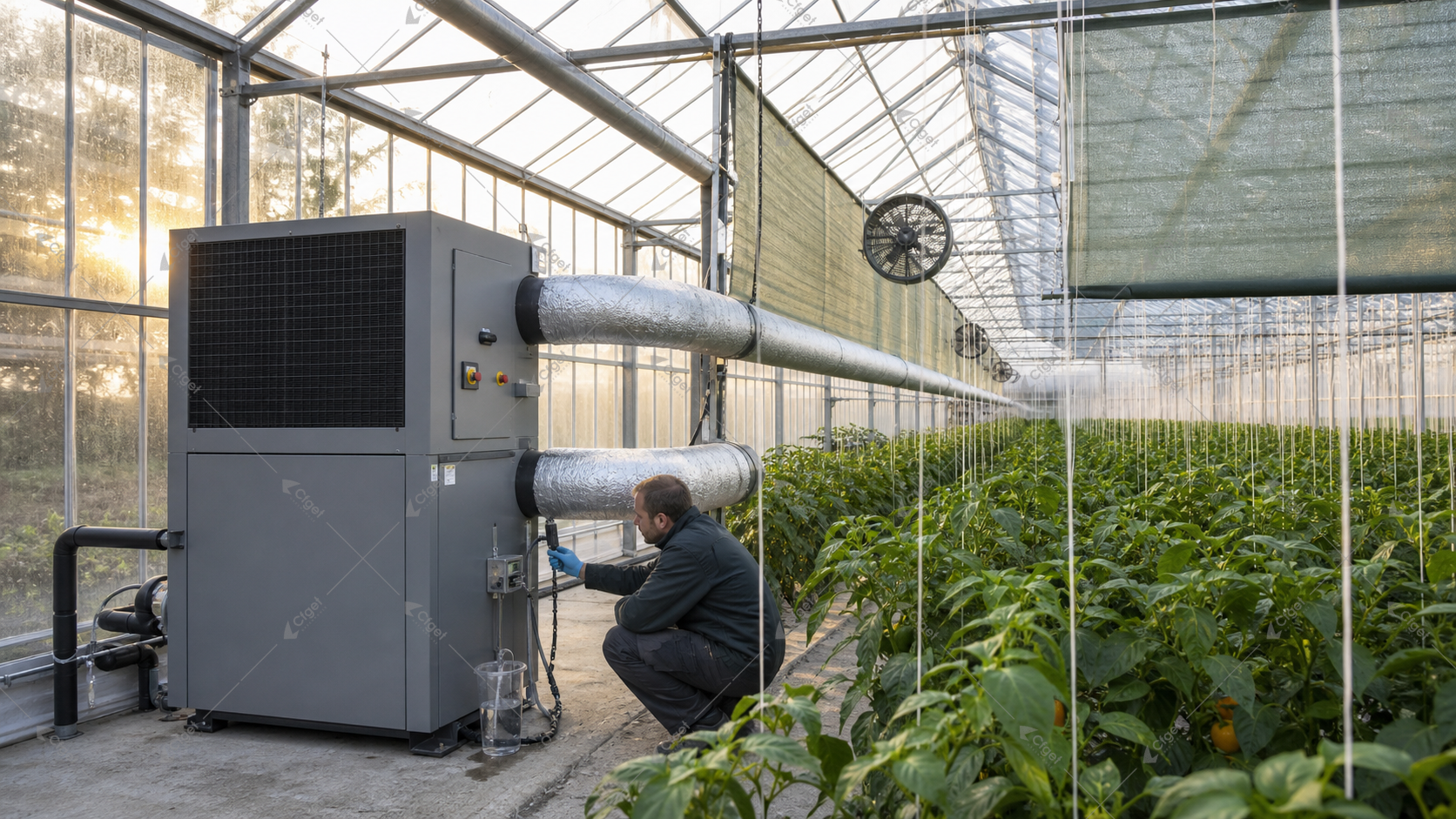
Daytime temperatures often exceed 40°C in summer. Evaporative cooling is widely used, but its effectiveness depends on humidity and airflow. Guidance from University of Florida IFAS Extension explains how fan-and-pad cooling performance declines when airflow or system balance is poor.
In the Middle East, cooling systems must be oversized and well integrated. Large roof height and wide ventilation openings reduce cooling load by allowing hot air to escape naturally. Climate data from the World Bank Climate Change Knowledge Portal confirms that extreme heat events are increasing, reinforcing the need to design for peak conditions.
This is why greenhouse type selection cannot ignore height, volume, and airflow paths.
Why is water efficiency as important as temperature control?
Water defines long-term sustainability.
For lettuce in arid regions, the best greenhouse type must support water-efficient production systems.
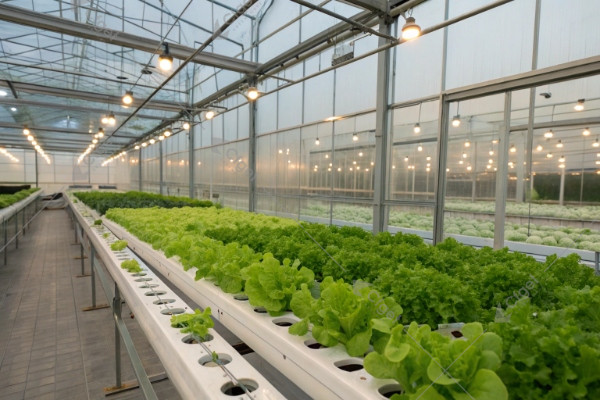
Hydroponics reduce water use dramatically.
Dive deeper
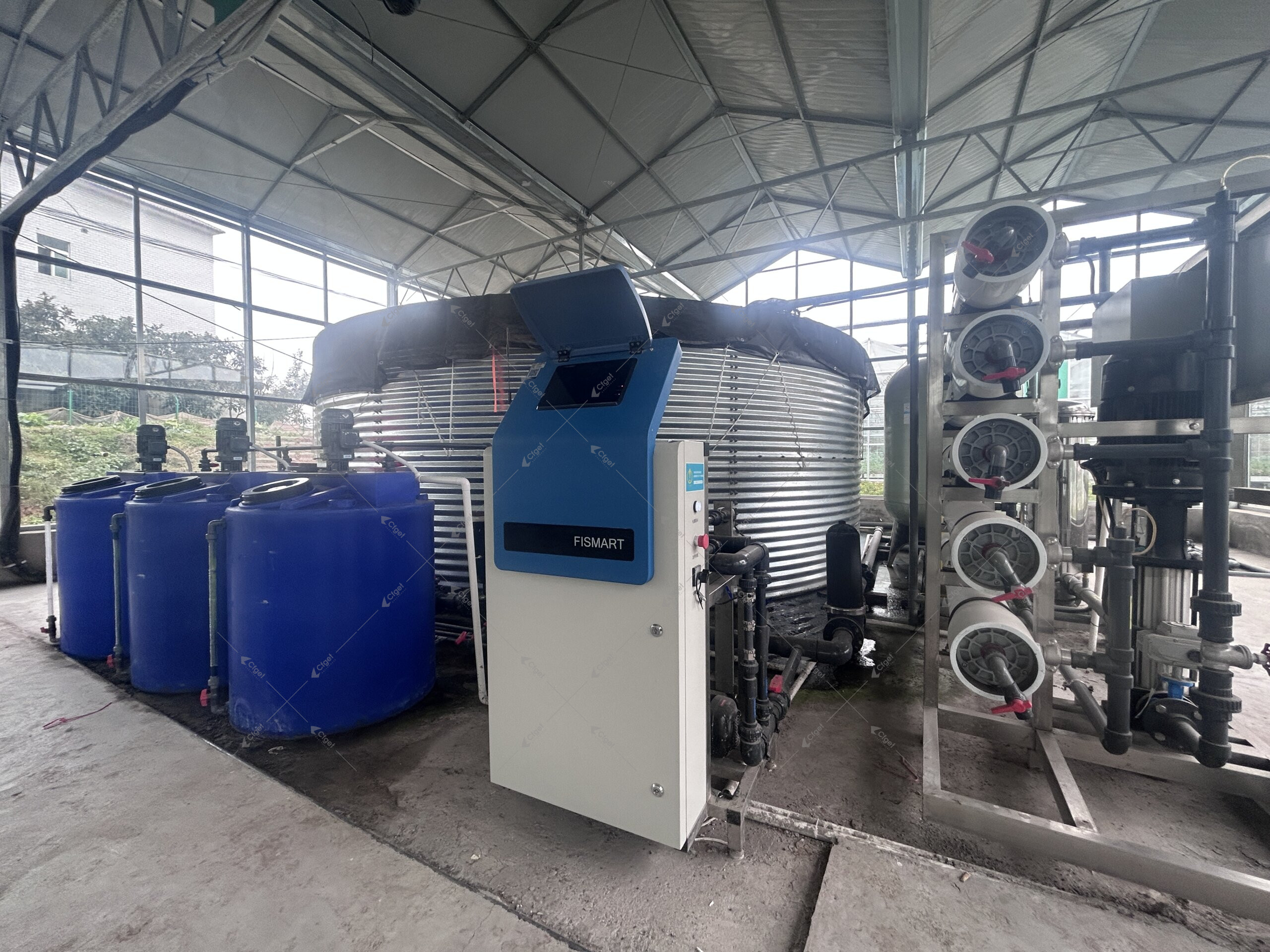
Most Middle Eastern lettuce projects use hydroponic systems. These reduce water consumption and improve cleanliness. However, hydroponics increase sensitivity to air temperature and humidity. Root-zone temperature rises quickly if cooling fails.
Guidelines from Rutgers University explain how humidity and airflow affect transpiration and plant health. These principles apply directly to hydroponic lettuce.
This reinforces why greenhouse type and production system must be planned together. A structure that cannot support stable airflow and cooling will not protect water efficiency gains.
CFGET’s system pages support this integration:
Is high-tech automation required for lettuce in the Middle East?
Not always, but precision matters.
Lettuce benefits from reliable, responsive control systems rather than extreme technological complexity.
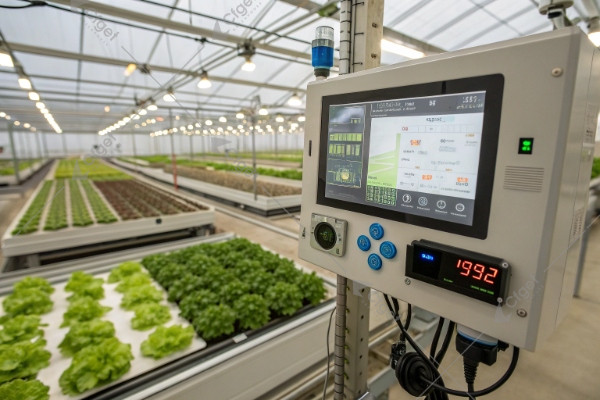
Fast response prevents crop loss.
Dive deeper
Lettuce grows fast. A few hours of overheating can destroy a crop. Control systems must respond quickly. Energy planning insights from the Cornell University Controlled Environment Agriculture (CEA) Program show that right-sized systems outperform over-designed ones in harsh climates.
Semi-closed systems with controlled air exchange can improve stability and reduce water loss, but they require skilled operation. For many projects, a well-designed multi-span greenhouse with strong cooling and simple automation delivers better ROI.
How should I balance CAPEX, OPEX, and yield stability?
Lettuce margins depend on consistency.
The best greenhouse type for lettuce is the one that minimizes crop loss and water waste while keeping operating cost predictable.
Dive deeper
I evaluate lettuce projects using cost per kilogram of marketable product. High crop loss destroys margins faster than high energy bills. Data trends from USDA Economic Research Service show that controlled environment agriculture success depends on stability and waste reduction.
High-roof multi-span greenhouses often deliver the best balance:
- lower CAPEX than sealed systems
- strong cooling capacity
- flexible operation
Semi-closed greenhouses win when premium quality and year-round supply justify higher investment.
So what is the best greenhouse type for lettuce in the Middle East?
The answer is clear when constraints are respected.
For most commercial lettuce projects in the Middle East, a high-roof multi-span greenhouse with integrated cooling and hydroponic systems is the best choice. Semi-closed greenhouses become optimal for premium, water-sensitive, year-round production.
Dive deeper
I summarize the decision like this:
| Decision factor | If YES | Best greenhouse direction |
|---|---|---|
| Extreme summer heat | Yes | High-roof multi-span |
| Severe water scarcity | Yes | Semi-closed + hydroponics |
| Moderate budget | Yes | Multi-span film |
| Premium retail contracts | Yes | Semi-closed |
| Fast ROI priority | Yes | Ventilation-first multi-span |
CFGET’s internal pages help structure next steps:
Conclusion
The best greenhouse type for commercial lettuce production in the Middle East is the one that removes heat efficiently, protects water resources, and stabilizes quality. High-roof multi-span greenhouses usually provide the strongest balance.
External References (Authority Sources)
FAO – Climate Change and Agriculture
https://www.fao.org/climate-change/en/World Bank – Climate Change Knowledge Portal
https://climateknowledgeportal.worldbank.org/University of Florida IFAS Extension – Fan and Pad Cooling Systems
https://edis.ifas.ufl.edu/publication/AE069Rutgers University – Greenhouse Evaporative Cooling Guide
https://nj-vegetable-crops-online-resources.rutgers.edu/wp-content/uploads/2015/06/Greenhouse-Evaporative-Cooling.pdfCornell University – Controlled Environment Agriculture Energy Resources
https://cea.cals.cornell.edu/energy/USDA Economic Research Service – Controlled Environment Agriculture Trends
https://www.ers.usda.gov/data-products/charts-of-note/chart-detail?chartId=109422
Internal References (CFGET)
Commercial Greenhouse Systems
https://cfgreenway.com/greenhouse/Semi-Closed Greenhouse
https://cfgreenway.com/semi-closed/Polycarbonate Greenhouse Systems
https://cfgreenway.com/polycarbonate/Smart Auto & Control Solutions
https://cfgreenway.com/solutions/smart-auto-control/Growing Systems
https://cfgreenway.com/growing-systems/Contact Us
https://cfgreenway.com/contact/
Internal Blog References (Related CFGET Articles)
Semi-Closed Greenhouse Systems
https://cfgreenway.com/semi-closed/Polycarbonate Greenhouse Systems
https://cfgreenway.com/polycarbonate/Shade Net and Rain Shelter Systems
https://cfgreenway.com/shade-net-rainshelter/