Desert blueberries can look like a goldmine, then heat waves hit, water costs rise, and fruit quality drops. One wrong structure choice can lock me into high OPEX for years.
The best way to grow export-grade blueberries in Dakhla, Morocco is a “stability-first” greenhouse or high-tunnel system: reduce solar load, protect root-zone temperature, run precise fertigation, and design airflow that works with desert humidity swings. Morocco’s blueberry sector has expanded into Dakhla, and export growth proves the market is real.<1>
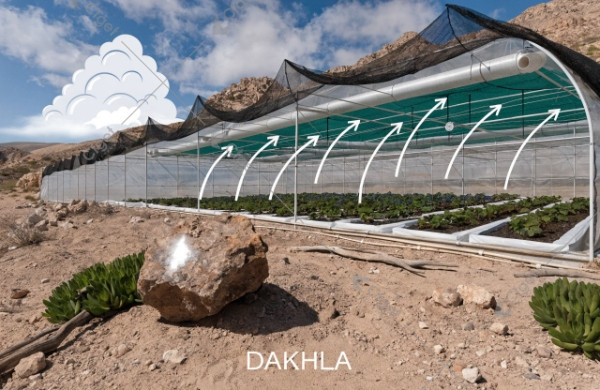
Desert blueberries win on climate and water discipline.
I’m writing this for commercial decision makers. If you are building in Dakhla-Oued Ed-Dahab, you are not asking “can blueberries grow?” You are asking: “Can I hit export grade consistently, with controllable costs?”
CFGET Video
Why are blueberries a high-demand greenhouse crop in Morocco, and why is Dakhla special?
Heat and water pressure scare most growers away from desert fruit. That is why Dakhla can be a serious opportunity when I design correctly.
Blueberries are in high demand because global trade expanded fast, and Morocco’s export growth has been strong. USDA notes Morocco expanded blueberry production from the north to the southern desert region of Dakhla-Oued Ed-Dahab, with harvest windows that can run many months.<1>
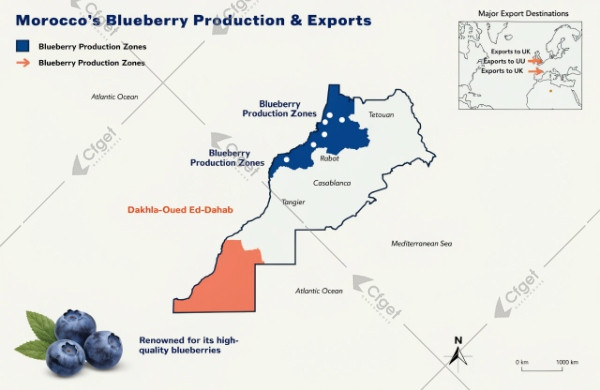
Dakhla is part of a real export system.
Dive deeper:
USDA’s Morocco fruit export spotlight explains that blueberry production expanded into the southern desert region of Dakhla-Oued Ed-Dahab, and it highlights a long harvest season plus rapid export growth in recent years.<1> This matters for SEO and for business. It means buyers already search for “Morocco blueberries,” and Dakhla growers are trying to capture early or late windows.
But Dakhla is not “easy.” Desert production forces me to solve three technical problems: (1) heat load in the greenhouse, (2) root-zone temperature and water quality, and (3) labor-friendly, repeatable management. If I ignore one, my grade drops and I lose pricing power.
I also pay attention to national water constraints because water cost becomes part of price competition. FAO AQUASTAT’s Morocco profile frames irrigation and water resource pressure as a national reality, which is why any high-value crop in Morocco must be water-efficient to stay profitable.<2> So I do not sell “more water.” I sell “more kg per liter,” with predictable quality.
What greenhouse type works best for Dakhla blueberries: tunnel, multi-span film, or glass?
If I copy a European glass blueprint into a desert, I can win—but only if I also accept the OPEX. If I go too cheap, I lose control and lose grade.
In Dakhla, a well-engineered high tunnel or multi-span film greenhouse is often the best ROI path for blueberries. Glass can work for premium control, but many commercial projects prefer film/tunnel structures with strong shading, ventilation, and substrate systems to control cost.
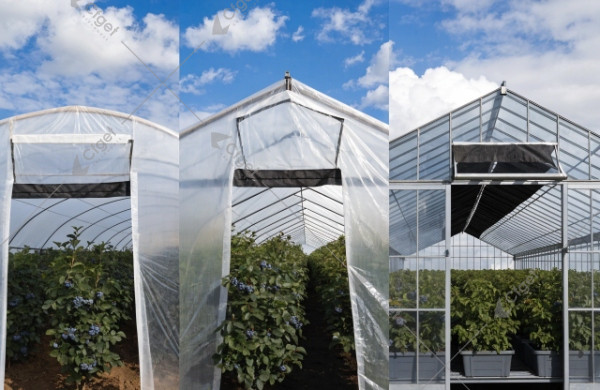
Structure choice decides OPEX for years.
Dive deeper:
I choose structure based on three performance targets: heat rejection, humidity control, and operational simplicity. In a desert edge climate like Dakhla, I usually start from a tunnel or multi-span film system because it can deliver large area with manageable CAPEX, and it can be upgraded with shade screens, insect netting, and airflow systems.
I avoid the mistake of treating “ventilation” like a checkbox. I want real air exchange without creating dust and pest entry. That means vent design + netting resistance must be planned together. If netting is added later, airflow collapses and canopy heat rises.
Here is the fast decision table I use:
| Greenhouse option | Best fit in Dakhla | Main advantage | Main risk |
|---|---|---|---|
| High tunnel (high-spec) | early-stage commercial | low CAPEX, fast build | weak control if venting is poor |
| Multi-span film | scalable export farms | better uniformity | needs correct vent area + airflow |
| Glass (Venlo-style) | premium precision farms | top light + automation | higher CAPEX + higher energy planning |
For structure references inside CFGET, these pages match the design language I use with buyers:
How do I control heat and keep blueberries productive in desert conditions?
Desert heat does not only reduce yield. It changes fruit firmness, shelf life, and pack-out. If I lose pack-out, I lose the export business.
I control heat in stages: reduce solar load first (shade/whitening), then move more air (ventilation + airflow), then use cooling only when it truly improves canopy conditions. My goal is stable fruit-zone temperature and stable root-zone temperature.
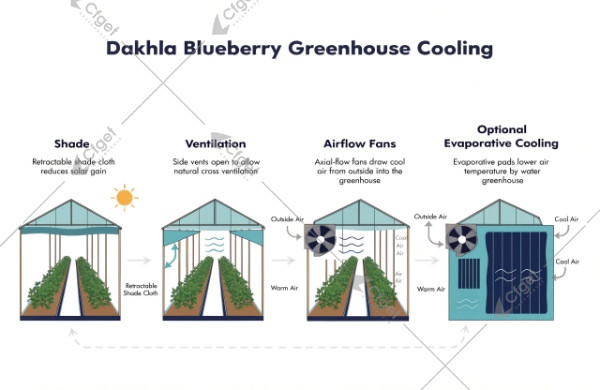
Staged heat control protects fruit firmness.
Dive deeper:
I do not chase “lowest air temperature.” I chase “stable plant behavior.” Blueberries are sensitive to root-zone stress and heat stress, and that shows up in fruit quality. In a desert greenhouse, most heat enters through radiation, not through the side walls. That is why shade strategy is usually my highest ROI control lever.
Then I focus on airflow. If hot air stays trapped above the canopy, leaf temperature rises and transpiration becomes unstable. If I over-cool with evaporative methods, humidity may rise and disease pressure can appear in pockets. So my sequence is strict: shade first, vent second, and cooling last.
USDA’s spotlight emphasizes that Morocco’s blueberry growth is linked to adapting production to different climates and expanding regions, which implies that “climate adaptation” is part of the business model.<1> I translate that into engineering: design for peak days, not average days.
Finally, I connect this to water. If heat stress rises, irrigation demand rises, but irrigation alone cannot fix overheating. If I try to “water my way out,” I waste water and still lose grade. That is why I build heat control into the structure from day one.
What substrate and fertigation strategy keeps Dakhla blueberries export-grade?
Blueberries are not like tomatoes. They need different root-zone conditions, and poor water management can cause chronic stress.
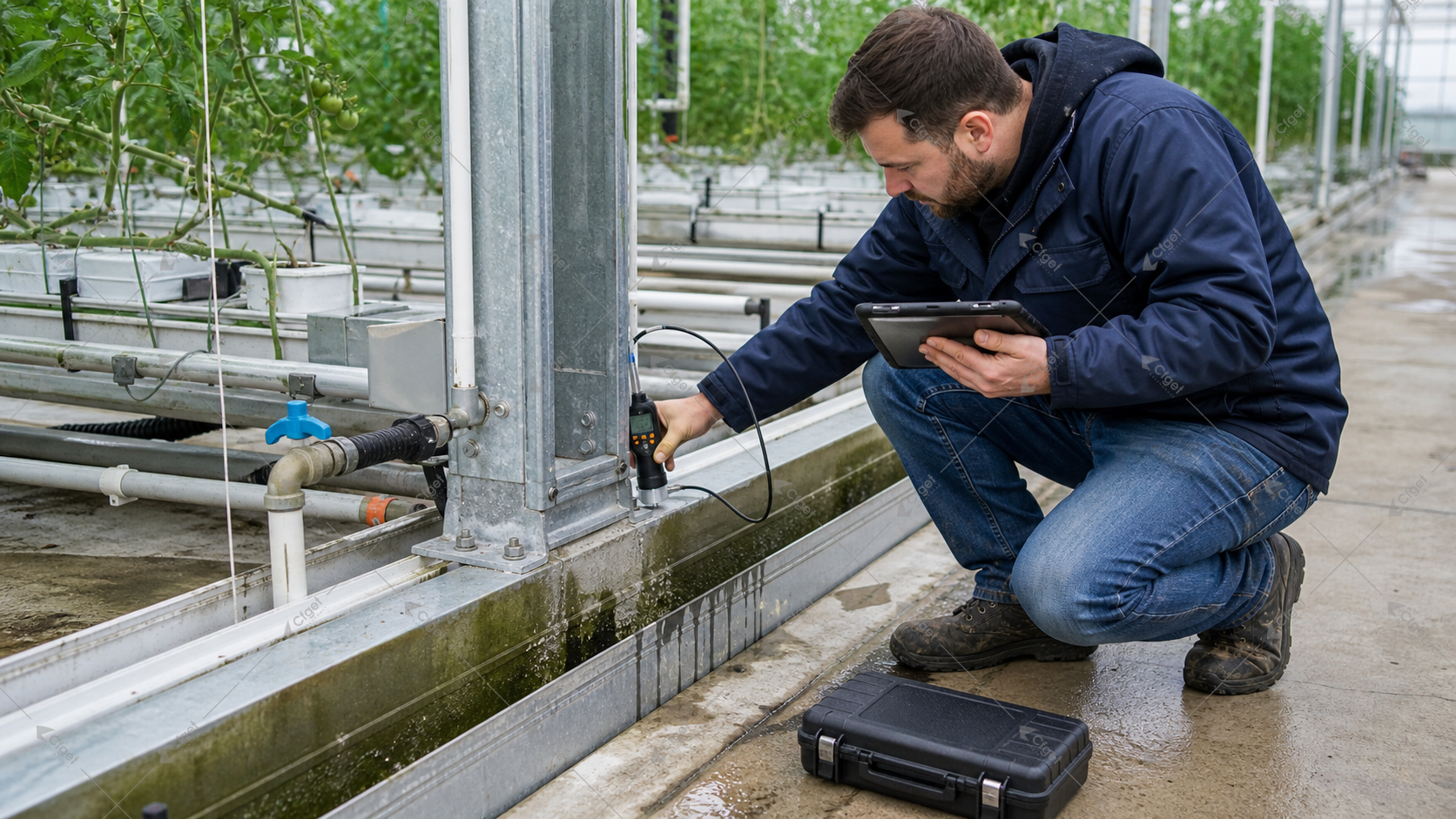
For commercial blueberries in Dakhla, I rely on substrate-based cultivation with precise fertigation. I track water quality, irrigation frequency, and drainage trends so the root zone stays stable and fruit quality stays consistent.
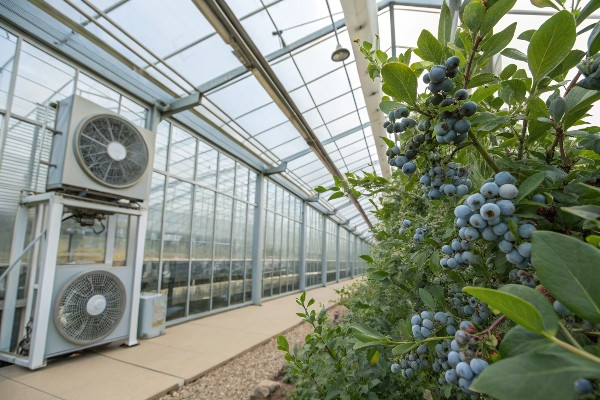
Root-zone stability is the shortcut to better pack-out.
Dive deeper:
I treat substrate as a control tool, not just a container. In desert regions, the benefit of substrate is predictable root aeration and predictable water distribution. That matters because water stress shows up fast in fruit size and firmness.
I also build irrigation around discipline. Pulse irrigation and stable drainage targets prevent salt accumulation and reduce “boom-bust” stress. Because Morocco faces water pressure, FAO AQUASTAT’s Morocco profile is a useful authority reference for why efficiency is strategic, not optional.<2>
I keep the management simple and auditable:
- irrigation events tied to heat load, not random timing
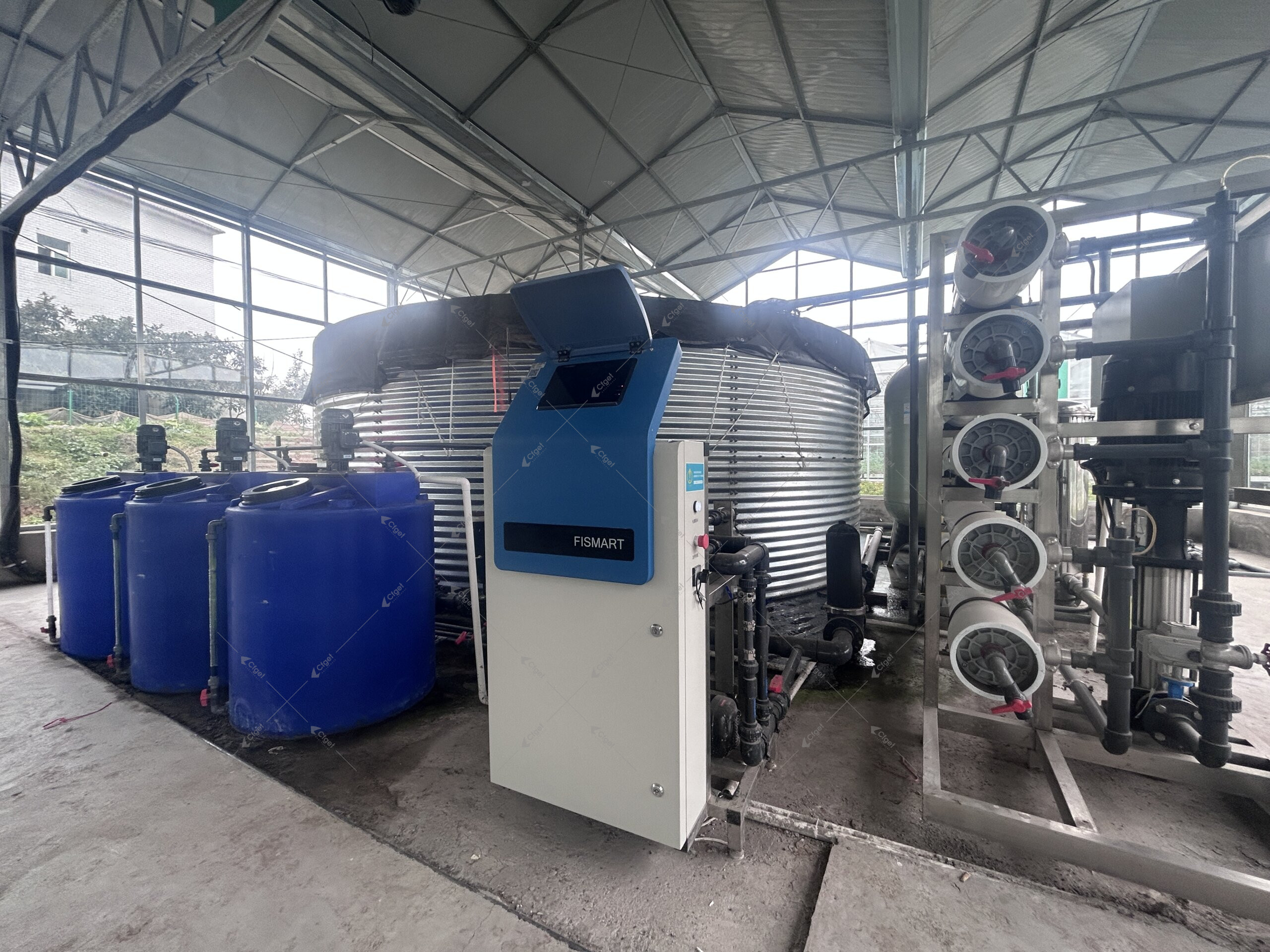
- filtration and pressure control to keep uniformity
- weekly trend review: drainage, plant stress signals, and reject rate
When buyers ask “How do I get higher grade?” I answer: stable root-zone moisture and stable canopy temperature. That is why I often link growers to CFGET’s irrigation guide, because it turns decisions into repeatable routines:
How do I build a sales-ready plan (pack-out, cold chain, and export trust)?
A blueberry greenhouse is a business system. If I do not plan cold chain and quality control, I will lose the export premium even if yield is high.
To stay export-ready, I design for pack-out: uniform fruit, clean handling flow, and quick cooling. Food safety and hygiene routines support pricing power and long-term buyers.
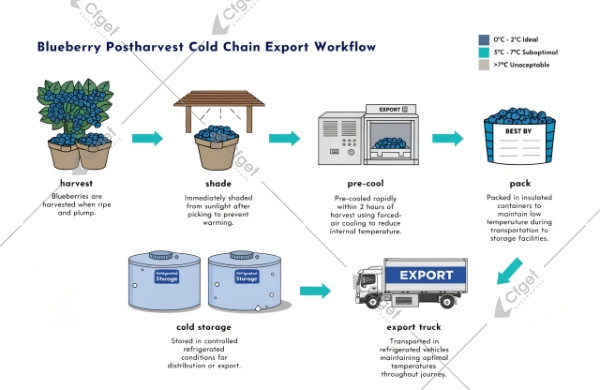
Export trust is built after harvest.
Dive deeper:
For export markets, consistency is the product. I build my greenhouse workflow around that fact. Harvest speed, shade at harvest, and fast cooling protect firmness and reduce decay risk. I also keep hygiene and documentation simple, because buyers want predictable suppliers.
On the authority side, I reference global food safety framing from WHO because it connects directly to trade trust and public health responsibility.<3> For growers, this is not theory. If my handling is inconsistent, my buyer will downgrade me.
My practical export checklist:
- clear harvest SOP and clean containers
- shade at harvest point
- fast cooling plan (even simple steps are better than none)
- grading standards written and enforced
- weekly reject-rate tracking
This is also where your brand advantage matters. You are not just selling “a greenhouse.” You are selling a complete operational pathway from 0 to 1.
Conclusion
Dakhla blueberry greenhouses win when I design for stability: heat control, root-zone control, water efficiency, and export-ready handling. That combination protects pack-out and keeps ROI realistic.
External Links Footnotes
1> https://www.fas.usda.gov/data/spotlight-morocco-fruit-exports
<2> https://www.fao.org/aquastat/en/countries-and-basins/country-profiles/country/MAR/
<3> https://www.who.int/news-room/fact-sheets/detail/food-safety
## Internal References (CFGET)
– **CFGET Homepage**
– **Commercial Greenhouse Systems**
– **Multi-span Film Greenhouse**
– **Wide-span Greenhouse**
– **Venlo Greenhouse**
– **Temperature Solutions (Cooling / Shading / Ventilation)**
– **Smart Auto & Control Solutions**
– **Contact**
## Internal Blog References (Related CFGET Articles)
– **Greenhouse Irrigation Systems: The Ultimate Guide to Boosting Yields & Saving Water**
Greenhouse Irrigation Systems: The Ultimate Guide to Boosting Yields & Saving Water
– **Greenhouse Climate Control Systems for Extreme Heat: Why Your Greenhouse Still Overheats and What to Do**
– **How Much Does It Cost to Build a Smart Greenhouse? Hidden Costs You Should Know**
How Much Does It Cost to Build a Smart Greenhouse? What Are the Hidden Costs?
– **How to Set Up a Commercial Greenhouse: An Essential Guide for Growers and Agribusinesses**
How to Set Up a Commercial Greenhouse: Essential Guide for Growers & Businesses?
– **Tropical Greenhouse Cooling Systems: Complete Guide to Hot Climate Agriculture**
https://cfgreenway.com/tropical-greenhouse-cooling-systems-complete-guide-to-hot-climate-agriculture/