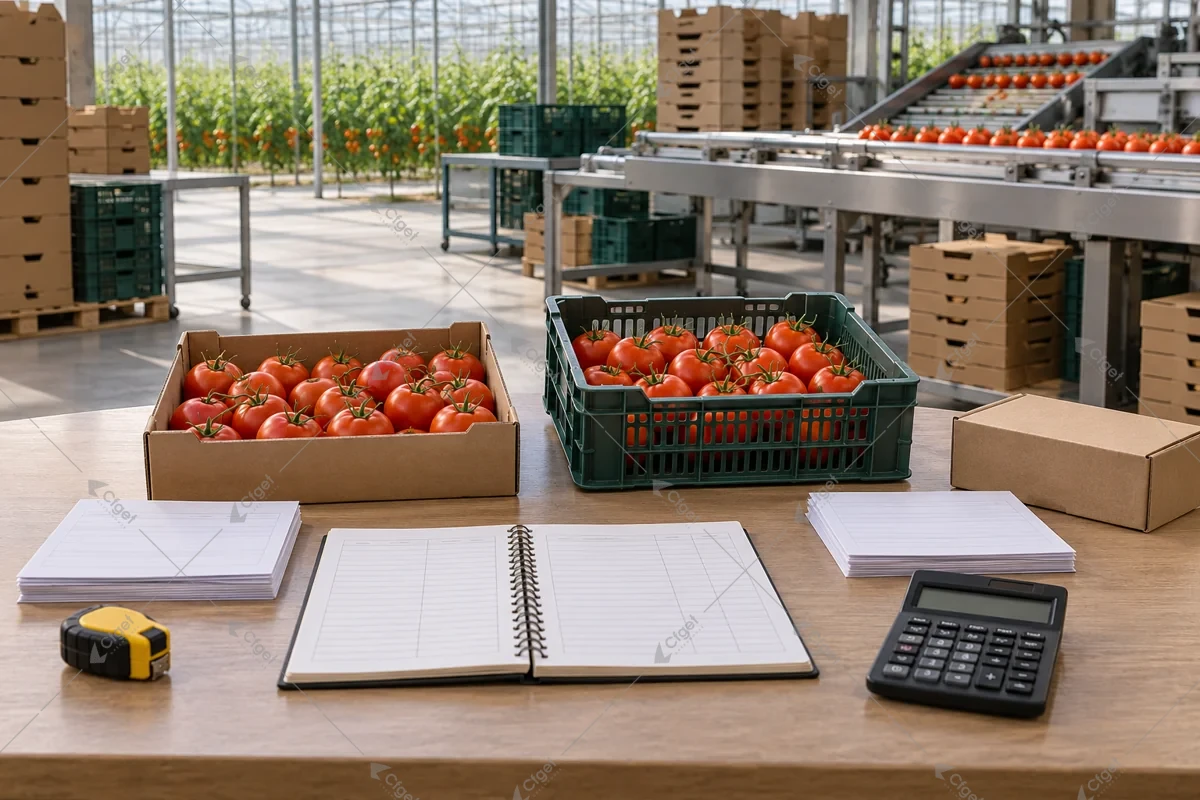
The important count in a reusable harvest-crate system is how many suitable, clean crates are ready when picking starts. A farm can own plenty of containers and still run short because they are waiting at a buyer, on a return vehicle, awaiting cleaning or held out of service.
Before switching, follow the complete container cycle. Check buyer acceptance, produce protection, cleaning arrangements, return responsibilities and peak availability. The purchase price is only one part of that decision.
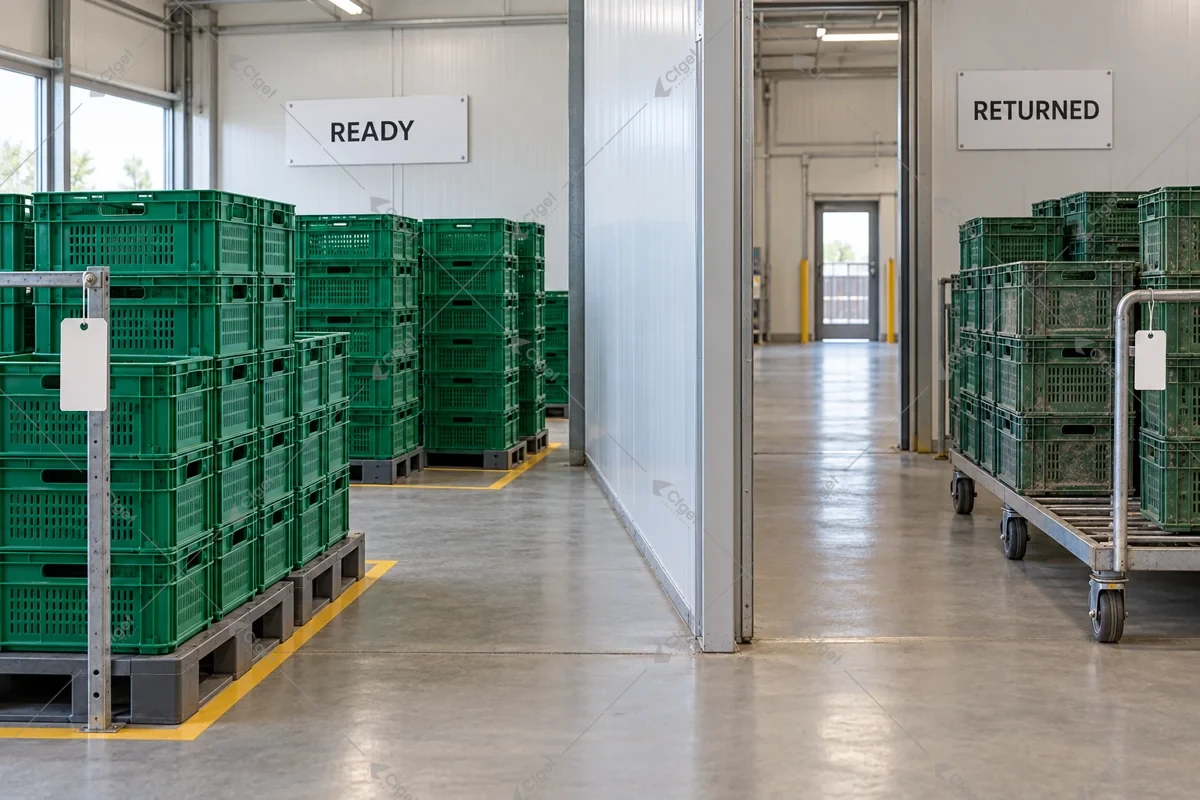
First decide where the crate will travel
A crate used only between greenhouse and packhouse has a different cycle from one delivered to customers. Mark the intended route and every place the container waits. Decide whether produce remains in it through cooling and delivery or is transferred into another pack.
Ask buyers to confirm the container they will accept, including dimensions, identification, pack format and return arrangements. A verbal agreement to “take reusable crates” may leave important details unresolved. Record who owns the crates, who counts them at handover and how discrepancies are reported.
If the buyer requires a different delivery pack, include the repacking task and both container systems in the comparison. Do not assume that replacing harvest containers also removes the cost of the final sales pack.
Check suitability before calculating savings
Request the manufacturer’s information for the intended food-contact use, handling, stacking and cleaning. Have the farm’s food-safety lead review it against the approved hygiene program and applicable local requirements. A container that is durable in general use is not automatically suitable for the farm’s produce and process.
Penn State’s harvest food-safety guidance emphasizes clean harvest containers and protected storage. Its produce-handling guidance also explains that packaging and stacking affect handling damage and airflow. These principles make the crate a part of the harvest and postharvest system, rather than a stand-alone purchase.
Arrange a practical check with the actual crop and equipment before a large order. Review how workers lift and empty the crate, whether it suits the handling route and how the loaded stack behaves under the manufacturer’s instructions. Use the crop’s approved cooling and handling procedure for any product-quality assessment.
Count each status separately
Take a snapshot at the same time during representative operating days. Give each crate one status at that moment. “Returned” and “ready” must remain separate if inspection and cleaning have not yet been completed.
| Status | Quantity | Location and expected next step |
|---|---|---|
| Clean and released for use | ________ | ________ |
| In picking or crop collection | ________ | ________ |
| Filled and waiting for packing or dispatch | ________ | ________ |
| In delivery transport | ________ | ________ |
| Held by buyers | ________ | ________ |
| In return transport | ________ | ________ |
| Returned and awaiting inspection | ________ | ________ |
| Dirty and waiting for cleaning | ________ | ________ |
| In cleaning or drying | ________ | ________ |
| Damaged, quarantined or otherwise unavailable | ________ | ________ |
| Unaccounted for and under investigation | ________ | ________ |
Reconcile the snapshot with the active inventory record. Confirmed disposals and confirmed losses belong in a separate transaction log so they are not repeatedly counted as usable stock. Record new purchases and returns to service there too.
Calculate clean supply at each picking cutoff
Use a separate balance for each crate type. Record the crop quantity to collect and the usable produce load per crate supported by the farm’s approved fill practice. With matching units, divide the quantity by that load and round up to whole crates. Add other planned issues only if they are not already included. No universal crate load is assumed.
Carry the clean-crate balance forward at each picking cutoff. Add only returns scheduled to complete the required inspection and hygiene steps before that cutoff; subtract planned issues and withdrawals. This is a local inventory-planning method. Expected release is a forecast, not a food-safety clearance.
| Field | Window 1 | Window 2 |
|---|---|---|
| Crate type and picking cutoff date/time | ________ | ________ |
| Harvest quantity, unit and approved load per crate | ________ | ________ |
| Calculated picking requirement and other planned issues | ________ | ________ |
| Opening released-clean stock | ________ | ________ |
| Returns expected: quantity and arrival time | ________ | ________ |
| Inspection, cleaning and drying completion time | ________ | ________ |
| Returned crates expected to be released before cutoff | ________ | ________ |
| New crates expected to be released before cutoff | ________ | ________ |
| Withdrawals from available clean stock | ________ | ________ |
| Projected availability before planned issues | ________ | ________ |
| Planned issues and projected closing clean balance | ________ | ________ |
| Reserve quantity and evidence for it | ________ | ________ |
| Shortfall, response, owner and decision deadline | ________ | ________ |
| Actual releases, issues, withdrawals and closing count | ________ | ________ |
| Actual release verification: person, time and record | ________ | ________ |
Projected availability equals opening clean stock plus qualifying returned and new crates, less withdrawals. Subtract planned issues to find the projected closing balance. The shortfall is planned issues plus the selected reserve, less projected availability, with no shortfall recorded when the result is below zero. Returns arriving late, or still awaiting required processing, contribute nothing at that cutoff.
Carry a nonnegative projected closing balance into the next window. A negative result means planned issues cannot be met: resolve the shortage and recalculate before rolling the plan forward. For actual operation, use actual authorized releases and counts instead of forecasts. Do not count a returned crate twice, first on arrival and again on release.
Give cleaning a place in the production schedule
Name the person responsible for receiving returned containers, inspecting them, handling damaged items and releasing clean crates. Make dirty and clean storage identifiable. Plan movement so returned containers do not have to pass through a clean storage area to reach cleaning.
Follow the approved farm procedure and current manufacturer instructions for cleaning and any required sanitizing. This article provides no chemical recipe, concentration or contact time. Those details depend on the product, equipment, intended use and applicable requirements.
Include inspection, any specified drying and protected storage in the turnaround time. A cleaning machine’s throughput alone does not establish release capacity.
Compare costs over a defined period
Keep the initial cash outlay visible, then record operating costs for the chosen comparison period. Include cleaning labor, water, energy, consumables, return transport, tracking, replacement of lost or damaged crates and any hired or pooled-container charges.
For a per-trip comparison, define a completed usable trip and count observed trips over the same period. State how ownership costs are allocated. Do not combine the full initial purchase outlay with an allocation of that same purchase cost and call the result an operating cost; that would count it twice.
Compare equivalent service. If a single-use option includes the buyer’s final pack while the reusable option still needs a liner or sales box, include those remaining materials. Deposits should be tracked separately from product sales and operating savings according to their actual terms.
Approve the switch after a documented trial
Choose a trial that includes the real picking, packing, delivery, return and cleaning cycle. Record clean-stock shortages, handling difficulties, buyer discrepancies, damage, losses and staff time. Keep the trial assumptions visible rather than extrapolating an ideal first trip across the whole year.
The decision is stronger when the farm can answer three practical questions: Will suitable clean crates be ready at peak harvest? Can the return and hygiene process run with the available people and space? Do observed costs support the proposed change?
If one answer is uncertain, resolve that part before scaling the system. A reliable crate cycle supports harvest operations because containers come back ready for their next use, with their condition, location and cost understood.
Download the working files
Use these CSV files with the instructions in this article.