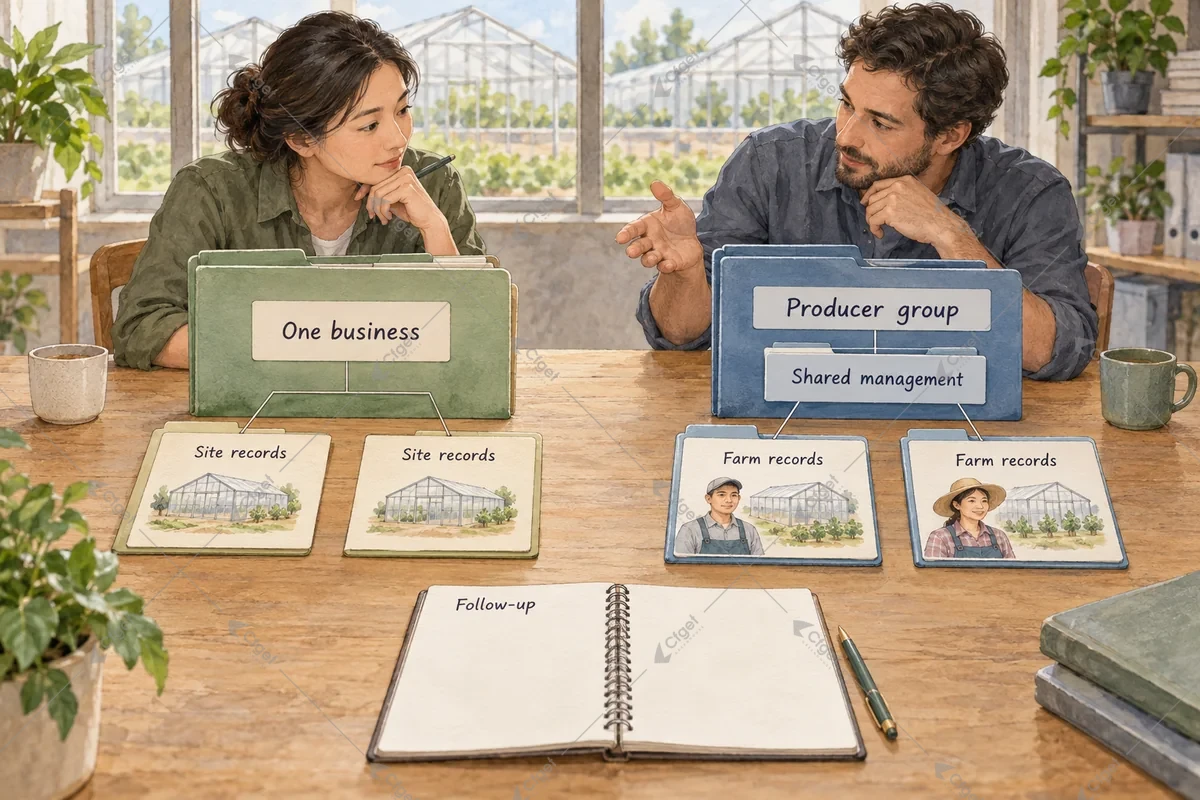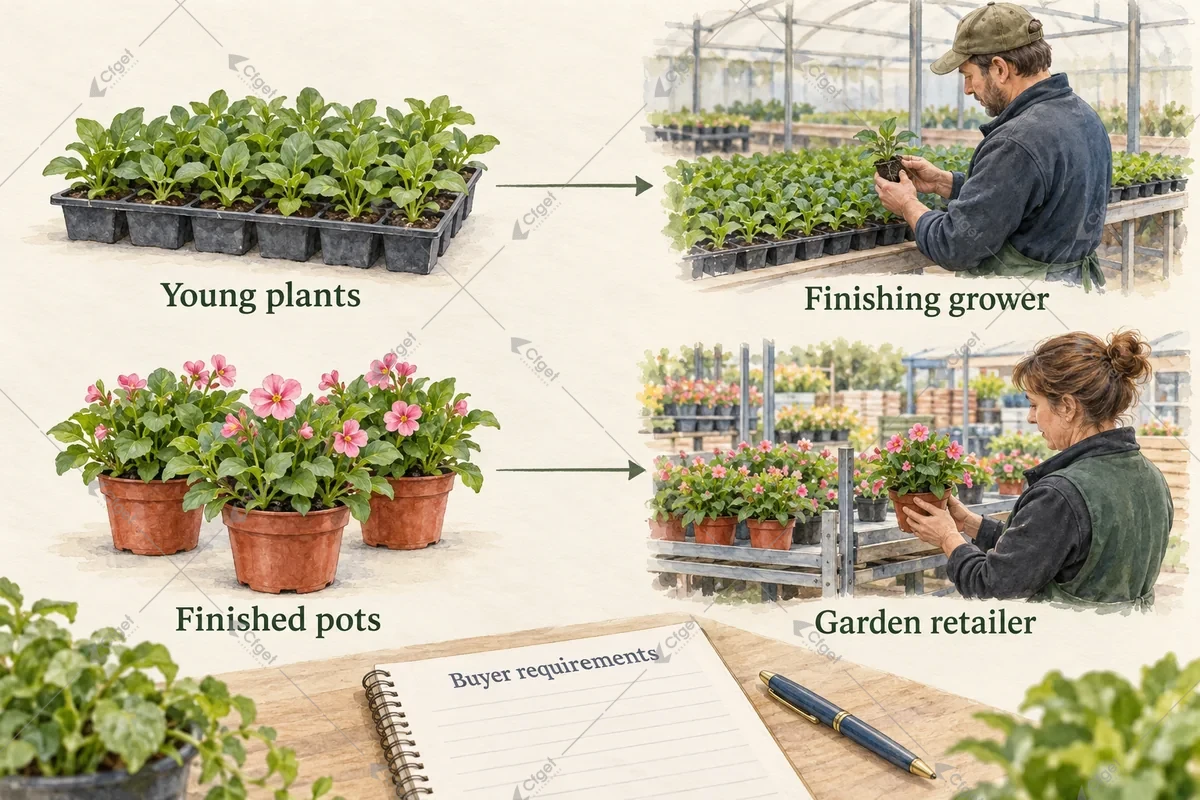
A greenhouse proposal may include “growing support” without saying what the buyer receives after the adviser leaves. Before comparing fees, ask for a description of the work: a visit and recommendations, continuing review of crop information, or an explicitly agreed crop-management role.
Those services can all be useful. They leave different work with the greenhouse business, and the difference matters most between visits.
Start with the expertise you are actually buying
The IFC’s 2016 report on Armenia’s greenhouse export supply chain identified this problem in concrete terms. Drawing on stakeholder meetings held from December 2015 to July 2016, it described businesses using the broad label “greenhouse specialist” without specifying the expertise required. It also discussed reliance on short visits from overseas specialists alongside the need for continuing competent support locally.
That historical qualitative assessment is useful for framing a purchase, rather than judging today’s Armenian workforce. Name the crop, production system and questions the service must address. A request to review a cucumber crop’s development is more informative than a request for an unspecified greenhouse expert.
Ask how the proposed adviser’s expertise matches that need and what happens when a question falls outside it. Equipment troubleshooting, crop advice and running the crop should each be described in the actual offer.
Compare what comes back to the grower
A practical comparison can start with three possible scopes:
- A site review. What will be examined, and what findings or recommendations will the buyer receive afterward? Establish whether a follow-up discussion is included.
- Continuing crop-strategy review. Which submitted observations and records will be reviewed between visits, what feedback comes back, and how are open questions followed through?
- A defined management responsibility. If a provider offers to take responsibility for particular crop decisions, ask exactly which decisions and which implementation duties are included. Do not infer that role from the availability of advice.
These are ways to examine offers, not standard packages every supplier sells. A narrowly defined review can fit a farm with strong day-to-day crop management. A buyer seeking continuing direction needs to establish whether that additional service is actually available.
Continuing advice needs a two-way information flow
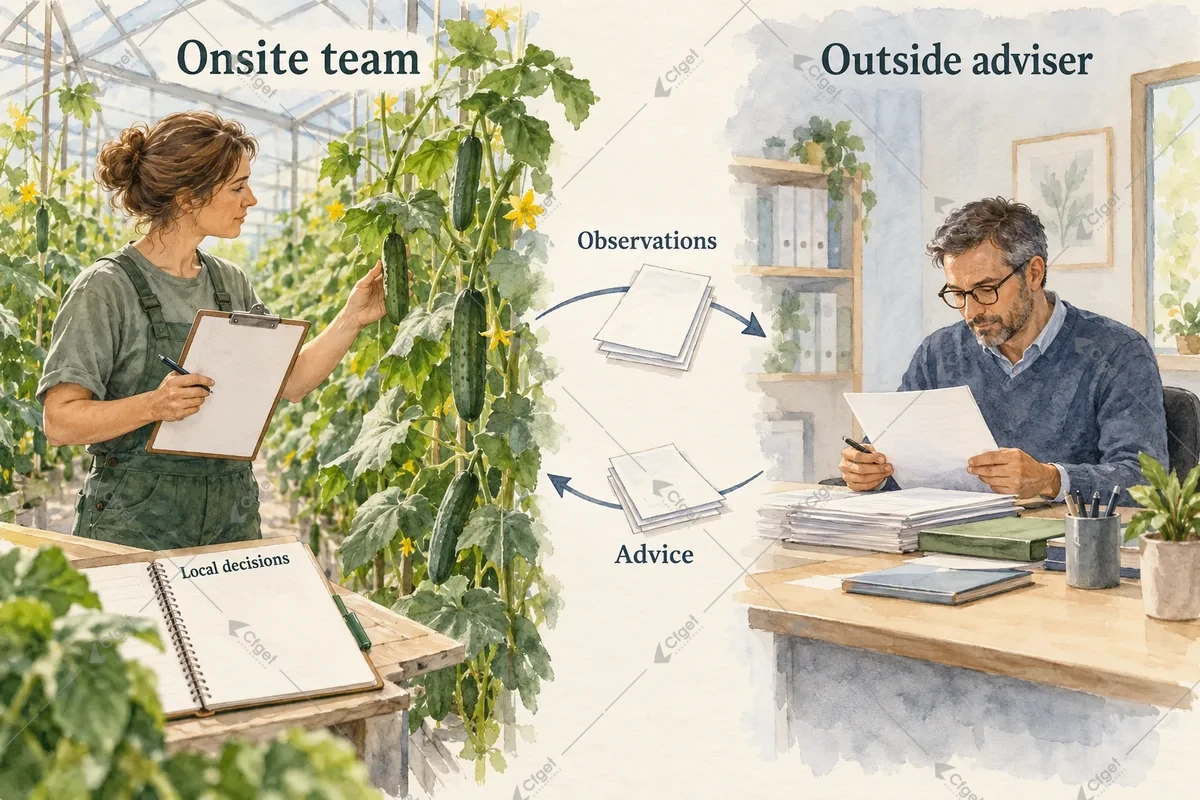
On its Greenhouse Vegetables team page, Delphy describes combining climate data, fertilization information and weekly crop measurements, reviewing them with the grower and adjusting strategy where needed. It also describes remote monitoring. This is one provider’s account of its working approach, not a promise about the terms or results of any offer.
The useful purchasing question is what makes that exchange work on your farm. Ask which observations the adviser expects, who supplies them, how missing or questionable records are handled and what form the response takes. A dashboard login alone does not answer those questions.
Then clarify the next handover: who considers the recommendation, decides what to do locally, confirms what was implemented and reports the crop’s response? The service description should make those steps understandable without implying that an offsite adviser has taken over ordinary operations.
Test an offer with one between-visit example
Consider two hypothetical offers. One includes a periodic visit and a written crop review. The other also includes review of agreed records between visits. If the grower submits a concern after the visit, the first offer may require additional work to be arranged; the second may include a defined follow-up process. Neither description alone establishes authority to manage the farm.
Walk that example through each actual proposal. Ask the provider to identify what it would receive, what it would return and what the onsite team would still do. Confirm the offered availability and boundaries instead of assuming immediate or continuous attention.
If the discussion exposes an unowned crop-management task, resolve it before accepting the service as sufficient. That may mean a different advisory scope, an explicitly offered management arrangement or retaining more responsibility locally.
Keep the agreed scope in the greenhouse feasibility review. Use the separate operator competency guide for equipment-related capability afterward. The buying decision here is what agronomic work will be delivered, and how it connects to the people who continue running the crop.