Short answer: a shade net house can reduce solar load and protect a crop, but it is not a universal cooling or profit system. Choose it from the crop light target, local solar radiation, temperature, humidity, wind, rain, pests and market window. Then specify net properties, openings, structure, drainage, irrigation, maintenance access and acceptance checks. Trial the shade level with crop and climate measurements before committing a full commercial block.
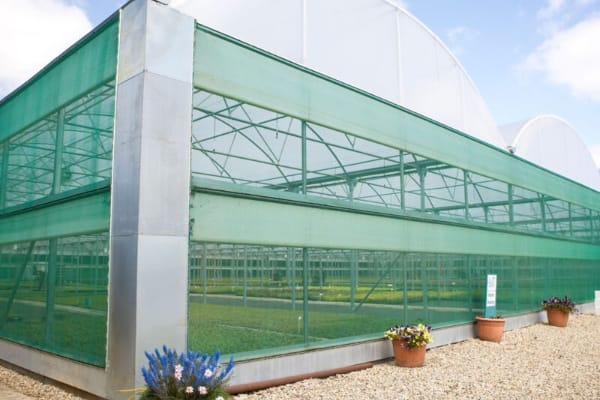
Net house farming means growing crops beneath a frame covered with netting. In a shade net house, the covering reduces incoming sunlight. The first decision is whether excess sun is the problem: shaded fruit can avoid some sunburn damage, but a crop already short of light may perform worse under an additional covering. Choose the crop and growing season before choosing the net.
Start with the crop and weather, not a shade percentage
Ask the grower or crop adviser for the light range, heat sensitivity, planting dates, target harvest window and quality limits. Obtain hourly or representative site data for solar radiation, dry-bulb temperature, humidity, wind, rainfall and extreme events. A percentage printed on a net roll does not predict the crop temperature by itself.
Shade changes both radiation and the energy available for photosynthesis. Too little shade may leave heat stress unresolved. Too much can reduce growth, stretch plants or delay harvest. Utah State University Extension describes shade as a production tool whose result depends on crop, environment and how it is deployed. Use a small trial bay or removable section to compare canopy temperature, light, plant response and marketable quality.
| Decision | Buyer input | Evidence to request |
|---|---|---|
| Crop duty | Crop, stage, season, quality target and light boundary | Agronomist basis and trial protocol |
| Net | Shade factor, color, openness, UV exposure and service conditions | Manufacturer data sheet, sample and warranty terms |
| Structure | Dimensions, site wind, rain, soil and attached loads | Drawings, load basis, foundations and connection details |
| Operation | Fixed or retractable use, labor, cleaning and replacement access | Operating sequence, maintenance plan and spare material |
Match the shade trial to the crop
For tomatoes and peppers, distinguish sunburn on exposed fruit from a general air-temperature problem. Utah State University Extension explains that fruit surface temperature and air temperature can differ substantially. Its guidance also warns that shade can leave soil wetter and increase humidity. Keep checking soil moisture after installing a net instead of carrying over the open-field watering schedule unchanged. See the USU shade-production guide for the crop and climate context.
Lettuce presents a different question: can shading make a hot-season planting marketable? A University of Georgia Extension publication describes summer lettuce in shaded high tunnels and cites a Kansas trial using 39% shade cloth. That is evidence from a particular crop and production system, not a recommended percentage for every net house. Use the UGA lettuce guide to plan a locally supervised comparison, with cultivar and planting date recorded alongside shade level.
Separate shade factor, porosity and color
A net specification should identify the tested property and test method. Shade factor describes intercepted radiation under stated conditions. Porosity and mesh geometry affect airflow and insect exclusion. Color and material can alter spectral and thermal behavior. Two products with the same headline shade number can behave differently because their yarn, weave, openness and installation are different.
Request a complete product data sheet and a physical sample. Record the roll identification, nominal width, joining method, edge reinforcement, UV stabilization statement, fire requirements where applicable, warranty exclusions and replacement lead time. The quotation should state whether clips, cables, profiles, sewing, tensioning parts and installation labor are included.
Do not block the airflow that makes the system work
A shade net house exchanges air through its roof and side openings. Crop rows, windbreaks, nearby buildings, dust screens and insect mesh can restrict that path. Ask the designer to show prevailing wind directions, inlet and outlet areas, internal obstructions and the treatment of calm conditions. A dense insect screen cannot be treated as if it had the same pressure drop as open shade net.
Measure conditions at crop height, not only at a weather station outside. A practical trial logs outside and inside temperature, humidity, radiation or light, wind where available and irrigation demand. Pair those records with crop observations. Avoid promising a fixed temperature reduction because results change with radiation, air movement, evaporation, crop canopy and measurement location.
Design the structure for the installed condition
Netting adds wind load and may collect water or debris if it sags. The structural brief should include design wind, terrain exposure, local code, bay spacing, member sizes, bracing, foundations and the load path through clips and cables. If the operating plan removes or retracts netting before severe weather, define who decides, how long the action takes and what happens when staff cannot reach the site.
Details should prevent abrasion at sharp steel edges and excessive stress at corners. Include allowances for installation tension, thermal movement, access doors, equipment penetrations and repair patches. Drainage around the perimeter should keep runoff away from foundations and work areas. The hot-climate greenhouse design guide provides the wider ventilation and envelope questions that sit beside the net-house decision.
Coordinate irrigation and crop layout
Shade can change evapotranspiration, but it does not eliminate the need to size and control irrigation from crop demand, water quality and distribution uniformity. Test the source water. Document flow, pressure, filtration, fertigation, zoning, flushing and drainage. Check emitter delivery at the highest and farthest points, then compare it with the design requirement.
Row direction, plant density and trellising influence air movement and access. Leave service paths for scouting, repairs and harvest. Keep valves, filters and electrical equipment reachable without disturbing crops. Use the commercial irrigation system guide for a separate water-distribution comparison, while this page remains focused on net-house selection.
Compare a trial through harvest
Keep a small comparison area with the same crop, planting date and routine care. Record what changes under the net: sunburn rejects, harvest timing, saleable crop weight, irrigation use and time spent operating or repairing the covering. Mark pest or disease problems separately so they are not mistaken for a shade response. A cooler afternoon reading alone does not tell you whether the crop is better. Review the harvest results with the crop adviser before extending the system to another block.
Budget the complete installed scope
Price comparisons should use the same dimensions, structural loads and supply boundary. Include survey, design, steel, coating, foundations, net and attachment parts, doors, insect control, irrigation, electrical work, freight, customs, installation, supervision, testing, training, spares and taxes. Record currency, quotation validity and exclusions.
Operating cost includes labor to deploy or repair netting, cleaning, replacement material, irrigation energy, pest monitoring and storm preparation. Use local prices and a downside case. A low headline cost per square meter does not show whether foundations, freight, labor or crop systems are missing.
| Acceptance check | What to record | Reason |
|---|---|---|
| Identity | Net roll, data sheet, color, width and shade test reference | Confirms the supplied material |
| Attachment | Clip spacing, cables, seams, corners and abrasion protection | Connects the net to the structural design |
| Operation | Doors, openings, retractable sequence and emergency action | Tests practical airflow and storm readiness |
| Crop trial | Inside and outside climate plus crop response | Checks the site-specific shade decision |
RFQ inputs for a commercial shade net house
- Project coordinates, survey, soil information, terrain and access
- Hourly or representative radiation, temperature, humidity, wind and rainfall data
- Crop, stage, season, planting density, light target and market window
- Required dimensions, bays, height, doors, internal layout and expansion plan
- Net shade test, color, mesh or porosity, UV statement and fire requirement
- Design code, wind and rain actions, foundations, bracing and connection details
- Fixed or retractable operation, storm plan, maintenance access and spares
- Water analysis, irrigation flow, pressure, filtration, fertigation and drainage
- Freight, installation, supervision, acceptance tests, training and exclusions
- Crop trial method, climate measurements and review dates tied to crop development and harvest
Technical references
Coraline Liao is CEO and Greenhouse Technical Director at CFGET. Her role here is to frame the greenhouse specification, interfaces and handover questions. Crop programs and structural approval remain with the responsible project professionals.
- Utah State University Extension: Using Shade for Fruit and Vegetable Production
- University of Georgia Extension: Shade Cloth and High Tunnels
- FAO: Good Agricultural Practices for Greenhouse Vegetable Crops
Send the site data, crop basis, structure dimensions, net requirements and supply boundary through the CFGET contact page. Ask every bidder to price the same scope and identify assumptions.