Struggling with scorching heat and bone-dry air destroying your crops? Desert climates and high altitudes create brutal growing conditions that standard cooling can’t handle.
High-pressure misting systems provide simultaneous cooling and humidification through flash evaporation, reducing temperatures by 20-30°F while maintaining optimal humidity levels. These systems excel in arid climates where traditional cooling methods fail.
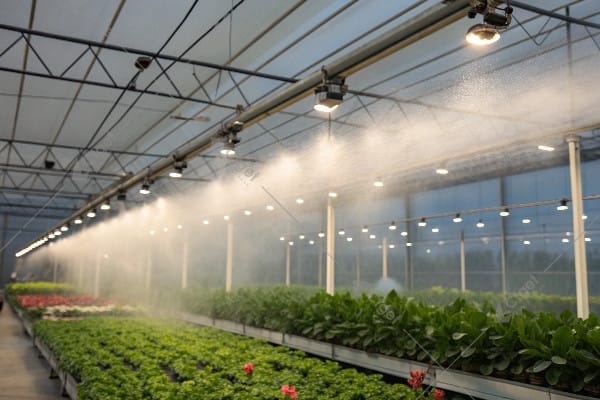
After installing misting systems across the harshest climates from Arizona deserts to Himalayan highlands, I’ve witnessed these systems transform impossible growing conditions into thriving agricultural operations. The science is elegant, the results are immediate, and the crop quality improvements often surprise even experienced growers.
The Science of Flash Evaporation: How Misting Cools & Humidifies Simultaneously
Traditional cooling forces you to choose between temperature control and humidity management. Misting systems eliminate this compromise through the physics of flash evaporation.
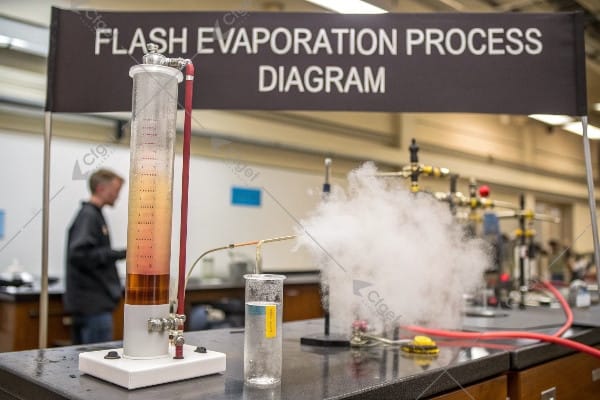
Flash evaporation occurs when pressurized water atomizes into microscopic droplets that instantly absorb heat energy and convert to water vapor. This process simultaneously cools the air while adding essential moisture for plant health.
Understanding the Evaporation Process
The magic happens at the molecular level when high-pressure pumps force water through precision nozzles at 800-1000 PSI. This extreme pressure creates droplets measuring just 5-10 microns in diameter. These microscopic droplets have enormous surface area relative to their volume, accelerating evaporation rates dramatically.
Each gram of water that evaporates absorbs 540 calories of heat energy from the surrounding air. This heat absorption creates the cooling effect you feel when misting systems operate. The smaller the droplets, the faster they evaporate, and the more immediate the cooling becomes.
Temperature drops of 20-30°F are common in dry climates where relative humidity starts below 30%. The cooling efficiency depends directly on the vapor pressure deficit – the difference between current humidity and saturation point. Higher deficits mean greater cooling potential, which explains why misting works best in arid conditions.
The simultaneous humidification occurs as evaporated water increases the air’s moisture content. This dual action solves the fundamental problem of desert growing where you need both cooling and humidity. Traditional air conditioning cools but removes moisture, while evaporative coolers add humidity but lose efficiency in humid conditions.
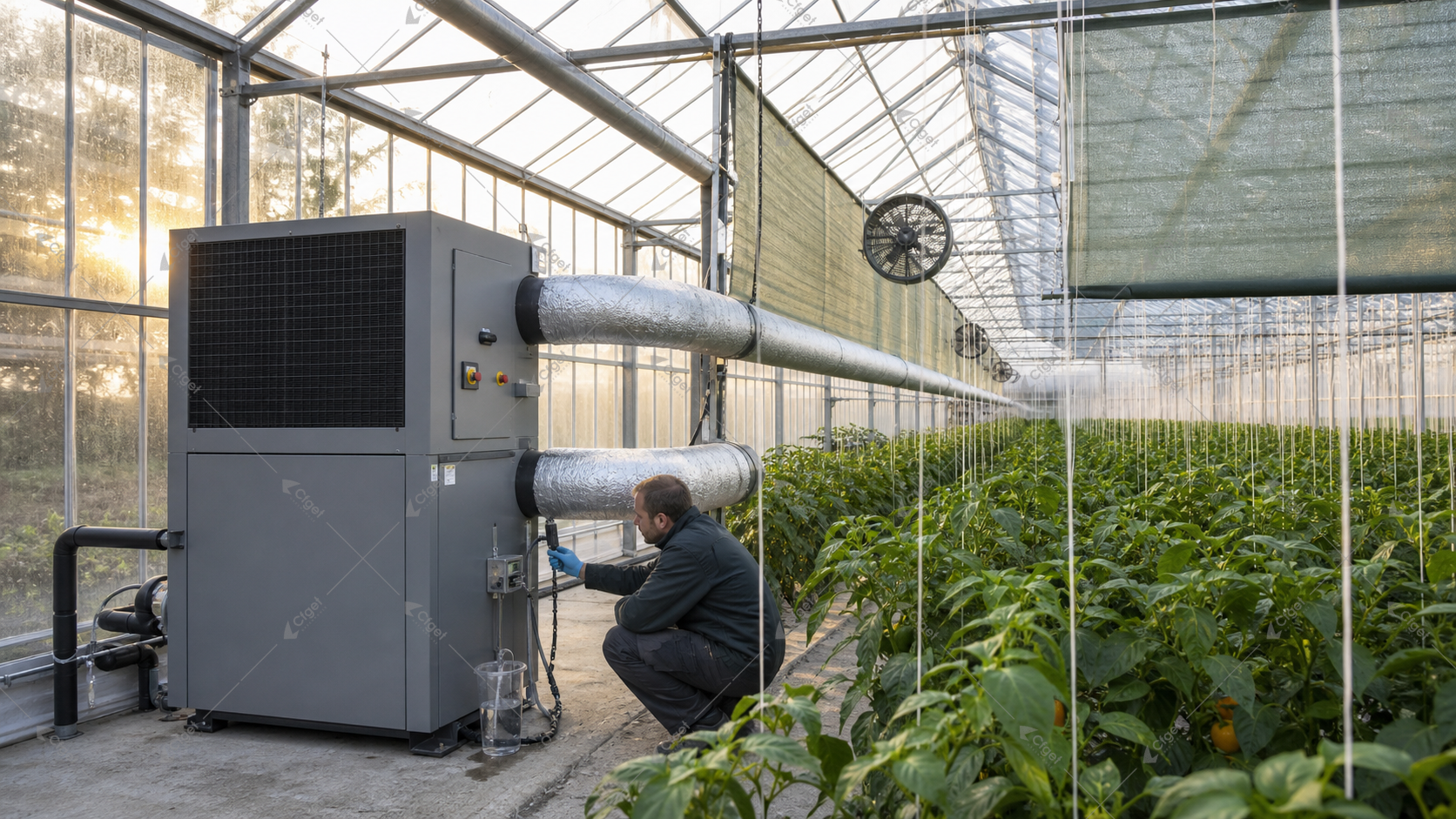
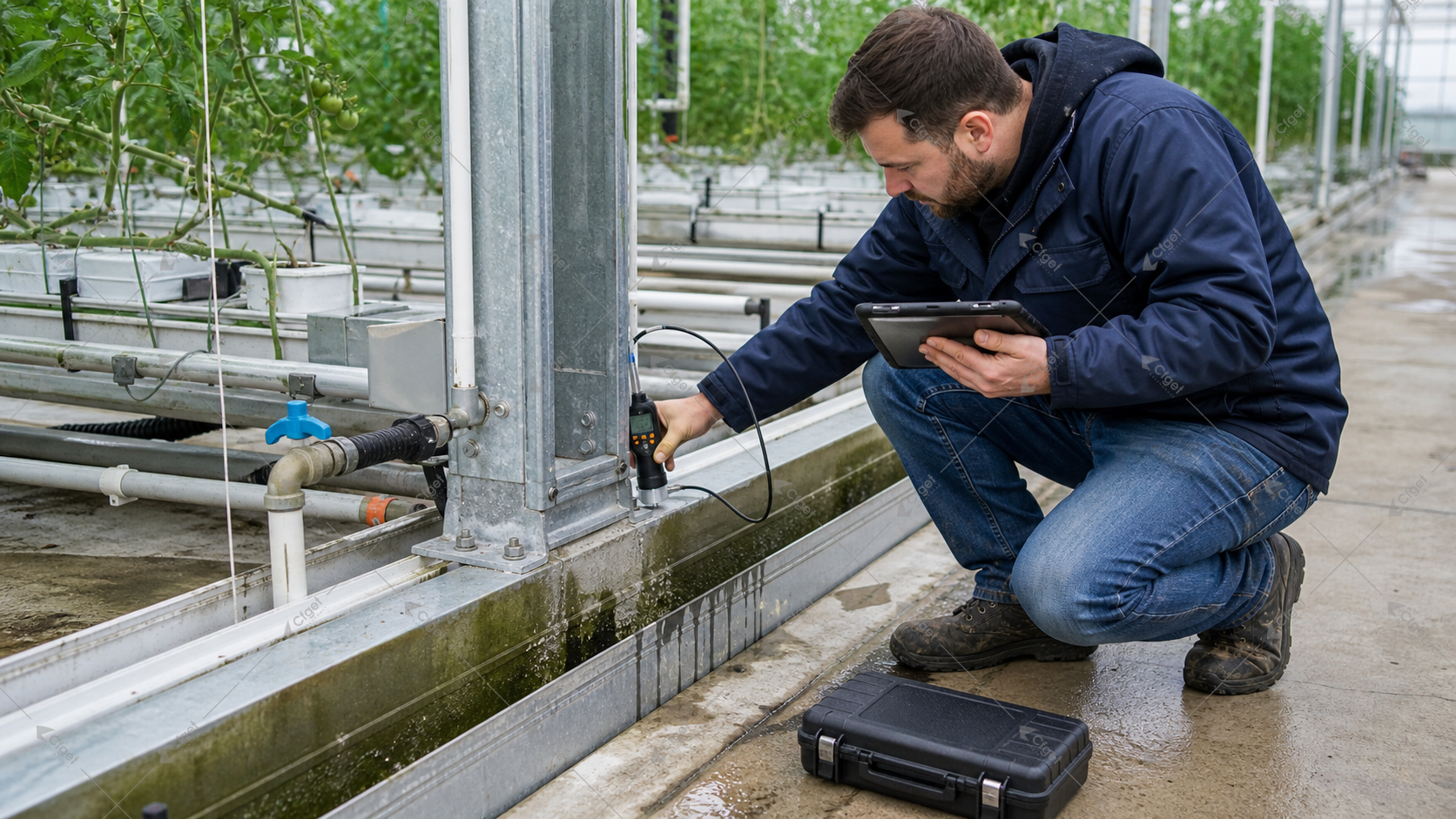
Quality misting systems maintain precise droplet sizes through engineered nozzle designs. Ceramic or stainless steel orifices resist mineral buildup that enlarges droplets and reduces efficiency. Regular maintenance of these precision components ensures consistent performance and prevents the larger droplets that cause plant wetting instead of flash evaporation.
The physics also explains why misting systems struggle in humid climates. When relative humidity exceeds 70%, evaporation rates slow dramatically, reducing both cooling and the system’s effectiveness. This limitation makes misting ideal for arid regions but less suitable for tropical or coastal growing operations.
From Arid to Ideal: The Essential System for High-Altitude & Desert Greenhouses
Desert and high-altitude locations present unique challenges that make misting systems not just beneficial but essential for successful crop production.
Extreme temperature swings, low humidity, and intense solar radiation in arid climates create stress conditions that destroy crops without proper environmental control. Misting systems provide the rapid response needed to maintain stable growing conditions.
Conquering Desert Growing Challenges
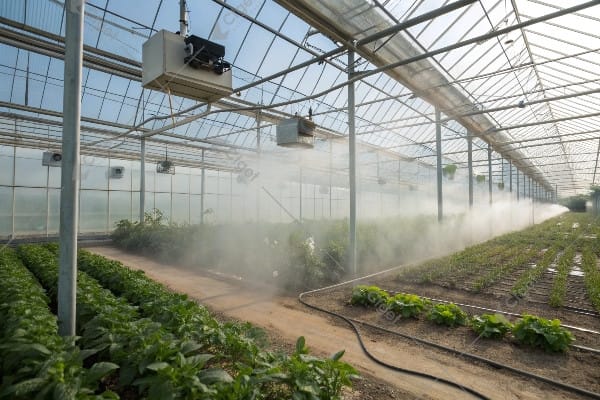
Desert climates assault plants with multiple stressors simultaneously. Daytime temperatures often exceed 110°F while nighttime temperatures can drop 40-50 degrees. Relative humidity frequently falls below 10%, creating conditions that desiccate plants faster than their root systems can replace lost moisture.
Solar radiation intensity in desert locations often exceeds plant tolerance levels. Without cooling and humidity control, leaves overheat and shut down photosynthesis during peak daylight hours. This photosynthetic shutdown reduces growth rates and can cause permanent plant damage during extended heat waves.
High-altitude locations add another layer of complexity. Reduced atmospheric pressure at elevation affects both evaporation rates and plant transpiration. The thinner air provides less thermal mass, causing rapid temperature fluctuations that stress sensitive crops. Misting systems help buffer these rapid changes by maintaining more stable microclimates.
Wind patterns in arid regions can devastate unprotected crops. Hot, dry winds strip moisture from plants faster than irrigation can replace it. Misting creates a protective humidity envelope around plants that reduces transpiration stress and prevents wind desiccation.
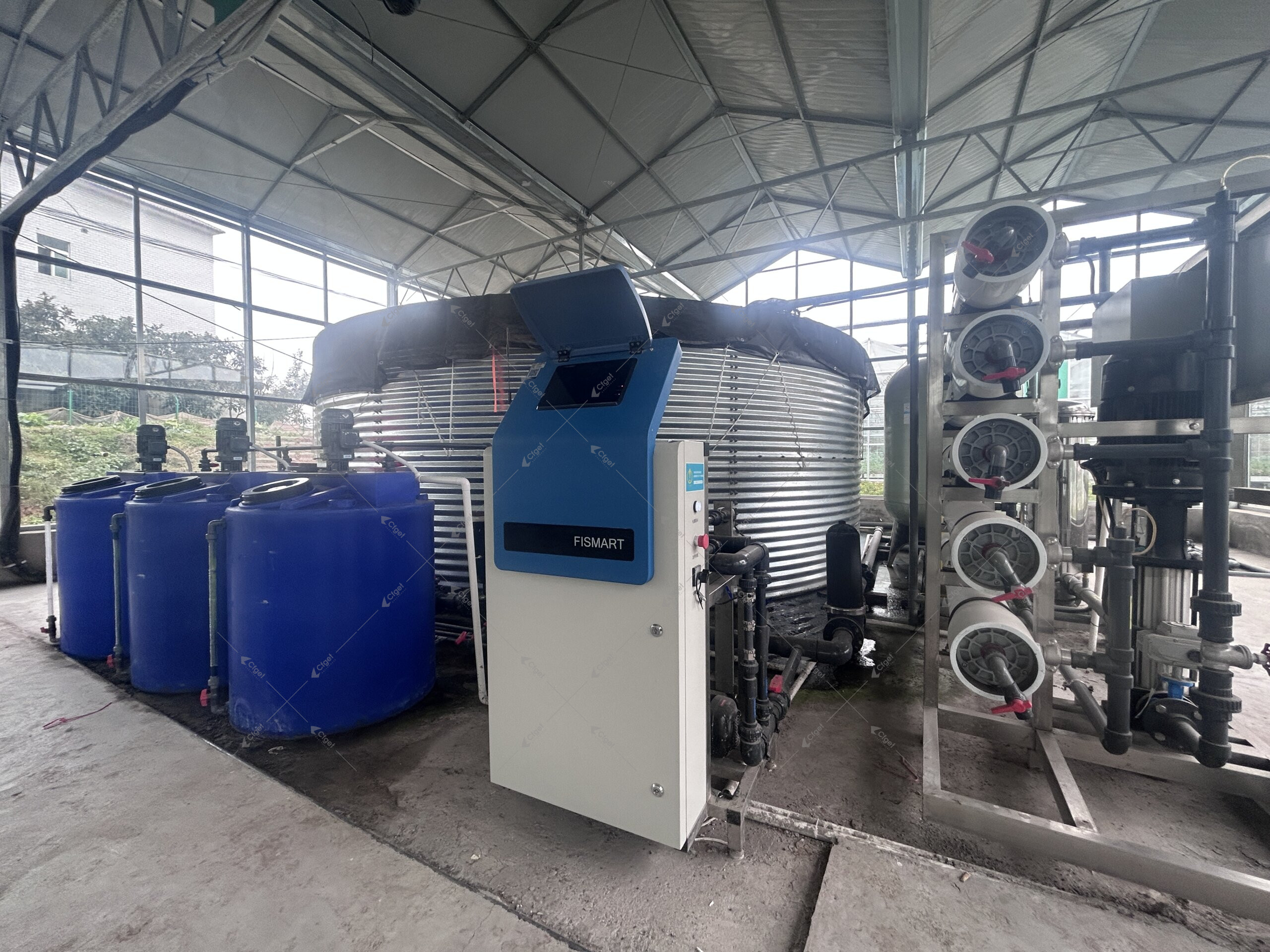
The mineral content of water sources in arid regions often exceeds acceptable levels for direct plant application. Quality misting systems include filtration and water treatment components that remove harmful salts and minerals before atomization. This preprocessing prevents leaf burn and nozzle clogging that plague inferior systems.
Dust control becomes an unexpected benefit in desert installations. The fine mist captures airborne particles, reducing dust accumulation on leaves that blocks light and reduces photosynthesis. This cleaning effect improves plant health while reducing manual labor requirements for crop maintenance.
Beyond Cooling: Achieving Total Environmental Control with Automated Misting
Modern misting systems integrate with comprehensive environmental controls to create precision growing environments that respond automatically to changing conditions.
Automated misting systems use multiple sensors to maintain exact temperature and humidity targets while preventing over-saturation. These systems coordinate with ventilation, heating, and shading to create optimal microclimates for specific crops.
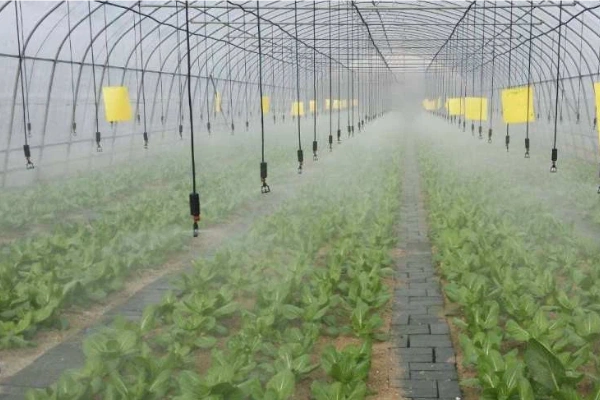
Precision Environmental Management
Advanced misting systems operate as part of integrated climate control networks that monitor dozens of environmental parameters simultaneously. Temperature sensors at multiple heights track thermal stratification, while humidity sensors measure both absolute and relative moisture levels throughout the growing space.
Vapor pressure deficit (VPD) control represents the cutting edge of misting automation. VPD measures the driving force behind plant transpiration, indicating when plants experience moisture stress. Automated systems maintain optimal VPD ranges by coordinating misting with ventilation and heating, ensuring plants never experience water stress while avoiding over-saturation.
Zone control capabilities allow different misting schedules in various greenhouse sections. Seedling areas might require higher humidity levels than mature plants, while different crop varieties often need distinct environmental conditions. Quality control systems manage these requirements automatically without manual intervention.
Integration with weather forecasting services enables predictive climate control. Systems can pre-cool structures before anticipated heat waves or adjust humidity levels based on incoming weather patterns. This proactive approach prevents plant stress rather than simply reacting to changing conditions.
Fertigation integration allows nutrient delivery through misting systems for foliar feeding applications. Automated systems can switch between pure water for cooling and nutrient solutions for feeding, maximizing both environmental control and plant nutrition efficiency.
Data logging and analysis capabilities provide insights into system performance and crop responses. Modern systems track energy usage, water consumption, and environmental parameters, generating reports that help optimize operations and reduce costs over time.
Emergency override functions ensure crop protection during equipment failures or extreme weather events. Battery backup systems maintain critical misting operations during power outages, while manual controls allow immediate system adjustments when automated systems experience problems.
High-Pressure Misting vs. Pad & Fan: A Head-to-Head Cooling Comparison
Choosing between misting and evaporative pad systems requires understanding the strengths and limitations of each technology in different applications.
High-pressure misting excels in precise humidity control and uniform cooling distribution, while pad and fan systems provide higher volume cooling at lower installation costs. The choice depends on crop requirements, climate conditions, and operational priorities.
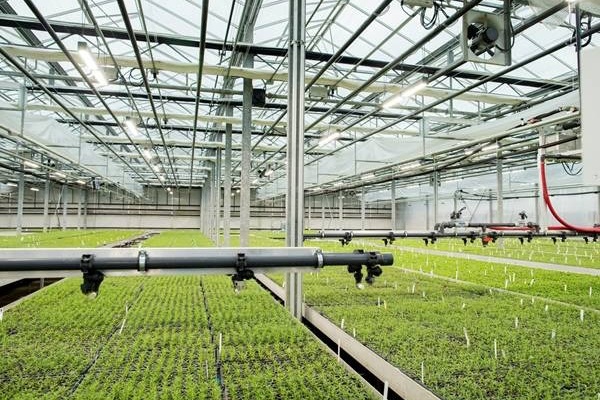
Performance Analysis Across Key Metrics
Cooling capacity differs significantly between systems. Pad and fan systems can reduce temperatures by 15-25°F in dry climates, moving large volumes of air through wetted pads. Misting systems achieve similar temperature reductions but with more precise control and better distribution throughout the growing space.
Humidity control represents misting’s greatest advantage. Pad systems saturate incoming air to nearly 100% relative humidity, which can promote disease problems in sensitive crops. Misting systems add humidity gradually, allowing precise control of moisture levels without over-saturation.
Energy consumption patterns favor different systems depending on operational schedules. Pad systems use significant electrical power for large exhaust fans but operate continuously during hot weather. Misting systems use high-pressure pumps that consume more energy per minute but operate intermittently, often resulting in lower overall energy usage.
Water quality requirements vary dramatically between systems. Pad systems tolerate poor water quality but require frequent pad replacement when mineral content is high. Misting systems demand excellent water quality to prevent nozzle clogging but use water more efficiently through precise application.
Maintenance demands differ in complexity and frequency. Pad systems require regular pad replacement, fan maintenance, and water distribution system cleaning. Misting systems need nozzle cleaning, high-pressure pump servicing, and filtration system maintenance, but these tasks require more technical expertise.
Installation costs generally favor pad systems for large structures where uniform cooling across wide areas is the primary goal. Misting systems cost more initially but provide greater flexibility and precision control that justifies the investment for high-value crops or specialized growing operations.
Crop suitability varies based on plant requirements and growth stages. Leafy greens and herbs often prefer the precise humidity control of misting systems, while larger vegetable crops may benefit from the high-volume air movement of pad and fan cooling.
Climate adaptability shows misting systems performing better in extremely arid conditions where pad systems struggle with mineral buildup and maintenance issues. Pad systems excel in moderate desert climates where consistent cooling loads justify their continuous operation.
Conclusion
Misting systems provide unmatched precision in temperature and humidity control, making them essential for successful cultivation in arid and high-altitude environments.