For commercial cucumber growers, choosing the right greenhouse is one of the most critical decisions for long‑term success. In Europe, especially in key growing regions like Almería in Spain and the Dutch greenhouse belt, cucumbers are a major greenhouse crop that supplies supermarket chains year‑round.
The best greenhouse for commercial cucumber production in Europe balances light transmission, airflow, climate control, and humidity management to support high, consistent yields. Choosing the wrong structure or climate strategy can cost yield, quality, and profitability.
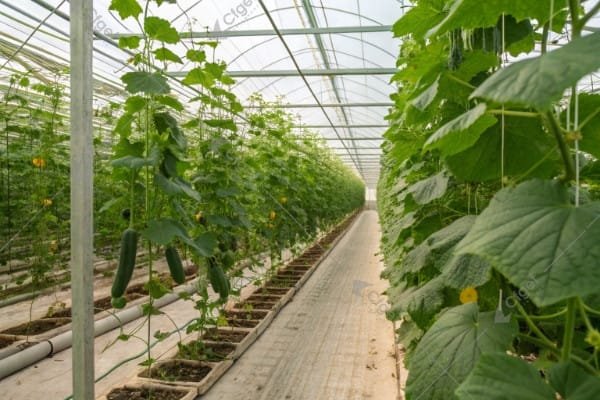
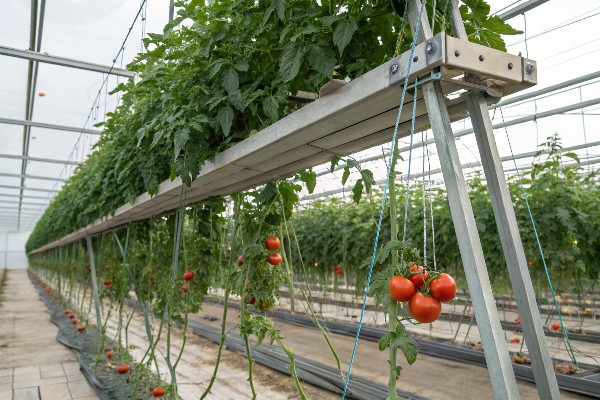
High‑density cucumber vines growing in a European greenhouse.
I have reviewed commercial operations and research across Europe. What works in Almería or the Netherlands often fails in less structured systems. This article explains clearly how to choose the right greenhouse type, how climate affects decisions, and how to match greenhouse structure with cucumber production systems for profitability.
Why Europe leads in greenhouse cucumber production
Europe has one of the most developed greenhouse vegetable sectors globally. Regions like Almería in Spain use large plastic greenhouse complexes to grow cucumbers, tomatoes, and peppers intensively, supplying markets early and extending harvests in winter. :contentReference[oaicite:3]{index=3}
Greenhouse cucumbers are grown because they provide stable quality and year‑round supply compared with field production, and Europe’s market demands consistent high‑quality produce.
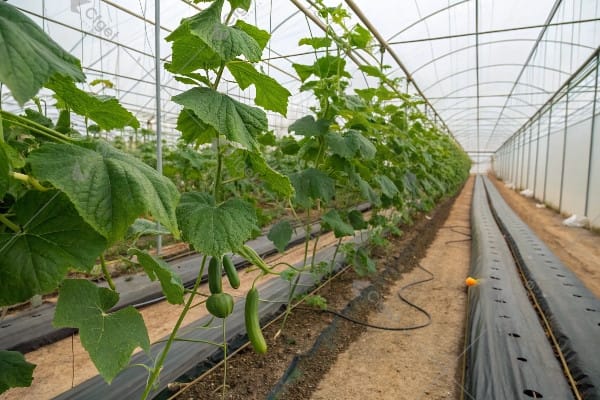
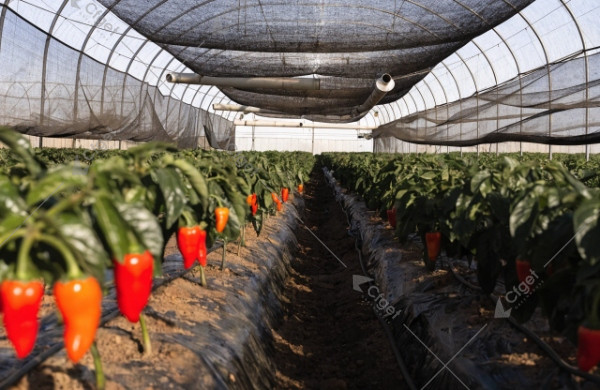
Extensive greenhouse complexes in Almería, southern Spain.
Dive deeper
Greenhouse cucumber production in Europe is not a niche. The climate there has enabled a dense cluster of commercial greenhouses that produce not only tomatoes but also large volumes of cucumbers and other salad vegetables. These greenhouses often operate three crop cycles per year, adapting to light and temperature changes with advanced climate control. :contentReference[oaicite:4]{index=4}
In the Netherlands, greenhouse complexes like Thanet Earth and Dutch greenhouse belts demonstrate the importance of integrated climate and energy control systems. Thanet Earth alone produces millions of cucumbers annually under year‑round glass greenhouse conditions, accounting for a significant share of the UK market. :contentReference[oaicite:5]{index=5}
Outside southern Europe, regions such as Belgium, Germany, and the Netherlands focus on high‑tech glass or multi‑layer structures with automated climate control, often paired with hydroponic systems to grow cucumbers at high densities while maintaining quality and market freshness.
Commercial cucumber growers choose greenhouse structures not only for crop climate optimization but also to secure supply contracts with supermarkets, where consistency and predictability matter more than short‑term cost savings.
What cucumbers need: climate and structure basics
Before choosing greenhouse types, it’s important to understand cucumber crop needs.
Cucumbers are warm‑season crops with moderate light requirements, and they respond dramatically to climate stability. :contentReference[oaicite:6]{index=6}
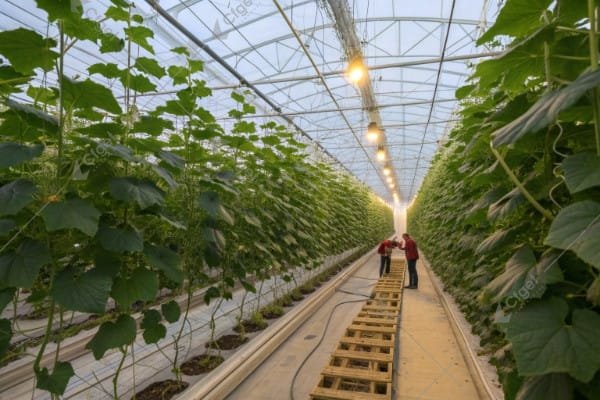
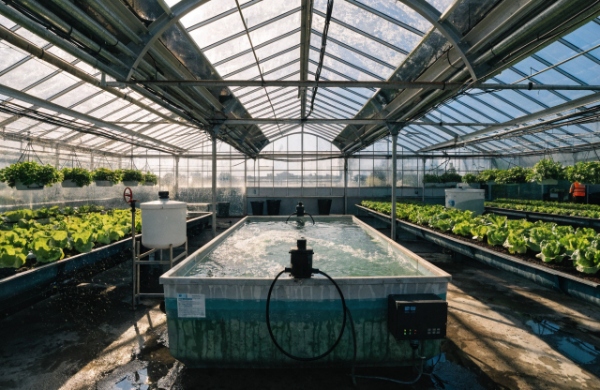
Optimal greenhouse climate for cucumber production.
Dive deeper
Cucumber plants thrive when:
- Daytime temperatures are between 21–26°C
- Night temperatures do not drop below about 15°C
- Relative humidity remains stable (about 60–70%)
- Low humidity fluctuation reduces disease risk such as powdery mildew or downy mildew. :contentReference[oaicite:7]{index=7}
Cucumbers grown in greenhouses are often sensitive to frost and cold drafts, making greenhouse design and insulation an important aspect in northern Europe. The controlled environment allows growers to plant in early spring and harvest through winter or provide consistent supply for supermarkets.
Cucumber growth is also influenced by light intensity. In northern and central Europe, supplemental lighting is often required to maintain high yields during short daylight periods. This is a factor in selecting transparent material and greenhouse orientation.
Three greenhouse types commonly used for European cucumber production
Selecting the right greenhouse type is about balancing light, temperature, humidity, and yield consistency. Below are the most common greenhouse structures in European commercial cucumber production:
1. Venlo Glass Greenhouses
Description: Traditional glass greenhouse with high transparency and robust frame, widely used in Northern and Central Europe.
Best for: High‑value, year‑round cucumber production with advanced climate controls.
Why it works:
- Exceptional light transmission, especially in winter.
- Allows precise climate control with automated systems.
- Supports hydroponic and trellis‑based cucumber production.
- Known for high crop uniformity and quality, ideal for supermarket contracts.
Challenges:
- High upfront investment and installation costs.
- Requires sophisticated climate control systems and energy inputs.
When it’s best:
For growers with year‑round production goals, premium market contracts, and markets willing to pay for consistent quality.
2. Multi‑Span Polycarbonate Greenhouses
Description: Greenhouse made of multiple connected spans covered with polycarbonate panels that diffuse light and provide moderate insulation.
Best for: Balanced performance, moderate cost, and strong climate stability.
Why it works:
- Light diffusion ensures even distribution to cucumber vines.
- Polycarbonate reduces the “hot spots” seen in single‑layer film greenhouses.
- Good insulation for both winter heat retention and summer climate moderation.
- Lower CAPEX compared to glass.
Challenges:
- May require supplemental lighting in northern regions during shorter days.
- Less light transmission than glass but better insulation than single‑layer film.
When it’s best:
For growers seeking a good balance between cost and performance, especially in regions with mild winters or strong seasonal variation.
3. Multi‑Span Film Greenhouses (Double Film)
Description: A greenhouse covered with double‑layer UV‑stabilized polyethylene film, sometimes with air inflation between layers.
Best for: Lower initial investment and good heat retention in moderate climates.
Why it works:
- Cost‑effective entry to protected cultivation.
- Double layers provide better insulation than single film.
- Modular and scalable design.
Challenges:
- Film covers have shorter lifespan and need periodic replacement.
- Lower light transmission than polycarbonate or glass.
- Sensitive to weather extremes (wind, hail, snow).
When it’s best:
For commercial ventures with strong cost constraints or in sun‑rich regions such as southern Spain where light is abundant.
Production system combinations with greenhouse types
The right greenhouse structure must be paired with an appropriate production system to maximize yield and quality.
Hydroponic systems such as NFT (nutrient film technique), rockwool substrate, or soilless media culture give cucumbers more uniform nutrient and water availability. Producing cucumbers in such systems enhances growth uniformity and reduces disease risk. :contentReference[oaicite:8]{index=8}
For commercial scale, vertical trellising systems inside greenhouses maximize space and light penetration, allowing growers to increase yield per square meter while maintaining airflow and light exposure.
Climate control and disease management
In commercial cucumber greenhouses, climate control systems must manage three key variables:
- Temperature stability – night heat retention and day cooling
- Humidity control – balance air moisture to reduce disease
- Air circulation – uniform airflow to prevent microclimate pockets
Fungal diseases such as powdery mildew and root rots can devastate crops if humidity is uncontrolled. Grafting onto tolerant rootstocks is a strategy to reduce disease damage under high greenhouse humidity. :contentReference[oaicite:9]{index=9}
How to choose the right greenhouse for your market
Choosing the best greenhouse type should follow a step‑by‑step decision logic:
- Identify your climate zone (Mediterranean, temperate, continental)
- Define your production window (year‑round vs seasonal)
- Calculate OPEX vs CAPEX (energy, lighting, humidity control)
- Match market targets (supermarket quality, export, local markets)
- Plan crop system integration (hydroponics, trellising, automation)
For example, in southern Spain’s intense sunshine, multi‑span film or polycarbonate may offer cost‑efficient production, whereas in cool northern Europe, Venlo glass with automated climate controls is often the superior choice.
Conclusion
The best greenhouse for commercial cucumber production in Europe depends on your climate, budget, and production goals. Venlo glass greenhouses provide top performance for year‑round markets, while polycarbonate and film greenhouses offer cost‑effective solutions with strong yield stability.
External References (Authority Sources)
-
FAO – Climate Change and Agriculture
https://www.fao.org/climate-change/en/ -
Wageningen University & Research – Greenhouse Horticulture
https://www.wur.nl/en/research-results/research-institutes/plant-research/greenhouse-horticulture.htm -
University of Florida IFAS Extension – Fan and Pad Evaporative Cooling Systems
https://edis.ifas.ufl.edu/publication/AE069 -
USDA Economic Research Service – Controlled Environment Agriculture Trends
https://www.ers.usda.gov/data-products/charts-of-note/chart-detail?chartId=109422
Internal References (CFGET)
-
Commercial Greenhouse Systems
https://cfgreenway.com/greenhouse/ -
Smart Auto & Control Solutions
https://cfgreenway.com/solutions/smart-auto-control/
Internal Blog References (Related CFGET Articles)
-
Polycarbonate Greenhouse Systems
https://cfgreenway.com/polycarbonate/ -
Venlo Glass Greenhouse Design
https://cfgreenway.com/venlo/ -
Semi-Closed Greenhouse Systems
https://cfgreenway.com/semi-closed/ -
Retractable Roof Greenhouses
https://cfgreenway.com/retractableroof/