Commercial cucumber growers in North America face unique challenges. Hot summers, cold winters, and tight market quality standards make greenhouse choice one of the most important decisions a producer can make.
The best greenhouse for commercial cucumber production in North America is one that balances strong light transmission, dependable climate control, and efficient energy use to ensure consistent yields and superior fruit quality.
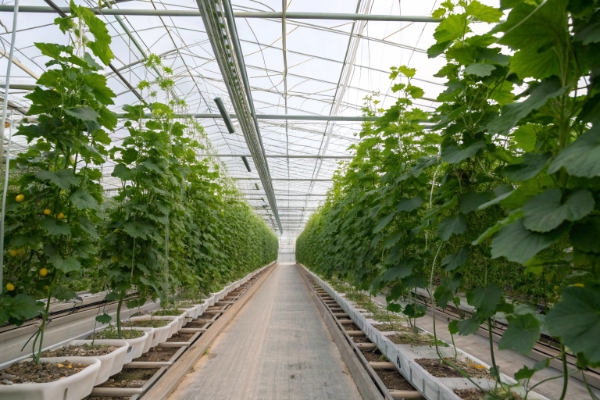
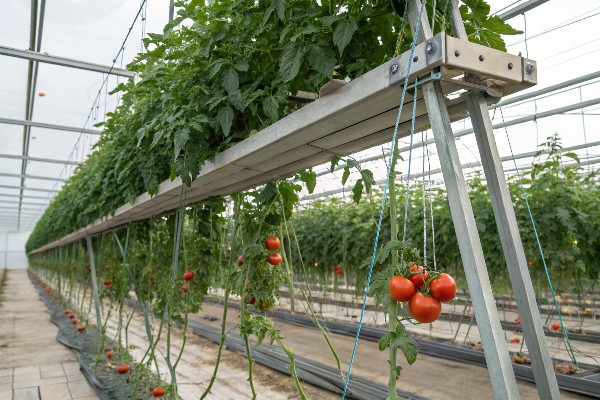
Modern greenhouse in North America with cucumber vines and automated climate systems.
I’ve reviewed dozens of commercial greenhouse cucumber operations across the United States and Canada. What works for one climate often fails in another. In this article, I’ll guide you step by step through the best greenhouse types for North American cucumber production, how climate affects those choices, and practical factors that influence yield, energy use, and profitability.
What makes cucumber greenhouse design different in North America?
Cucumbers are a warm‑season crop that thrives in stable environments. In North America, commercial production must deal with a wide range of climates — from cold northern winters to hot, humid summers.
Unlike some crops, cucumbers need consistent warmth, strong support structures (trellising), and careful humidity control to prevent disease and ensure marketable fruit quality.
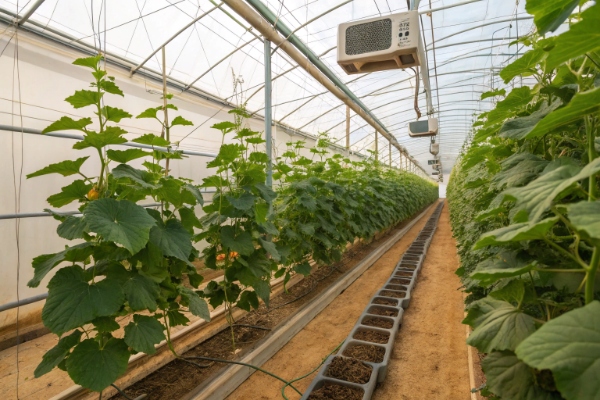
Stable temperature & humidity control drives cucumber production success.
Dive deeper
In northern states and Canada, outdoor cucumber production is limited by short growing seasons and frost risk. Greenhouses extend the season and improve yield rates. But a greenhouse that performs well in California may not work the same in Ontario or Michigan without adjustments. Seasonal temperature differences affect heating costs, cooling requirements, and disease pressure.
Climate stability is crucial because cucumbers respond poorly to temperature swings. If nights are too cold or days too hot, fruit set decreases and vines slow down growth. That reduces yield and devalues the crop in the eyes of buyers.
North American greenhouse operators also face rising energy costs. Electricity and natural gas prices vary widely across regions, and the choice of greenhouse structure plays a significant role in energy use. For example, poorly insulated film greenhouses may have low upfront cost but high winter heating bills. On the other hand, glass or polycarbonate greenhouses can retain heat better but require higher initial investment.
The key to choosing the right greenhouse is to understand not just “what grows cucumbers,” but “what grows cucumbers profitably in your location.”
Which greenhouse types are most effective for commercial cucumber production in North America?
In my experience, three main greenhouse structures consistently appear in successful North American cucumber operations. Each type has strengths and weaknesses depending on climate and production goals.
1. Venlo Glass Greenhouses
Description: A high‑end greenhouse structure made with glass panels and steel frames. Known for excellent light transmission and strong temperature stability.
Best for: Year‑round production in temperate to cold climates (e.g., Michigan, Ontario, New England).
Why it works:
- Outstanding light transmission, especially in winter.
- Strong heat retention with proper insulation systems.
- Supports advanced automation and climate control.
- Ideal for integrating hydroponic or trellised systems, which cucumbers benefit from.
Challenges:
- High initial cost.
- Requires expert installation and ongoing maintenance.
- Energy demand for winter heating can be high without proper design.
When it’s best:
For growers whose business model requires stable year‑round supply, especially in colder regions or markets where quality and consistency command premium prices.
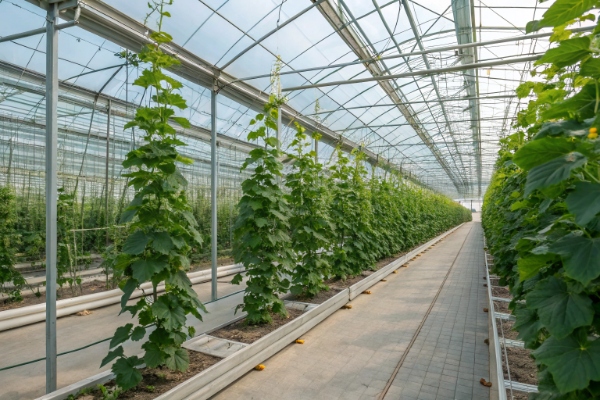
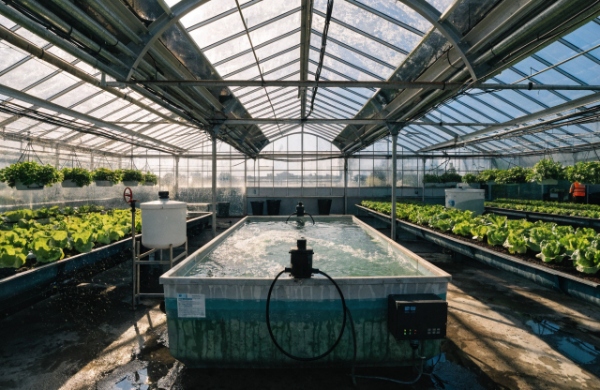
Glass greenhouse maximizing light and climate control.
Dive deeper
The Venlo greenhouse originated in Europe but has been widely adopted in North America for high‑value crops like cucumbers, tomatoes, and peppers. Its rigid structure and segmented design allow growers to zone different climate areas within one greenhouse. This is useful when managing multiple crop cycles or adjusting for microclimate differences due to external weather shifts.
In northern climates, glass provides the best return on energy investment because it allows more sunlight — often the biggest “free energy” input — into the greenhouse. This sunlight not only drives photosynthesis but also helps reduce heating bills in shoulder seasons when outdoor temperatures are moderate.
However, growers must pair glass structures with automated shading, ventilation, and heating systems to manage summer heat spikes and winter cold snaps. Thermostats, CO₂ controllers, and precision humidification systems improve fruit set and reduce disease risk.
Many commercial operators also choose double‑glazed or insulated glass options to reduce winter heat loss and improve energy efficiency. This option increases upfront cost but often pays off through lower operating expenses and more consistent yields.
2. Multi‑Span Polycarbonate Greenhouses
Description: Multiple connected greenhouse modules covered with rigid polycarbonate panels that diffuse light and provide moderate insulation.
Best for: Medium‑scale commercial growers in moderate climates (e.g., Pacific Northwest, parts of the Midwest).
Why it works:
- Good light diffusion for even plant growth.
- Better insulation than film, reducing heating costs.
- Lower upfront cost than glass with decent durability.
- Simplifies annual maintenance.
Challenges:
- Light transmission lower than glass.
- May require supplemental lighting in winter.
- Not as durable as glass in extreme weather.
When it’s best:
For growers in moderate climates where winter temperatures do not drop severely and heating costs are a concern.
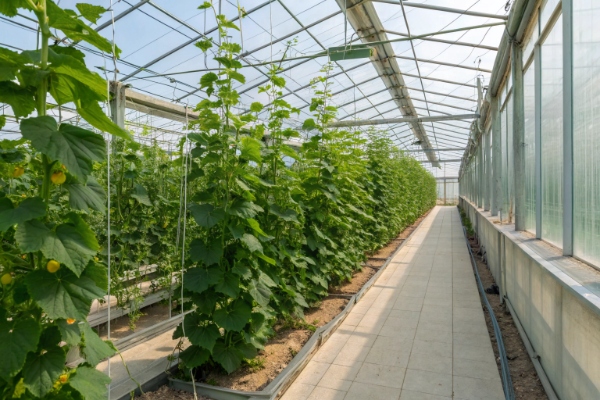
Polycarbonate greenhouse delivering even light diffusion.
Dive deeper
Polycarbonate panels scatter light rather than allow direct beams, creating a diffused lighting environment that many growers find beneficial for leafy vines like cucumbers. Diffused light ensures that lower leaves and interior parts of the plant receive light, reducing shading stress and improving overall canopy photosynthesis.
This type of greenhouse also performs better than simple film structures in terms of insulation. In locations where nights cool down but not excessively, a well‑insulated polycarbonate greenhouse retains heat better, reducing the frequency and intensity of supplemental heating.
Another advantage is weather resilience. Polycarbonate panels are impact resistant, which is important in areas subject to hail or wind stress. For growers dealing with unpredictable spring or fall storms, polycarbonate is often more cost‑efficient in repairs than glass.
When choosing polycarbonate, growers often combine it with ridge and panel ventilation, automated fans, and roll‑up sidewalls to manage both high summer heat and winter cold. These combinations help balance cooling needs and energy efficiency.
3. Multi‑Span Film Greenhouses (Double Film)
Description: Greenhouses covered with UV‑stabilized polyethylene film — often in two layers with an air bubble in between to increase insulation.
Best for: Entry‑level commercial operations or growers in sunny, mild regions (e.g., parts of California, southern Texas, Baja California).
Why it works:
- Lowest upfront investment among commercial greenhouse types.
- Double film provides decent insulation for moderate climates.
- Easy to repair or replace film.
Challenges:
- Film materials degrade faster than rigid panels or glass.
- Lower light transmission and insulation than polycarbonate or glass.
- Less effective in colder climates or areas with high wind and storms.
When it’s best:
For growers with budget constraints in sunny regions, where heating costs are minimal and light abundance compensates for lower transmission quality.
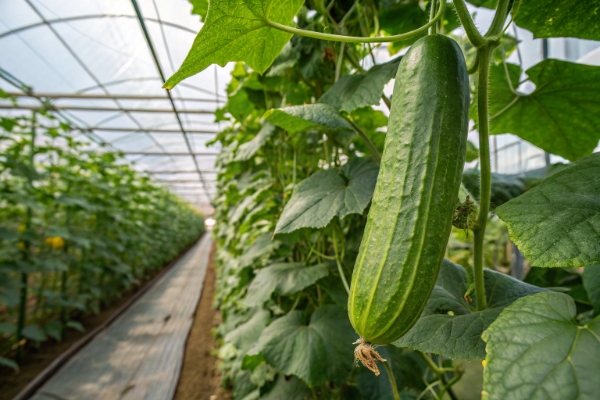
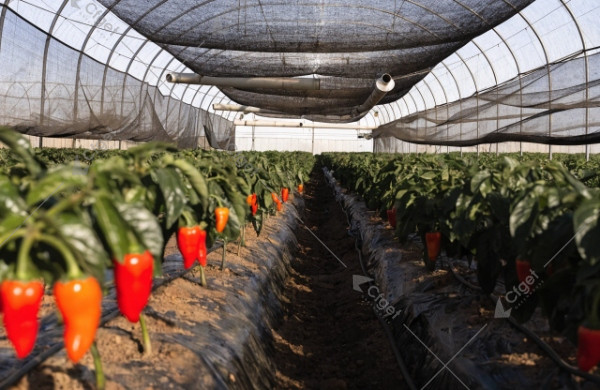
Film greenhouse greenhouse option with double film.
Dive deeper
Double‑layer film greenhouses create an insulating air pocket that reduces heat loss and improves thermal stability. The polyethylene film also diffuses some incoming light, which can help minimize hot spots and uneven growth.
In extremely sunny regions, film greenhouses can outperform rigid panel structures because the light intensity is already high, and the crop does not rely on maximum light transmission in winter.
However, growers must manage film lifespans. Film covers degrade over time, losing strength and clarity. UV‑stabilized films help extend lifespan, but frequent replacements are still part of the long‑term operating cost. In high‑wind regions, growers also need robust anchoring systems and frame strength to prevent damage.
Film structures are usually paired with passive ventilation (ridge vents, side vents) and roll‑up walls. For cucumber production, these ventilation strategies help manage humidity, but additional cooling systems may be necessary in extreme summer heat.
Climate control and disease management in cucumber greenhouses
Choosing structure is one piece of the puzzle; climate control is another.
Cucumbers are susceptible to diseases such as powdery mildew and botrytis, which thrive in high humidity and stagnant air. Controlling humidity, maintaining stable temperature, and providing consistent airflow are critical for a successful crop.
High‑quality ventilation, automated cooling, and real‑time monitoring systems are not optional for commercial cucumbers — they are essential.
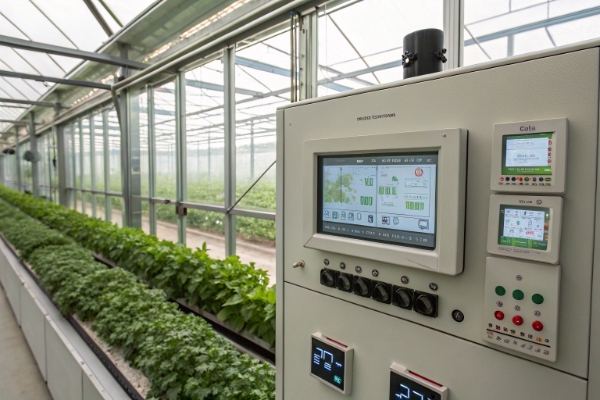
Climate control systems help maintain ideal conditions.
Dive deeper
Automated systems that integrate sensors for temperature, humidity, and CO₂ allow growers to respond quickly to environmental changes. Variable speed fans, roof vents, and shade screens help manage heat during summer months. In cooler periods, insulated doors, night curtains, and energy screens retain warmth and reduce heating bills.
Disease management is often tied to airflow. Poor circulation creates microclimates with higher humidity — perfect conditions for fungal spores to take hold. A well‑designed greenhouse promotes continuous airflow at all canopy levels.
How to choose your greenhouse type: a decision framework
Choosing the best greenhouse for cucumbers in North America should follow a clear decision process:
- Assess your climate zone — cold, moderate, or warm.
- Define your production goals — year‑round vs seasonal.
- Measure your budget — consider CAPEX and long‑term OPEX.
- Check your energy costs — heating vs cooling balance.
- Match structure with crop needs — light, humidity, airflow.
- Plan for automation and control systems.
Using this process, many growers decide that glass greenhouses make sense in colder climates, polycarbonate suits moderate zones, and film works well in sunny, mild areas with low heating demands.
Conclusion
Commercial cucumber production in North America demands careful greenhouse selection. Venlo glass greenhouses provide superior year‑round control but come at higher cost. Polycarbonate greenhouses balance cost and performance in moderate climates, while film greenhouses offer affordable entry points in sunnier areas.
The right greenhouse aligns with climate, budget, and production goals, ensuring cucumbers grow consistently and profitably.
External References (Authority Sources)
-
FAO – Food and Agriculture Organization of the United Nations (Climate and Heat Stress)
https://www.fao.org/climate-change/en/ -
Wageningen University & Research – Greenhouse Horticulture
https://www.wur.nl/en/research-results/research-institutes/plant-research/greenhouse-horticulture.htm -
University of Florida IFAS Extension – Fan and Pad Evaporative Cooling Systems
https://edis.ifas.ufl.edu/publication/AE069 -
USDA Economic Research Service – Controlled Environment Agriculture Trends
https://www.ers.usda.gov/data-products/charts-of-note/chart-detail?chartId=109422
Internal References (CFGET)
-
Commercial Greenhouse Systems
https://cfgreenway.com/greenhouse/ -
Smart Auto & Control Solutions
https://cfgreenway.com/solutions/smart-auto-control/
Internal Blog References (Related CFGET Articles)
-
Polycarbonate Greenhouse Systems
https://cfgreenway.com/polycarbonate/ -
Venlo Glass Greenhouse Design
https://cfgreenway.com/venlo/ -
Semi-Closed Greenhouse Systems
https://cfgreenway.com/semi-closed/ -
Retractable Roof Greenhouses
https://cfgreenway.com/retractableroof/