Skip to content
Dutch strawberry margins can disappear fast. Energy costs rise, fruit softens, and Botrytis spreads. If I choose the wrong structure, I pay every week in losses.
In the Netherlands, the best commercial strawberry greenhouse is usually a high-light glass house (often Venlo-style) for premium, year-round programs, or a well-designed polytunnel/high-tunnel system for cost-first production. I decide based on light, humidity control, labor flow, and my target market window.
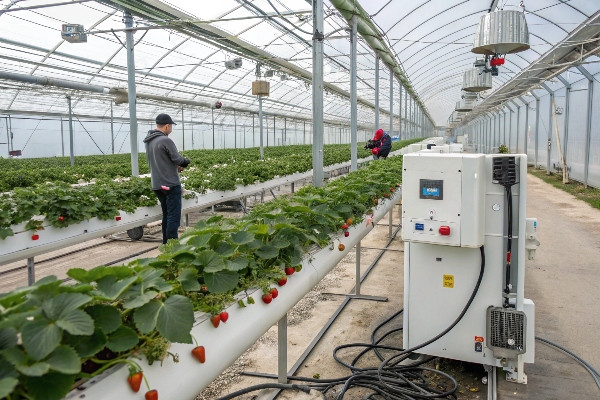
I do not start with “greenhouse type.” I start with the Dutch reality: protected cultivation is already the main engine of output. Statistics Netherlands (CBS)<1> reports that in 2024, strawberries grown in greenhouses and tunnels accounted for three-quarters of the total Dutch strawberry harvest, and the area under glass and tunnels reached 602 hectares. That tells me one thing: my structure choice must support stable, repeatable production.
So my goal is simple. I build a system that holds fruit quality under low light, high humidity, and tight labor schedules. Then I push yield without pushing disease.
Which greenhouse type wins in the Netherlands for strawberries: Venlo glass, polytunnel, or multi-span film?
If I pick only by CAPEX, I regret it later. If I pick only by technology, my payback can get too long.
For Dutch commercial strawberries, Venlo glass often wins for premium programs that need winter light and tight climate control, while polytunnels/high tunnels win for lower-cost seasonal peaks. Multi-span film can work, but only if ventilation and humidity control are engineered like a “real greenhouse.”
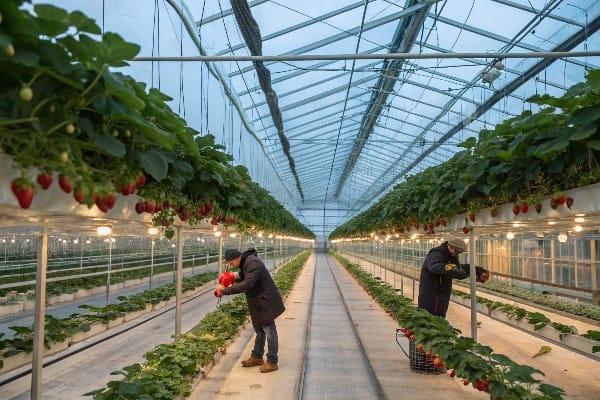
How I compare the three options (my real checklist)
I use four criteria that decide yield and pack-out:
1) Winter light capture
Dutch winters are dark. If I want steady winter harvest, glass with good transmission and clean geometry matters. I take inspiration from Dutch greenhouse research that shows how light improvements can drive performance. I also look at lighting as a tool, because Wageningen University & Research (LED strawberry study)<2> and ISHS Acta Horticulturae (LED strawberry paper)<3> describe positive yield and quality effects from LED strategies in Dutch greenhouse contexts.
2) Night humidity and condensation control
If my structure traps humidity, Botrytis finds me. I design for dew control, airflow, and fast purge.
3) Labor flow and harvest logistics
Strawberries are labor-heavy. I need straight lanes, clean picking flow, fast cooling access, and simple hygiene zones.
4) Energy profile and risk
If I cannot afford the energy plan, the structure is not “best.” It is a trap.
My structure decision table (Dutch grower view)
| Option | Best use case | Strength | Main risk |
|---|---|---|---|
| Venlo glass (high-light) | year-round premium programs | top light + tight control | higher CAPEX + energy planning needed |
| Polytunnel / high tunnel | seasonal peak supply | low CAPEX, fast build | humidity spikes, softer fruit if unmanaged |
| Multi-span film (engineered) | mid-cost scale-up | big area, flexible systems | weak vent design can cause constant disease |
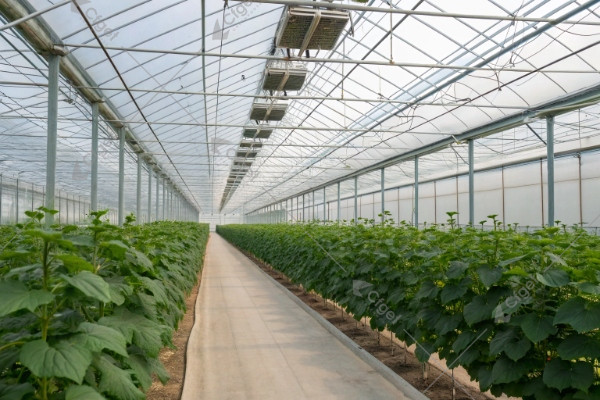
If I target supermarkets with strict specs, I lean to glass. If I target short seasonal windows and lower capital, I lean to tunnels. If I want scale on a budget, I only choose film when ventilation and airflow are designed properly.
For CFGET structure options I reference internally:
What climate settings matter most for Dutch strawberries, and how do I prevent Botrytis without killing growth?
Botrytis is the silent profit killer. It starts in flowers, then it shows up in fruit when sugar rises. Many growers react too late.
I prevent Botrytis by managing free moisture and canopy wetness time, not by chasing one RH number. I use airflow, spacing, sanitation, and a dew-risk routine that keeps flowers and fruit dry.
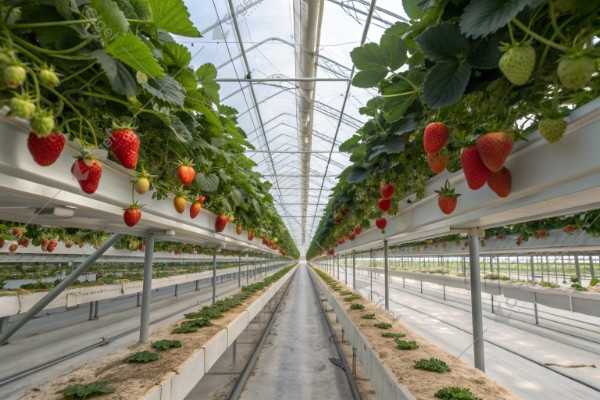
What the disease guides remind me (and why it matters)
UC IPM Botrytis fruit rot in strawberry<4> explains that Botrytis can infect flowers when spores land and free water is present, and infections can stay dormant and then resume later when conditions become favorable. This is exactly why I treat humidity control as “daily discipline,” not an emergency action.
In greenhouse environments, the risk is even clearer. Penn State Extension (Managing Botrytis in the greenhouse)<5> notes that infection is encouraged by free moisture on tissues for long periods, high relative humidity in the canopy, and cool temperatures. It also points out how condensation can drip from glazing onto plants and create perfect infection conditions.
My Dutch-style Botrytis control stack
I use a layered approach:
1) Night moisture routine
- I purge moisture before the house “wets up.”
- I keep air moving across the canopy.
- I use small heat + vent steps to protect dew point margin.
A practical humidity-control reference from government extension explains the link between humidity, dew point, and condensation risk in protected crop settings. Government of British Columbia (Understanding Humidity Control PDF)<6>
2) Canopy and hygiene discipline
- I remove dead tissue fast.
- I keep pick lanes clean.
- I avoid working in wet canopies.
3) Variety and fruit exposure choices
I prefer plant habits that keep fruit dry and exposed to airflow.
My “humidity problem” troubleshooting table
| Symptom I see | Likely cause | First fix I apply |
|---|---|---|
| mold under calyx | fruit stays wet | increase airflow + reduce wetness hours |
| gray fuzz after cool nights | dew/condensation | earlier purge + small heat support |
| hotspots in corners | stagnant air | fan placement and blocked flow check |
| soft fruit + rot in packs | slow cooling | faster cold chain and sorting discipline |
When I do these basics well, my fungicide dependency drops and my pack-out stabilizes.
For CFGET climate system references I use internally:
Should I use supplemental LED lighting for Dutch greenhouse strawberries, and what yield levers actually pay back?
Lighting is expensive, and mistakes are expensive too. If I add LEDs without a plan, my costs explode.
I use LEDs when my business model needs winter volume, consistent Brix, and stable flowering. I focus on return levers: uniformity, fruit quality, and production timing, not only total grams.
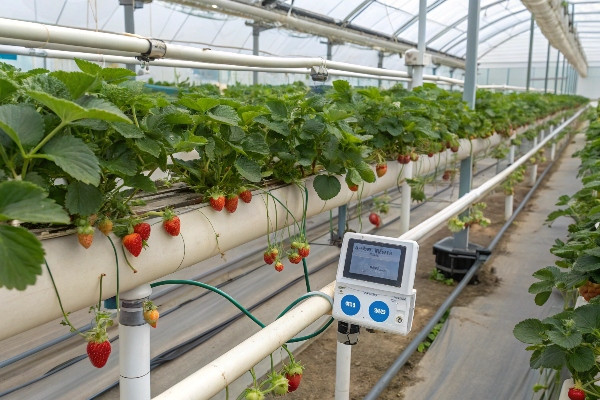
What research tells me (in plain terms)
Wageningen work has shown that LED strategies can improve strawberry quality and production in greenhouse contexts. Wageningen University & Research (LED Light to improve Strawberry Flavour, Quality and Production)<2> and the related peer-reviewed summary page ISHS Acta Horticulturae (1137_29)<3> describe positive effects on production and quality parameters under different LED treatments.
I also track applied trials because they reflect commercial reality. A trial announcement connected with Wageningen reports strong yields in a winter program and highlights irrigation, climate, and lighting learning points. Grodan news release on WUR strawberry trial<7>
My ROI-first lighting checklist
I do not start with “µmol.” I start with these questions:
- Do I sell into a window where winter price is high enough?
- Can I keep humidity stable when lights add heat and transpiration?
- Can my labor and packing line handle the extra volume?
- Can I manage pollination and fruit set under my light regime?
The three yield levers I use before “more light”
1) Uniformity
Poor uniformity is hidden loss. I use reflective surfaces, spacing, and consistent irrigation.
2) Root zone stability
If my EC swings, fruit quality swings. I keep substrate moisture stable and avoid late-day oversaturation.
3) Fast cold chain
Strawberries lose value fast after harvest. Cooling is a profit tool.
If those are stable, then LEDs can push my program to the next level.
For CFGET system references:
How do I boost yield per square meter in Dutch strawberry greenhouses without sacrificing shelf life?
Many growers chase yield, then quality drops. Retail rejects increase. The business gets weaker even with “more kilos.”
I boost yield by protecting fruit firmness and reducing disease pressure. My core actions are: stable climate, correct irrigation timing, clean harvest flow, and consistent plant balance through the season.

My practical yield system (grower-facing)
I run yield as a system:
1) Climate control that protects fruit
- I avoid long wet nights.
- I keep airflow constant.
- I limit condensation events.
This is why tunnels need strong ventilation habits. High tunnel guidance often stresses that ventilation is key for managing humidity and disease in protected systems. Penn State Extension (High Tunnel Production)<8> also highlights ventilation as critical for avoiding extreme temperature swings and lowering humidity inside tunnels.
2) Ventilation after irrigation
Moisture after irrigation is often a hidden trigger. A regional production guide also reminds that ventilation is necessary after irrigation to exchange warm, damp air with fresh air in tunnel systems. NC State Extension (Strawberry plasticulture guide)<9>
3) Disease and sanitation that match the crop
Botrytis and other diseases punish lazy hygiene. I remove infected fruit and dead tissue daily. I train staff to spot early problems and isolate hotspots.
4) Harvest and cooling discipline
I pick carefully, and I cool fast. If my cold chain is slow, my shelf life collapses.
My “yield vs shelf life” management table
| Grower action | Yield effect | Shelf-life effect | Why it works |
|---|---|---|---|
| stable night humidity routine | + | + | less mold pressure |
| stop late irrigation earlier | + | + | less wet fruit and calyx rot |
| constant airflow in canopy | + | + | faster drying, better fruit firmness |
| faster cooling after harvest | 0 to + | +++ | slows rot and softening |
| strict sanitation | + | +++ | lowers inoculum and spread |
When I do these consistently, my pack-out improves. Then my yield per m² is real yield, not waste.
For CFGET best-practice references:
- https://cfgreenway.com/best-greenhouse-practices-for-commercial-strawberry-production-grower-strategies-to-maximize-yield/
- https://cfgreenway.com/mastering-strawberry-greenhouse-cultivation-best-practices-for-optimal-growth/
Conclusion
In the Netherlands, I choose Venlo glass for premium year-round strawberries and tunnels for cost-first seasonal supply. Then I win with dew-risk control, airflow, sanitation, and fast cooling. Yield only counts when shelf life stays strong.
External Links Footnotes (Authority Sources)
1> https://www.cbs.nl/en-gb/news/2025/32/strawberry-harvest-doubles-in-15-years-despite-smaller-cultivated-area
<2> https://research.wur.nl/en/publications/led-light-to-improve-strawberry-flavour-quality-and-production
<3> https://www.actahort.org/books/1137/1137_29.htm
<4> https://ipm.ucanr.edu/agriculture/strawberry/botrytis-fruit-rot/
<5> https://extension.psu.edu/managing-botrytis-or-gray-mold-in-the-greenhouse
<6> https://www2.gov.bc.ca/assets/gov/farming-natural-resources-and-industry/agriculture-and-seafood/animal-and-crops/crop-production/understanding_humidity_control.pdf
<7> https://www.grodan.com/global/about/news/breaking-boundaries-continual-strawberry-yields-defy-winter-dormancy-in-ground-breaking-trial-by-grodan-and-fluence-at-wageningen-university–research/
<8> https://extension.psu.edu/high-tunnel-production/
<9> https://content.ces.ncsu.edu/southern-regional-strawberry-plasticulture-production-guide
—
## Internal References (CFGET)
– **CFGET Homepage**
– **Venlo Greenhouse**
– **Multi-span Film Greenhouse**
– **Humidity Solutions**
– **Temperature Solutions**
– **Lighting Solutions**
https://cfgreenway.com/solutions/lighting/
– **Irrigation Solutions**
https://cfgreenway.com/solutions/irrigation/
– **Strawberry Case (Cold Climate Project Example)**
https://cfgreenway.com/cases/slug/almaty-kazakhstan-greenhouse-project/
—
## Internal Blog References (Related CFGET Articles)
– **Best Greenhouse Practices for Commercial Strawberry Production: Grower Strategies for Higher Yield**
Best Greenhouse Practices for Commercial Strawberry Production: Grower Strategies to Maximize Yield
– **Mastering Strawberry Greenhouse Cultivation: Best Practices for Optimal Growth?**
Mastering Strawberry Greenhouse Cultivation: Best Practices for Optimal Growth?
– **How to Choose the Right Strawberry Greenhouse Manufacturer for Your Business?**
How to Choose the Right Strawberry Greenhouse Manufacturer for Your Business?
– **Commercial Greenhouse Types: Complete Guide to 20+ Designs from Basic to High-Tech**
https://cfgreenway.com/commercial-greenhouse-types-complete-guide-to-20-designs-from-basic-to-high-tech/