Skip to content
Roses can look perfect, but profits can collapse fast when heat spikes, humidity traps, and pests slip in. I lose money through lower grades, rejected loads, and weak vase life.
In Kenya’s rose belt, I win by matching greenhouse structure to local wind and rain, then controlling humidity, pests, and fertigation as one system. That is how I protect Grade-A stems, reduce Botrytis risk, and stay ready for strict export checks.
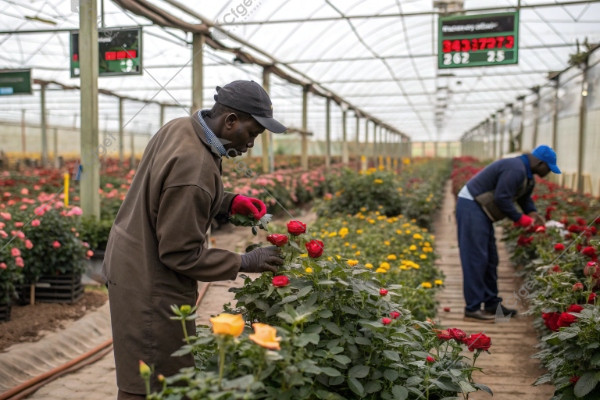
If I treat my greenhouse like “just a structure,” I pay for it every week. In Kenya, my greenhouse is my risk-control tool. I design it to handle hot days, rainy nights, and high pest pressure. Then I run it with simple rules that my team can follow.
Which greenhouse type fits Kenya rose production best: Sawtooth, multi-span film, or Venlo?
A wrong structure makes me fight heat and humidity every day. I get uneven growth, soft stems, and more disease pressure.
For Kenya rose farms, I choose the structure by wind, rainfall patterns, and the level of climate precision I need. A strong multi-span film house is often the best cost-to-control option, while Sawtooth improves natural airflow in hot conditions, and Venlo fits premium control models.
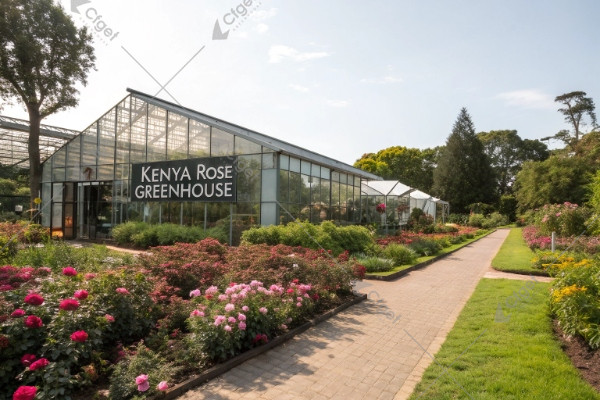
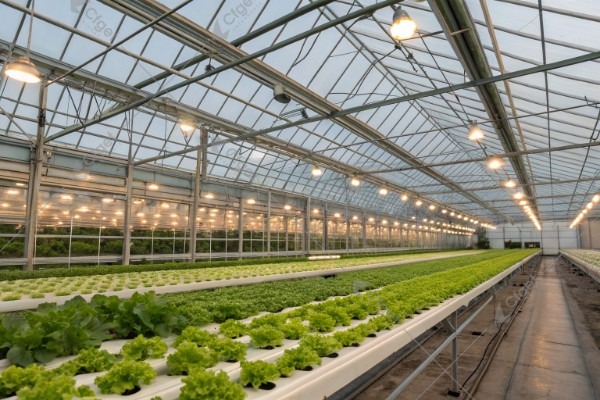
I start with airflow. If my site has steady wind and I want low energy cooling, I look at Sawtooth Greenhouse as the base structure. The roof shape helps hot air escape and reduces stagnant zones. If I need a large continuous block for operations, I often choose Multi-span Film Greenhouse because it is cost-effective and easy to expand. If I am chasing the highest consistency and I am ready for more investment and tighter management, I consider Venlo Greenhouse for stable light and control.
Then I match structure to my export reality. If EU compliance pressure is high, physical exclusion matters. I build around clean entry, sealed gaps, and screened vents using Pest Barriers. That single decision reduces how much I “need” to spray, and it also reduces surprises during inspection routines.
Here is how I decide fast:
| Decision factor | Best fit (most common) | Why it works for Kenya roses |
|---|---|---|
| High heat + good wind | Sawtooth | Strong passive ventilation, lower cooling cost |
| Cost control + scale | Multi-span film | Great ROI, large blocks, flexible upgrades |
| Premium consistency | Venlo | Strong light management, better precision potential |
| High pest pressure | Any type + sealing | Physical exclusion supports IPM and compliance |
My rule is simple: I do not buy “a greenhouse.” I buy airflow + exclusion + manageability.
How do I control humidity and Botrytis risk during rainy nights without killing growth?
High humidity feels harmless until it becomes condensation. Then Botrytis pressure climbs, petals mark, and vase life drops.
I control Botrytis risk by preventing condensation, not by chasing a perfect RH number. I ventilate and heat in short, planned steps, keep air moving through the canopy, and remove dead tissue fast so spores have less to attack.
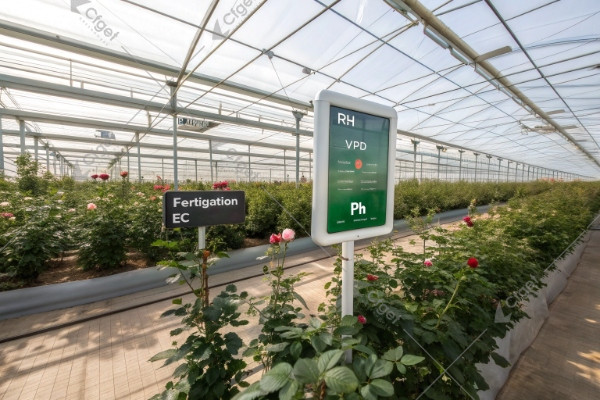
I follow three practical rules that my team can execute every day.
Rule 1: No wet leaves at night. Condensation is the real trigger. When nights cool fast, RH can rise and water forms on leaves and petals. University greenhouse guidance explains why humid air and condensation raise disease risk, and why ventilation matters. UConn IPM guidance on reducing greenhouse humidity<1> and Cornell greenhouse disease notes on Botrytis<2> both point to the same idea: prevent condensation and keep sanitation strict.
Rule 2: Airflow is not optional. I use horizontal airflow fans to break boundary layers and stop “cold wet corners.” I also manage vent opening in a controlled way. Even small changes in minimum vent opening can reduce peak humidity, which matters for disease risk.
Rule 3: Sanitation is a climate tool. Botrytis loves dead petals and old leaves. If I leave debris, I create a spore factory. So I treat sanitation like irrigation: it is scheduled, not “when we have time.”
I also respect that rose quality is linked to humidity. Research shows that very high humidity can reduce keeping quality and raise defects like bent neck. ISHS research on high air humidity and cut rose keeping quality<3> is a useful reminder that humidity is not just a disease issue. It is also a market quality issue.
A simple night routine that works:
| Time window | What I do | Why it helps |
|---|---|---|
| Late afternoon | Reduce late heavy irrigation | Less free moisture overnight |
| Sunset to night | Short vent “pulses” + airflow fans | Push moist air out, reduce condensation risk |
| Coolest hours | Avoid over-closing vents | Prevent trapped humidity and wet leaves |
| Morning | Water early, dry canopy | Leaves dry before night cooling |
When I do this well, I see fewer petal marks, stronger stems, and fewer surprise disease spikes after rainy periods.
How do I meet EU-style pest pressure and False Codling Moth rules with greenhouse design, not just chemicals?
Export rules can change my business overnight. One pest interception can mean inspections, delays, and lost value.
I protect export readiness by designing a “systems approach” inside the greenhouse: physical exclusion, clean entry, monitoring, and disciplined routines. This reduces pest pressure before I even think about sprays.
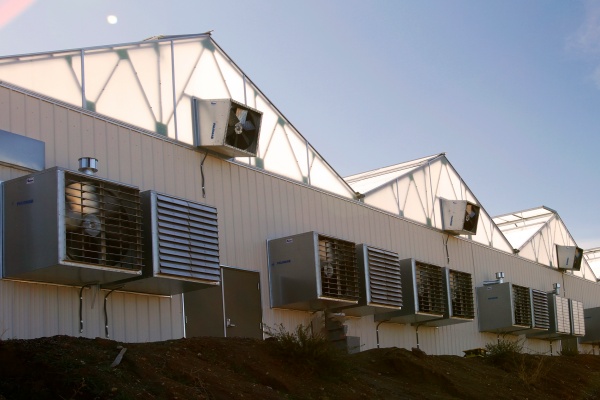
If I grow roses for strict markets, I cannot rely on reaction sprays. I must reduce pest entry and breeding space. Kenya’s plant health authority explains why the False Codling Moth (FCM) has become a major focus for rose exports and how inspections increased over time. I use KEPHIS guidance on EU regulations and rose exports<4> as a reality check for what “export-ready” means in practice.
My greenhouse actions are practical:
- Sealed perimeter: I block gaps where moths and thrips enter.
- Screened vents: I use insect netting sized for the pest risk, and I maintain it.
- Clean entry flow: I use a double-door or air curtain concept when traffic is high.
- Monitoring: I place traps and record trends, not stories.
- Crop hygiene: I remove waste fast so pests have less habitat.
This is why I like to integrate Pest Barriers into the base design, not as an afterthought. If the greenhouse is “leaky,” my labor and chemical costs never stop rising.
I also align operations with recognized market expectations. Kenya’s industry standard system and benchmarking references help me understand what buyers care about. The Kenya Flower Council compliance framework<5> is a good reference point because it connects production practices to market access.
My simple export rule: if my greenhouse is easy to clean, easy to seal, and easy to monitor, then my compliance work becomes repeatable.
How do I increase Grade-A stem yield per m² in Kenya without pushing soft growth?
If I push nitrogen and water too hard, I get fast growth but weaker stems and more disease risk. If I play too safe, I lose volume.
I raise Grade-A stems by keeping climate and fertigation stable, then using light, VPD, and pruning rules to push strength, not softness. I aim for steady growth, clean buds, and predictable harvest timing.
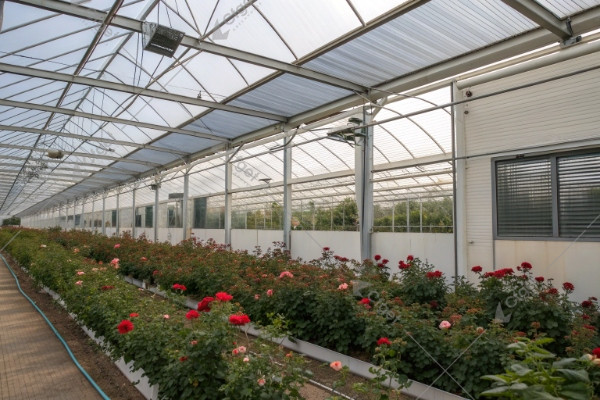
I focus on “stability first.” Roses reward consistency. When temperature and humidity swing hard, stems vary in thickness and length, and bud uniformity drops.
I use VPD thinking because it connects humidity to plant function. A university greenhouse cooling resource explains VPD in simple terms and why it matters for transpiration and nutrient flow. University of Arkansas greenhouse cooling and VPD basics<6> helps my team understand why “too wet air” slows transpiration and can cause weak movement of water and nutrients.
Then I tune fertigation for strength. I do not chase a single “magic EC.” I watch drain trends and adjust. In practice, I run short pulses during the day, then protect the root zone from saturation at night. I also schedule leaf removal and pruning to keep a productive canopy that still allows airflow.
I also think about postharvest before I cut. Research links preharvest climate to vase life and quality. ISHS research on postharvest quality related to preharvest conditions<7> reinforces my main belief: if I run a sloppy climate, I pay for it later in the cold chain.
A weekly performance checklist I use:
| Target outcome | What I watch | What I change first |
|---|---|---|
| Longer stems | Light + temperature stability | Shade timing, vent staging |
| Stronger stems | VPD stability, no wet nights | airflow, night vent pulses |
| Clean buds | pest pressure trends | exclusion, monitoring, hygiene |
| Better vase life | humidity peaks + leaf wetness | dew point control, sanitation |
When heat pressure is high, I also lean on proven cooling logic. I review Tropical Greenhouse Cooling Systems to choose the right sequence: reduce load, ventilate hard, then add active cooling only when it truly works.
Conclusion
I grow Grade-A Kenya roses by designing for airflow and exclusion first, then running humidity, pests, and fertigation as one routine. That keeps stems uniform, disease lower, and export readiness realistic.
External References (Authority Links)
1> UConn Integrated Pest Management – Reduce Greenhouse Humidity
https://ipm.cahnr.uconn.edu/reduce-greenhouse-humidity/
<2> Cornell Greenhouse Horticulture – Disease Guidelines (Botrytis supplemental information)
<3> International Society for Horticultural Science (ISHS) – High Air Humidity Reduces the Keeping Quality of Cut Roses
https://www.ishs.org/ishs-article/405_18
<4> Kenya Plant Health Inspectorate Service (KEPHIS) – EU Regulations on Rose Exports and FCM Systems Approach
https://www.kephis.go.ke/kenya-takes-bold-steps-address-european-union-eu-regulations-rose-exports
<5> Kenya Flower Council – Compliance and Sustainability Standard overview
https://kenyaflowercouncil.org/index.php/component/content/article/34-what-we-do/69-compliance
<6> University of Arkansas – Greenhouse Cooling Systems and VPD Explanation
https://greenhouse.hosted.uark.edu/Unit06/Section02.html
<7> ISHS Acta Horticulturae – Postharvest Quality of Roses Related to Preharvest Conditions
https://www.actahort.org/books/669/669_33.htm
## Internal Blog References (Related CFGET Articles)
– **Best Greenhouse Setup for Commercial Rose Production in Kenya: Increase Grade-A Stems and Meet EU Rules**
– **Sawtooth Greenhouses: Zero-Energy Natural Ventilation for Tropical Growing**
Sawtooth Greenhouses: Beat the Heat with Zero-Cost Natural Ventilation?
– **Tropical Greenhouse Cooling Systems: Complete Guide to Hot Climate Agriculture**
Tropical Greenhouse Cooling Systems: Complete Guide to Hot Climate Agriculture
– **How to Set Up a Commercial Greenhouse: Essential Guide for Growers & Businesses**
How to Set Up a Commercial Greenhouse: Essential Guide for Growers & Businesses?
– **How Much Does It Cost to Build a Smart Greenhouse? What Are the Hidden Costs?**
How Much Does It Cost to Build a Smart Greenhouse? What Are the Hidden Costs?
– **Pest Barriers: Insect Netting, Sealing, and Air-Curtain Options**
https://cfgreenway.com/solutions/pest-barriers/