Many blueberry greenhouse projects start with high expectations. Then uneven flowering, soft fruit, and rising operating costs appear. The structure looks fine, but results fall short.
For commercial blueberry production in the United States, the best greenhouse type is usually a high-roof multi-span greenhouse or a Venlo-style glass greenhouse, chosen based on climate zone, production timing goals, and how precisely the grower needs to control temperature, humidity, and root conditions.
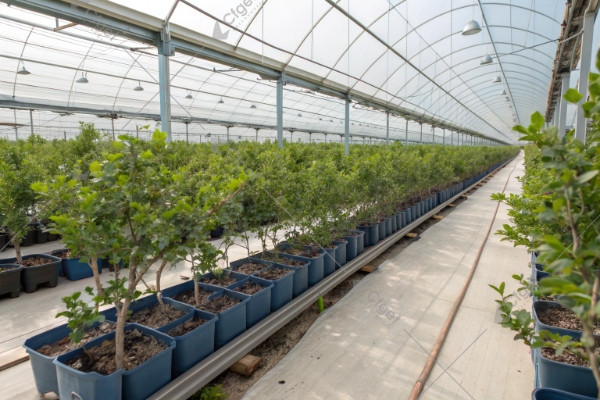
Blueberry greenhouses focus on uniform flowering and fruit firmness.
I write this from a system-level evaluation view. The United States is one of the world’s largest blueberry producers, with major production in California, Florida, Georgia, Michigan, Oregon, and Washington. Greenhouse and protected cultivation are increasingly used to extend seasons, protect fruit quality, and stabilize supply for fresh markets. That context defines what “best greenhouse type” really means.
Why do blueberries require a different greenhouse strategy than vegetables?
Blueberries behave very differently from vegetables.
Blueberries are perennial plants with shallow, sensitive root systems and strong responses to temperature and humidity during flowering and fruit development.
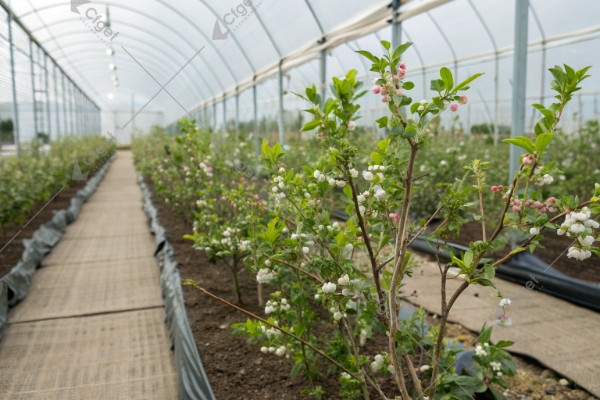
Flowering stability determines final yield.
Dive deeper
Unlike tomatoes or cucumbers, blueberries are woody perennials. They respond to cumulative stress over time. Heat spikes, poor ventilation, or root-zone temperature swings may not show immediate damage, but they reduce fruit size, firmness, and shelf life.
Research and production guidance summarized by Wageningen University & Research – Greenhouse Horticulture emphasizes that perennial fruit crops require long-term climate stability rather than short-term peak performance.
Humidity is another critical factor. High humidity during flowering increases disease risk and reduces pollination efficiency. Blueberries rely heavily on good airflow to maintain healthy flowers and fruit set. This makes greenhouse type selection especially sensitive to ventilation design and internal air movement.
Which greenhouse types are used for commercial blueberries in the United States?
The market has narrowed the options.
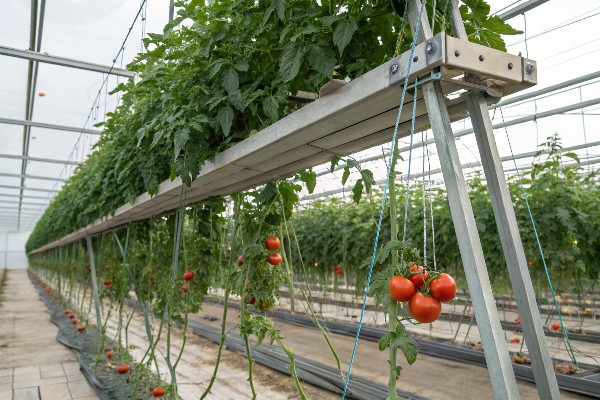
Commercial blueberries in the United States are mainly grown in high-roof multi-span greenhouses, with Venlo glass greenhouses used in premium or research-driven projects.
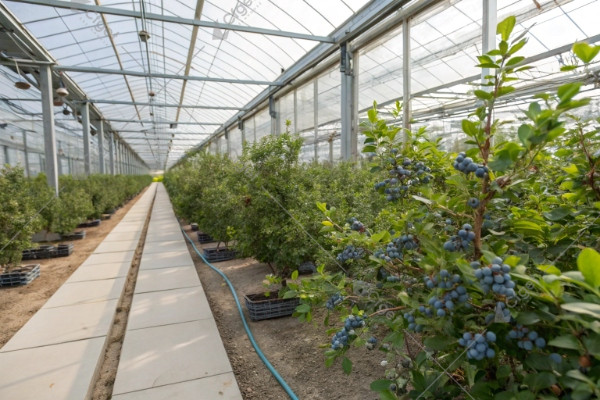
High-roof structures support airflow and pollination.
Dive deeper
Single tunnels are sometimes used for seasonal protection, but they struggle with airflow and pollination efficiency at scale. Blueberries benefit from open internal volume and strong air exchange. High-roof multi-span greenhouses provide:
- better airflow and temperature buffering
- space for pollinators or mechanical pollination systems
- more uniform climate across rows
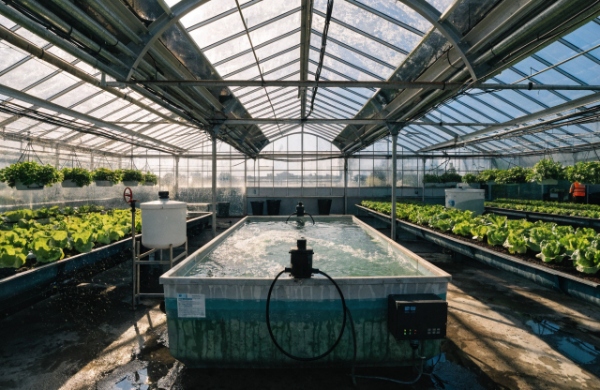
Venlo glass greenhouses are chosen when the project targets early or extended-season premium markets. Glass offers high light transmission and precise climate control, which supports early flowering and fruit development. However, CAPEX and operational complexity are higher.
Polycarbonate structures appear in regions with hail risk or colder winters, but for blueberries, ventilation capacity usually outweighs insulation needs.
CFGET’s platform pages reflect these structural options:
How does the U.S. climate influence the best greenhouse type for blueberries?
The United States spans many climate zones. This directly shapes greenhouse design.
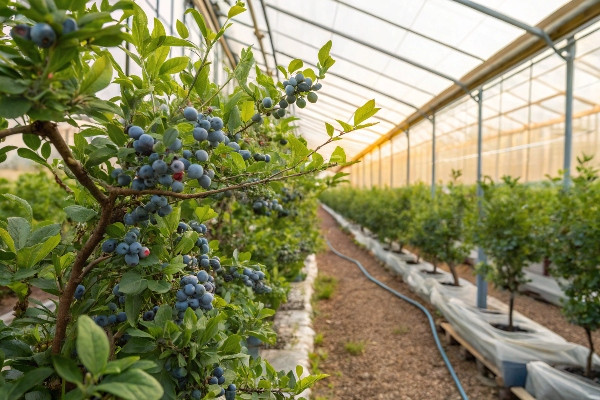
From hot California valleys to humid Southeast regions and cool Northern states, the best greenhouse type for blueberries depends on ventilation and heat management more than insulation alone.
Dive deeper
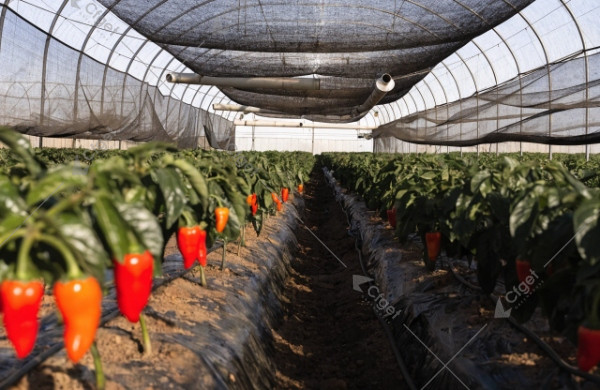
In California and the Southeast, summer heat and humidity dominate risk. Blueberries suffer under prolonged high temperatures, especially during fruit fill. Evaporative cooling helps in dry regions, but loses efficiency in humid zones.
Guidance from University of Florida IFAS Extension explains why evaporative cooling performance drops as humidity rises. This principle applies directly to blueberry greenhouses in Florida and Georgia. In these regions, ventilation-first designs with shading are often more reliable than energy-intensive cooling alone.
In Northern states, winter and early spring production becomes the focus. Here, light transmission and temperature stability matter. Climate variability data from the World Bank Climate Change Knowledge Portal confirms increasing extremes, reinforcing the need to design for peak stress conditions rather than averages.
How important is pollination when choosing a greenhouse type for blueberries?
Pollination is a hidden constraint.
For blueberries, greenhouse type must support effective pollination, whether by bees or alternative systems.
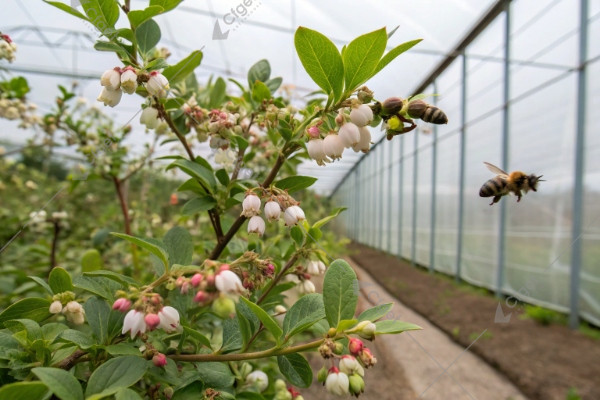
Pollination efficiency affects yield directly.
Dive deeper
Blueberries depend heavily on pollination for fruit set and uniformity. In greenhouses, pollination efficiency can drop if airflow is weak or if temperature and humidity discourage pollinator activity.
High-roof structures with good ventilation create a more stable environment for bees. Tight, low-volume structures often struggle. This is a key reason why many successful blueberry greenhouses favor multi-span designs with generous internal volume.
Research and crop physiology principles summarized by USDA Agricultural Research Service show how environmental conditions influence pollination and fruit development in perennial crops. While not greenhouse-specific, these principles apply directly to protected blueberry systems.
This is a point many SERP-ranking articles miss entirely. They discuss structure and cost, but ignore pollination as a system requirement.
Is high-tech automation necessary for commercial blueberries?
Not always, but precision matters.
Blueberries benefit from stable, well-tuned control systems rather than extreme technological complexity.
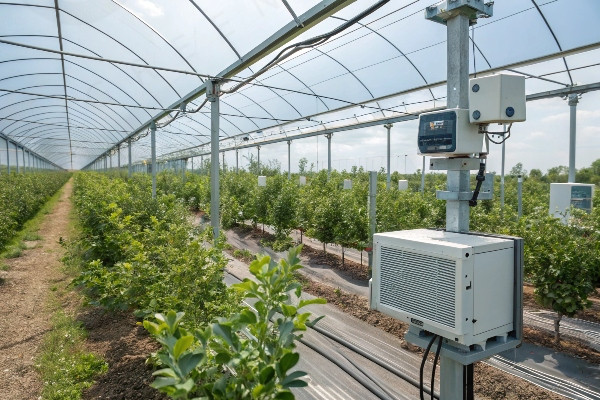
Stability matters more than complexity.
Dive deeper
Blueberries have long production cycles. Overly aggressive climate control can stress plants over time. I prefer systems that:
- maintain moderate, stable temperatures
- prevent humidity buildup
- avoid sharp day–night swings
Energy planning resources from the Cornell University Controlled Environment Agriculture (CEA) Program show that right-sized systems often outperform oversized ones in long-term cost control.
High-tech glass greenhouses make sense for premium early-season programs, but mid-tech multi-span greenhouses with smart ventilation and shading often deliver better ROI for most U.S. blueberry producers.
Solutions like Smart Auto & Control support this approach by stabilizing climate without unnecessary complexity.
How should I evaluate CAPEX, OPEX, and long-term ROI for blueberries?
Blueberries reward patience and stability.
The best greenhouse type for blueberries is the one that delivers consistent fruit quality with predictable operating costs over multiple seasons.
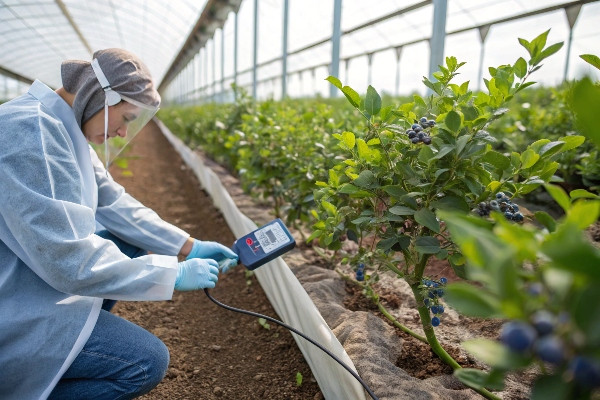
Long-term ROI matters more than short-term yield.
Dive deeper
I evaluate blueberry greenhouses by:
- fruit size and firmness consistency
- shelf life and transport quality
- labor efficiency over multiple years
- energy and water cost stability
Data trends from USDA Economic Research Service highlight the growing importance of operating cost control in controlled environment agriculture.
High-tech glass may reduce variability, but only pays off if the market rewards early or premium fruit. For many growers, high-roof multi-span greenhouses offer a better balance of cost and control.
So what is the best greenhouse type for blueberries in the United States?
The answer depends on realistic goals and constraints.
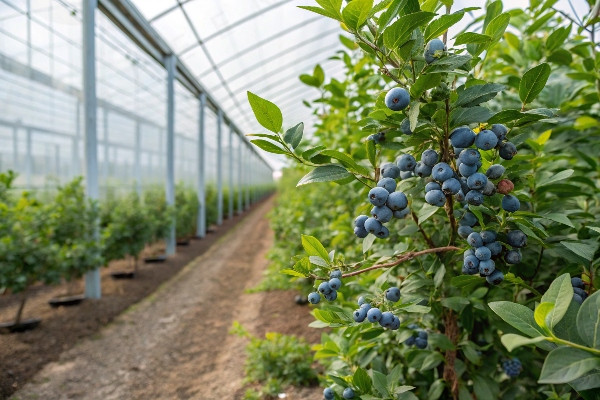
For most commercial blueberry projects in the United States, a high-roof multi-span greenhouse delivers the best balance of airflow, pollination support, and cost control. Venlo glass becomes the best option only for premium, early-season, or research-driven programs.
Dive deeper
I summarize the decision like this:
| Decision factor | If YES | Best greenhouse direction |
|---|---|---|
| Strong pollination requirement | Yes | High-roof multi-span |
| Early or extended season target | Yes | Venlo glass |
| Hot or humid summers | Yes | Ventilation-first multi-span |
| Energy cost sensitivity | Yes | Mid-tech systems |
| Long-term stability focus | Yes | Multi-span over sealed structures |
CFGET’s internal pages help structure next steps:
Conclusion
The best greenhouse type for commercial blueberry production in the United States is the one that supports pollination, stabilizes climate, and protects long-term fruit quality. High-roof multi-span greenhouses usually deliver the strongest balance.
External References (Authority Sources)
-
FAO – Climate Change and Agriculture
https://www.fao.org/climate-change/en/ -
World Bank – Climate Change Knowledge Portal
https://climateknowledgeportal.worldbank.org/ -
Wageningen University & Research – Greenhouse Horticulture
https://www.wur.nl/en/research-results/research-institutes/plant-research/greenhouse-horticulture.htm -
University of Florida IFAS Extension – Fan and Pad Cooling Systems
https://edis.ifas.ufl.edu/publication/AE069 -
Cornell University – Controlled Environment Agriculture Energy Resources
https://cea.cals.cornell.edu/energy/ -
USDA Economic Research Service – Controlled Environment Agriculture Trends
https://www.ers.usda.gov/data-products/charts-of-note/chart-detail?chartId=109422 -
USDA Agricultural Research Service
https://www.ars.usda.gov/
Internal References (CFGET)
-
Commercial Greenhouse Systems
https://cfgreenway.com/greenhouse/ -
Venlo Greenhouse
https://cfgreenway.com/venlo/ -
Polycarbonate Greenhouse Systems
https://cfgreenway.com/polycarbonate/ -
Smart Auto & Control Solutions
https://cfgreenway.com/solutions/smart-auto-control/ -
Growing Systems
https://cfgreenway.com/growing-systems/ -
Contact Us
https://cfgreenway.com/contact/
Internal Blog References (Related CFGET Articles)
-
Polycarbonate Greenhouse Systems
https://cfgreenway.com/polycarbonate/ -
Semi-Closed Greenhouse Systems
https://cfgreenway.com/semi-closed/ -
Venlo Glass Greenhouse Design
https://cfgreenway.com/venlo/