Many pepper greenhouses in Spain look advanced on paper. Yet growers still face uneven fruit size, blossom drop during heat waves, and rising energy costs. Profit becomes unstable.
For commercial sweet pepper production in Spain, the best greenhouse type is usually a well-designed multi-span greenhouse (film or PC) or a Venlo-style glass greenhouse for export-focused, year-round programs—chosen by climate load, market demands, and operating cost limits.
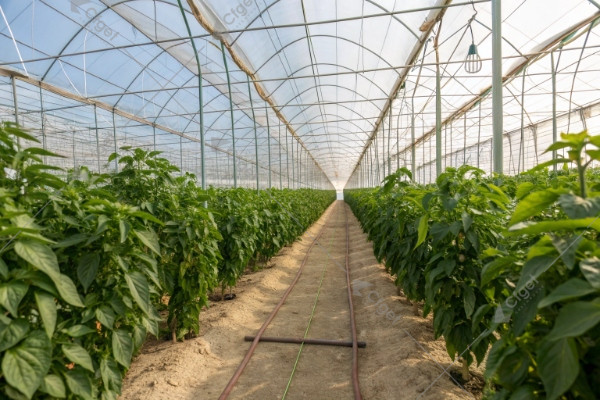
Spanish sweet pepper production relies on climate stability and uniformity.
I write this from a practical project review angle. Spain is one of Europe’s largest sweet pepper producers, especially in Almería and Murcia. Production serves both domestic and export markets. That mix makes greenhouse selection a business decision, not a trend decision.
Why do sweet peppers need a different greenhouse strategy?
Sweet peppers are sensitive during flowering and fruit set. Heat spikes and humidity swings reduce fruit quality fast.
The best greenhouse type for peppers must control heat load, maintain airflow, and protect flower set—not just maximize light.
Flowering stage is the most climate-sensitive period.
Dive deeper
Many articles group peppers with tomatoes. This misses a key point. Peppers are more sensitive to high night temperatures and humidity during flowering. When nights stay too warm, pollen viability drops. Yield loss follows.
Research and production guidance summarized by Wageningen University & Research – Greenhouse Horticulture emphasizes that fruiting crops with long cycles require stable day–night control and uniform airflow. For peppers, uniformity often matters more than peak light intensity.
In Spain, summer heat is the main stress. So the greenhouse type must reduce radiation load and remove heat efficiently. This shifts the “best” choice away from purely sealed structures unless advanced cooling and control are in place.
Which greenhouse types dominate pepper production in Spain?
The Spanish market already shows clear patterns.
Commercial sweet peppers in Spain are mainly grown in multi-span greenhouses (film or PC), with Venlo glass used for high-end export programs.
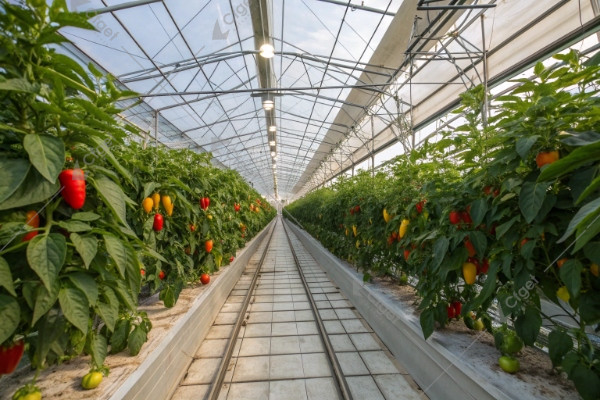
Multi-span structures dominate Spanish pepper production.
Dive deeper
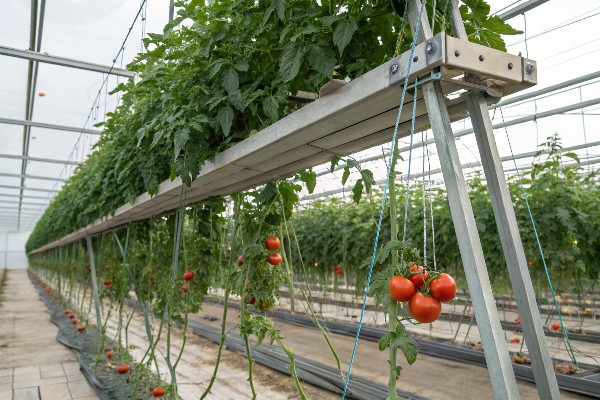
Single-span structures exist, but large-scale pepper production needs scale and uniformity. Multi-span designs allow:
- large ventilation openings
- integrated shading
- insect netting for IPM
- zoning to reduce climate gradients
Film greenhouses are common in Almería because they allow flexible ventilation and lower CAPEX. Polycarbonate is used when durability or insulation is needed. Venlo glass greenhouses appear in projects targeting premium export markets where year-round consistency justifies higher investment.
CFGET’s platform pages reflect these options clearly:
The key mistake in many SERP pages is treating “multi-span” as one category. In reality, design details—vent size, ridge height, airflow path—decide performance.
How does Spain’s climate shape the “best” greenhouse choice?
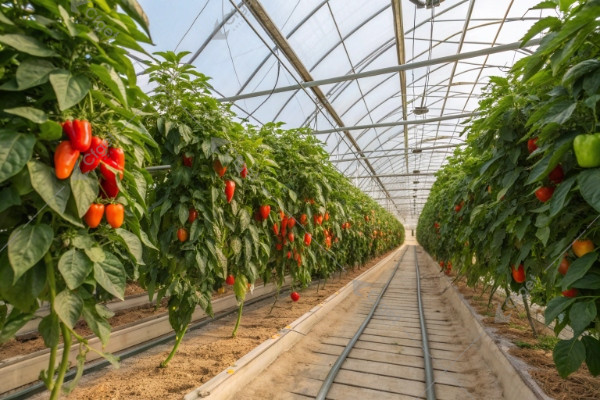
Spain’s pepper regions face intense solar radiation and long hot seasons.
In southern Spain, the best greenhouse type is one that prioritizes heat load reduction and ventilation over insulation.
Dive deeper
In Almería, summers bring high radiation and warm nights. Evaporative cooling helps, but only when humidity allows it. Guidance from University of Florida IFAS Extension explains why evaporative cooling performance drops as humidity rises. This principle applies directly to Spain’s coastal zones.
Climate data from the World Bank Climate Change Knowledge Portal shows increasing heat extremes in Southern Europe. This reinforces the need to design for peak heat, not average conditions.
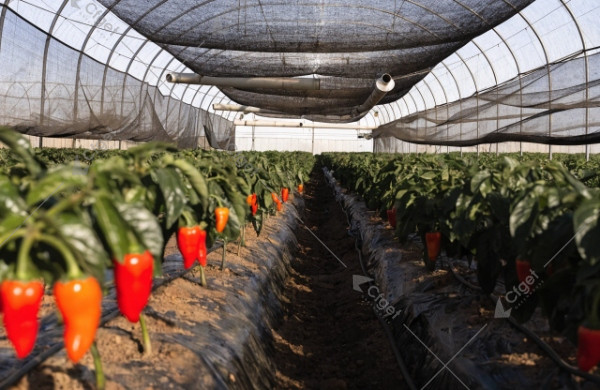
For peppers, overheating during flowering causes more damage than moderate light reduction. That is why many successful Spanish pepper greenhouses use:
- whitewashing or external shading
- large roof vents
- strong natural ventilation
This combination is easier to achieve in multi-span structures than in tightly sealed glass houses without advanced cooling.
Is high-tech automation necessary for commercial peppers?
Only when the business model demands it.
Sweet peppers benefit from reliable, well-tuned control systems more than from maximum technological complexity.
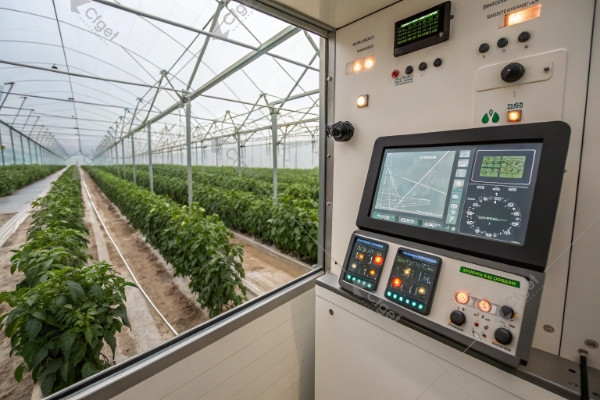
Control quality matters more than control quantity.
Dive deeper
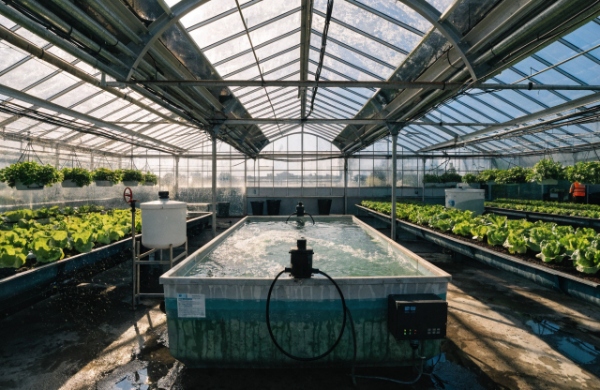
High-tech glass greenhouses can deliver excellent pepper yields, especially for export contracts requiring uniform color and size. However, they require:
- skilled operators
- reliable power supply
- disciplined climate management
Energy planning resources from the Cornell University Controlled Environment Agriculture (CEA) Program show that technology must match crop value. Peppers sit between leafy greens and tomatoes in value. Over-investment can hurt ROI.
Many Spanish growers succeed with mid-tech automation focused on:
- ventilation staging
- shading control
- basic humidity management
Solutions like Smart Auto & Control support this approach by stabilizing climate without excessive complexity.
How should I evaluate CAPEX vs OPEX for pepper greenhouses?
Peppers reward stability over extreme intensity.
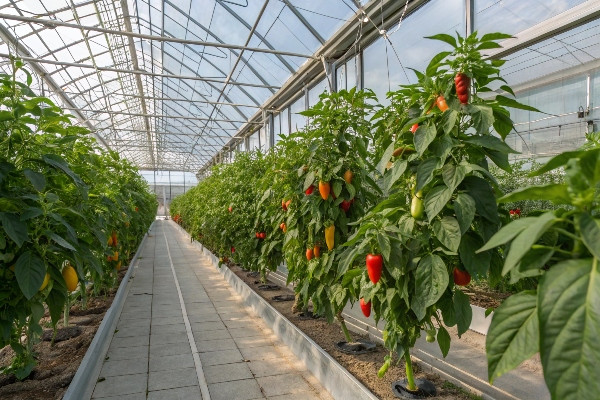
The best greenhouse type for peppers is the one that minimizes total cost per kilogram while protecting flower set and fruit quality.
Dive deeper
I evaluate greenhouse types by:
- yield stability
- grade consistency
- labor efficiency
- energy and water cost
High-tech glass may reduce variability, but the added cost must be justified by price premiums. Data trends from USDA Economic Research Service show that operating cost management is central to controlled environment success.
Mid-tech multi-span greenhouses often deliver better ROI for Spanish peppers because they:
- reduce heat stress risk
- keep energy demand moderate
- allow flexible seasonal strategies
This is why many export-oriented projects still choose multi-span designs with upgraded climate systems rather than full glass.
How do production systems affect greenhouse choice for peppers?
System and structure must match.
Substrate-grown peppers increase sensitivity to climate swings, reinforcing the need for uniform airflow and humidity control.
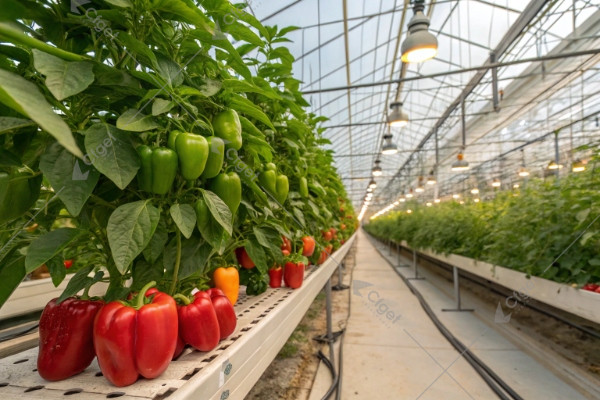
Substrate systems raise climate precision needs.
Dive deeper
Most commercial peppers in Spain use substrate systems. These improve root health and yield but increase sensitivity to air conditions. High humidity slows transpiration and increases disease risk.
Guidelines from Rutgers University explain how humidity and airflow affect plant health. Even though the document focuses on cooling, the principles apply directly to pepper production.
This reinforces why greenhouse type selection must consider production system. A structure that performs well for soil-grown crops may struggle with dense substrate-grown peppers.
CFGET’s internal resources help align structure and system:
So what is the best greenhouse type for sweet peppers in Spain?
The answer depends on realistic goals.
For most commercial sweet pepper projects in Spain, a well-ventilated multi-span greenhouse offers the best balance of cost, heat management, and yield stability. Venlo glass becomes the best option only when premium export quality and year-round supply justify higher investment.

Dive deeper
I summarize the decision like this:
| Decision factor | If YES | Best greenhouse direction |
|---|---|---|
| Intense summer heat | Yes | Multi-span with shading + large vents |
| Premium export contracts | Yes | Venlo glass + advanced control |
| Moderate budget, fast ROI | Yes | Multi-span film or PC |
| High labor efficiency needed | Yes | Automation-ready multi-span |
| Energy cost sensitivity | Yes | Ventilation-first design |
This approach keeps the focus on production reality, not labels.
If you want to explore options, CFGET’s pages support next steps:
Conclusion
The best greenhouse type for commercial sweet pepper production in Spain is the one that manages heat, protects flowering, and keeps operating cost predictable. For most growers, a well-designed multi-span greenhouse delivers the strongest balance.
External References (Authority Sources)
-
FAO – Climate Change and Agriculture
https://www.fao.org/climate-change/en/ -
World Bank – Climate Change Knowledge Portal
https://climateknowledgeportal.worldbank.org/ -
Wageningen University & Research – Greenhouse Horticulture
https://www.wur.nl/en/research-results/research-institutes/plant-research/greenhouse-horticulture.htm -
University of Florida IFAS Extension – Fan and Pad Cooling Systems
https://edis.ifas.ufl.edu/publication/AE069 -
Rutgers University – Greenhouse Evaporative Cooling Guide
https://nj-vegetable-crops-online-resources.rutgers.edu/wp-content/uploads/2015/06/Greenhouse-Evaporative-Cooling.pdf -
Cornell University – Controlled Environment Agriculture Energy Resources
https://cea.cals.cornell.edu/energy/ -
USDA Economic Research Service – Controlled Environment Agriculture Trends
https://www.ers.usda.gov/data-products/charts-of-note/chart-detail?chartId=109422
Internal References (CFGET)
-
Commercial Greenhouse Systems
https://cfgreenway.com/greenhouse/ -
Polycarbonate Greenhouse Systems
https://cfgreenway.com/polycarbonate/ -
Venlo Greenhouse
https://cfgreenway.com/venlo/ -
Smart Auto & Control Solutions
https://cfgreenway.com/solutions/smart-auto-control/ -
Growing Systems
https://cfgreenway.com/growing-systems/ -
Contact Us
https://cfgreenway.com/contact/
Internal Blog References (Related CFGET Articles)
-
Polycarbonate Greenhouse Systems
https://cfgreenway.com/polycarbonate/ -
Semi-Closed Greenhouse Systems
https://cfgreenway.com/semi-closed/ -
Retractable Roof Greenhouses
https://cfgreenway.com/retractableroof/