Many greenhouse projects look affordable at first, but heat exposes weak design very fast. Crops suffer, systems overload, and the original budget quickly stops working.
A commercial greenhouse in a hot climate usually costs between USD 30 and 120 per square meter, but the real budget depends on climate type, cooling limits, water quality, and energy prices, not only on the structure itself.

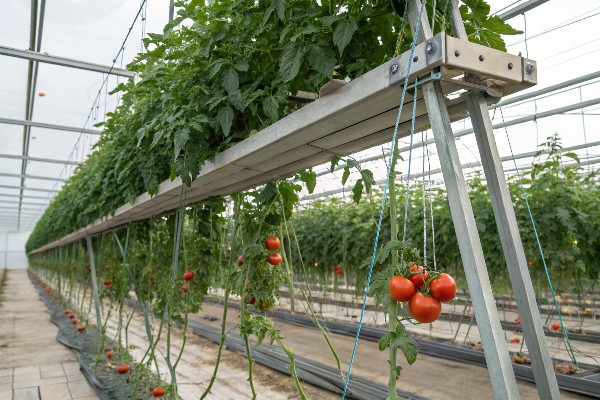
A commercial greenhouse designed for hot climate operation.
I write this from a first-person project view. I have reviewed many supplier quotes and many top-ranking articles. Most of them show price ranges, but they skip why budgets fail in hot climates. This article fills those gaps using engineering logic and independent research, not sales claims.
Why is commercial greenhouse cost higher in hot climates?
Heat is not a background condition. In hot climates, heat becomes the main force that controls design size and daily operation.
Commercial greenhouse costs are higher in hot climates because ventilation, shading, and cooling systems must work harder and longer to protect crops, not just cover them.

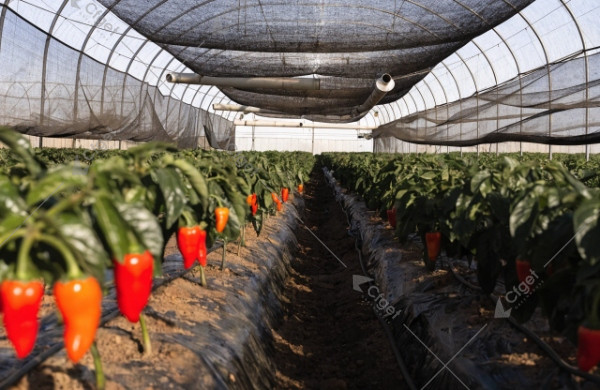
Heat stress inside a greenhouse.
Dive deeper
Many cost articles say, “Hot climates need more systems.” That statement is incomplete. What really matters is how heat load drives system size and runtime.
Greenhouse ventilation and fan performance are not guesswork. Performance testing and airflow standards for greenhouse fans are defined by ASABE (American Society of Agricultural and Biological Engineers). These standards explain why undersized fans cannot remove heat fast enough. When airflow is weak, cooling systems must run longer, which increases both capital cost and daily energy use.
From a global agriculture view, heat stress is also a biological limit. FAO – Food and Agriculture Organization of the United Nations identifies high temperature as a major factor reducing crop productivity, even in protected cultivation. FAO reports show that heat increases plant respiration, water demand, and yield instability. This means greenhouse systems in hot climates must be designed for heat control first, not added later.
I also separate hot climates into dry heat and hot–humid heat. These behave very differently. To avoid wrong assumptions, I use long-term regional data from the World Bank Climate Change Knowledge Portal. This data clearly shows how temperature and humidity patterns differ between Central Asia, the Middle East, and Southeast Asia.
Research from Wageningen University & Research – Greenhouse Horticulture explains that greenhouse performance depends on balancing outside climate load with inside climate control capacity. If ventilation and cooling capacity cannot handle peak heat, the greenhouse becomes unstable, no matter how strong the structure is.
So cost increases come from three layers:
- Design cost rises because ventilation area and shading coverage must be larger.
- Operating cost rises because fans, pumps, and controls run more hours each day.
- Failure cost rises because poor heat control causes yield loss and disease pressure.
If heat is treated as a small issue, the budget will always be wrong.
How do cooling, water, and energy systems change the real cost?
Cooling is the engine of a hot-climate greenhouse. The structure is only the shell.
In hot climates, cooling systems often account for 20–35% of total greenhouse cost and a large share of long-term operating expenses. Water quality and energy prices decide whether the system stays affordable.

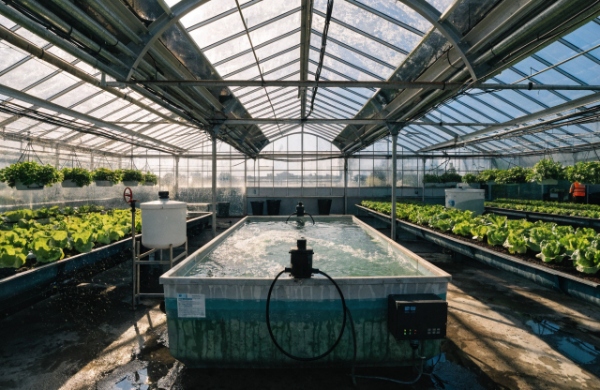
Fan-and-pad cooling system in operation.
Dive deeper
Many ranking pages list cooling systems but do not explain their limits. University extension research clearly shows that evaporative cooling efficiency drops when humidity is high. This limitation is explained by University of Florida IFAS Extension and also by University of Massachusetts Greenhouse Crops Research.
This means the same cooling design does not work equally well everywhere. In dry heat, evaporative cooling can reduce temperature effectively. In hot and humid climates, the temperature drop is smaller, so airflow and shading become more important. That usually increases budget requirements.
Water quality is another hidden cost driver. Cooling pads and fog systems suffer from scale when water hardness is high. This shortens pad life and raises maintenance cost. These limits are explained in the Rutgers University Greenhouse Evaporative Cooling Guide (PDF).
Energy cost links all of this together. Fans and pumps may run many hours each day. Even small efficiency differences matter. For this reason, I often refer to planning frameworks from the Cornell University Controlled Environment Agriculture (CEA) Program when discussing system sizing and energy use.
From a system view supported by Wageningen University & Research, correct climate matching often reduces unnecessary energy use over time, even if initial investment is higher.
| Item | Dry Hot Climate | Hot & Humid Climate |
|---|---|---|
| Evaporative cooling effect | Strong | Limited |
| Water demand | Medium | High |
| Fan runtime | Medium | High |
| Design risk | Medium | High |
| Budget sensitivity | Medium | Very high |
Cooling, water, and energy must be budgeted as one system.
Most greenhouse failures do not happen because the structure was expensive. They happen because operating reality was ignored.
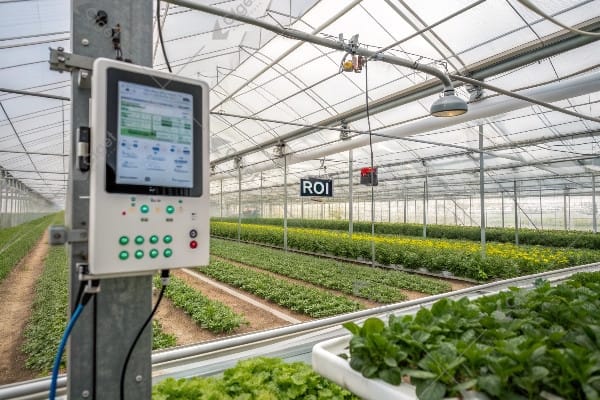
The most common ROI mistakes come from ignoring operating cost, copying the wrong climate design, and forgetting maintenance and replacement cycles.
Dive deeper
Many buyers compare only price per square meter. This ignores how greenhouses really earn money. Controlled environment agriculture depends on daily climate control intensity. Data from the USDA Economic Research Service (ERS) shows that energy and climate management are major cost drivers in protected systems.
Another mistake is copying designs from other regions. A design that works in dry heat may fail in humid heat. High humidity increases disease pressure and reduces cooling efficiency. Yield loss becomes a hidden cost that never appears in the original quote.
From a risk perspective, FAO climate adaptation frameworks warn that systems designed only for average conditions face high failure risk during extreme heat events. Climate extremes are increasing, not decreasing.
Maintenance is also underestimated. Cooling pads, fan belts, sensors, and shading systems all have limited lifespans. Heat and dust shorten them. Guidance from the Purdue University Extension Greenhouse Program explains how temperature and humidity control choices affect long-term system performance.
When I calculate ROI, I always include:
- Annual electricity cost
- Annual water cost
- Maintenance and replacement cycles
- Yield stability under peak heat
Without these, ROI numbers are only marketing.
How should I budget differently for dry heat vs humid heat?
This question changes both budget size and success rate.
Dry heat budgets should focus on evaporative cooling and airflow, while humid heat budgets should focus on shading, ventilation design, and realistic cooling limits.

Dive deeper
I start every budget with climate classification. I confirm temperature range, humidity pattern, and night cooling potential using long-term data from the World Bank Climate Change Knowledge Portal.
Next, I define crop targets and acceptable inside conditions. Different crops tolerate heat differently. This changes cooling demand.
Then I choose the cooling path. For dry heat, evaporative cooling may work well. For humid heat, extension research from University of Florida IFAS Extension and University of Massachusetts Greenhouse Crops Research warns against expecting large temperature drops from evaporation alone.
After that, I convert design choices into both CAPEX and OPEX. Energy planning resources from the Cornell University Controlled Environment Agriculture (CEA) Program help explain why energy must be managed from the start.
Finally, I add maintenance cycles. Guidance from Rutgers University and Purdue University Extension shows how system choice affects maintenance frequency.
This climate-first budgeting logic is strongly supported by both FAO and Wageningen University & Research. They do not sell greenhouses, which makes their conclusions reliable.
Conclusion
In hot climates, greenhouse cost is a system problem, not a structure problem. I budget based on climate type, cooling limits, water quality, and energy rates, because these decide long-term stability and profit.
External References
-
ASABE – Greenhouse Ventilation Fan Testing Standards
https://elibrary.asabe.org/azdez.asp?AID=37167&Abstract=565.htm&CID=s2000&JID=2&T=3 -
FAO – Climate Change and Agriculture
https://www.fao.org/climate-change/en/ -
FAO – Climate Adaptation Resources
https://www.fao.org/climate-change/resources/en/ -
Wageningen University & Research – Greenhouse Horticulture
https://www.wur.nl/en/research-results/research-institutes/plant-research/greenhouse-horticulture.htm -
World Bank – Climate Change Knowledge Portal
https://climateknowledgeportal.worldbank.org/ -
University of Florida IFAS Extension – Fan and Pad Cooling Systems
https://edis.ifas.ufl.edu/publication/AE069 -
University of Massachusetts – Fan and Pad Evaporative Cooling Systems
https://www.umass.edu/agriculture-food-environment/greenhouse-floriculture/fact-sheets/fan-pad-evaporative-cooling-systems -
Rutgers University – Greenhouse Evaporative Cooling Guide (PDF)
https://nj-vegetable-crops-online-resources.rutgers.edu/wp-content/uploads/2015/06/Greenhouse-Evaporative-Cooling.pdf -
Cornell University – Controlled Environment Agriculture Energy Resources
https://cea.cals.cornell.edu/energy/ -
USDA Economic Research Service – Controlled Environment Agriculture Trends
https://www.ers.usda.gov/data-products/charts-of-note/chart-detail?chartId=109422 -
Purdue University Extension – Temperature Control in Greenhouses (PDF)
https://www.extension.purdue.edu/extmedia/HO/HO-327-W.pdf