Extreme heat causes more greenhouse crop failures than pests, disease, or poor soil. Many growers install fans and coolers and still find that their greenhouse runs too hot, crops stall, or quality drops.
A greenhouse climate control system fails under extreme heat not because the equipment is missing, but because the system design does not match real climate load, humidity limits, airflow patterns, and crop needs.
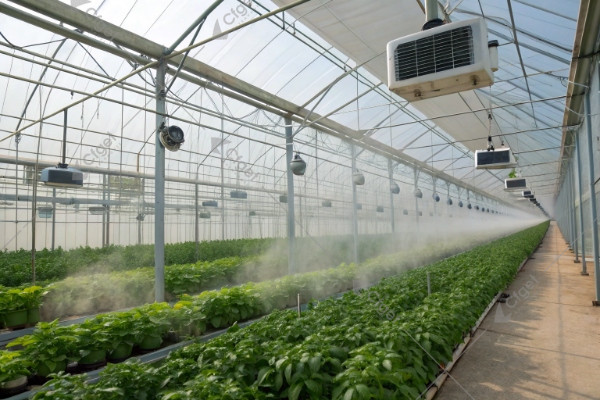
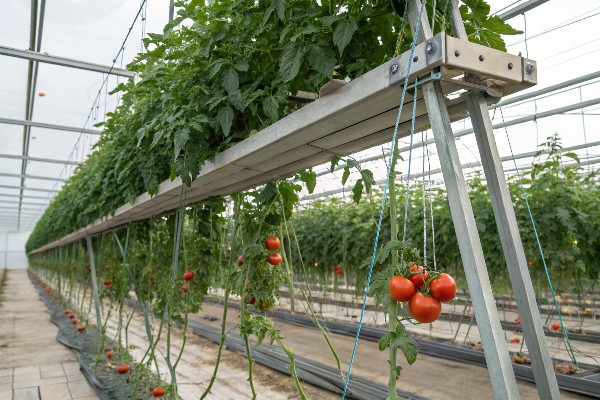
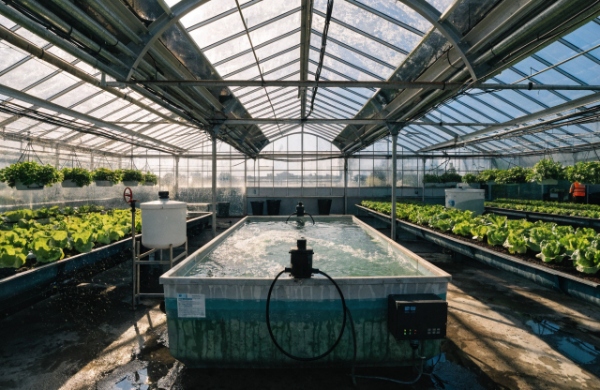
Modern climate control systems help stabilize interior conditions under heat stress.
I’ve reviewed dozens of greenhouse heat failure cases across Southeast Asia, North America, and the Middle East. What I learned is this: you don’t fix heat by adding devices—you fix heat by designing around heat load, humidity boundaries, airflow, and crop requirements. In this article, I will break down the reasons why greenhouse climate control fails in extreme heat, what systems actually work, and how to choose them based on your real conditions.
Most content lists cooling systems but does not explain why greenhouses still overheat in extreme heat.
Greenhouses overheat when the heat load exceeds the system’s capacity to remove heat and control humidity consistently. High outside temperature, solar radiation, and poor airflow combine to create a runaway heat situation.
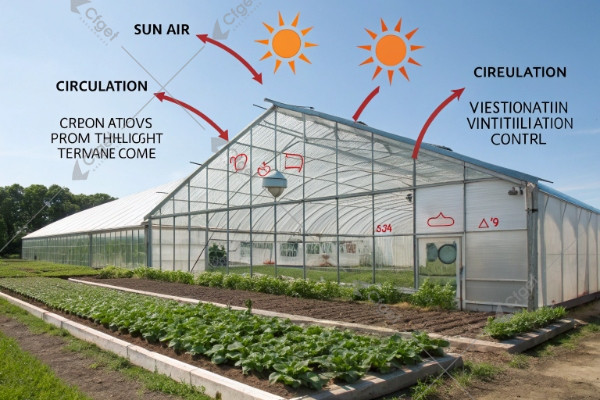
Heat load comes from outside temperature and solar radiation.
Dive deeper
Heat load has two main components: sensory heat (from outside air temperature) and solar gain (direct sunlight entering the structure). In extreme heat—when outside temperatures reach 40–45°C with high solar radiation—the cumulative heat entering a greenhouse can overwhelm any single cooling method.
This is why many growers make the mistake of thinking “I need a bigger fan” without first understanding the actual heat load equation. You cannot cool more heat than enters the space, and if airflow is poor or humidity is high, even powerful systems will not work.
A key concept most articles miss is wet‑bulb temperature. Your cooling potential is not based on dry‑bulb (standard temperature) alone. When humidity is high, the air’s capacity to carry moisture diminishes, reducing evaporative cooling effectiveness. This behavior is clearly explained in research by University of Florida IFAS Extension and University of Massachusetts Greenhouse Crops Research.
So the first rule of climate control in extreme heat is this:
You must match your cooling strategy to the actual climate (heat + humidity), not average design conditions.
Why simple cooling systems are not enough: the limitations of evaporative cooling
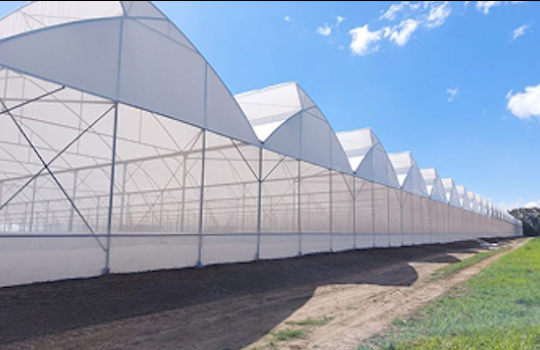
Evaporative cooling (fan and pad / fog systems) is often presented as the “go‑to” solution. But under extreme heat, especially with high humidity, it stops working effectively.
The cooling limit of evaporative systems is bounded by the wet‑bulb temperature of the outside air. When humidity is high, the wet‑bulb temperature approaches the dry‑bulb temperature, and cooling potential falls sharply.
Dive deeper
In dry heat (low humidity), adding moisture to the air via wet pads or mist systems can lower interior temperatures significantly. This is because dry air has more capacity to absorb water vapor. However, in hot, humid air, the air is already close to saturation. Adding moisture does not cool it significantly. Consequently:
- Temperature drops are limited
- Humidity rises dangerously
- Disease pressure (like powdery mildew) skyrockets
Multiple extension studies note this behavior. For example, UF IFAS and UMass research both illustrate that cooling efficiency declines steeply as relative humidity rises above 60–70%. This limitation is a major reason growers experience “no change” despite powerful cooling equipment.
Because of this, growers in humid tropical regions must pair evaporative cooling with shade control, increased ventilation, and humidity management strategies rather than relying on evaporative cooling alone.
If you think evaporative cooling is “the answer,” it must be used with the correct climate context first.
Why ventilation and airflow design matter just as much as cooling
A common mistake I see is installing cooling devices without planning airflow paths and ventilation capacity. Fans are only effective if air can actually move through the space and remove heat.
Poor airflow design creates heat pockets and dead zones where cooling systems cannot reach.

Dive deeper
Fans have a rated capacity, but effective ventilation depends on:
- Greenhouse length and layout
- Vent position and size
- Inlet/outlet balance
- Pressure differences and airflow paths
A fan that works alone may just circulate hot air in a loop without removing it. This is why many advanced articles reference fan performance standards like those from ASABE (American Society of Agricultural and Biological Engineers): real airflow is often lower than nominal. This phenomenon is similar to what is documented in greenhouse ventilation standards (ASABE). Poor design means even expensive equipment performs poorly.
Another important factor is ventilation type. Natural ventilation works well under certain wind conditions and spacing. Mechanical ventilation (fans) works more consistently but must be sized to actual heat removal requirements, not just “fan quantity.”
The European greenhouse research from Wageningen University & Research – Greenhouse Horticulture highlights that ventilation area and the position of openings can drastically improve or worsen airflow patterns.
In short:
Even the best cooling system fails if warm air cannot exit and fresh air cannot enter smoothly.
What really works in extreme heat: integrated climate control strategies
Cooling alone is not enough. The best greenhouse climate control systems combine multiple elements that reduce heat input and increase heat removal.
The most effective strategies include:
- Heat load reduction (shade cloths, reflective coatings)
- Ventilation design (optimized inlets and outlets)
- Evaporative cooling (if climate allows)
- High‑volume airflow systems (fans + tunnel ventilation)
- Automatic climate controllers (sensors integrated with controls)
- Humidity management (dehumidification or controlled ventilation)
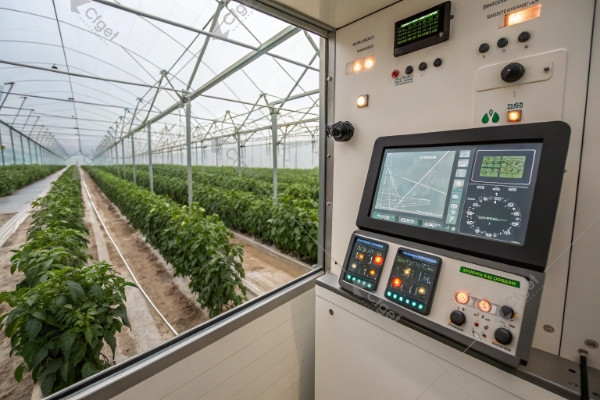
An integrated climate control strategy works best in extreme heat.
Dive deeper
Let’s break down each component.
Heat Load Reduction
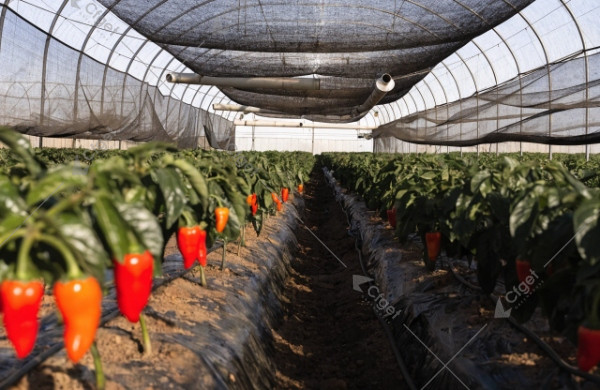
Start by reducing incoming energy. This may sound obvious, but shade cloths and solar reflection systems reduce the amount of heat entering the greenhouse. Reduced heat input means the system has less heat to remove, which reduces energy demand and improves stability.
Ventilation Design
Effective ventilation is about moving air through the greenhouse rapidly and evenly. This includes correct inlet sizing, appropriate outlet placement, and matching fan capacity to greenhouse volume. Good airflow removes surface heat efficiently.
Evaporative Cooling (Where Applicable)
In dry climates, evaporative cooling is still very effective. In humid regions, it must be supplemented with other methods because humid air cannot accept much additional moisture.
High‑Volume Air Movement
Strong fans with well‑designed ducting or natural ventilation openings ensure that heat is not just redistributed. Air must be exchanged with the outside environment.
Automatic Controllers
Sensors tied to automated systems ensure that fans, vents, shade, and cooling systems operate in concert rather than independently. Smart systems prevent unnecessary energy use and maintain crop zones more effectively.
Humidity Management
In climates with high humidity, simply cooling can raise relative humidity to disease‑promoting levels. Controlled ventilation that balances fresh intake with internal moisture is necessary.
Each of these elements interacts with the others. A climate control system is most effective when it is designed holistically, not as independent pieces.
How to choose the right climate control systems for your greenhouse
Choosing the right system starts with diagnosis.
You must evaluate:
- Your local climate profile (temperature range + humidity profiles)
- Heat load patterns (solar radiation, night shadows)
- Crop sensitivity (some crops tolerate heat or humidity better than others)
- Available water and energy budgets
- Ventilation and heat removal capacity

Dive deeper
Start with climate data. Long‑term temperature and humidity patterns tell you much about your baseline conditions. Tools like the World Bank Climate Change Knowledge Portal help you understand seasonal extremes (not just averages), which matter when designing for heat waves.
Next, evaluate your crop needs. Leafy greens may tolerate slightly different conditions than vine crops like tomatoes or cucumbers. Knowing this helps tailor climate control to priority zones within your greenhouse.
Then examine resource constraints. Cooling systems that rely on high water inputs may be unsuitable where water is scarce or expensive. High energy costs favor designs that reduce cooling load rather than just increase cooling capacity.
A structured decision process ensures you invest in systems that solve real pain points, not just add equipment.
Conclusion
Greenhouse climate control in extreme heat is not about buying the most expensive cooler. It’s about understanding heat load, humidity limits, airflow patterns, and crop needs—and designing an integrated system that addresses all of them.
The right approach combines heat reduction, ventilation, targeted cooling, automation, and humidity management.
Well‑designed climate systems don’t just cool. They stabilize your greenhouse against the extremes that threaten crop quality and profit.
External References (Authority Sources)
-
FAO – Food and Agriculture Organization of the United Nations (Climate and Heat Stress)
https://www.fao.org/climate-change/en/ -
World Bank – Climate Change Knowledge Portal
https://climateknowledgeportal.worldbank.org/ -
University of Florida IFAS Extension – Fan and Pad Evaporative Cooling Systems
https://edis.ifas.ufl.edu/publication/AE069 -
University of Massachusetts – Fan and Pad Evaporative Cooling Systems
https://www.umass.edu/agriculture-food-environment/greenhouse-floriculture/fact-sheets/fan-pad-evaporative-cooling-systems -
Wageningen University & Research – Greenhouse Horticulture
https://www.wur.nl/en/research-results/research-institutes/plant-research/greenhouse-horticulture.htm -
Cornell University – Controlled Environment Agriculture Energy Resources
https://cea.cals.cornell.edu/energy/
Internal References (CFGET)
-
Commercial Greenhouse Systems
https://cfgreenway.com/greenhouse/ -
Smart Auto & Control Solutions
https://cfgreenway.com/solutions/smart-auto-control/
Internal Blog References (Related CFGET Articles)
-
Semi-Closed Greenhouse Systems
https://cfgreenway.com/semi-closed/ -
Polycarbonate Greenhouse Systems
https://cfgreenway.com/polycarbonate/ -
Venlo Glass Greenhouse Design
https://cfgreenway.com/venlo/ -
Shade Net and Rain Shelter Systems
https://cfgreenway.com/shade-net-rainshelter/