Greenhouse ROI is not a standard percentage. It is the cash left after crop losses, labor, energy, maintenance, finance, and replacement reserves, measured against the full installed investment. The calculation is useful only when every number comes from the same site, crop, season, and sales plan.
*By Coraline Liao, CEO, CFGET | Updated: July 16, 2026*
*Reviewed by CFGET Project Planning Team*
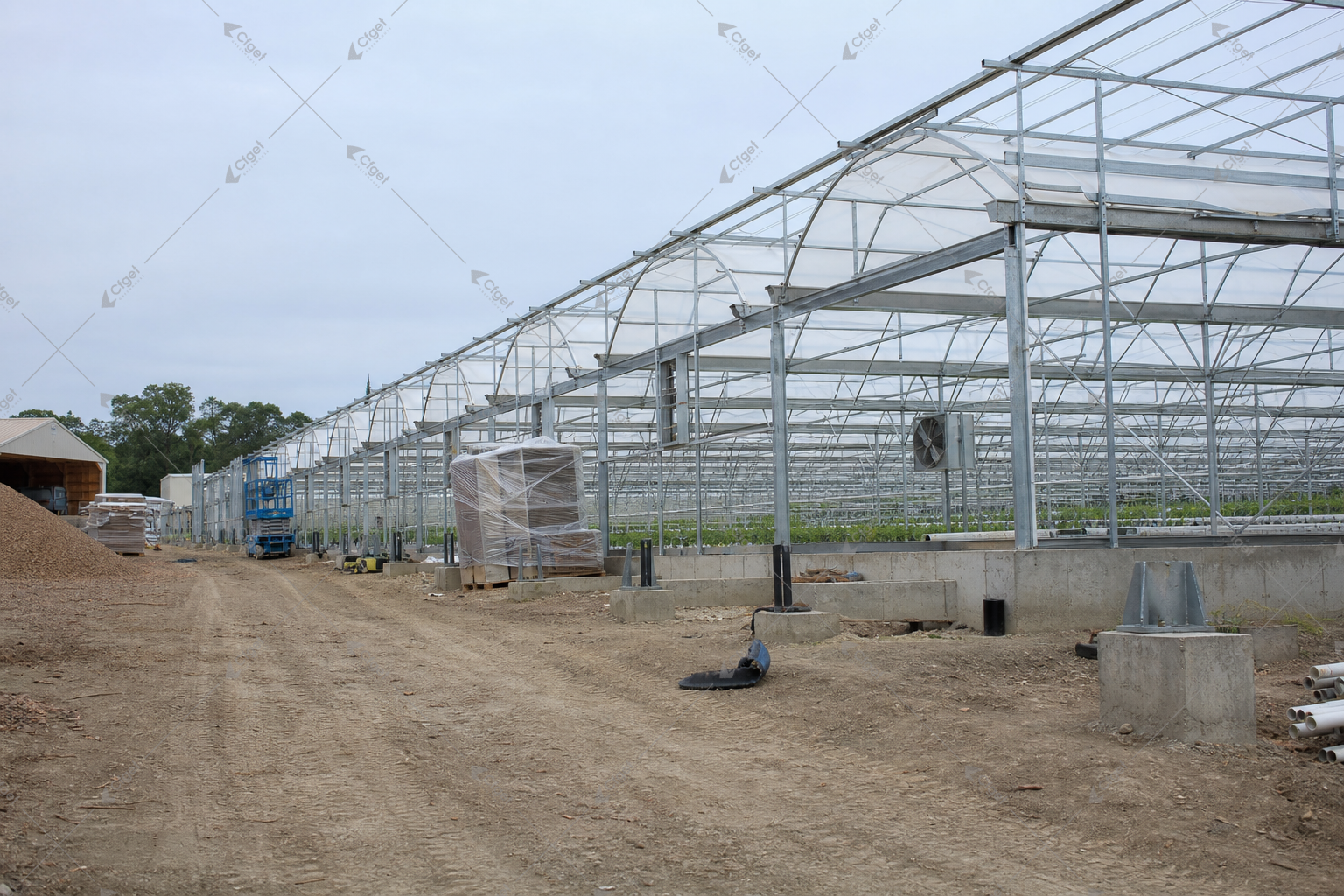
The suspicious greenhouse payback models are often the neatest ones. They start with a supplier price, multiply an optimistic yield by a good market price, and call the gap profit. Real projects are less tidy. A late crop, an undersized electrical connection, or a covering replacement can move the result more than a small discount on the frame.
A payback period is the last line, not the first
Start with annual cash flow. Payback comes later.
| Line in the model | What belongs in it |
| Saleable crop revenue | Marketable kilograms multiplied by the net farm-gate price after grading loss, packaging, commissions, and rejected product. |
| Direct crop cost | Seedlings, substrate, fertilizer, crop protection, packaging, water, and crop-specific consumables. |
| Operating overhead | Labor, heating, cooling, electricity, repairs, sanitation, laboratory work, insurance, administration, and local transport. |
| Ownership and finance | Depreciation, interest, taxes, permits, and the cost of capital tied up in the project. |
| Replacement reserve | Covering, pumps, motors, pads, sensors, filters, screens, and control components that will not last as long as the main structure. |
Annual operating cash is revenue minus the cash expenses above. Simple payback is the installed capital divided by that annual cash. If the annual cash turns negative in an ordinary bad year, the simple payback figure is not the main problem. Liquidity is.
Mississippi State University Extension uses the same basic discipline in its greenhouse tomato budget: capital, annual ownership cost, and variable crop cost are kept separate, and growers are told to replace the example assumptions with their own. The old dollar values are not a quotation for another country. The budgeting structure is still useful.
The quotation is only one part of installed capital
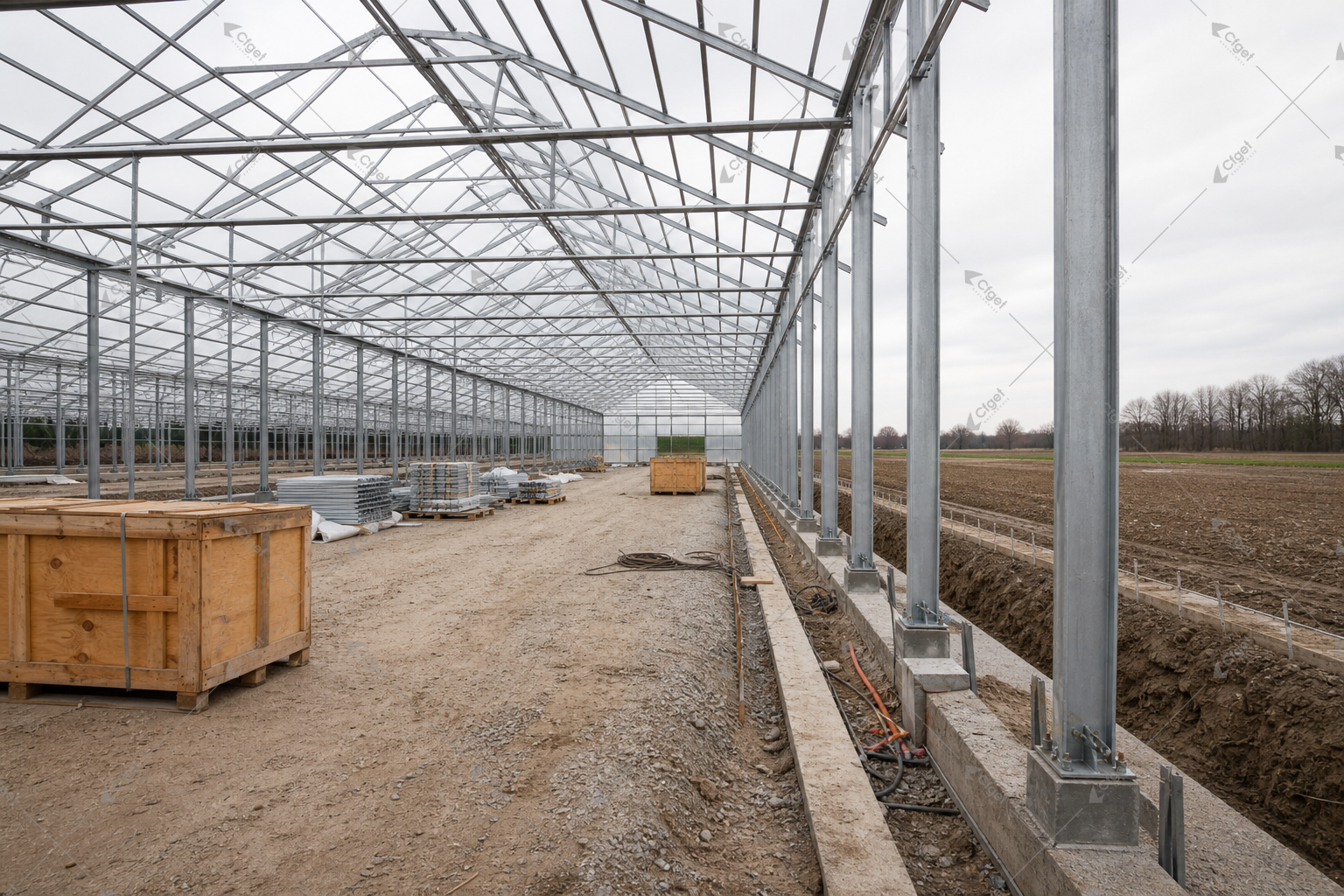
A greenhouse can arrive on time and still exceed its budget because the original model treated the supplier quotation as the whole investment.
| Capital item | Common omission |
| Greenhouse supply | Buyers compare totals without checking steel weight, design loads, covering specification, ventilation area, or included systems. |
| Logistics | Inland haulage, ocean freight, insurance, duties, unloading equipment, storage, and damaged-item handling may sit outside the offer. |
| Site work | Earthwork, drainage, foundations, roads, fencing, water storage, transformer capacity, boiler fuel, and utility connections are usually local. |
| Installation | Local labor, lifting equipment, accommodation, supervision, tools, testing, and commissioning need a named owner. |
| Start-up cash | The first crop uses labor, inputs, energy, packaging, and marketing cash before the project receives steady revenue. |
I would not rank two quotations until both suppliers mark every line as included, excluded, optional, or supplied locally. Drawings help here. A general sales description can hide scope; a roof section, equipment layout, and packing list usually cannot.
The crop model can break before the greenhouse does
The revenue side deserves more skepticism than the structure price. Use saleable yield, not biological yield. Use the price received after grading and sales costs, not the best retail price found online.
Season matters too. A greenhouse may technically produce year-round while the profitable window is much shorter. Heating, cooling, pollination, disease pressure, and market price can move in opposite directions. A 2026 HortTechnology case study of a medium-sized Florida cherry tomato greenhouse found the operation slightly below break-even under its stated costs and selling price. The lesson is not that greenhouse tomatoes fail. It is that a technically productive greenhouse can still miss its economic target.
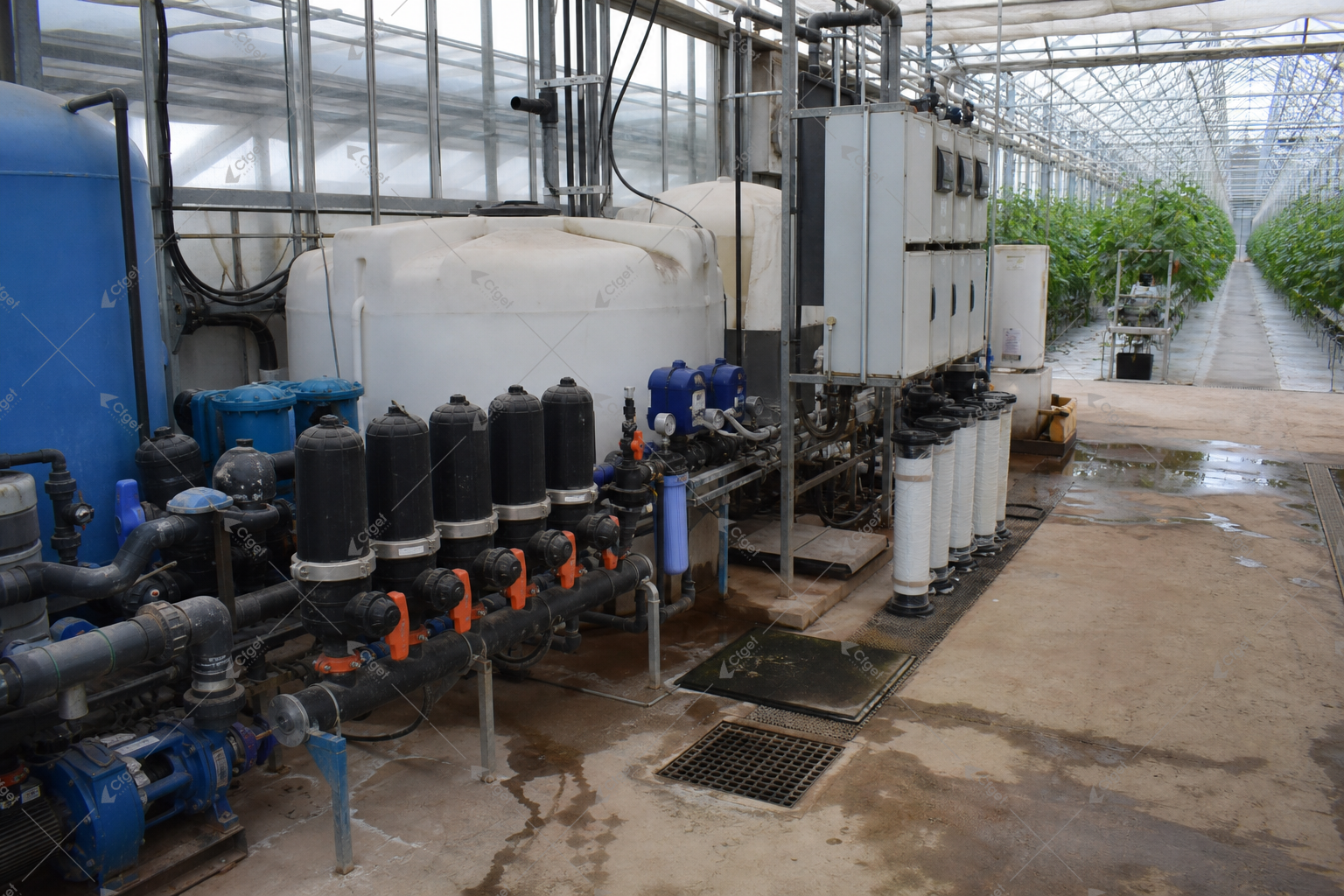
Build a base case from numbers you can defend. Then change the few inputs that can hurt the project quickly:
- Lower the saleable yield and delay the first stable harvest.
- Reduce the selling price to the level available during a crowded market week.
- Raise labor and energy costs using local tariffs, not supplier estimates.
- Add crop disposal, sanitation, or one equipment repair.
- Delay customer payment while keeping payroll and utilities on time.
This is not pessimism. It is a check on whether the business can survive a normal operating problem without emergency cash.
Evidence pack: numbers that belong beside the quote
Two sources are especially useful for the method:
- Mississippi State University Extension greenhouse tomato budget separates initial investment, ownership cost, variable cost, and break-even price. Its figures are local and dated, so use the categories rather than copying the prices.
- 2026 HortTechnology greenhouse cherry tomato cost-benefit case study includes fixed cost, labor, energy, capital cost, break-even analysis, and sensitivity testing for one Florida operation.
- UConn commercial greenhouse design resource is useful when the financial model needs to be checked against ventilation, structure, and site design.
The supplier should provide engineering scope. The buyer and local advisers must provide crop price, saleable yield, labor productivity, utility tariffs, taxes, finance, market access, and permit costs. Mixing those responsibilities produces a precise spreadsheet with weak inputs.
What I would ask CFGET to show
For an early project review, ask for the structural drawings, design loads, steel specification, covering, climate equipment list, irrigation and fertigation scope, electrical loads, packing list, spares, delivery terms, and installation boundary. Those documents define the part of the model a greenhouse supplier can support.
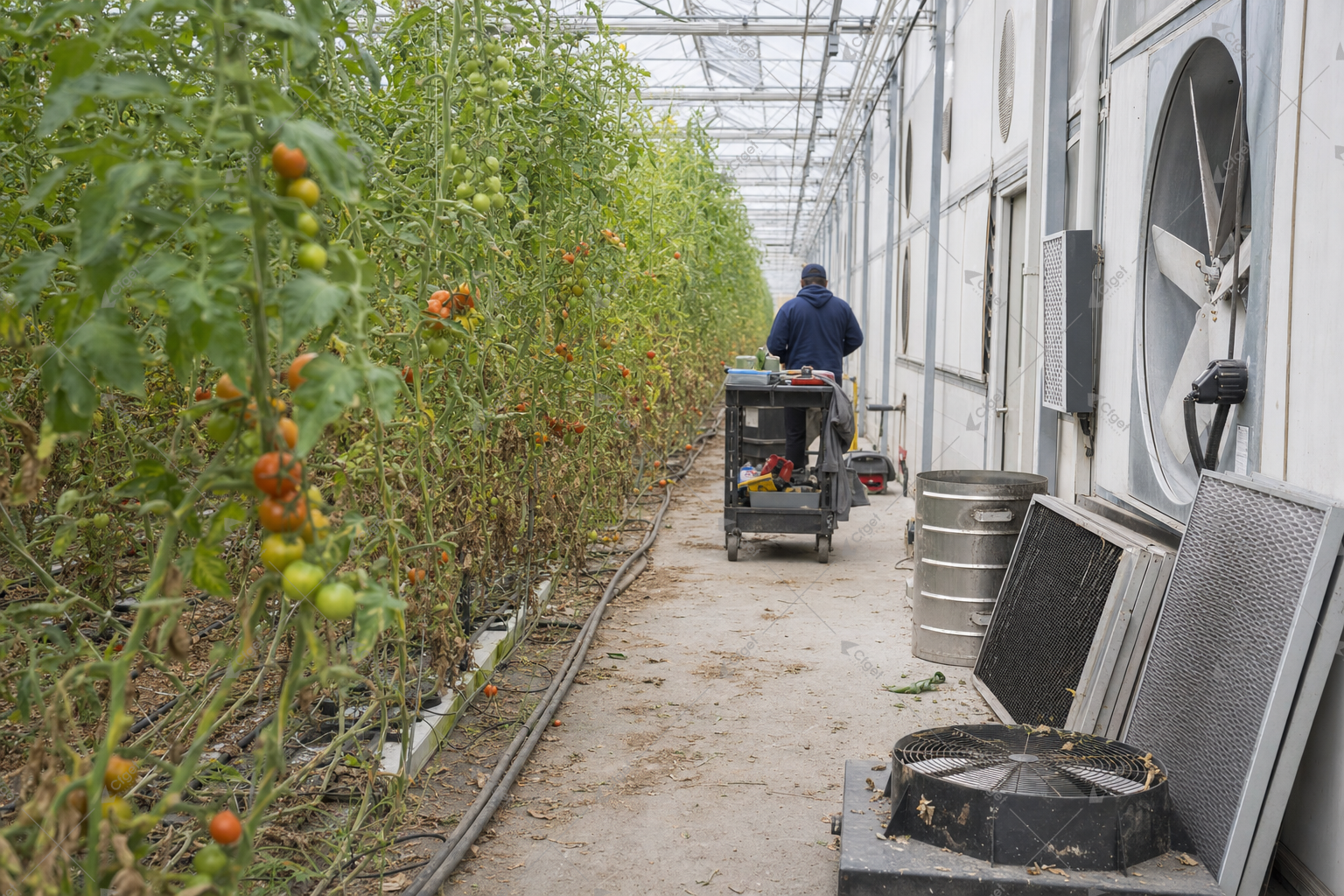
Questions to put in the spreadsheet before paying a deposit
| Question | Evidence to attach |
| What is the full installed capital? | Supplier offer, freight terms, civil estimate, utilities, installation plan, commissioning, initial spares, and working capital. |
| What is the saleable crop volume? | Crop schedule, plant density, expected grading loss, ramp-up period, and local grower or agronomist review. |
| What price reaches the farm? | Buyer contracts or recent local sales records after packaging, commission, transport, and rejected product. |
| Which cost can change fastest? | Local labor rates, electricity and fuel tariffs, water treatment, replacement intervals, and finance terms. |
| What stops the project? | Minimum cash balance, break-even price, break-even saleable yield, and the month with the largest cash deficit. |
My own stop signal is simple. If the project only pays back when yield, price, and uptime are all near their best case, it is not ready for a deposit. Change the design, the crop plan, the market plan, or the capital structure first.
Research note
This guide uses current AIO and search questions to identify what buyers are being told, then checks the answer against greenhouse enterprise-budget methods and project scope documents. The financial examples in linked studies belong to their own place, year, crop, and operating system. They are evidence for the method, not promised results for a CFGET project.
About Coraline and CFGET
Coraline Liao is CEO of CFGET. Her public LinkedIn profile describes her as a Greenhouse Technical Director with more than 15 years in the greenhouse industry, focused on customized climate-control and greenhouse solutions. Her published topics include greenhouse structure, light management, hydroponics, and fertigation.
For this article, that experience is used where a supplier can be useful: defining structure and equipment scope, drawings, utilities, installation boundaries, and replacement items. Local engineers, growers, accountants, and permitting authorities remain responsible for their parts of the final project.
Email: [email protected]
Company background: About CFGET
Company profile: CFGET GreenWay on LinkedIn
Related greenhouse planning pages
CFGET video: greenhouse options before comparing cost
This CFGET video gives a project visual to keep beside the cost discussion, because price only makes sense after the structure and system scope are clear.