Extreme heat can make my tomato irrigation feel impossible. If I water too little, plants stress and fruit set drops. If I water too much, Brix falls and cracking rises.
In Almería extreme heat, I run tomato irrigation with short frequent pulses tied to solar radiation, and I keep a controlled drain percentage to prevent salt buildup. I watch leachate EC and VPD so the plant stays stable, which protects both yield and Brix.
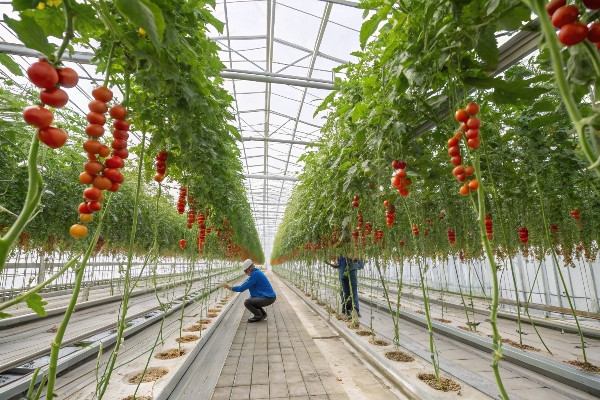
Pulse irrigation tied to radiation with leachate EC tracking.
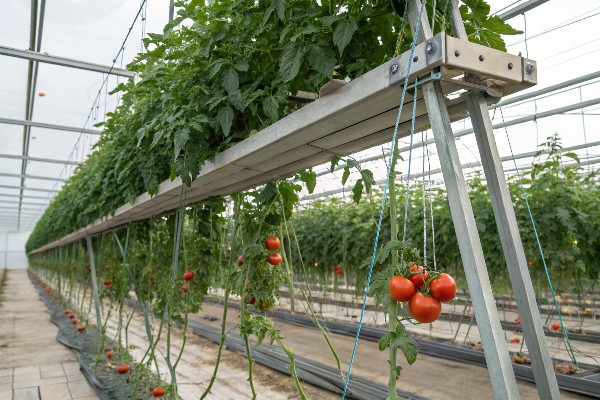
Almería’s greenhouse scale proves that strong sun can be managed when systems are stable. NASA Earth Observatory<1> For me, irrigation is not “how much water today.” It is “how stable is the root zone every hour.”
What is the best pulse irrigation strategy for tomatoes during Almería extreme heat?
Long irrigation runs create big moisture swings. Swings cause stress, cracking risk, and unstable fruit filling.
The best strategy is frequent short pulses that follow solar radiation, with a steady root-zone moisture curve and a predictable drain pattern. Pulse irrigation reduces root-zone fluctuation and improves nutrient delivery efficiency.
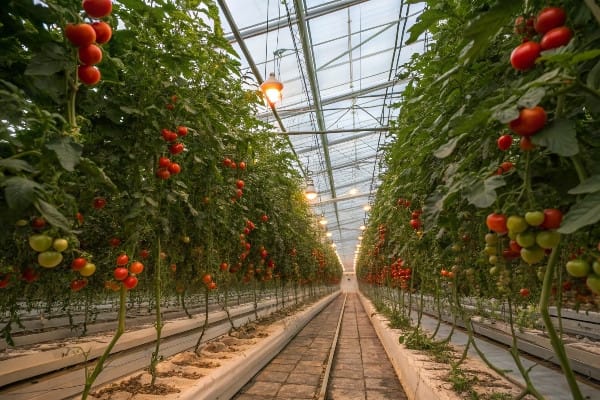
In extreme heat, I want “smooth,” not “big.”
Dive deeper
When heat rises fast, plant transpiration rises fast. If I wait too long, the plant experiences short dry stress. Then many growers over-correct with one long run. That is when fruit can take up water too quickly and cracking risk rises. I avoid that by building a pulse schedule that follows the sun.
I use a simple 3-phase daily rhythm:
-
Phase 1: Morning wake-up (no runoff at the start)
I start with small pulses to re-wet the substrate evenly. I do not want heavy drain here. Heavy early drain usually means the root zone stayed too wet overnight. -
Phase 2: Midday high load (more pulses, not bigger pulses)
I increase pulse frequency, not the pulse size. This keeps oxygen in the root zone and keeps EC drift slower. -
Phase 3: Afternoon taper (protect night humidity and Brix)
I taper irrigation before late evening so I do not enter the night with an overly wet substrate. This helps reduce overnight humidity risk and protects taste.
If I automate this, I link radiation and irrigation staging using:
- Smart Auto & Control Solutions
https://cfgreenway.com/solutions/smart-auto-control/
This reduces human error, which is one of the biggest hidden yield killers in hot climates.
Here is the control table I use:
| What I adjust | What I want | If I see a problem | My first move |
|---|---|---|---|
| Pulse frequency | smooth moisture curve | midday wilting | add pulses, keep size small |
| Pulse size | stable root oxygen | runoff too early | reduce size, spread pulses |
| Last irrigation time | drier night start | low Brix + soft fruit | stop earlier, taper slower |
The goal is boring irrigation. Boring is profitable.
What drain percentage is “safe” for tomatoes in hot weather, and why?
If I have zero drain in soilless systems, salts can accumulate. If I have too much drain, I waste water and wash away nutrients.
A controlled drain (leaching fraction) helps prevent salt buildup. Many greenhouse references describe a common target range around 10–15% drain for open systems, while actual needs depend on water quality and EC trends.
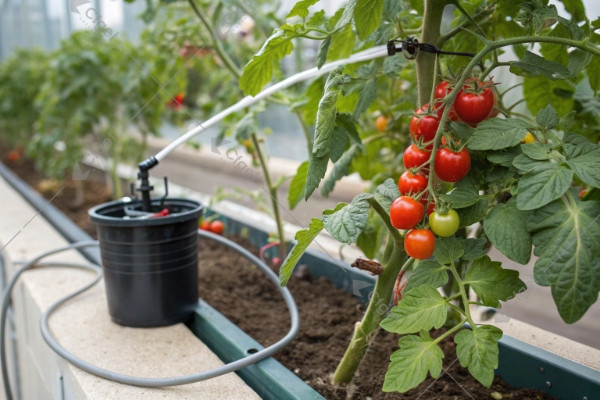
Drain is a control tool, not a habit.
Dive deeper
I do not use drain percent as a fixed rule. I use it as a salt-control lever.
A practical greenhouse nutrient management reference explains that traditional recommendations often aim for about 10–15% leaching fraction to avoid excess soluble salts. UMass Nutrient Management<2> I use that as a starting point, not a final answer.
My “real answer” comes from the trend:
- If leachate EC is creeping up, I need more flushing and better pulse timing.
- If leachate EC is stable and plants are strong, I can reduce drain and save water.
I also avoid drain early in the day. If I see drain at the first pulses, it often means the root zone was too wet overnight. That increases disease risk and reduces oxygen.
I use a simple decision table:
| Situation | What it means | What I change |
|---|---|---|
| No drain all day + leachate EC rising | salt buildup risk | increase controlled drain later in day |
| Drain too early in morning | root zone too wet overnight | reduce late irrigation, adjust first pulses |
| Drain high all day | wasted water + nutrient loss | reduce pulse size, improve uniformity |
| Uneven drain by zone | distribution issue | fix emitter uniformity + pressure |
Drain percent is only useful when it is linked to EC and plant response.
How do I use leachate EC and pH to prevent salt stress during heat waves?
In extreme heat, plants drink more water, but nutrient uptake does not always match. That can push root-zone EC up quickly.
I use leachate EC as a “root-zone reality check.” If leachate EC rises too high above the feed, salts are accumulating and I adjust irrigation timing, drain strategy, and nutrient concentration.
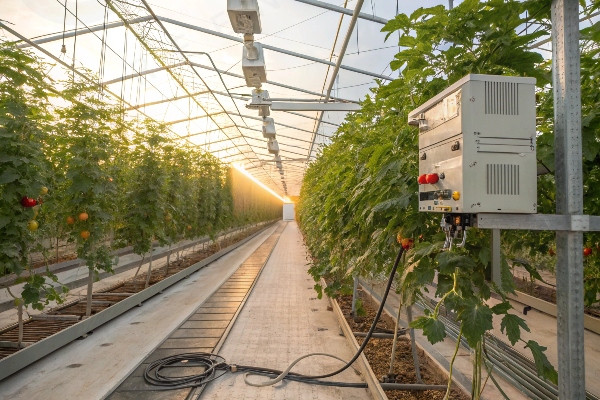
Trends matter more than single readings.
Dive deeper
I like leachate EC because it is hard to fake. It tells me what the roots actually live in.
Mississippi State University’s greenhouse tomato guide explains that some leachate should drain after feeding, and it suggests monitoring leachate EC to see whether fertilizer is accumulating in the bags. Mississippi State Extension PDF<3> That is exactly how I use it.
My practical rule:
- If leachate EC is consistently much higher than feed EC, the root zone is getting “hotter” than I intend.
- In extreme heat, that “hot root zone” can reduce uptake, stress the plant, and hurt fruit quality.
My adjustment sequence is always the same:
1) Fix irrigation timing and pulse uniformity first
2) Adjust drain strategy second
3) Adjust nutrient concentration last
This avoids the common mistake: cutting nutrients too early when the real issue is timing.
Here is the table I use with my team:
| Observation | Likely cause | My first action | My second action |
|---|---|---|---|
| Leachate EC rising daily | salts accumulating | add pulses + stable drain | check water quality, adjust recipe slowly |
| Leachate EC spikes after midday | too long dry gap | increase midday pulse frequency | reduce pulse volume per event |
| pH drifting out of range | dosing or sensor drift | calibrate sensors | adjust acid/base slowly |
| Zone-to-zone EC differs | uneven distribution | check pressure/emitters | rebalance lines and filters |
I also make sure the irrigation system is built for stable control. If hardware is weak, no schedule works. That is why the irrigation system design matters:
- Commercial Greenhouse Systems
https://cfgreenway.com/greenhouse/
How do I coordinate cooling and irrigation so heat control does not destroy Brix?
Cooling changes transpiration. If I cool the air and raise humidity, transpiration can drop. Then water movement into fruit changes. That can soften fruit and reduce Brix.
I coordinate cooling and irrigation by using VPD as the bridge metric. I avoid big VPD drops during cooling, and I adjust irrigation pulses to keep plant water flow stable during midday heat.
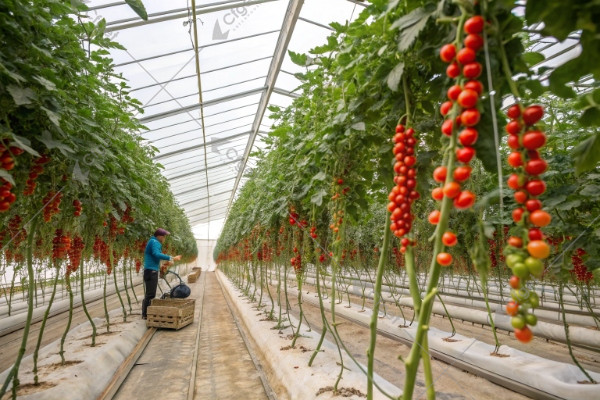
Stable VPD supports stable fruit filling.
Dive deeper
If I treat cooling and irrigation as separate, I create problems. I prefer one combined idea: plant water balance.
VPD is useful because it connects temperature and humidity to transpiration. Michigan State University Extension explains why greenhouse growers pay attention to VPD and how it relates to plant water loss and stress. Michigan State University Extension<4> I use VPD to avoid two mistakes:
-
Mistake 1: Cooling that crashes VPD
If VPD drops too low, the plant slows transpiration. Leaves dry slower. Disease risk rises. Fruit can become softer. -
Mistake 2: Irrigation that ignores cooling stages
If I keep the same irrigation rhythm while cooling changes the climate, the plant water balance becomes unstable.
My integrated routine looks like this:
- Shade early to reduce load
- Ventilate for heat removal
- Only use evaporative cooling when it will be effective
- Adjust pulse timing so the plant never hits a long dry gap
If I run fan-and-pad systems, I respect the reality that gradients and humidity effects exist, and I manage them with staging and airflow. UF/IFAS Extension<5>
This approach is how I protect Brix while still protecting fruit set in the hottest weeks.
Conclusion
In Almería extreme heat, my tomato irrigation wins by stability. I run short frequent pulses tied to radiation, keep a controlled drain percentage, and monitor leachate EC trends. I coordinate irrigation with VPD and cooling stages to protect both yield and Brix.
External Links Footnotes (Authority Sources)
1> https://science.nasa.gov/earth/earth-observatory/almerias-sea-of-greenhouses-150070
<2> https://www.umass.edu/agriculture-food-environment/book/export/html/9863
<3> https://extension.msstate.edu/sites/default/files/publications/publications/p1828.pdf
<4> https://www.canr.msu.edu/news/why_should_greenhouse_growers_pay_attention_to_vapor_pressure_deficit_and_n
<5> https://edis.ifas.ufl.edu/publication/AE069
—
## Internal References (CFGET)
– **CFGET Homepage**
– **Commercial Greenhouse Systems**
– **Smart Auto & Control Solutions**
– **Multi-span Film Greenhouse**
– **Wide-span Greenhouse**
– **Sawtooth Greenhouse**
– **Shade Net & Rain Shelter Systems**
– **Contact**
—
## Internal Blog References (Related CFGET Articles)
– **Greenhouse Irrigation Systems: Complete Guide to Drip & Fertigation**
Greenhouse Irrigation Systems: The Ultimate Guide to Boosting Yields & Saving Water
– **Commercial Greenhouse Irrigation Systems Explained: Exploring 6 Efficient Water-Saving Technologies to Boost Crop Yields**
– **Best Irrigation Systems for Commercial Greenhouses: 2025’s Top 6 Picks Explained (Drip, Micro-Sprinkler & More)**
– **How Much Does It Cost to Build a Smart Greenhouse? Hidden Costs You Should Know**
How Much Does It Cost to Build a Smart Greenhouse? What Are the Hidden Costs?
– **Why Sawtooth Greenhouses Beat the Heat with Zero-Energy Natural Ventilation**
https://cfgreenway.com/sawtooth-greenhouses-beat-the-heat-with-zero-cost-natural-ventilation/