A crop plan requests a number of tomato heads per square metre. The nursery quotation sells plants. Those quantities coincide only when every delivered rooted plant carries one head that meets the crop plan’s definition at the required stage.
Reconcile plants and heads by date before ordering. Separate single-headed and double-headed deliveries, leaders expected to develop later, and heads actually present at each crop check. A planned future leader is not a head already supplied by the nursery.
Agree what is being counted
Use the grower’s or crop adviser’s definitions consistently across the plan and the nursery order. For this record, a rooted plant is the supplied unit with its root system. A leader is a main growing stem. A counted head is a leader that meets the agreed developmental condition for a particular dated check.
That last definition matters. A replacement seedling may have a visible growing point while still failing the agreed stage criterion for a crop already established in the production house. Record the plant and its actual condition without treating it as an immediate replacement for a mature head.
University of Vermont’s 2007 discussion of grafted tomatoes describes multiple leaders on one rooted plant and the different timing of a later-developed leader. It supports the distinction between a rooted plant and its leaders. Its historical training, variety and spacing advice should not become an automatic order rule for another crop.
Commercial documents also use heads as a planning unit. The Canadian De Ruiter Serenity page expresses its cultivar guidance in heads per square metre. That unit must not be copied into the plant-quantity box on a purchase order. This article does not select a suitable density.
Use one area and a dated head plan
Obtain the crop adviser’s approved target head count for each important stage, or the approved density and its area basis. Use the growing-area definition in the facility plan so that gross building area and cropped area do not drift between documents.
List the intended plant positions separately from the heads. Identify the cultivar, rootstock where relevant, block, planting date and expected delivery condition. If a later change in leader number is planned, give it its own stage and decision reference. A single undated total loses the sequence the nursery needs to understand.
Do not automatically halve an order because some plants can support two leaders. The purchase quantity depends on how many rooted units are needed, which head states are actually supplied and when additional leaders are expected to qualify.
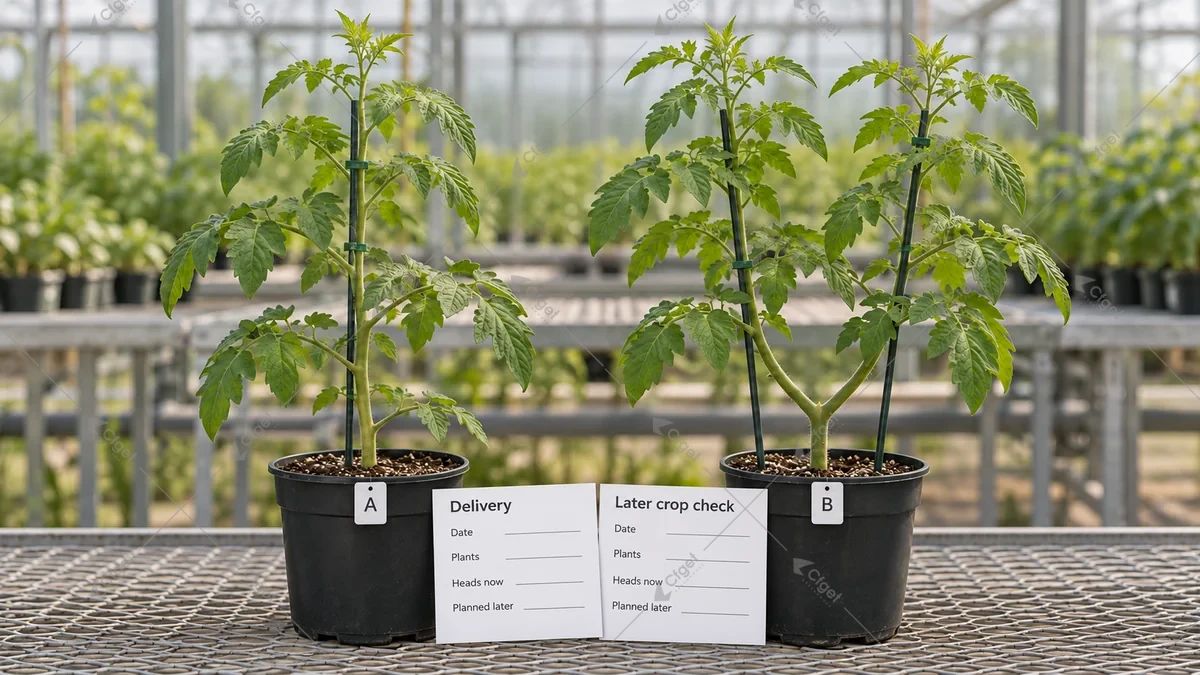
Reconcile the order, then reconcile the crop
The plant-and-head order plan compares approved requirements with single-, double- and other-headed quantities. The dated head reconciliation records what actually changes after delivery. Keep the block and plan reference identical in both files.
| At the order stage | At each later check |
|---|---|
| Required rooted plant positions | Rooted plants physically present and plants meeting establishment criteria |
| Ordered quantities by delivered head state | Observed heads meeting the current stage definition |
| Required delivered head condition | Heads lost, removed or newly qualifying since the previous check |
| Approved future leader plan and date | Future leaders still pending, recorded outside the current total |
| Reference to separately managed reserve | Replacement plants, their arrival date and qualifying heads actually added |
The calculator flags the numerical gap; it cannot approve the crop plan. Enter zero when a category is confirmed absent. Leave an unknown quantity blank. Do not count a replacement from the reserve in both the initial production quantity and the later addition.
A mixed order needs more than one multiplication
Hypothetical example: an approved plan calls for 1,100 rooted plants and 1,600 qualifying heads at delivery. The nursery order contains 600 single-headed plants and 500 double-headed plants. This provides 600 + 500 = 1,100 rooted units and 600 + (500 × 2) = 1,600 heads, provided the supplied heads meet the agreed delivery condition.
The plan then calls for 400 additional leaders to qualify by a later stage, taking the planned total to 2,000 heads. Those 400 do not belong in the nursery’s delivered-head total. They belong in the dated future plan and subsequent observation.
At that later check, imagine that 350 additional leaders have qualified. Twenty double-headed plants have been removed, accounting for forty lost heads. Another thirty heads were removed from plants that remain. Twenty replacement plants are present, but their heads have not yet met the agreed stage criterion.
The head reconciliation is 1,600 + 350 − 40 − 30 + 0 = 1,880 qualifying heads. The gap to the later plan is 120. There are again 1,100 rooted plants physically present, while only 1,080 meet the establishment criterion in this example. Counting plants alone would conceal the head shortfall.
These are invented quantities for explaining the record, not recommended planting densities or expected crop losses. The crop adviser decides how the real shortfall should be handled. A spreadsheet gap is not an instruction to create more leaders or order more plants immediately.
Keep the observed total separate from the movement record
Carry forward the previous confirmed head count, add newly qualifying heads and subtract documented losses. Compare that calculated movement total with the actual count at the new check. A difference calls for reconciliation before the number is used in another plan.
Use mutually exclusive movement categories. A lost plant’s two heads belong in the plant-removal line; they should not also appear as two separately removed heads. Newly qualifying heads on a replacement belong in the replacement line, rather than both that line and the later-leader addition.
Keep accepted deliveries, establishment and the current head count as distinct observations. If the supplier delivers a different head state from the order, retain that exception in the delivery record. Do not revise the original order silently to make the counts agree.
Give the nursery a specification it can answer
The final order should name the rooted quantity, cultivar and rootstock, required head state, required developmental condition and delivery date for each block. It should also say which later leaders remain the crop plan’s responsibility. Reserve quantities should refer to the existing nursery-capacity and replacement policy instead of adding an unexplained percentage.
Ask the nursery and crop adviser to resolve any mismatch before dispatch. Once the crop is planted, the same dated record gives the grower a clear view of whether the intended head population actually exists.