Many commercial growers install greenhouses but overlook one of the most important systems inside: irrigation. Wrong irrigation systems do more harm than good. Crops may suffer from water stress, root disease, unequal growth, and unstable yields.
The best greenhouse irrigation system for commercial vegetable production delivers the right amount of water, nutrients, and oxygen to plant roots in a controlled way that matches crop needs, climate conditions, and production goals.
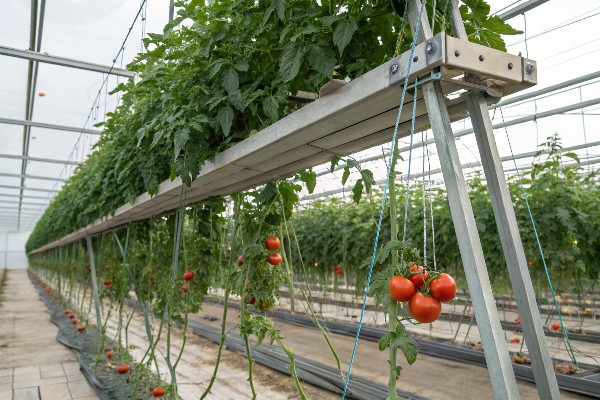
Greenhouse irrigation system delivering water and nutrients to vegetables.
I have reviewed dozens of commercial greenhouse projects for leafy greens, cucumbers, and tomatoes across North America, Europe, and Southeast Asia. In this article, I explain why irrigation matters, compare the main irrigation systems, and show you how to choose the right one based on crop life cycle, water quality, climate, and production scale.
Why greenhouse irrigation systems matter more than growers think
Many growers think irrigation is just turning on the tap. In controlled environment agriculture, irrigation is part of climate and nutrient control. The wrong system can waste water, increase disease pressure, and reduce yield quality.
Greenhouse irrigation systems are critical because they directly affect plant water uptake, root oxygen availability, nutrient delivery, and uniform growth.
Dive deeper
In open field production, plants rely on soil capillarity and rainfall patterns. In greenhouses, growers must recreate optimal water and nutrient conditions artificially. Whether you grow tomatoes, cucumbers, or leafy greens, root zone conditions control plant vigor.
Water quality differences (salinity, pH, dissolved solids) also matter. Poor water quality leads to clogged emitters, blocked lines, and uneven wetting of the root zone. Extension research from University of Florida IFAS Extension shows how common greenhouse irrigation problems come from incorrect emitter spacing, system design mismatches with crop size, and failure to match irrigation timing to crop evapotranspiration.
Commercial growers cannot ignore these issues. High plant density in greenhouses makes irrigation uniformity essential. Slight differences in soil moisture translate into big yield differences in high‑value crops.
The main types of irrigation systems used in commercial greenhouses
There are three major irrigation systems used in greenhouse production:
- Drip irrigation / micro‑irrigation
- Sub‑irrigation (ebb and flow / nutrient film technique)
- Spray / overhead irrigation
Each has advantages and limitations depending on crop type, structure, and climate.
Drip irrigation: the most versatile option for vegetables
Drip irrigation delivers water and nutrients through emitters directly to the root zone. It is widely used in tomato, cucumber, pepper, and leafy greens production.
Why drip irrigation works:
- Precise water application to each plant
- Reduces water waste and evaporation
- Matches crop demand on a daily basis
- Supports fertigation (nutrients + water) with minimal labor
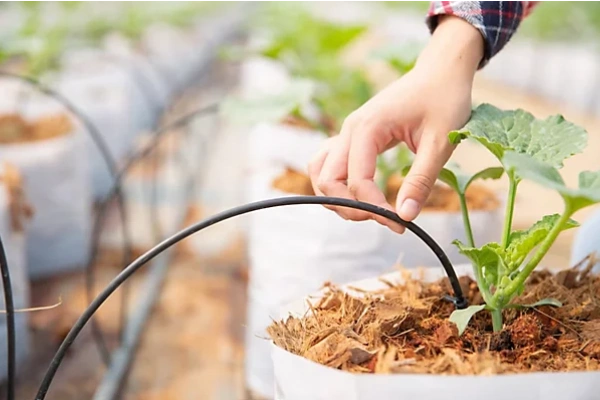
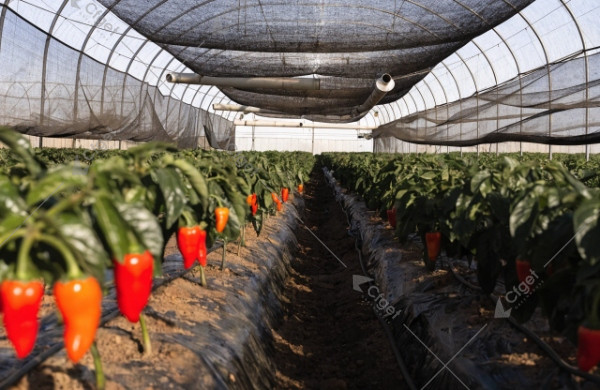
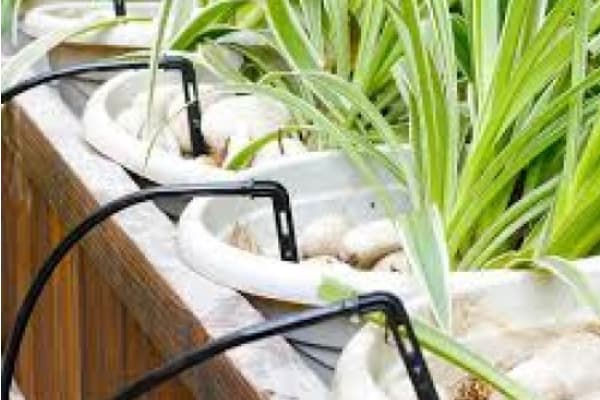
Drip irrigation supplying water and nutrients directly to plant roots.
Dive deeper
Drip systems use lines and emitters spaced according to plant spacing. For vine crops like tomatoes and cucumbers, emitters are typically placed at multiple locations along the row to ensure even root zone moisture. Effective drip design needs proper pressure regulation and filters to prevent emitter clogging. Water quality is especially critical here — hard water or saline water causes scale buildup, which blocks emitters over time.
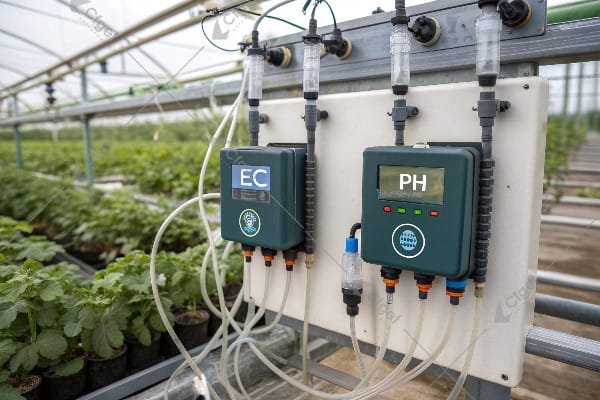
Fertigation — delivering fertilizer dissolved in irrigation water — is a major advantage of drip irrigation. Many commercial growers rely on automated injectors to deliver nutrients in proportion to plant growth stage. Controlled Environment Agriculture (CEA) manuals, like those referenced by Cornell University Controlled Environment Agriculture (CEA) Program, recommend regular monitoring of EC (electrical conductivity) and pH in drip lines to maintain optimal nutrient delivery.
Drip systems are flexible. They can be used on soil beds, in troughs with substrate, or above hydroponic media. Whether you grow leafy greens in rockwool or tomatoes in coco coir, drip can serve as the backbone irrigation system. However, drip systems require maintenance: filters must be cleaned, emitters checked, and lines flushed regularly.
Sub‑irrigation: high uniformity and low water consumption
Sub‑irrigation systems deliver water from below the root zone. Common sub‑irrigation methods include ebb and flow and nutrient film technique (NFT). These systems are widely used in lettuce, herbs, and small vegetables.
Why sub‑irrigation works:
- Water is delivered uniformly from below the plant
- Roots absorb water based on plant needs
- Reduces surface evaporation
- Can lead to high water use efficiency
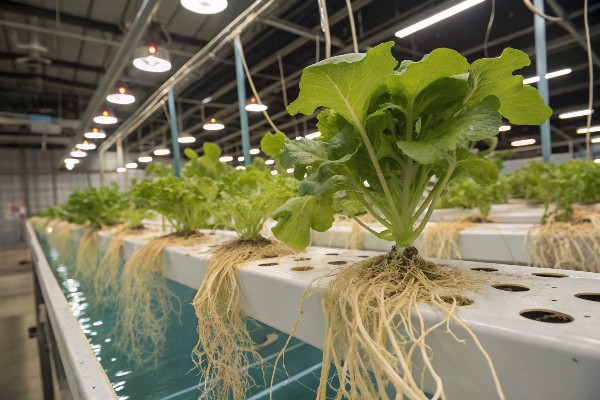
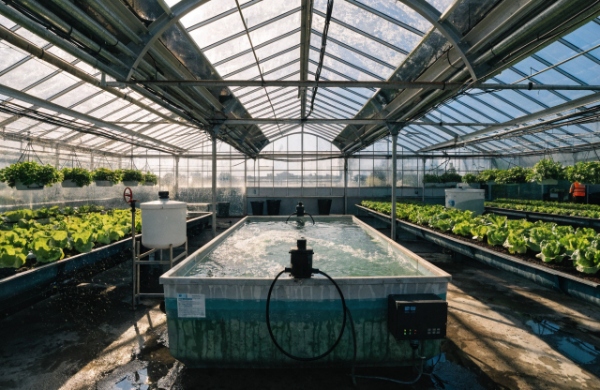
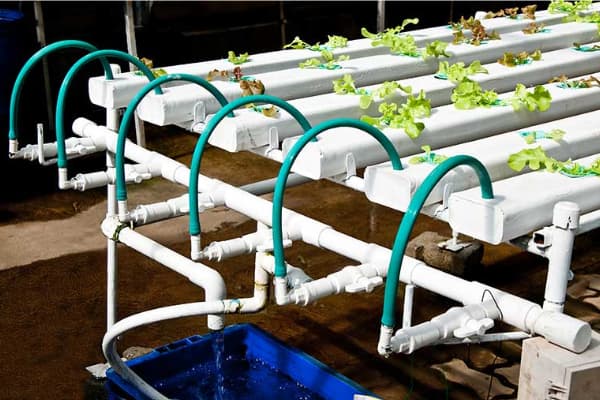
Sub‑irrigation system delivering water from below the root zone.
Dive deeper
Sub‑irrigation is often associated with hydroponic systems. NFT, for instance, uses a thin nutrient film flowing over plant roots, providing constant access to water and nutrients. Ebb and flow systems flood a tray or bed at intervals and then drain it back to a reservoir. These systems are popular for leafy greens and herbs because they ensure the root zone stays moist without saturation.
However, sub‑irrigation systems require careful oxygen management. Roots need oxygen as much as water; if the root zone stays too wet for too long, plants can suffocate. This is why many commercial greenhouse guides emphasize interval timing and aeration in sub‑irrigation systems. Research from Rutgers University Greenhouse & Floriculture Programs highlights that poor oxygenation in sub‑irrigation can reduce crop quality and cause diseases.
Sub‑irrigation excels in water efficiency — often using 50% or less water than traditional surface irrigation — and is ideal where water resources are limited or costly.
Spray or overhead irrigation: when it makes sense
Spray or overhead systems are similar to outdoor sprinklers, but controlled for greenhouse use.
Why spray irrigation works:
- Good for young plants and seedling stages
- Can provide foliar cool‑down effects in hot climates
- Covers large areas quickly
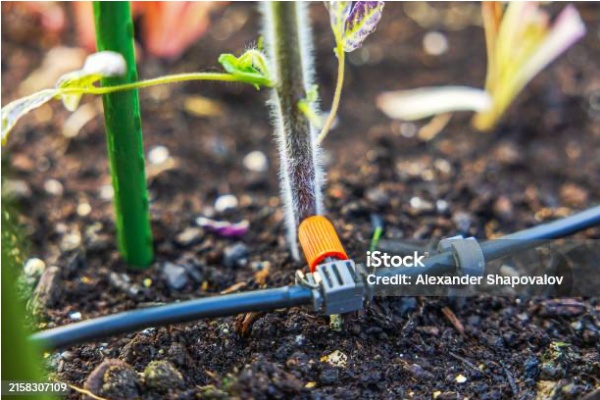
Overhead irrigation covering greenhouse crop rows.
Dive deeper
Overhead irrigation is often used early in crop cycles when plants are small and evenly spaced. It can help with dust settling and provides a fine mist that cools leaf surfaces. However, it has drawbacks: water droplets on leaves can increase humidity and disease risk, particularly for leafy greens and vine crops. High humidity combined with overhead wetting creates an environment conducive to fungal diseases like botrytis and downy mildew, as documented in greenhouse disease guides by **University of Florida IFAS Extension.
Because of this, overhead irrigation is usually combined with strong ventilation and climate control systems to prevent moisture buildup. Many growers phase out overhead systems once crops grow larger and switch to more precise methods like drip or sub‑irrigation.
Climate impacts irrigation choice: humidity, temperature, and water availability
Your regional climate greatly affects which irrigation system will work best.
-
Hot, dry climates (e.g., parts of California, Middle East):
Favored systems: drip irrigation with fertigation + high‑efficiency filters.
Reason: Low humidity allows evaporative cooling, but water conservation is critical. -
Hot, humid climates (e.g., Southeast Asia):
Favored systems: sub‑irrigation + precise drainage + elevated benches.
Reason: Limit overhead wetting; control humidity to reduce disease pressure. -
Temperate climates (e.g., Europe, Canada):
Favored systems: combination of drip + sub‑irrigation + controlled automation.
Reason: Balance water use efficiency with climate control.
Climate determines irrigation strategy.
Dive deeper
Greenhouse climate is a combination of temperature and humidity. High humidity reduces evaporation from the root zone, meaning drip irrigation solutions need careful calibration to avoid overwatering. In dry climates, overhead misting may be used as a cooling aid, but only if combined with adequate airflow to prevent fungal growth.
Water availability and quality also matter. Hard water leads to scaling and clogging in drip systems. Some growers install water softeners or filters to maintain line performance. In areas with limited water, recirculating irrigation systems — especially sub‑irrigation — become attractive because they recycle unused nutrient solution.
Nutrient delivery and fertigation strategies
Irrigation is not water alone. In greenhouse vegetable production, irrigation is often paired with fertigation — injecting nutrients into the water stream.
Fertigation allows:
- Precise nutrient delivery
- Adjustment of nutrient levels based on crop growth stage
- Lower nutrient runoff
- Better root zone balance
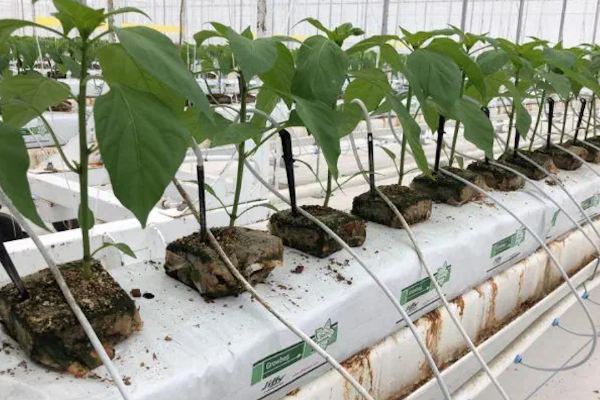
Fertigation system injecting nutrients into irrigation water.
Dive deeper
Fertigation systems use injectors, flow meters, and nutrient controllers to blend fertilizers with irrigation water. In commercial greenhouse systems, this allows growers to adjust nutrient solutions according to crop stage — higher nitrogen for leafy greens early, more potassium and calcium for fruiting crops later.
Precision fertigation improves both yield and quality, as documented in horticultural production studies available through Cornell University CEA Program. Monitoring EC (electrical conductivity) and pH in irrigation water ensures roots get the right nutrient balance without salt buildup.
However, fertigation requires monitoring. If nutrient strength is too high, it can cause osmotic stress, especially in hot climates where water uptake increases. Automated nutrient sensors help maintain consistency and reduce manual errors.
How to design your irrigation system for commercial greenhouses
Choosing the right irrigation system involves a structured process:
-
Define your crop needs
- Leafy greens need consistent moisture but low humidity on leaves.
- Vine crops need water delivered close to roots without wetting foliage.
-
Evaluate water quality and availability
- Install filters and treatment systems if needed.
-
Match irrigation to climate type
- Use sub‑irrigation in humid zones.
- Pair drip with cooling in dry hot zones.
-
Integrate irrigation controllers with climate sensors
- Link with temperature and humidity systems for automated scheduling.
-
Plan maintenance and flushing protocols
- Regularly flush lines and check emitters.
Dive deeper
I always start with a simple principle: root zone conditions control success. That means irrigation design must come before planting. Before selecting emitters, calculate crop water demand based on crop evapotranspiration, greenhouse volume, and climate patterns.
Next, design your layout so each plant receives equal water and nutrient supply. For example, spacing emitters based on plant spacing and expected root spread ensures uniform wetting.
Water quality testing — for pH, salinity, hardness, and microbial load — is not optional. If water is poor, install appropriate treatment systems. Hard water scales drip emitters; saline water stresses plants.
Finally, integrate your irrigation controllers with greenhouse automation. Climate conditions influence water demand. When the controller knows both temperature and humidity, it can adjust irrigation timing automatically, reducing over or under watering.
Conclusion
The best greenhouse irrigation system for commercial vegetables depends on crop type, climate, water quality, and production goals. Drip irrigation is the most versatile for most crops, sub‑irrigation offers high water efficiency, and overhead systems serve growth stages or cooling purposes when used with proper climate control.
Successful greenhouse irrigation is not just about the system you choose — it’s about designing it to work with your climate, crop needs, and nutrient strategies.
External References (Authority Sources)
-
University of Florida IFAS Extension – Greenhouse Vegetable Production
https://edis.ifas.ufl.edu/publication/CV239 -
Rutgers University Greenhouse & Floriculture Programs
https://njaes.rutgers.edu/greenhouse‑floriculture/ -
Cornell University CEA (Controlled Environment Agriculture) Program
https://cea.cals.cornell.edu/energy/ -
World Bank Climate Change Knowledge Portal
https://climateknowledgeportal.worldbank.org/
Internal References (CFGET)
-
Commercial Greenhouse Systems
https://cfgreenway.com/greenhouse/ -
Smart Auto & Control Solutions
https://cfgreenway.com/solutions/smart-auto-control/
Internal Blog References (Related CFGET Articles)
-
Polycarbonate Greenhouse Systems
https://cfgreenway.com/polycarbonate/ -
Semi-Closed Greenhouse Systems
https://cfgreenway.com/semi-closed/ -
Venlo Glass Greenhouse Design
https://cfgreenway.com/venlo/ -
Shade Net and Rain Shelter Systems
https://cfgreenway.com/shade-net-rainshelter/