Start with the license and product pathway
North America is not one regulatory market. Rules differ by country, state, province, municipality and product class. A medical facility, adult-use flower operation and low-THC hemp project can face different requirements for site security, plant tracking, testing, pesticides, odor, waste, storage and worker access. The buyer should obtain written requirements from the responsible authorities before fixing the layout or equipment scope.
The production brief should name the cultivars or cultivar groups, propagation method, planned crop stages, saleable product and batch-release process. It should also define where material is received, quarantined, propagated, flowered, harvested, dried, trimmed, tested, stored and dispatched. A greenhouse vendor can coordinate the building and growing systems, but cannot replace legal, pharmaceutical, fire, electrical or occupational-safety approval.
Divide the facility into operating zones
Cannabis stages do not always share the same photoperiod, humidity risk or access rule. Map propagation, vegetative growth, flowering, mother stock and quarantine before choosing bay widths. Separate crop movement from waste movement where the operating plan requires it. Show hygiene transitions, tool storage, staff changing, chemical storage, loading and emergency routes. The plan should identify which zones can be isolated after a pest, disease, HVAC or irrigation event.
Large uninterrupted crop zones may simplify equipment and labor, but they also increase the value exposed to one failure. Smaller zones add partitions, doors, controls and duplicated equipment. Ask each bidder to show the capital and operating consequence of the proposed zone size, along with the method used to prevent light leakage and uncontrolled air transfer between stages.
Compare structure and covering by measured duties
| Decision | Buyer input | Evidence to request |
|---|---|---|
| Structure | Site wind, snow, seismic, suspended equipment and crop-wire loads | Governing code, load combinations, framing drawings, reactions and connection details |
| Covering | Useful light, insulation, condensation, cleaning and replacement plan | Installed assembly data, joints, seals, warranties and maintenance access |
| Blackout | Required dark period, leakage tolerance and operating schedule | Screen layout, overlap details, side closures, vent light traps and acceptance test |
| Air leakage | Humidity, odor and carbon-dioxide control approach | Pressure zones, exhaust and make-up paths, door strategy and test method |
Glass, rigid panels and film assemblies can all be useful in the right project. None is automatically best for a continent or crop. The selected assembly must fit the site weather, energy price, light target, equipment loads and replacement capacity. A supplier should state what is included in the installed envelope rather than quoting only a material name.
Design light management as one system
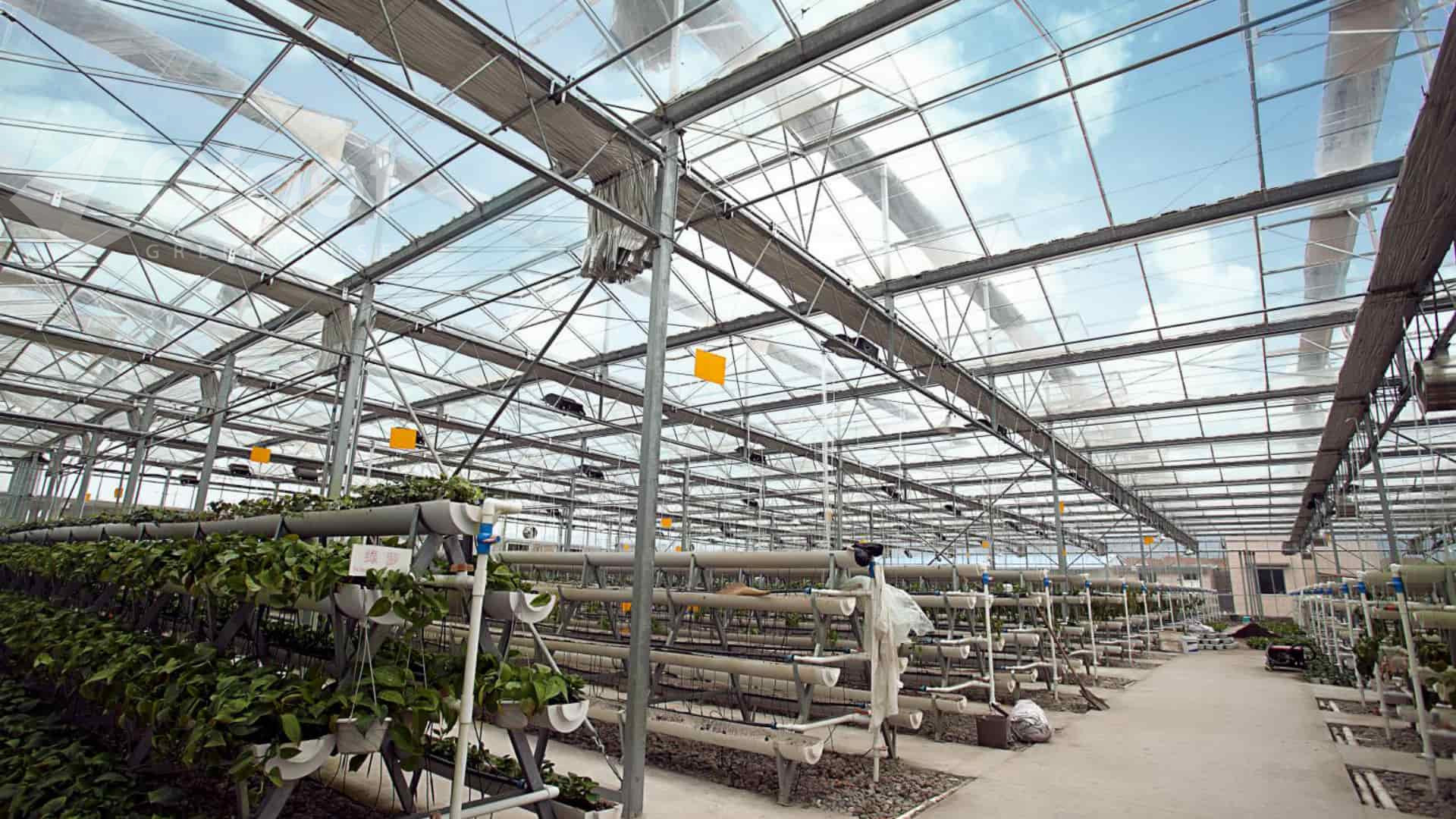
Photoperiod control involves more than installing a blackout screen. The screen geometry, side seals, penetrations, vent light traps, door use and control sequence all affect the dark period. Supplemental fixtures add electrical load and heat. Their layout interacts with structure, crop height, screens, irrigation booms, fire protection and maintenance access. Ask for a coordinated reflected ceiling or truss plan showing every overhead device.
Ohio State University Extension describes cannabis as a short-day plant and notes that cultivar-specific photoperiod response matters. Cornell controlled-environment research also shows why lighting claims need crop, spectrum, intensity and economic boundaries. Use research to define trial and monitoring questions. Do not turn one experimental result into a supplier guarantee for every cultivar or facility.
Make humidity and air movement visible in the load calculation
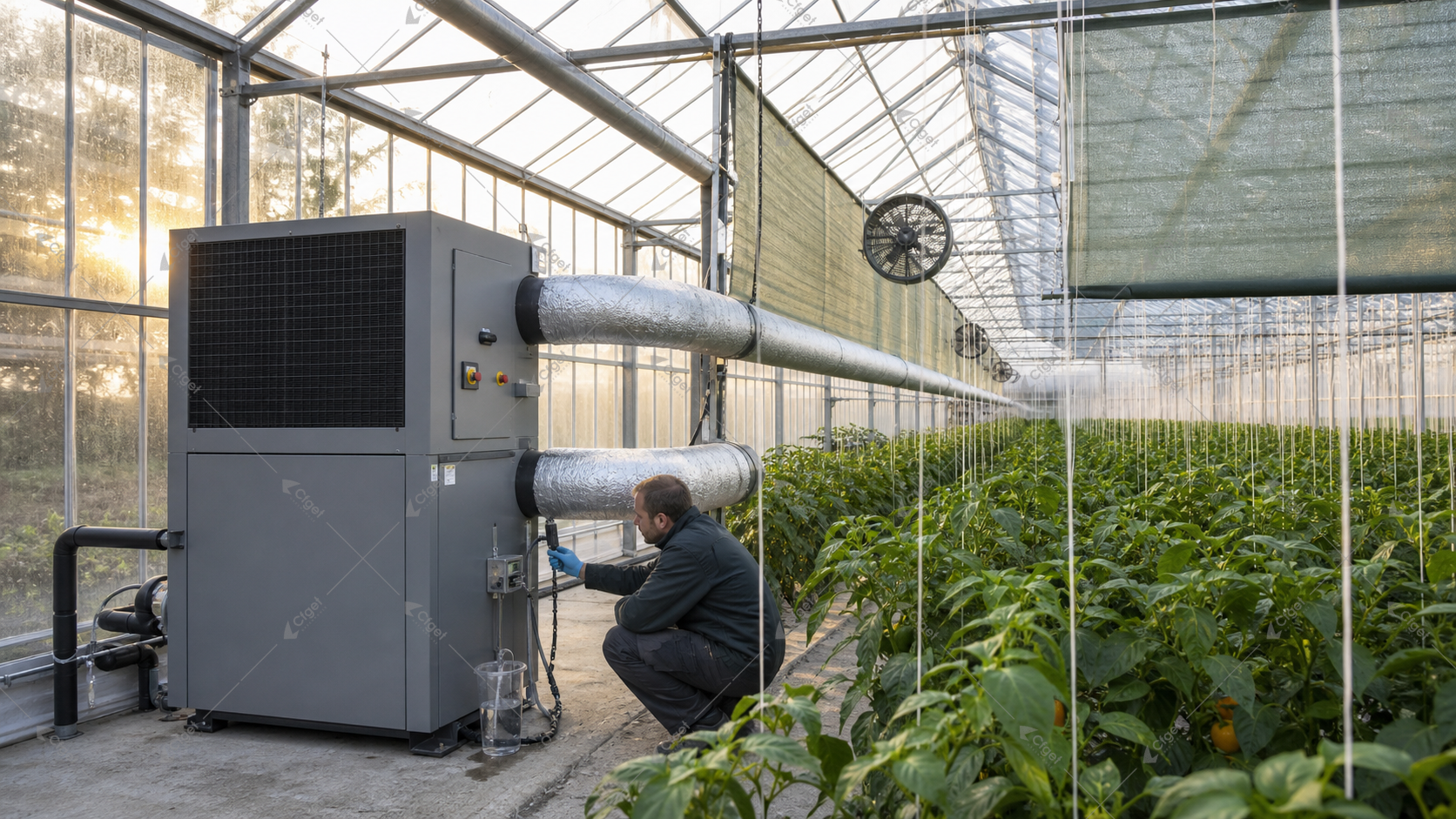
Plants release moisture, while irrigation, wet surfaces and outdoor air add or remove moisture depending on the hour. The mechanical brief should include sensible and latent loads for each crop stage, planting density and design weather point. Ask how the system handles nights, shoulder seasons and periods when cooling demand is low but moisture removal remains high. A temperature setpoint alone does not size dehumidification.
Show supply, return, circulation and exhaust paths at crop level. Identify sensor locations and how representative readings will be checked. Dense foliage can create local conditions that one wall sensor misses. The proposal should state alarm thresholds, failed-sensor behavior, manual overrides and the safe position of vents, screens, fans, pumps and valves during power or network loss.
Coordinate odor, carbon dioxide and ventilation
Odor control must be based on the applicable permit and neighbor context. It can affect exhaust rate, filtration, pressure control, fan power and filter replacement access. Carbon-dioxide enrichment, where lawful and agronomically justified, also depends on how often the facility vents. The controls narrative should prevent unsafe or wasteful operation by defining occupancy interlocks, gas detection, ventilation states and alarm ownership.
Do not accept one carbon-dioxide target or ventilation rule for every stage. Ask the crop adviser, mechanical designer and safety team to agree on the operating envelope. Record which devices are safety critical, which require backup power and how the facility returns to service after an alarm.
Build irrigation, sanitation and drainage around batch control
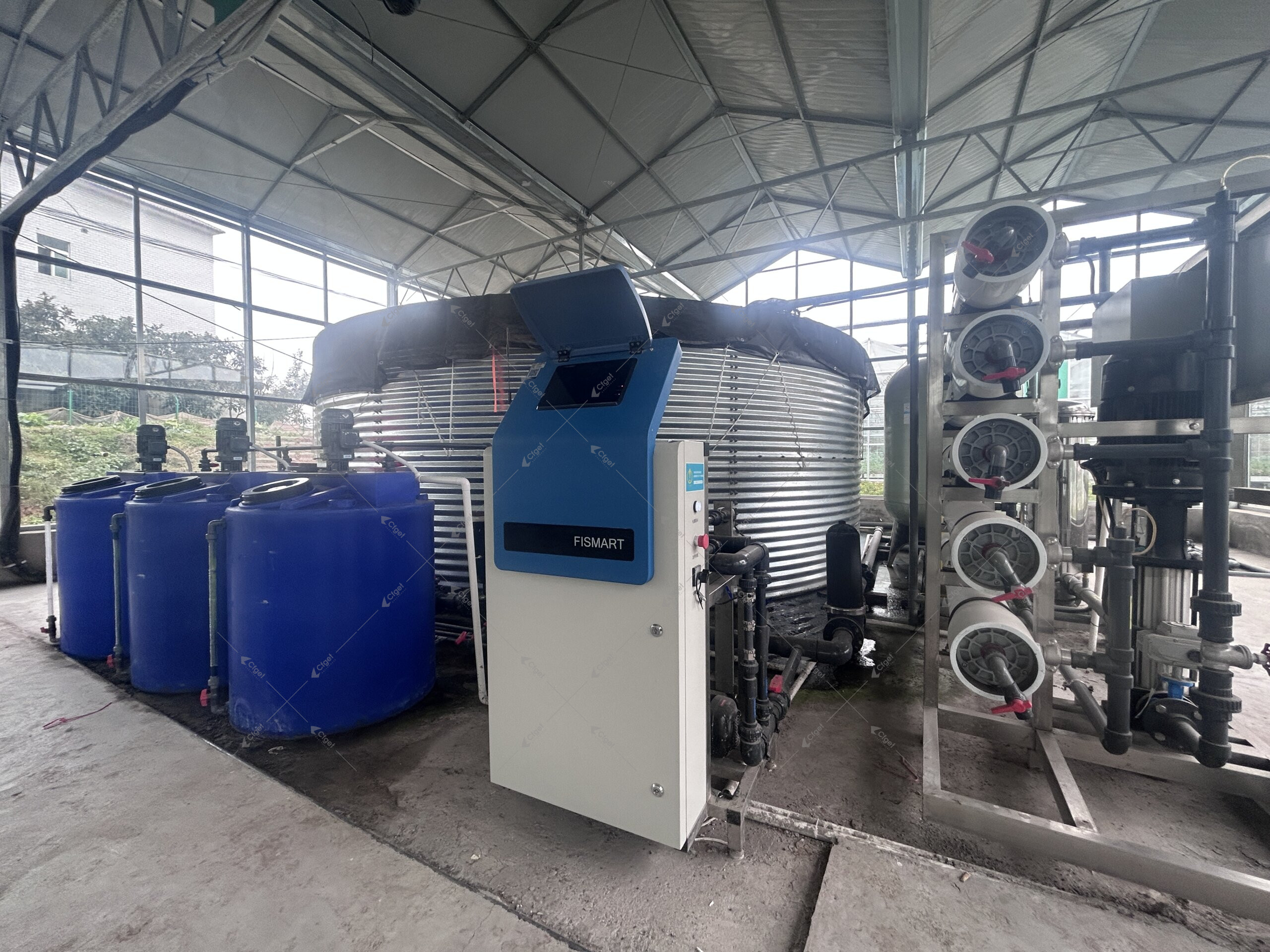
Send bidders a recent water analysis and peak source capacity. State whether the system is drain-to-waste or recirculating, how runoff is collected, and what discharge rules apply. Specify filtration, dosing, mixing, storage, sampling and calibration access. The design should make it possible to isolate a zone, drain lines, clean tanks and verify that a sanitation cycle reached the intended surfaces.
Material selection must match fertilizers, cleaning agents and operating temperature. Label every responsibility for water treatment, fertigation, drainage, disinfection and waste. The buyer should also define how recipes are approved, who can change them, and how controller settings and audit records are backed up.
Plan security and post-harvest before pricing the greenhouse
Perimeter security, access control, cameras, storage and plant tracking may influence doors, corridors, data systems and backup power. Drying and processing spaces have different environmental and fire considerations from the crop house. If they are outside the greenhouse supplier’s scope, their utility and material-flow interfaces still belong on the drawings.
Ask for a responsibility matrix covering structure, civil work, utilities, growing systems, security, post-harvest rooms, permits, installation, commissioning and training. A low quotation may exclude the systems that decide whether the licensed facility can operate.
Commission failure states, not only normal operation
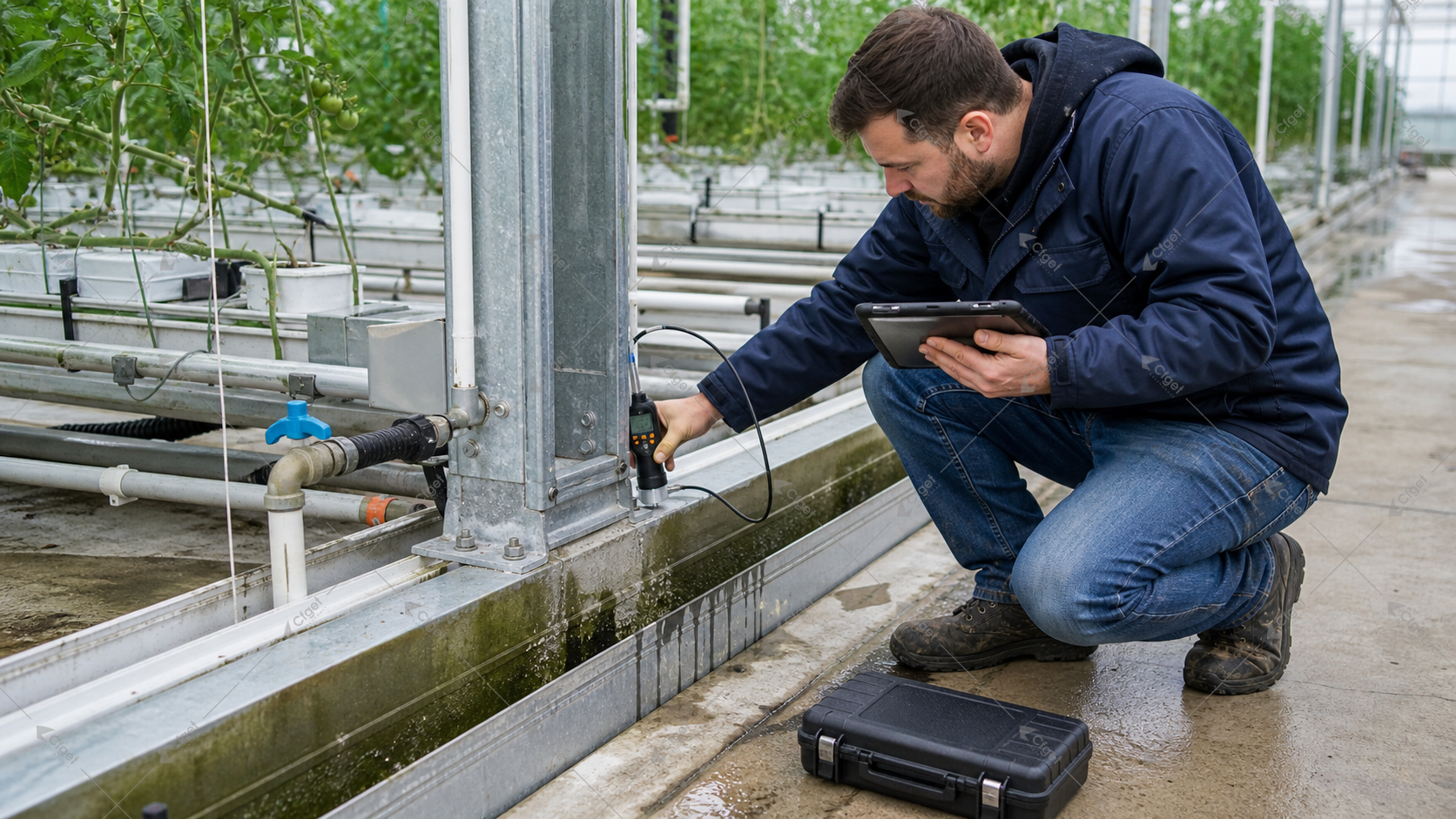
Commissioning should test blackout deployment, sensor plausibility, humidity recovery, irrigation uniformity, alarm delivery, backup power and safe restart. Run agreed failures one at a time, including loss of power, communications, pump flow, a climate sensor and a zone controller. Record the expected response, allowable recovery time and person responsible for action.
Handover should include drawings, device schedules, setpoint ranges, calibration records, software backups, spare parts, manuals and training records. These documents matter more than a polished dashboard because operators need them when equipment is unavailable or a technician changes.
RFQ inputs for a North American cannabis greenhouse
- Jurisdiction, license class, product pathway and written compliance requirements.
- Site survey, soil information, drainage, access and local structural design criteria.
- Hourly weather file, utility tariffs, electrical capacity, fuel and backup-power limits.
- Cultivar groups, crop stages, zone sizes, planting method and production calendar.
- Photoperiod, useful-light and blackout acceptance requirements by zone.
- Temperature, humidity and air-quality boundaries with named extreme conditions.
- Water analysis, fertigation, drainage, sanitation, discharge and waste responsibilities.
- Security, traceability, post-harvest, loading and worker-flow interfaces.
- Alarm ownership, failure response, commissioning tests and acceptance criteria.
- Freight, civil work, installation, permits, training, spares and service exclusions.
Related CFGET resources
Use the greenhouse climate-control scope to define system interfaces, the light-management overview for screening and fixture coordination, and the irrigation and fertigation scope for water-system responsibilities. The greenhouse installation guide helps assign design, installation and commissioning stages.
Technical references
- Ohio State University Extension: Ever-Evolving Aspects of Cannabis Production
- Cornell University: controlled-environment cannabis lighting research
- National Conference of State Legislatures: cannabis overview
Send CFGET the licensed site, weather file, zone plan, utilities, water analysis, compliance interfaces and acceptance tests. A useful proposal should show calculations, drawings, included equipment, exclusions and the evidence used to select each system.