Callused cuttings and transplantable rooted liners are different developmental starting points. Buying callused material may leave rooting and propagation work in the receiving nursery, even when it is placed directly into the final pot. Compare the supplied condition and the required endpoint before comparing arrival dates or promised crop time.
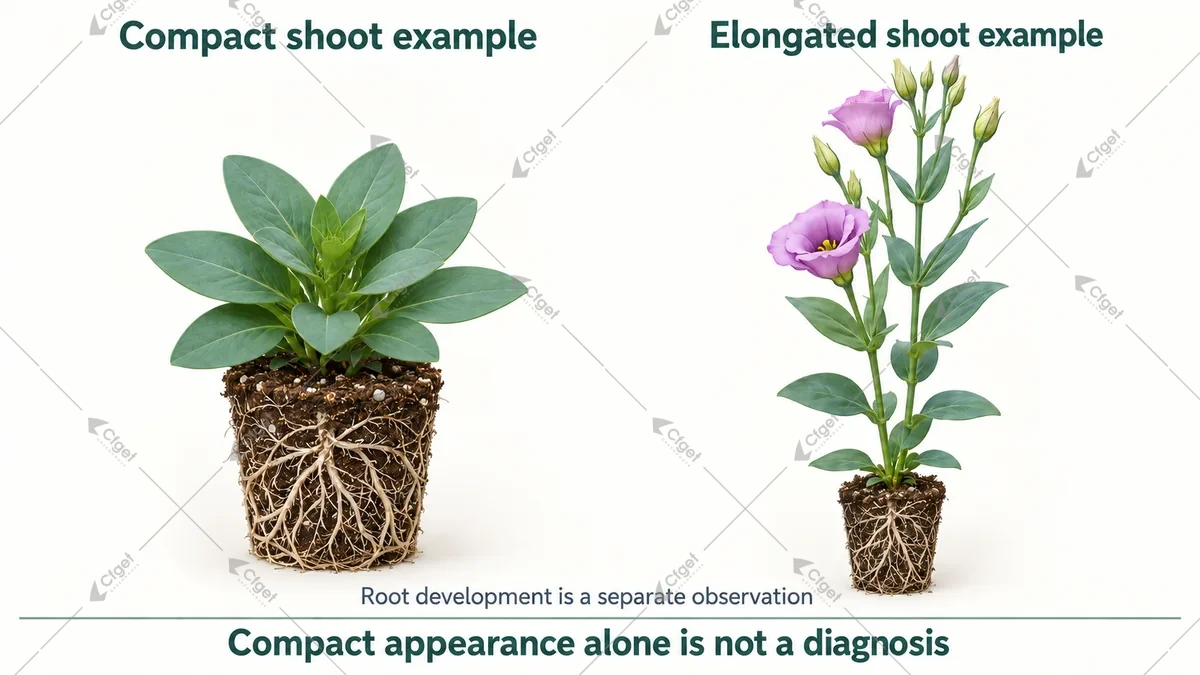
A few visible roots also do not automatically establish a transplantable liner. Agree what root development and plant condition the nursery is purchasing for the actual crop and cultivar.
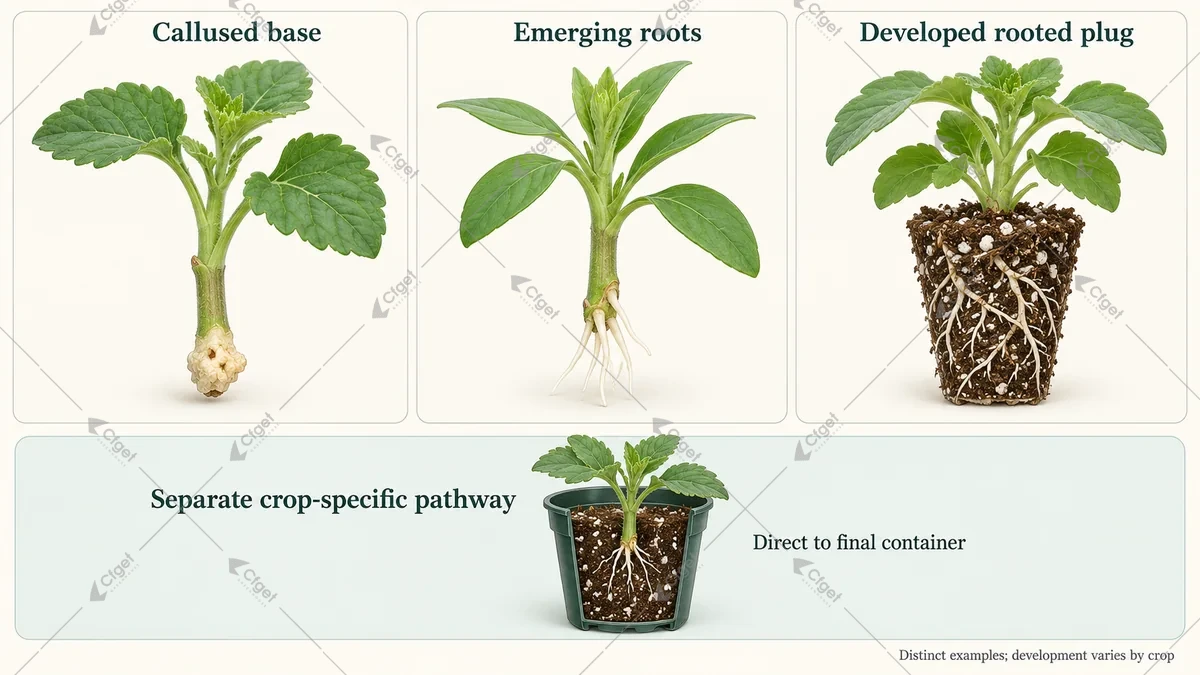
Separate callus, emerging roots and a transplantable liner
Callus is tissue formed at the cutting base. It is not itself a developed root system. Adventitious roots arise from the cutting and then extend; a later rooted liner has developed toward the condition needed for its intended transplant operation.
These are observations of different structures and functions, not just three age labels. Do not assume every species follows an identical compulsory callus sequence or that the same number of days describes comparable development in different crops.
Ball’s liner-production guide distinguishes callus, emerging/elongating roots and a transplantable liner within its named stage framework. Use the physical endpoints for comparison; its stage numbers and production instructions are not universal crop rules.
| Observed endpoint | What it can show | What it does not establish alone |
|---|---|---|
| Basal callus | The stated basal tissue condition | A developed root ball |
| Roots emerging or elongating | Root development is underway | The agreed transplantable condition |
| Transplantable liner specification met | The purchased endpoint for that crop and operation | Every later finished-pot requirement |
Direct sticking changes the route, not the need for roots
Some supported crop programs place cuttings directly into the final container instead of rooting them first in an intermediate liner cell. That can remove an intermediate transplant step. It does not remove the biological development of a functioning root system.
This difference matters to facility planning. A final pot holding material still in propagation is not automatically equivalent to a final pot receiving a developed liner. The receiving nursery needs the capability and crop-specific support for the work that remains.
Ball currently distinguishes unrooted and “Callus” forms on its cutting-supply page. That confirms distinct commercial starting forms. Its general speed or cost claims should not be adopted as a fixed time saving for every shipment and cultivar.
Compare equal endpoints when discussing time
In a fictional example, Nursery A receives callused material and Nursery B receives transplantable rooted liners of the intended cultivar. Both put material into final pots on the same date. A may still owe a propagation phase that B has already purchased.
Calling A’s route “direct stick” does not make the starting endpoints equal. Record where the time count begins and what finished condition ends it. Arrival-to-rooted-liner time and arrival-to-finished-pot time answer different questions.
A University of Florida study across 2015–2016 compared cutting routes for four species. In some scaevola comparisons, received callused material showed no time advantage over unrooted material; the authors discussed limited callusing in some shipments. The October 2018 research report supports checking the actual supplied state and crop conditions. Its aggregate time figures are not a promised reduction for another nursery.
Ask what the shipment still needs to become
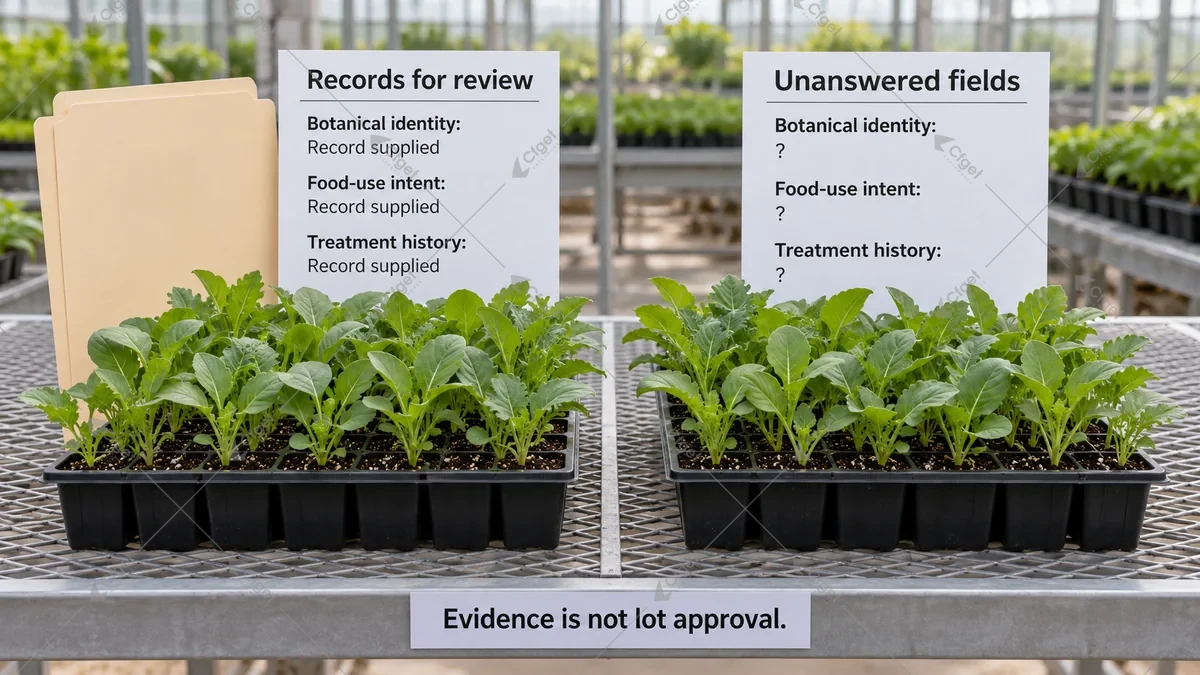
Request evidence describing the material being offered: crop/cultivar, basal condition, documented root development and the supplier’s endpoint specification. Keep the shipment identity with those observations. A representative photograph can support that discussion, but an image alone should not approve readiness.
Then map the remaining work. Does the planned route require propagation in a liner cell, supported rooting in a final container, or finishing from an already transplantable liner? Ask the crop specialist to confirm the facility capabilities and responsibilities for the chosen route.
If the supplier and nursery use different stage terms, translate them into the physical observations before accepting a date forecast. A shared word such as “rooted” can conceal a difference between initial roots and a handled liner meeting the agreed specification.
Download the offer-to-development map
Download the cutting-stage comparison map (CSV). This is a manual worksheet with no formulas. Import as UTF-8, comma-separated text and record basal condition, root development and transplantable condition separately for each offer. Include a separate direct-to-final-container route only where it has crop-specific support. Keep the starting and ending endpoints beside any elapsed-time evidence. Adjust wrapping and save a native spreadsheet copy.
The next decision is which developmental work the nursery can reliably receive and complete, without assuming a universal rooting duration. For related planning, see nursery bench capacity and transplant receiving inspection.