Choose the intended ginger maturity before treating a protected-season result as a sales plan. Baby ginger is an immature harvested form of culinary ginger, not necessarily a separate miniature cultivar. A tunnel that produces tender immature rhizomes has not thereby demonstrated that it can deliver a buyer’s specified mature product in the same season.
Also clarify “fresh.” Mature ginger can be marketed fresh. The word does not by itself mean baby ginger or identify the handling condition the buyer expects.
Follow rhizome development into the intended product
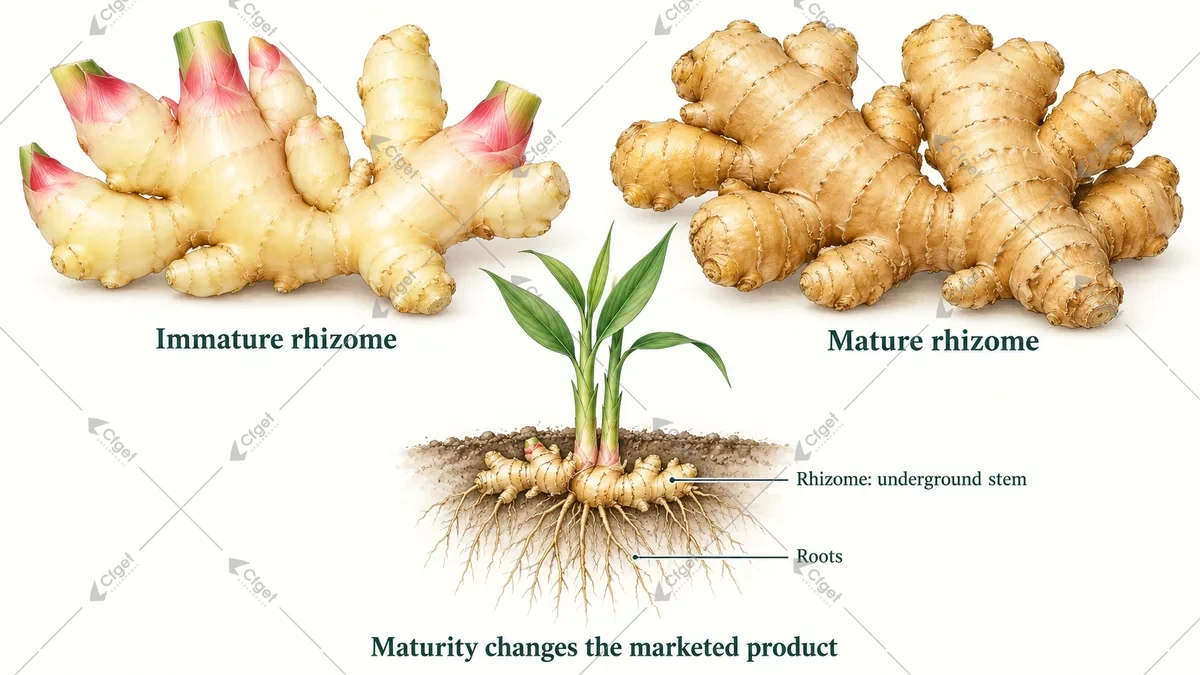
Culinary ginger is Zingiber officinale. The harvested rhizome is an underground stem, distinct from the roots attached to it. As the rhizome develops, its surface and internal texture change. Young material has a particularly delicate surface; more mature material develops a different skin and becomes more fibrous.
Wisconsin Extension describes rhizome identity, easily damaged skin and maturity-related texture in its culinary-ginger article. A mature rhizome should not be treated as damage-proof simply because its skin is more developed.
| Product question | Immature or baby-ginger route | Mature-ginger route |
|---|---|---|
| What state is being sold? | Tender immature rhizome under the buyer’s description | A specified more mature rhizome |
| What needs evidence from the season? | Reaching the accepted immature state | Reaching the accepted mature state |
| What does handling need to address? | Delicate surface and the actual delivery chain | The agreed skin/product condition and delivery chain |
| Does “fresh” resolve maturity? | No | No |
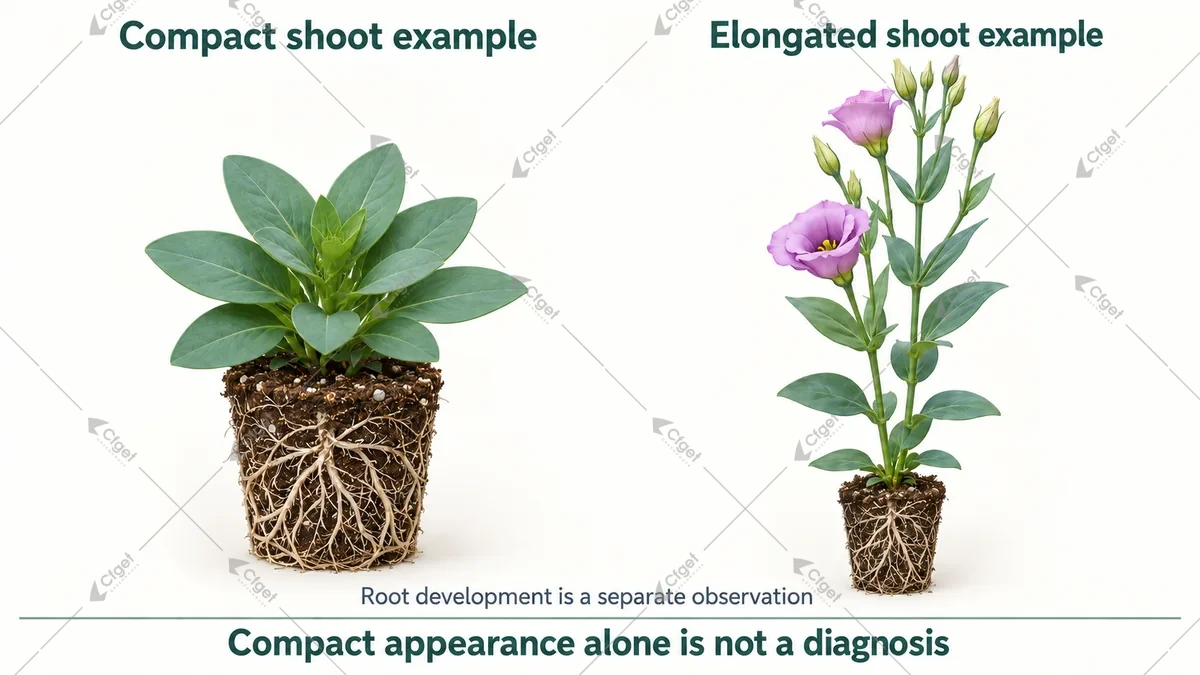
Describe the product with the buyer rather than using skin colour alone as a universal maturity test. Cultivar and actual product condition still matter. A conceptual image illustrates the distinction; it does not identify a lot or approve it for sale.
Make the whole protected season visible
A local growing plan may include an earlier protected establishment phase and a later growing-on period. State which stages the proposed facility supports and what evidence shows the crop can reach the intended harvested condition within the available window.
Kentucky Extension’s June 2019 ginger and turmeric crop profile describes regional high-tunnel experience and distinguishes immature and mature products. Its discussion connects later maturity with additional season requirements in that context. Kentucky dates, yields and prices should not be transferred to another location.
The useful commercial question is whether the proposed protected period supports this maturity target, not whether ginger can be grown under cover at all. A heated greenhouse, an unheated tunnel and a short local field season represent different conditions. Adding a protected structure does not automatically settle the crop-development timeline.
When the buyer asks for a different maturity
Imagine a fictional grower with evidence of tender immature rhizomes from an unheated tunnel in its local autumn window. A buyer requests mature ginger for an established handling chain. The observed output and the requested product do not yet match.
First ask whether the buyer accepts the immature product and its delivery requirements. If so, make that an explicit product agreement. If not, the grower needs evidence for a different season or facility plan before promising mature supply.
Do not relabel the observed baby ginger as equivalent mature ginger. Nor should storage after harvest be assumed to complete missing in-crop development. The question is what the crop becomes while growing, followed by a separate question about preserving the harvested product through the intended chain.
Connect handling evidence to the marketable rhizome
Keep the handling and packing discussion specific to the proposed maturity. A procedure accepted for a buyer’s usual mature supply should not automatically be assigned to tender immature material. Ask which physical defects, presentation and delivery windows the buyer will accept, then confirm that the actual route has supporting evidence.
If evaluating crop output, count the agreed marketable rhizome product separately from soil, foliage and other non-saleable material. A whole lifted plant weight is a different quantity. The accounting boundary should remain the same when comparing the two routes.
This comparison gives no harvest-age, curing or storage recipe. It is intended to resolve the earlier product-and-season decision so a crop specialist can assess the relevant production pathway.
Download the product-and-season worksheet
Download the ginger maturity and season worksheet (CSV). It is a manual record with no formulas. Import as UTF-8, comma-separated text and complete the baby-ginger and mature-ginger routes separately. Record identity and source, buyer maturity description, local protected stages, evidence for reaching the target, handling requirements and unresolved delivery/storage questions. Adjust wrapping and save a native spreadsheet copy.
Confirm product acceptance before expanding the facility assumption. If the reviewed pathway needs a longer or more intensive protected season, use that defined requirement in the separate greenhouse lifecycle-cost comparison; do not infer a return from a generic ginger price premium.