The nutrient tank contains calcium, the EC looks normal, and the youngest lettuce leaves still develop brown margins. Buying another calcium product may not address the failure. Calcium must reach the expanding tissue in sufficient time; its presence in the tank is only the beginning of that route.
Tipburn is a physiological disorder associated with inadequate calcium supply to rapidly developing leaf tissue. It is not automatically evidence of low calcium in the fertilizer recipe. First verify the symptom, then examine water movement, roots, canopy conditions and growth rate together.
Locate the damage before naming it
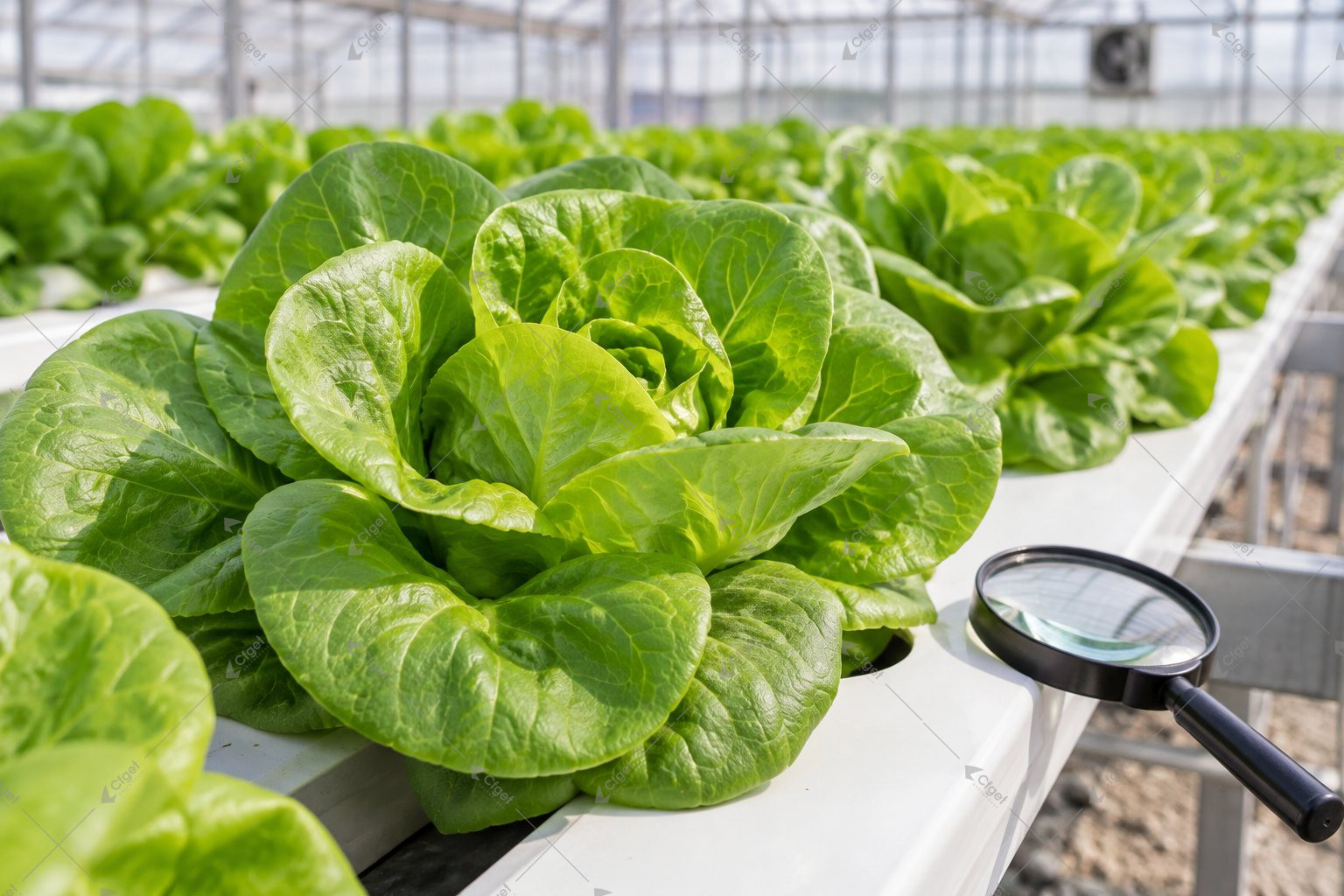
Open a sample of affected heads and compare them with nearby unaffected heads of the same cultivar and age. Record whether damage is on young enclosed leaves, exposed older edges or scattered spots. Photograph the whole plant as well as the damaged tissue. Spreading lesions, unusual spotting or soft decay need a plant-health assessment; an online photograph cannot rule out another cause.
Map the problem by cultivar, planting date, channel or bed and greenhouse position. Damage concentrated in one hydraulic zone suggests a different investigation from damage appearing across several zones after the same weather change. Neither pattern proves the cause, but each makes the next measurement more useful.
Separate calcium supply from calcium delivery
Cornell’s discussion of environmental tipburn describes how water uptake and transpiration influence calcium delivery, and why more calcium may not solve environmentally driven deficiency at growing points. Its examples include propagation conditions; they are not a single climate recipe for every mature lettuce cultivar or hydroponic system.
| Question | Evidence to collect | What the result can change |
|---|---|---|
| Is the intended solution reaching the crop? | Source, feed and crop-zone samples; dosing and flow records | Whether to investigate supply or delivery before reformulating |
| Can roots take up water consistently? | Root inspection, interruptions, temperature and system-appropriate oxygen checks | Whether a root-zone or circulation problem needs priority |
| Are conditions different inside the crop? | Leaf-height humidity and temperature, canopy density and airflow observations | Whether a room sensor is missing a sheltered area |
| Did growth conditions change quickly? | Recent light and temperature trends matched to crop age | Whether transitions and growth rate need review |
Why a fan purchase needs a crop-level check
A fan can move air along an aisle while leaving tightly enclosed leaves in a different environment. Conversely, direct high-speed flow can create uneven drying. Before adding equipment, document where air actually moves through the crop and whether the proposed arrangement reaches the problem area without producing a new gradient.
Do not respond to tipburn by trying to maximize transpiration everywhere. Leaf development, day and night conditions, cultivar sensitivity and water availability all affect the outcome. An adjustment appropriate for a sheltered inner canopy may not suit an exposed perimeter row. Use a small, recorded comparison and crop-specific advice rather than applying a universal humidity or VPD target.
Judge the correction on new growth
Damaged tissue will not become sound tissue after a setting changes. Mark the affected cohort, record the intervention date and follow newly developing leaves and later planting cohorts. Count marketable heads as well as visible lesions: a treatment that slows the crop substantially may reduce symptoms while creating a different commercial problem.
Keep a comparison area where practical, and avoid changing feed concentration, spacing, lighting and fans simultaneously. If several variables must change to protect the crop, document them honestly; that response may be necessary, but it cannot show which individual change caused improvement.
Bring a diagnosis brief, not just a photograph
- Identify cultivar, age, growing system and affected leaf positions.
- Compare root condition and delivered solution between affected and unaffected plants.
- Match the onset to irrigation, lighting and climate records.
- Define a measurable next-crop check before buying equipment.
The lettuce greenhouse guide provides the wider system context. When discussing a layout or climate-control change with CFGET, share the crop map and measurements; they help determine whether the proposed equipment addresses the observed limitation.